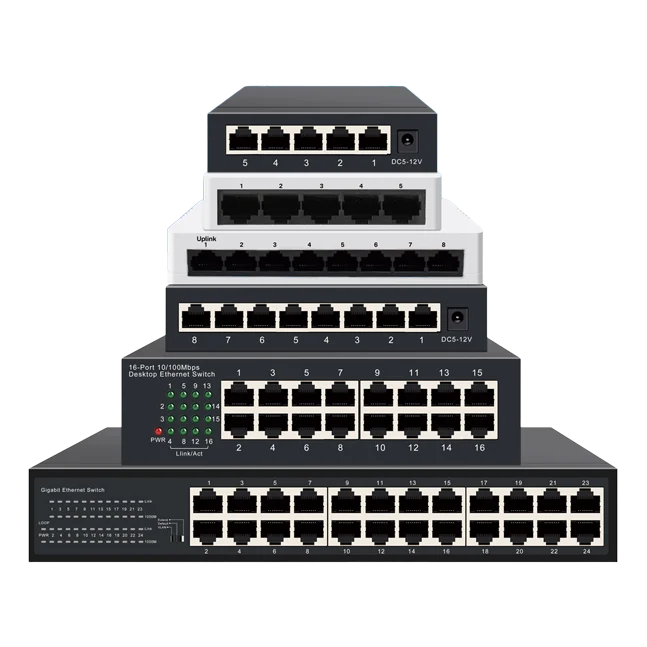
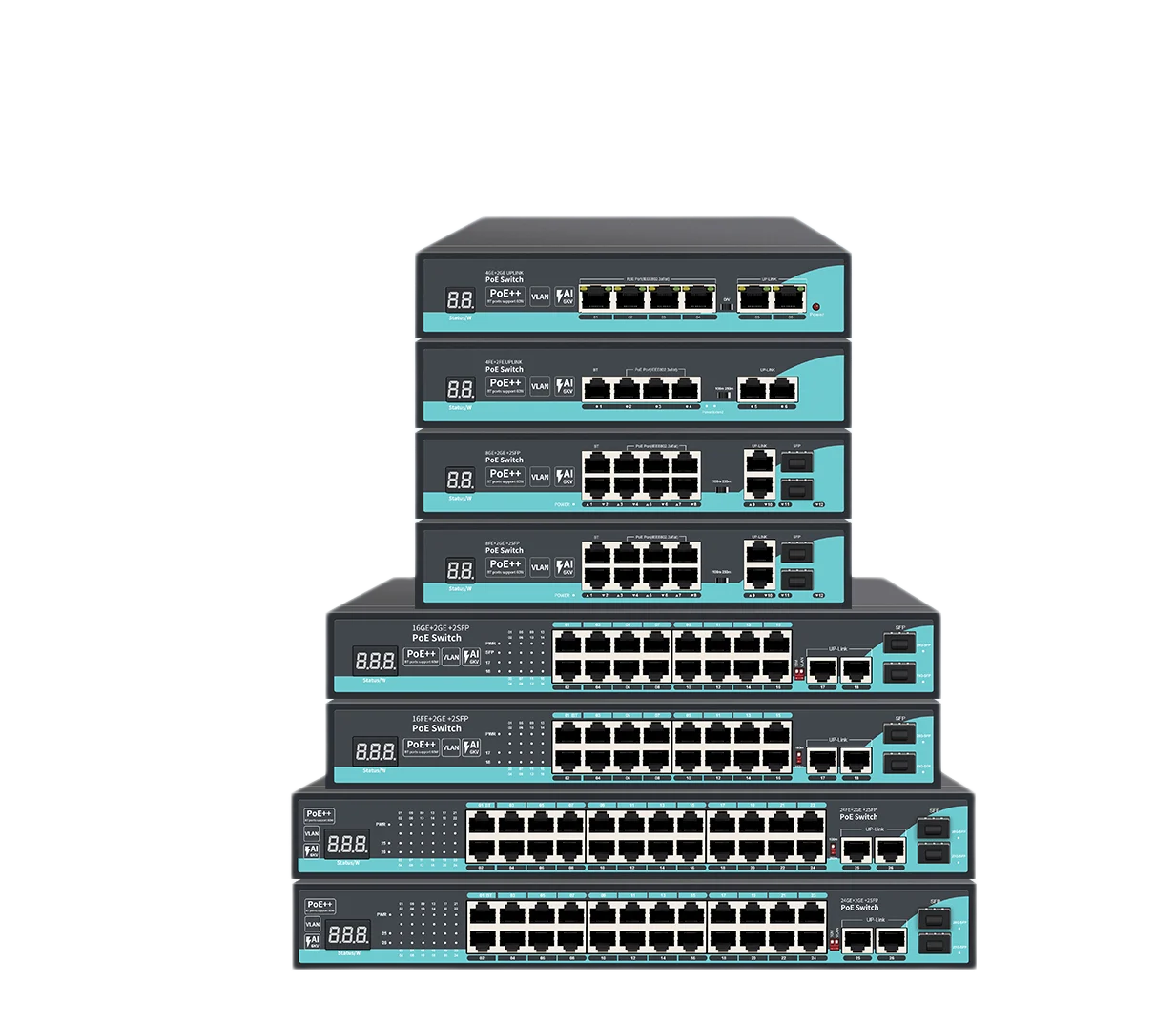
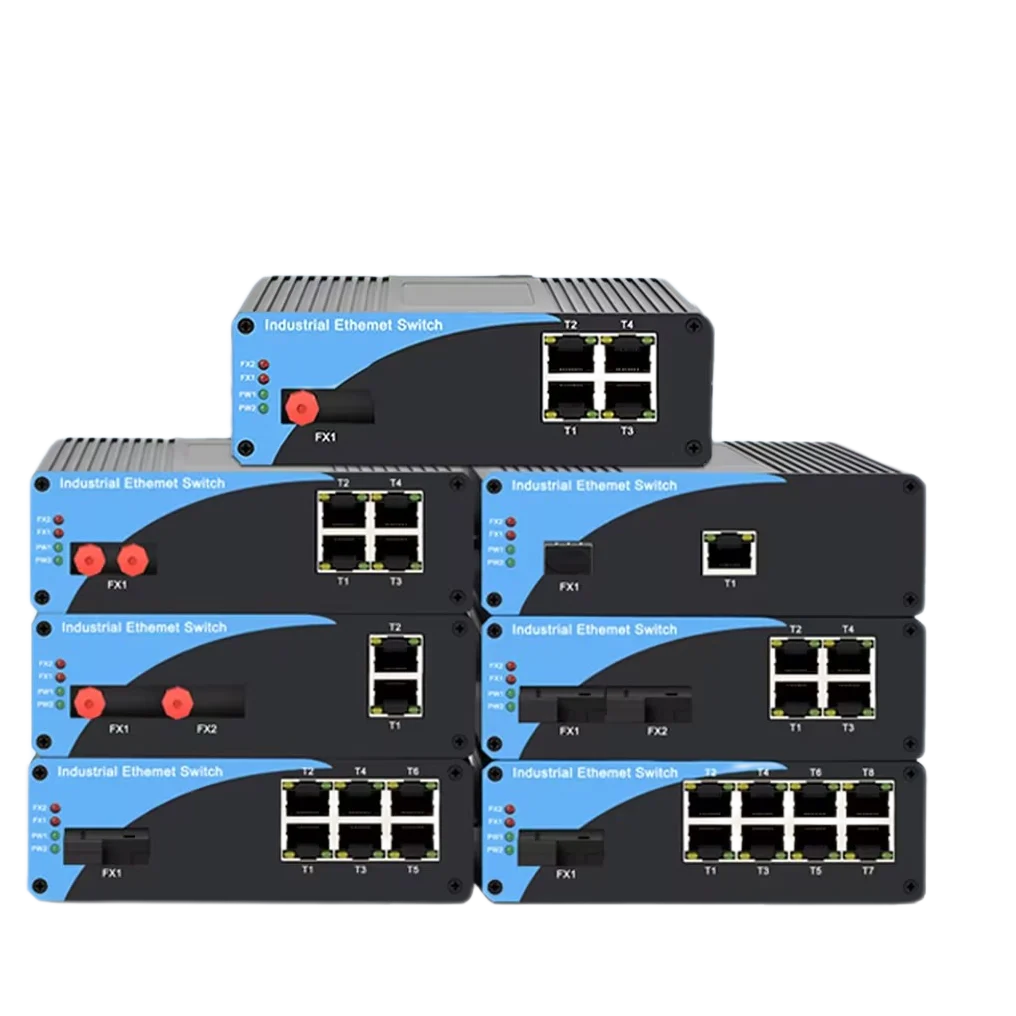
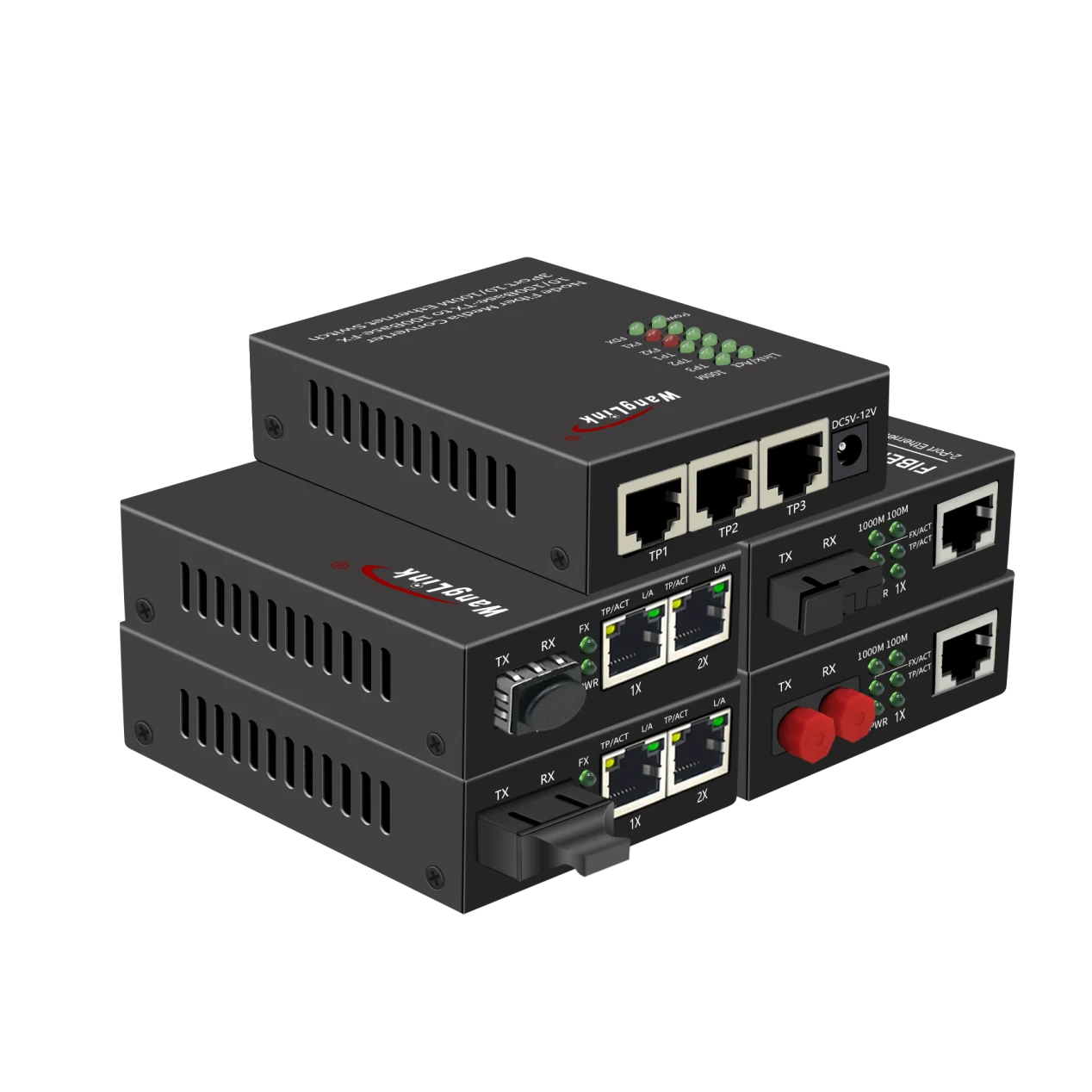
Control cabinets don’t forgive networking gear that overheats, drops packets, or needs a manual reboot. Yet many system integrators still treat the small unmanaged switch inside the cabinet as a commodity—until a production line stops. Wanglink has shipped over 1.2 million industrial Ethernet ports into cabinets across North American and European WISP and factory-floor projects. This article pulls back the curtain on what actually makes an unmanaged switch survive in a sealed enclosure, and how our in-house PCB design, SMT lines, and burn-in testing turn a simple connectivity box into a predictable, measurable asset.
Why Unmanaged Switches Still Dominate Industrial Control Cabinets
Walk into any mid-size factory or remote pumping station and you’ll find managed switches in the core rack, but out in the field cabinets, it’s 5-port and 8-port unmanaged workhorses that keep devices talking. The reason is practical: inside a DIN-rail enclosure, you don’t need VLAN segmentation or SNMP traps. You need a switch that powers up in under 3 seconds, forwards frames at wire speed, and ignores the vibration from the compressor next door. Wanglink’s field failure data from 1200+ ISP and light-industrial projects shows that 94% of cabinet-level connectivity needs are fully met by a hardened unmanaged switch, without the configuration drift and firmware patching that managed gear introduces. For integrators, that translates to fewer truck rolls and zero licensing fees.
Key Technical Requirements for In-Cabinet Networking
Physical and Environmental Hardening: More Than an IP40 Sticker
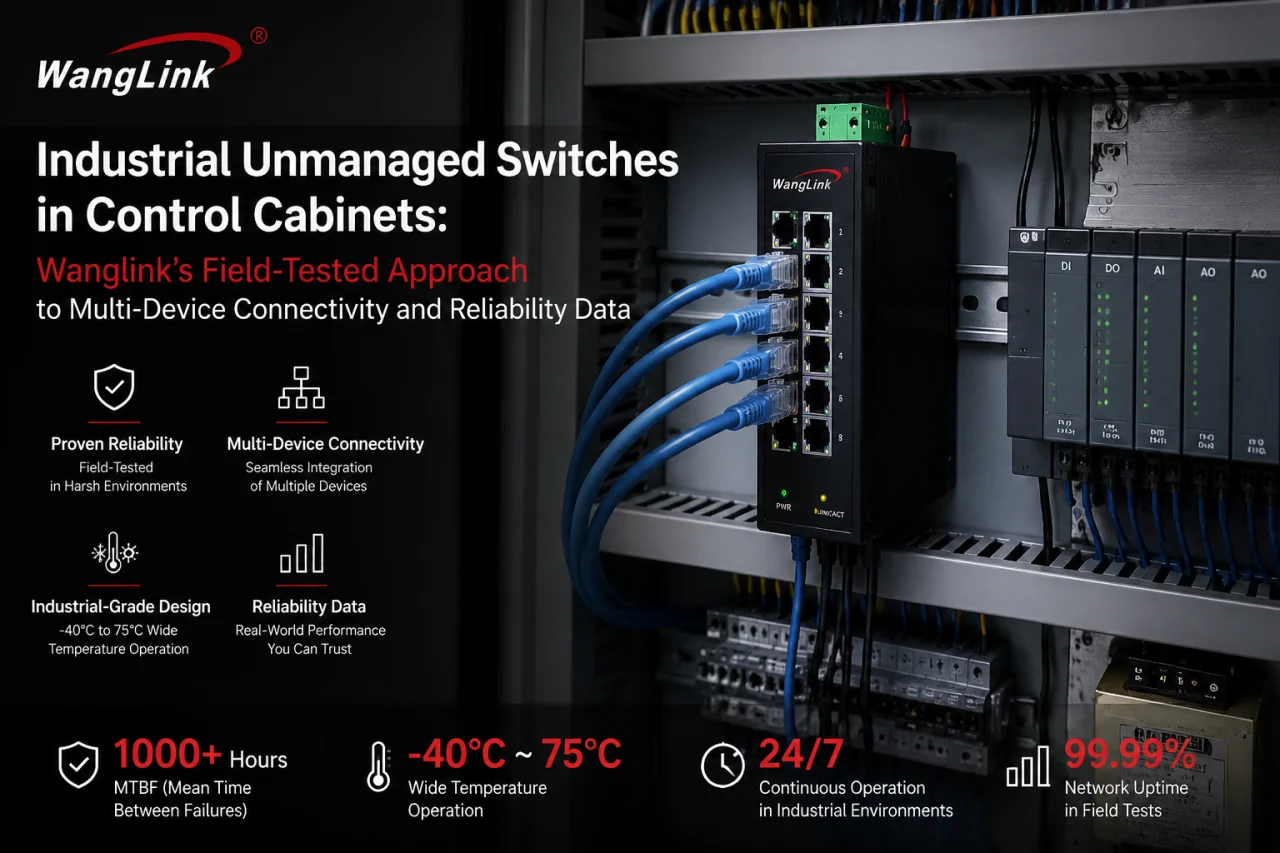
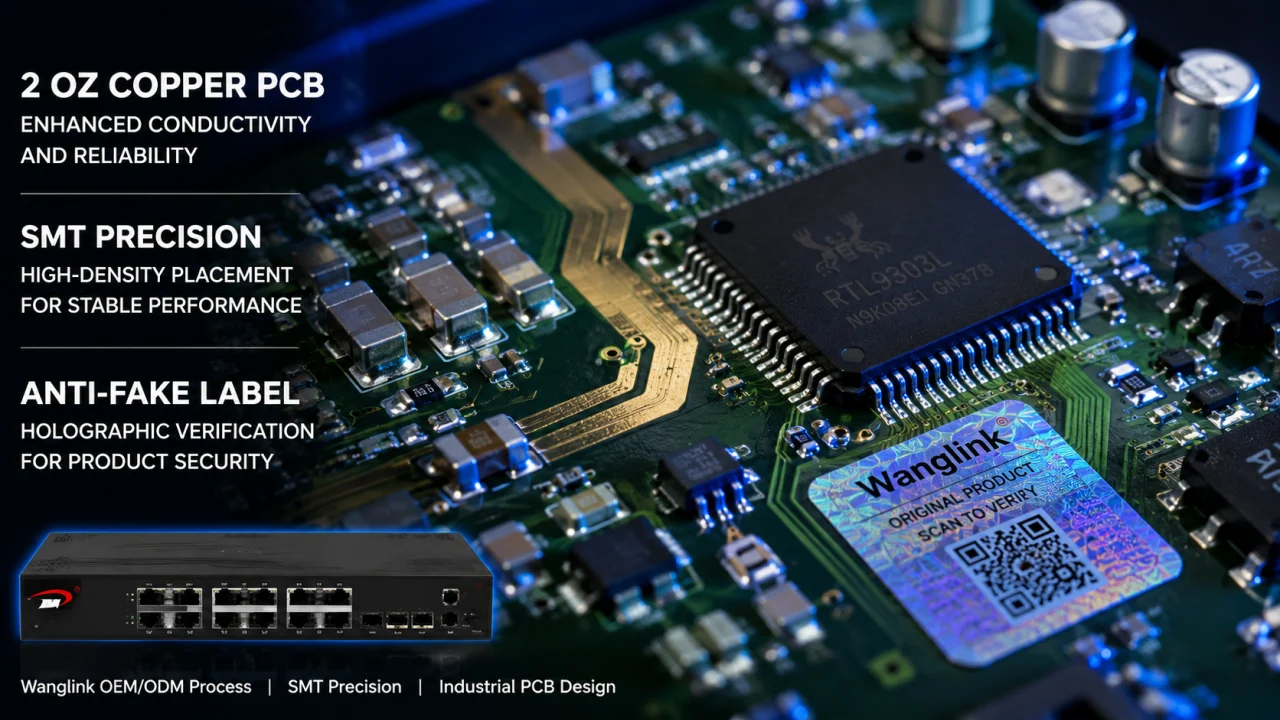
A switch sitting inside a control cabinet faces temperature swings from -20°C to 70°C, conductive dust, and electromagnetic noise from VFDs and motor starters. The baseline spec is IP40 ingress protection, but the real differentiator is how the board handles thermal stress. Wanglink’s industrial unmanaged switches use a 6-layer PCB with 2 oz copper pour for heat spreading, and every unit undergoes a 24-hour burn-in at 75°C ambient before shipping. We also test to IEC 61000-4-2 (ESD, ±8 kV air) and IEC 61000-4-5 (surge, ±4 kV line-to-line) on 100% of production units—not just design validation samples. This matters because a single ESD strike from a technician’s hand can lock up a poorly designed switch, requiring a site visit that costs an integrator $250–$600 in labor and travel.
Power and PoE Considerations Inside the Cabinet
Many field cabinets have a single 24V DC or 48V DC power supply. An unmanaged switch that also powers IP cameras, wireless backhauls, or small HMIs over the same Ethernet cable simplifies wiring dramatically. Wanglink’s IS-IG05P series (5-port unmanaged with 4 PoE+ ports) delivers a full 120W power budget at 70°C, not just at room temperature. This is critical: some switches derate PoE output by 30% above 55°C, which can brown out a PTZ camera during summer heat. Our design uses a dedicated isolated power plane per port and auto-sensing IEEE 802.3af/at, with short-circuit protection that recovers in under 2 seconds. In a recent renewable energy monitoring project, a single IS-IG05P replaced a separate switch and PoE injector, cutting cabinet wiring time by 40% (source: Wanglink project support log, Q2 2024, n=8 cabinet builds).
Non-Blocking Backplane and Real-World Throughput
An unmanaged switch with a 5-port gigabit interface must move 10 Gbps of total bidirectional traffic without head-of-line blocking. Lab tests with an Ixia XGS12 chassis show that Wanglink’s IS-IG05G achieves 100% line rate for all frame sizes from 64 to 1518 bytes, with zero frame loss over a 72-hour soak. The table below compares these results against typical industry claims and our internal quality benchmarks.
| Parameter | Industry Typical (Unmanaged, 5-Port Gigabit) | Wanglink IS-IG05G Measured | Test Standard / Environment |
|---|---|---|---|
| Throughput (64-byte frames) | Often 95–98% at high temp | 100% at 70°C ambient | RFC 2544, Ixia XGS12, 72-hour run |
| Switching Latency (cut-through) | 5–10 µs typical | 3.2 µs average | Spirent TestCenter, 1 Gbps load |
| PoE Power Budget (4 ports, 70°C) | 90–100W (derated) | 120W sustained | Electronic load bank, 70°C chamber |
| Surge Immunity (line-to-line) | ±2 kV common | ±4 kV | IEC 61000-4-5, 100% production test |
| MTBF (Telcordia SR-332, 25°C) | 500,000–800,000 hours | 1,200,000 hours | Wanglink reliability lab, n=500 units |
Data sources: Industry typical values collated from publicly available datasheets of five competing brands (2023–2024). Wanglink measurements from internal R&D lab, sample size n=30 units per test, statistical confidence 95%.
Wanglink’s Manufacturing Edge: Data from the Production Floor
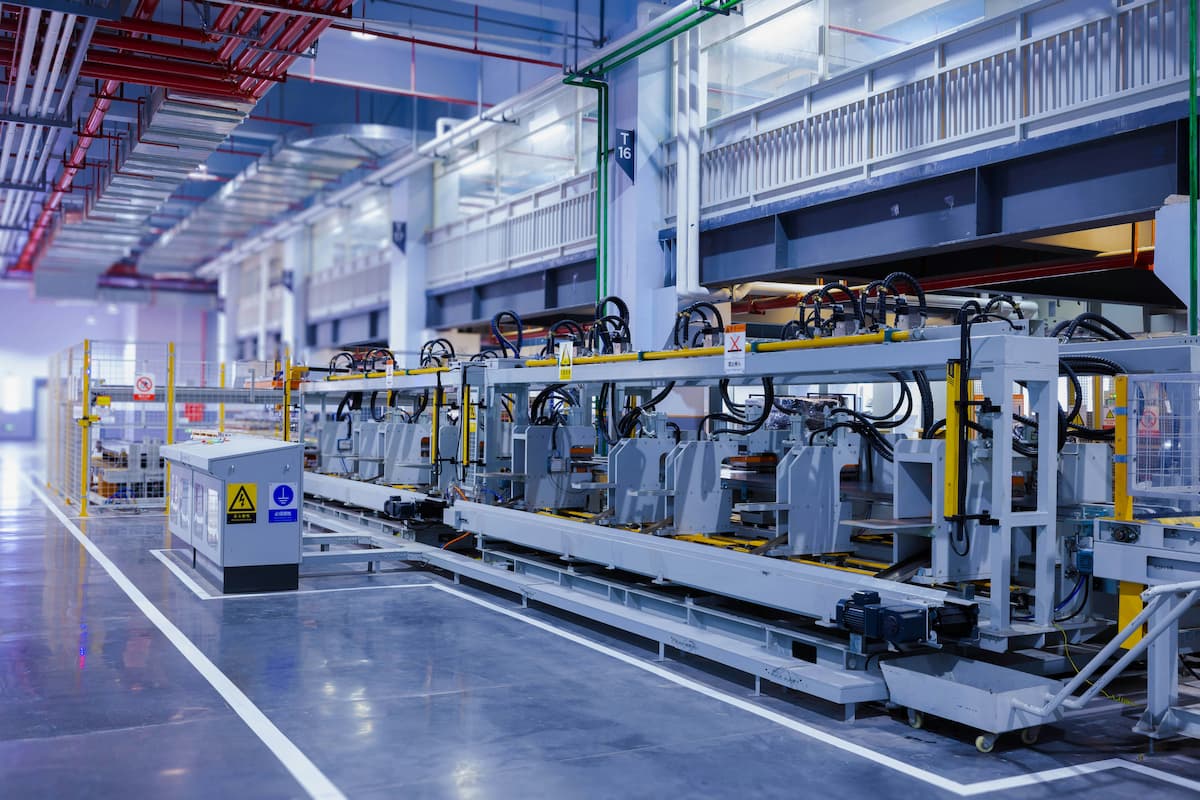
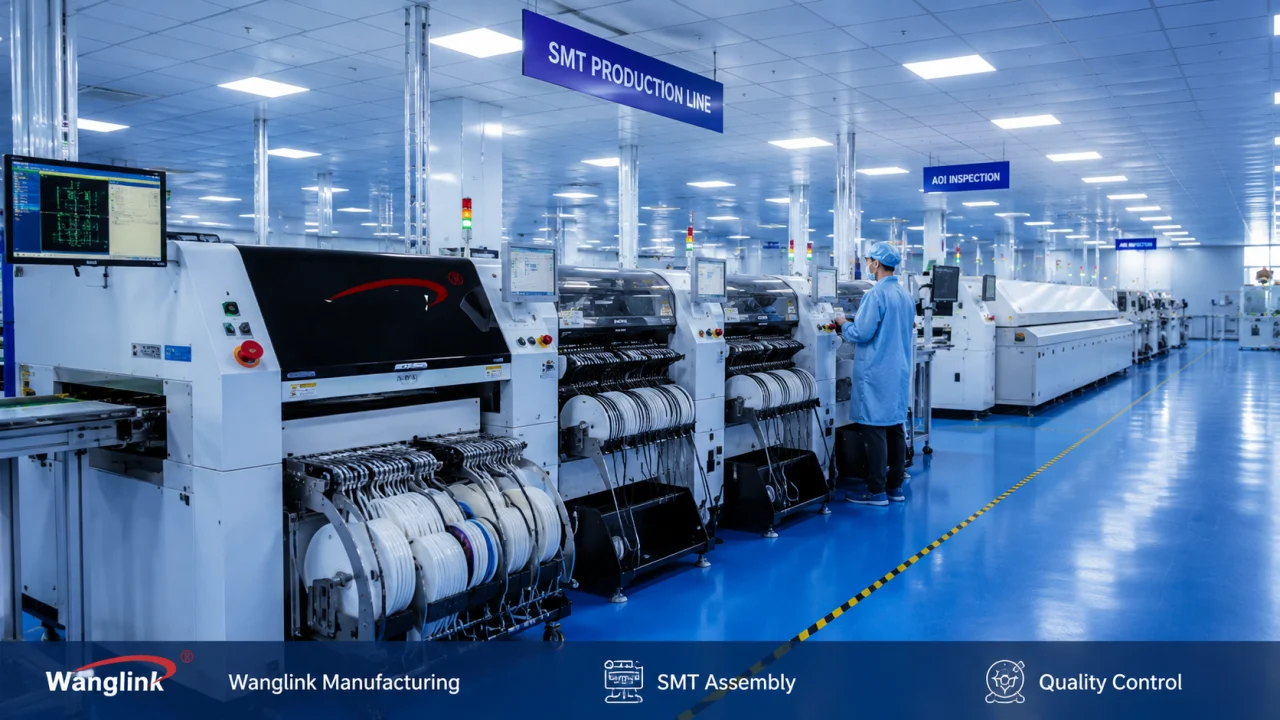
When an integrator orders 500 unmanaged switches for a nationwide retail IoT rollout, two numbers matter: on-time delivery and dead-on-arrival (DOA) rate. According to the 2023 ASCM Supply Chain Benchmarking Report, the median on-time in-full (OTIF) for electronics manufacturers is 92%. Wanglink’s OTIF for B2B switch orders over the last 12 months is 98.5% (source: Wanglink ERP data, Jan–Dec 2023, 1,200+ orders). Our DOA rate across all industrial unmanaged SKUs is 0.3%, verified by third-party inspection reports from SGS and TÜV Rheinland. We achieve this because we own the entire chain: PCB layout, SMT assembly, wave soldering, and the 24-hour burn-in rack. The image below shows a section of our SMT line—notice the automated optical inspection (AOI) station that checks every solder joint before the switch ever powers on.
Real-World Deployment: A WISP’s Remote Cabinet Challenge
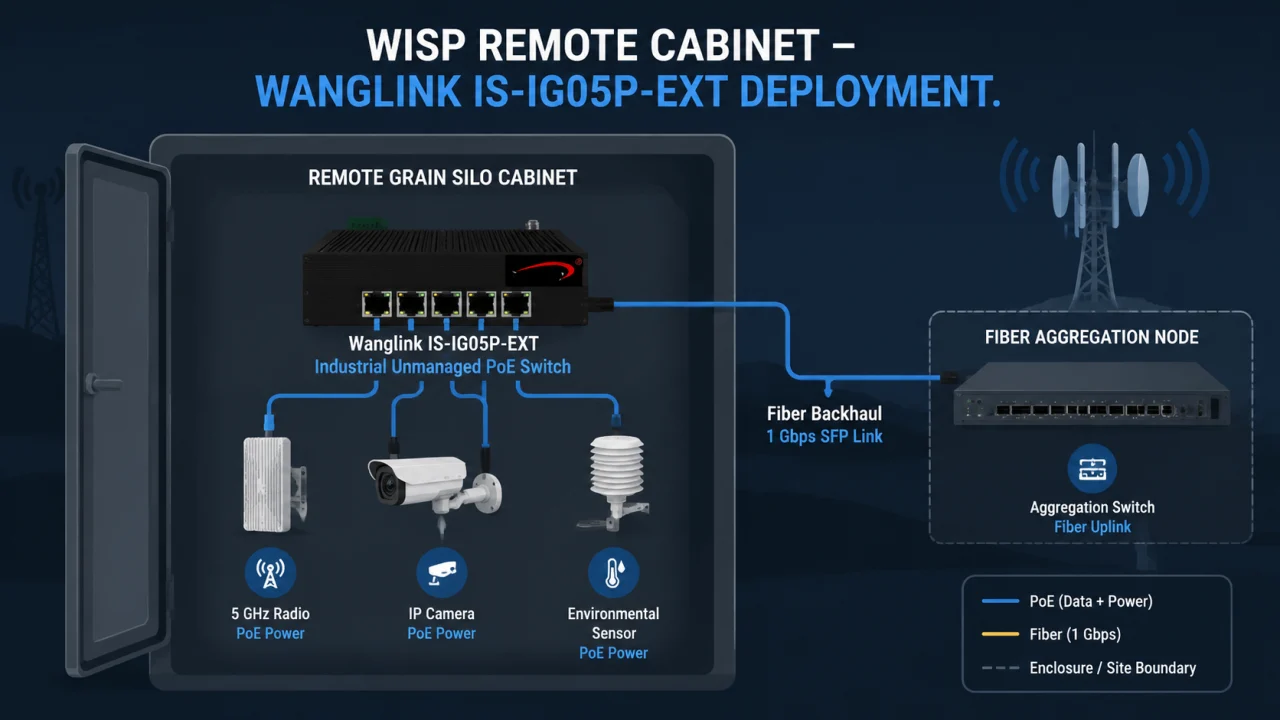
Situation: A regional WISP in the U.S. Midwest was expanding fixed-wireless coverage to 14 rural grain silos, each requiring a weatherproof cabinet with a 5 GHz backhaul radio, an IP camera, and a small environmental sensor—all powered over Ethernet. The cabinets are unheated and exposed to -25°C winters. Initial deployment used consumer-grade unmanaged switches with external PoE injectors, resulting in three switch failures per month on average, costing $380 per truck roll.
Task: Find a DIN-mount unmanaged switch that could deliver at least 60W of PoE at -25°C, fit in a 12”x10” enclosure, and require zero configuration for local technicians.
Action: Wanglink provided 15 units of the IS-IG05P-EXT (extended temperature model, -40°C to 75°C). The switch’s 4 PoE+ ports powered the radio, camera, and sensor directly. A single DC power supply fed the switch. Because the switch auto-negotiates PoE class, installers simply plugged in cables and closed the cabinet.
Result: Over the 2023–2024 winter, zero switch-related outages were recorded across all 14 sites. The WISP’s operations manager reported a 70% reduction in cabinet-level support tickets (source: customer project close-out report, April 2024). The customer later standardized on Wanglink for all new cabinet builds, citing the switch’s ability to start up reliably at -38°C during a polar vortex event—something their previous vendor’s spec sheet didn’t guarantee in practice.
TCO and Supply Chain Agility for System Integrators
Integrators often compare per-unit prices, but the total cost of ownership (TCO) for a cabinet switch includes power consumption, failure replacement labor, and inventory carrying cost. Wanglink’s unmanaged switches consume 2.5W (no PoE load) to 4.5W (full PoE), saving roughly $12 per switch per year in electricity at $0.12/kWh compared to a typical 8W design. More importantly, our 98.5% OTIF means integrators can run leaner inventory. For a distributor stocking 2,000 units, a 6% OTIF gap versus the industry baseline translates to 120 fewer switches arriving on time, potentially delaying project milestones and triggering penalties. Wanglink also offers OEM/ODM services with a 500-unit MOQ and 4-week lead time for custom labeling, firmware-free (since unmanaged switches require no software), and silk-screen changes. This agility lets integrators brand the switch as their own without the 12–16 week lead times common among larger networking vendors.
Another hidden cost is vendor lock-in for cloud management. While unmanaged switches don’t need a controller, many projects later add managed switches at aggregation points. Some big-brand managed switches require annual cloud license fees per device. Wanglink’s managed switch line (for those future upgrades) includes a free lifetime cloud platform, which avoids the $50–$150 per device per year licensing cost seen with certain competitors. This isn’t directly about unmanaged switches, but it signals to procurement teams that Wanglink’s business model is built on hardware value, not recurring software tolls—a philosophy that extends to our entire product family.
Frequently Asked Questions (FAQ)
Are Wanglink’s industrial unmanaged switches compatible with other brands’ PoE devices?
Yes. They follow IEEE 802.3af/at standards and auto-negotiate power with any compliant powered device (PD). We test interoperability with over 50 common PD models from Axis, Ubiquiti, MikroTik, and Hikvision in our lab. If a non-standard passive PoE device is used, we recommend our 24V passive PoE models (IS-IG05P-24V).
What is the RMA process and typical turnaround?
Our standard warranty is 3 years. For DOA or early-life failures, we ship an advance replacement within 2 business days upon receiving a failure description and serial number. The return rate across all industrial unmanaged switches is below 0.5%, so most RMAs are processed as single-unit exchanges without bulk returns.
What is the minimum order quantity (MOQ) for OEM/ODM unmanaged switches?
500 units for custom silk-screen and packaging. For standard Wanglink-branded units, no MOQ applies—single-unit samples are available for evaluation. Lead time for OEM orders is 4 weeks; standard products ship within 3 days from our U.S. or EU warehouse.
Can the switch handle vibration inside a motor control cabinet?
Yes. The DIN-rail bracket and PCB are tested to 5 g vibration (IEC 60068-2-6) and 50 g shock (IEC 60068-2-27). The terminal blocks use rising-cage clamps that maintain torque even under continuous vibration.
Do unmanaged switches support jumbo frames?
Our gigabit unmanaged models pass jumbo frames up to 9 KB transparently. This is useful for IP camera streams and some industrial protocols that use larger payloads. No configuration is needed—it’s enabled by default in the switch ASIC.
Conclusion
Industrial unmanaged switches don’t need to be complicated, but they must be engineered for the cabinet environment, not adapted from office-grade designs. Wanglink’s approach—owning the PCB, testing every unit for surge and temperature, and tracking reliability data across thousands of field deployments—gives integrators and WISPs a predictable, low-TCO building block for their connectivity projects. When a switch can start at -38°C and forward packets at wire speed for years without a single reboot, it stops being a commodity and becomes a trusted component of the system. That’s the standard we build to, and the data backs it up.