
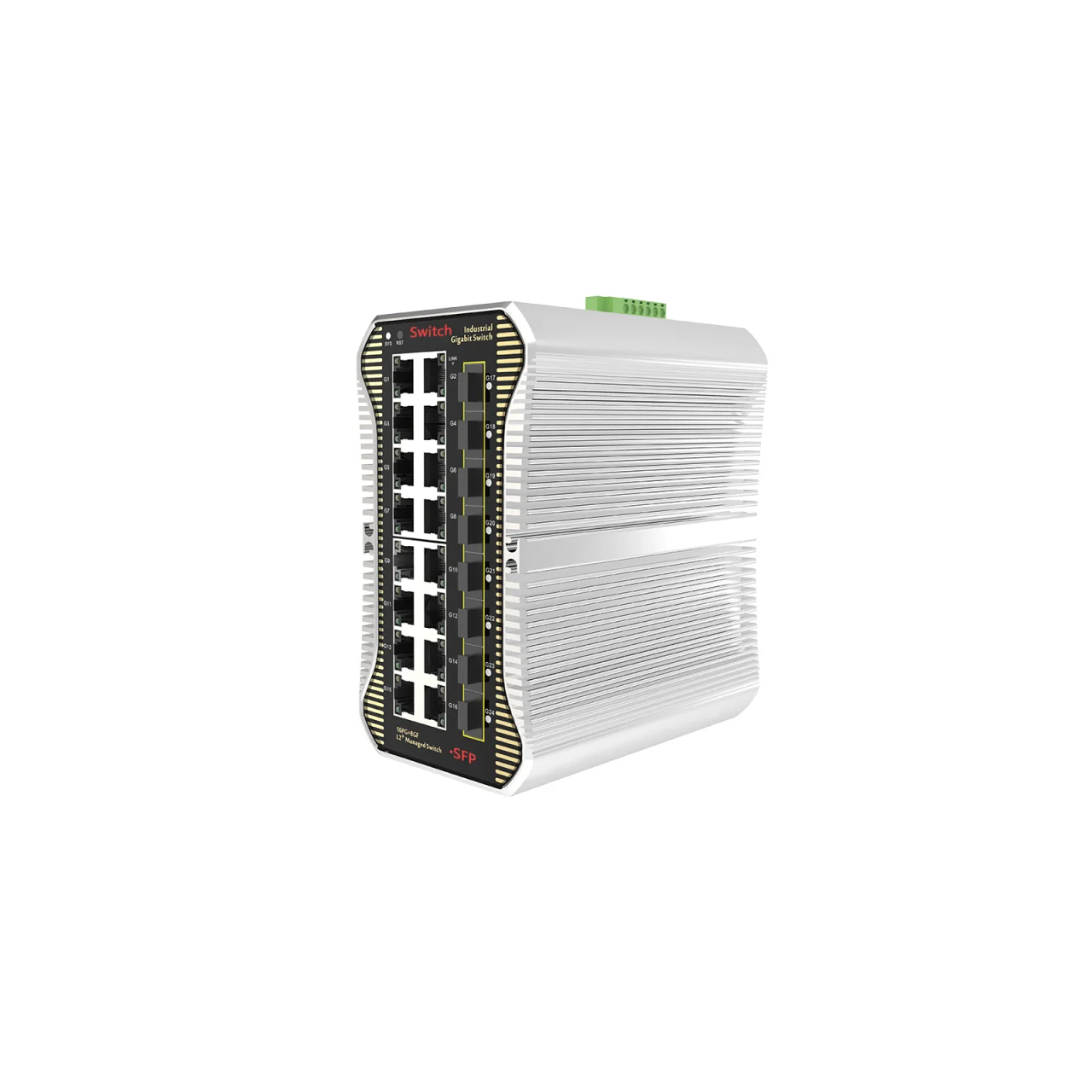
Industrial Gigabit Switching for Fiber-Connected Field Networks
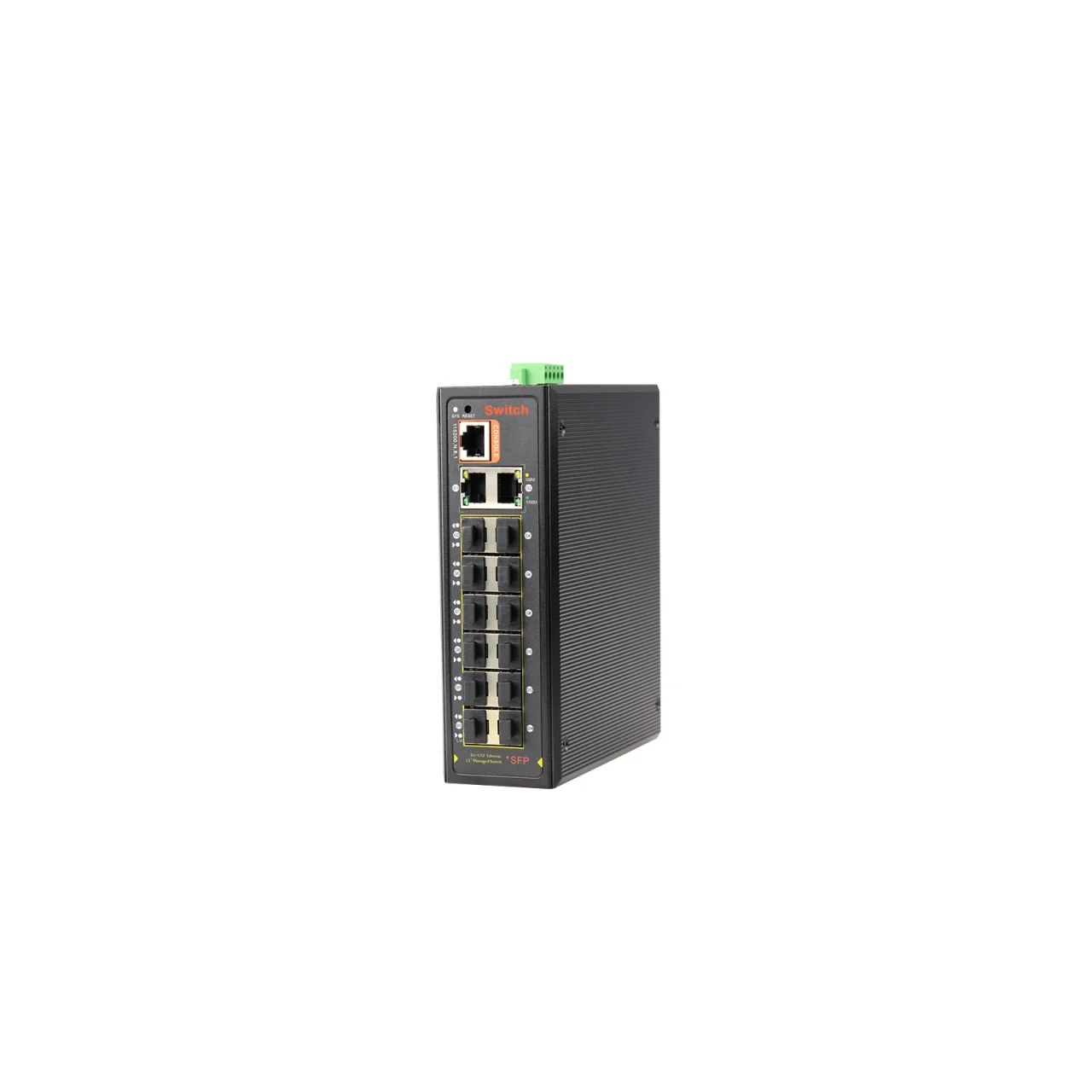
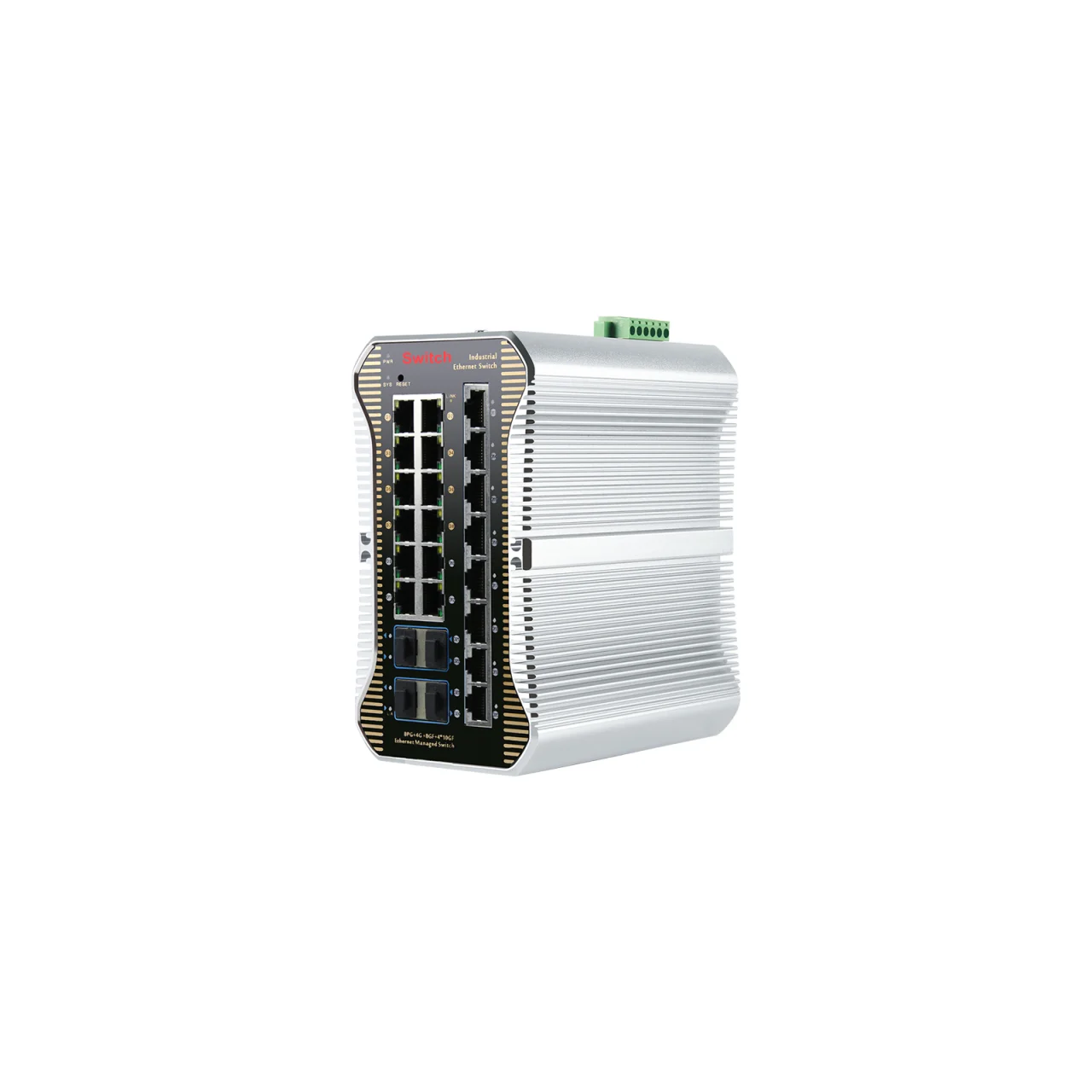
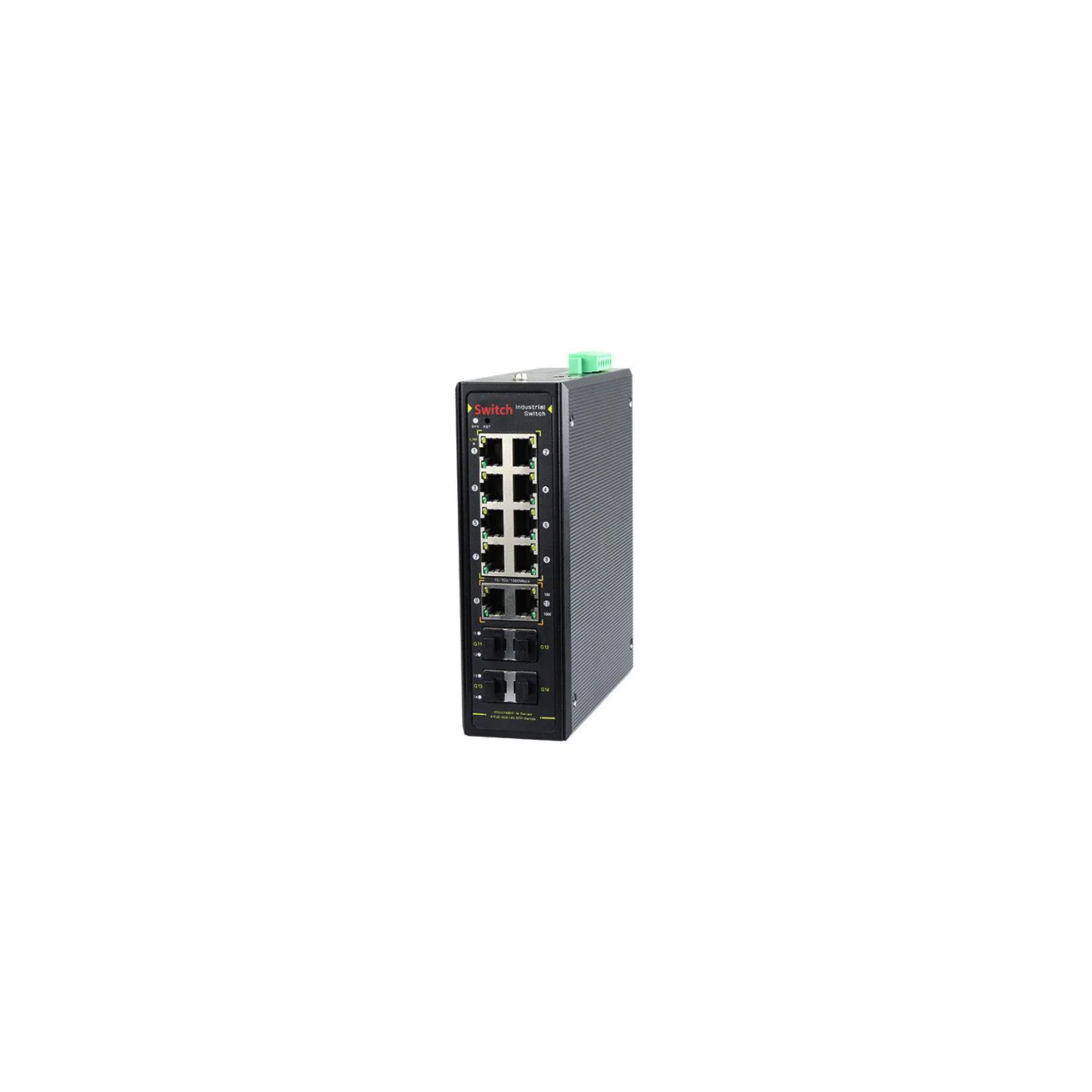
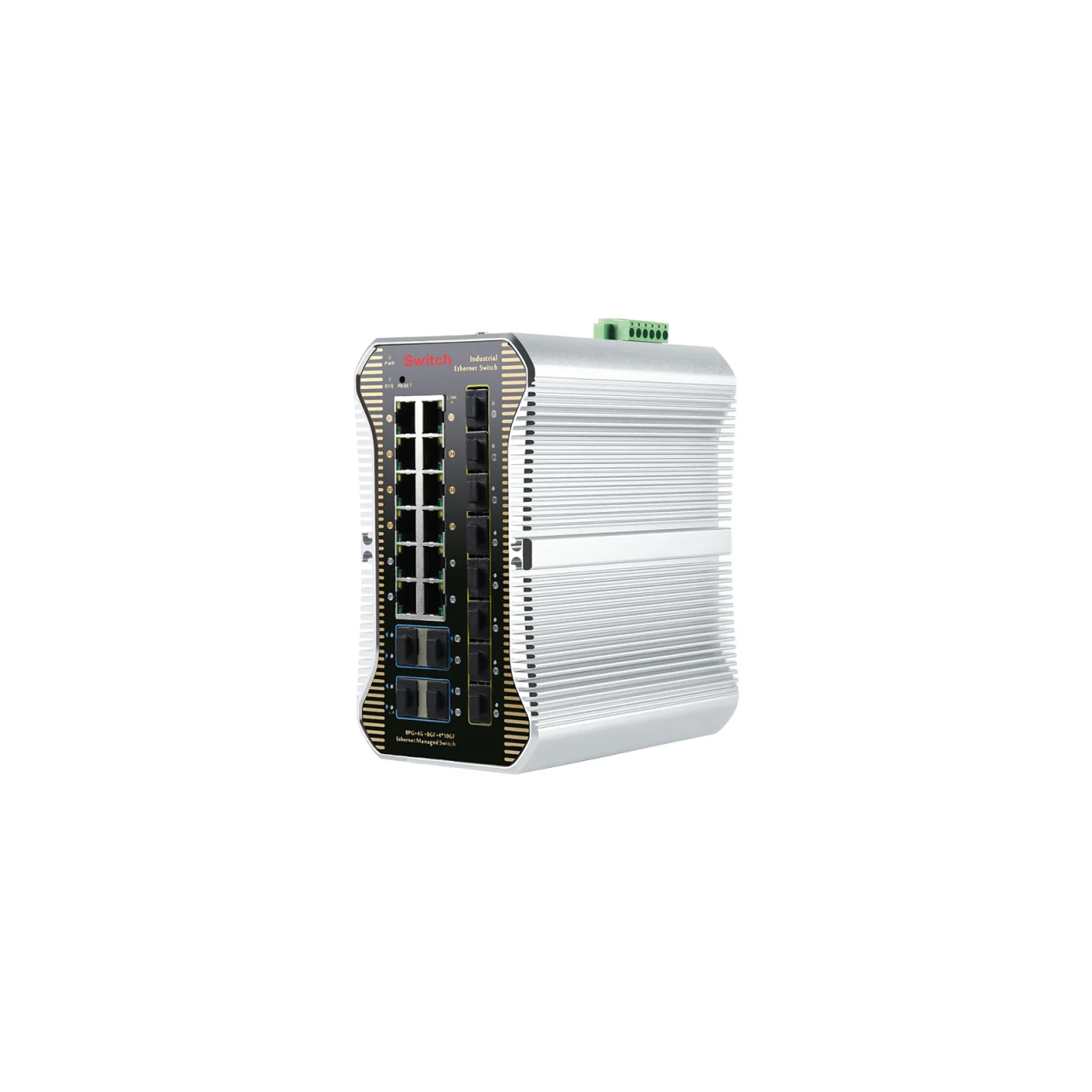
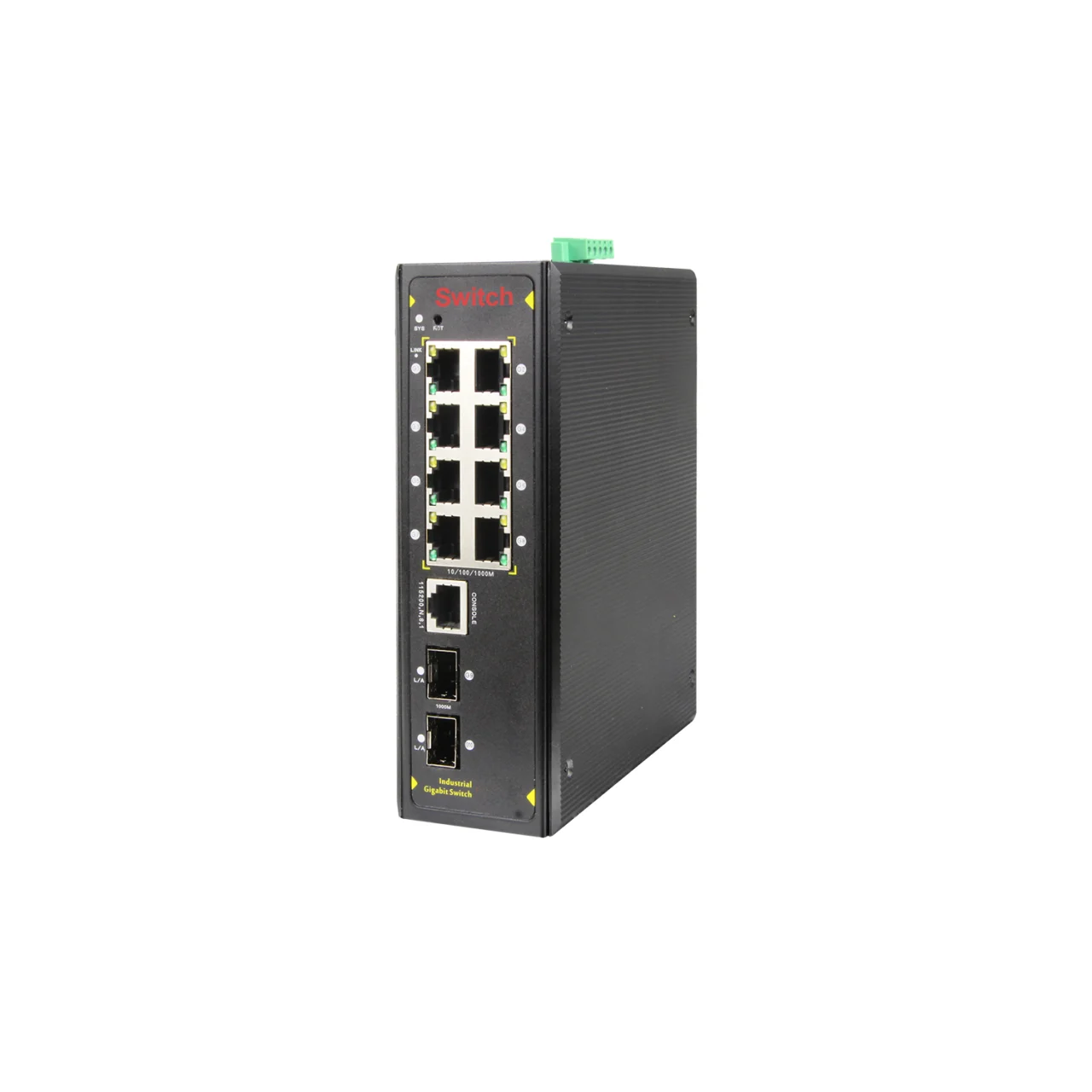
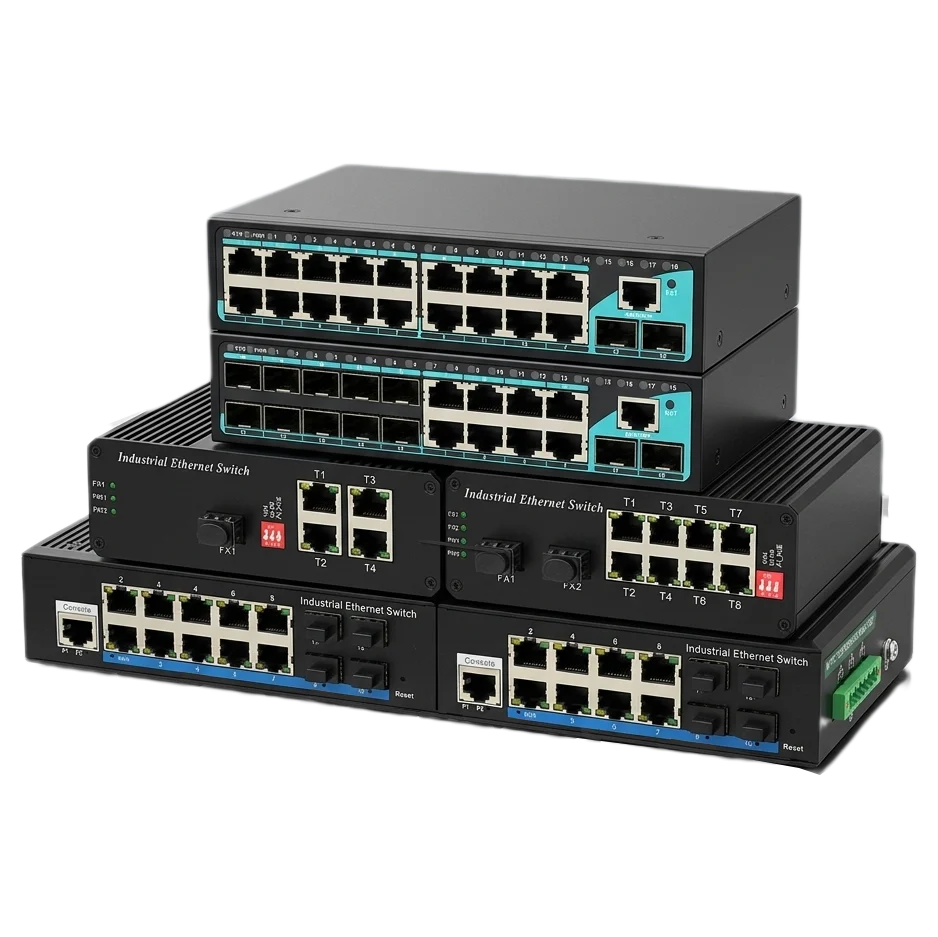
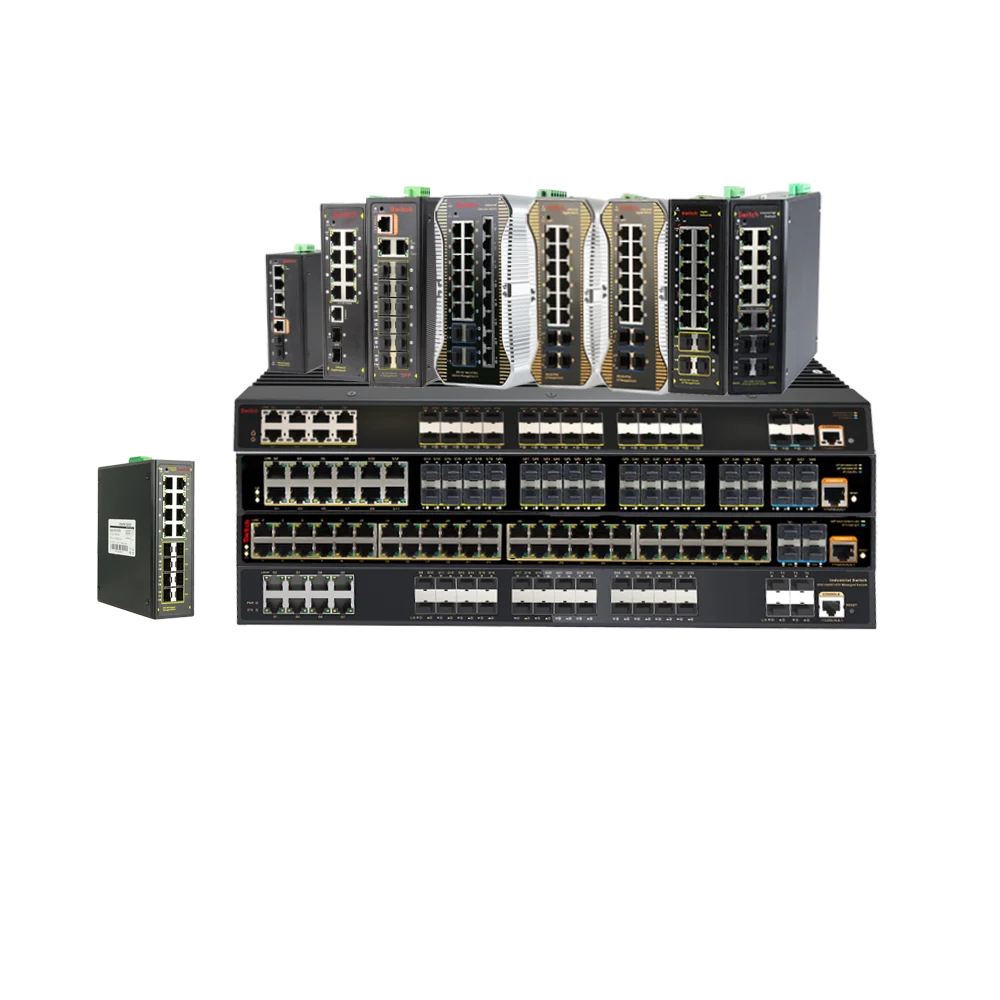
The IS700-16E8F is a 16-port full gigabit managed industrial ethernet switch DIN rail designed for industrial networks that need both copper access and long-distance fiber uplinks. It provides 16 auto-sensing 10/100/1000Base-T RJ45 ports for cameras, PLCs, access controllers, computers, and other Ethernet devices, plus 8 100/1000Base-X SFP slots for backbone connections or ring topologies. Every port supports non-blocking, wire-speed forwarding, so traffic does not slow down simply because more devices are active.
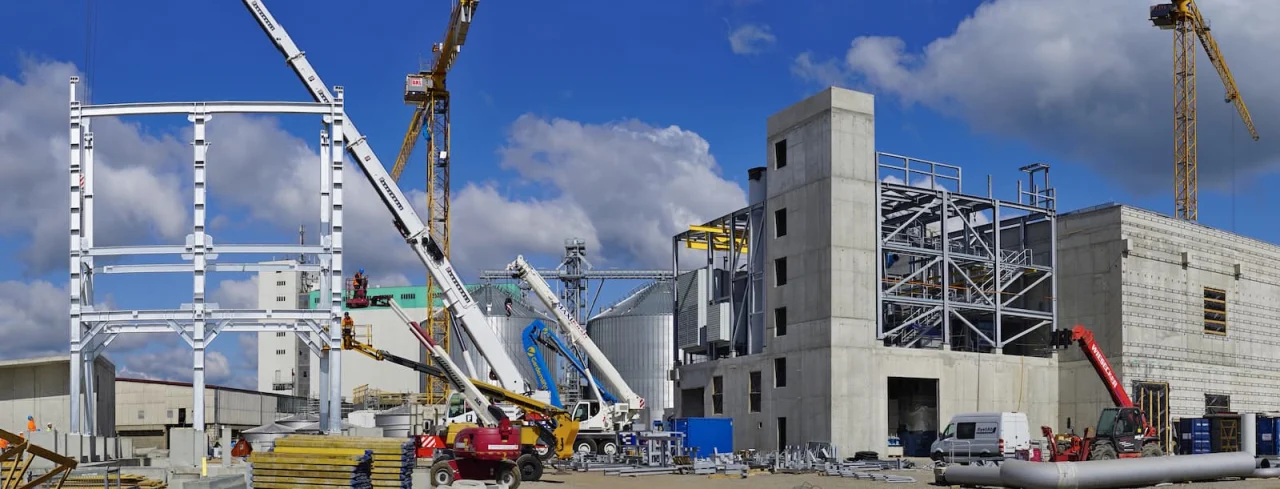
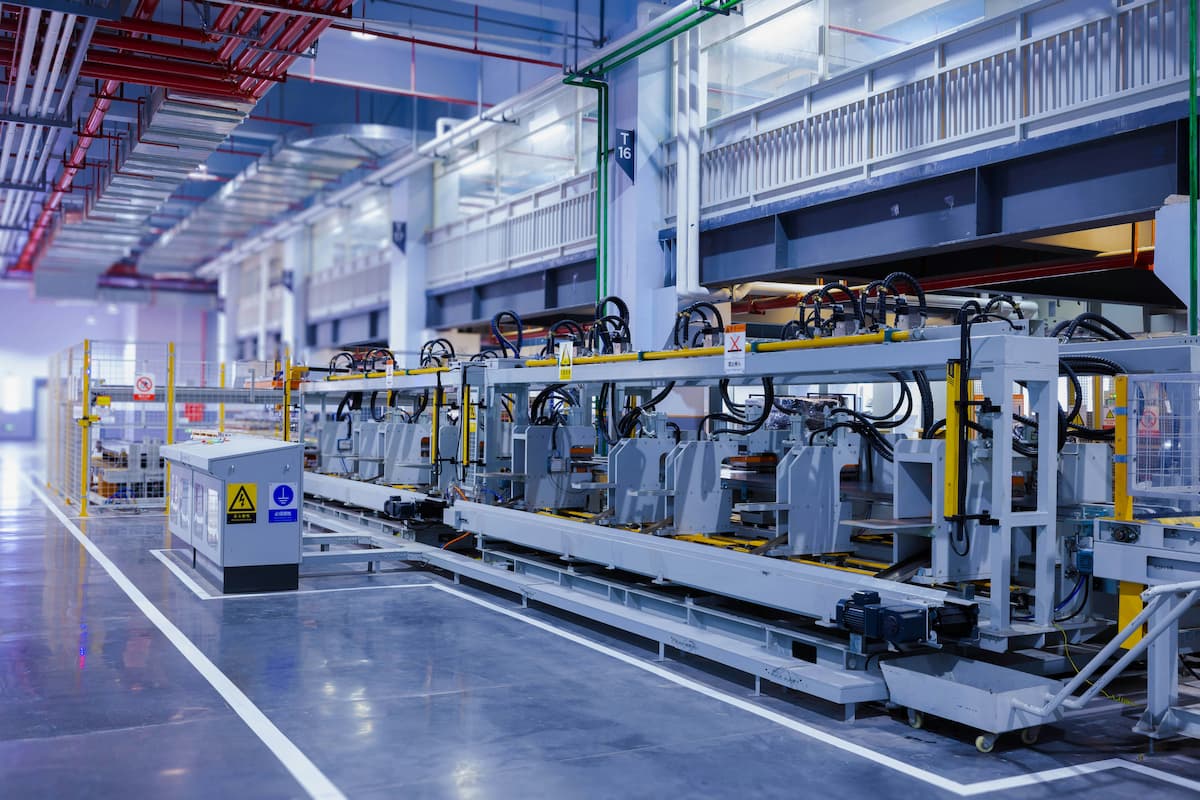
This managed industrial Ethernet switch is a practical fit for control cabinets, transportation equipment rooms, substations, mining sites, factory floors, and renewable energy installations. The DIN rail form factor helps installers keep the switch close to field devices, while the aluminum housing and fanless design reduce moving parts, dust intake, and routine maintenance. With an operating temperature range of -40°C to +80°C, the switch can stay in service where standard office networking equipment is not a safe choice.
Flexible Fiber Uplinks and Fast Network Recovery
The 8 SFP uplink ports accept optional single-mode or multimode gigabit optical modules. Depending on the selected optics, fiber links can cover short cabinet-to-cabinet runs or distances up to 120 km. This gives network planners room to expand without replacing the switch when the site layout changes. SFP port expansion also supports 2.5G optical modules for specific ring applications, subject to module compatibility and network design.
For networks where a cable break cannot bring down communications, the switch supports STP, RSTP, MSTP, and ITU-T G.8032 ERPS. ERPS recovery can be less than 20 ms, while spanning-tree protocols support common redundant uplink designs. Link aggregation is available through LACP or static aggregation, helping increase uplink capacity and maintain service when a member link fails. These functions are useful for IP surveillance, rail signaling, industrial control, and power monitoring systems that need predictable recovery instead of manual troubleshooting.
Layer 2+ Control Without Unnecessary Complexity
Operations teams can manage the switch through HTTPS web management, CLI, console, Telnet, SSH, SNMP, and related tools. IPv4 and IPv6 management, static routes, LLDP, NTP, system logs, port statistics, cable diagnosis, Ping testing, CPU monitoring, and memory monitoring help administrators identify problems without visiting every cabinet. The L2+ feature set also includes 802.1Q VLANs, protocol- and MAC-based VLANs, Voice VLAN, QinQ, Access/Trunk/Hybrid port modes, IGMP and MLD snooping, and multicast VLAN support.
For segmented industrial networks, administrators can apply ACL rules from Layer 2 through Layer 4, including MAC addresses, IP addresses, protocols, TCP/UDP ports, port ranges, and VLANs. 802.1X, MAC authentication, RADIUS, IP-MAC-VLAN-port binding, DHCP snooping, ARP inspection, port isolation, IP source protection, and storm control help limit unauthorized access and contain faulty or excessive traffic. QoS supports 802.1p and DSCP mapping, eight queues per port, rate limiting, packet filtering, and SP, WRR, or SP+WRR scheduling. This helps protect control traffic and video streams when the network is busy.
Built for Installation and Long-Term Service
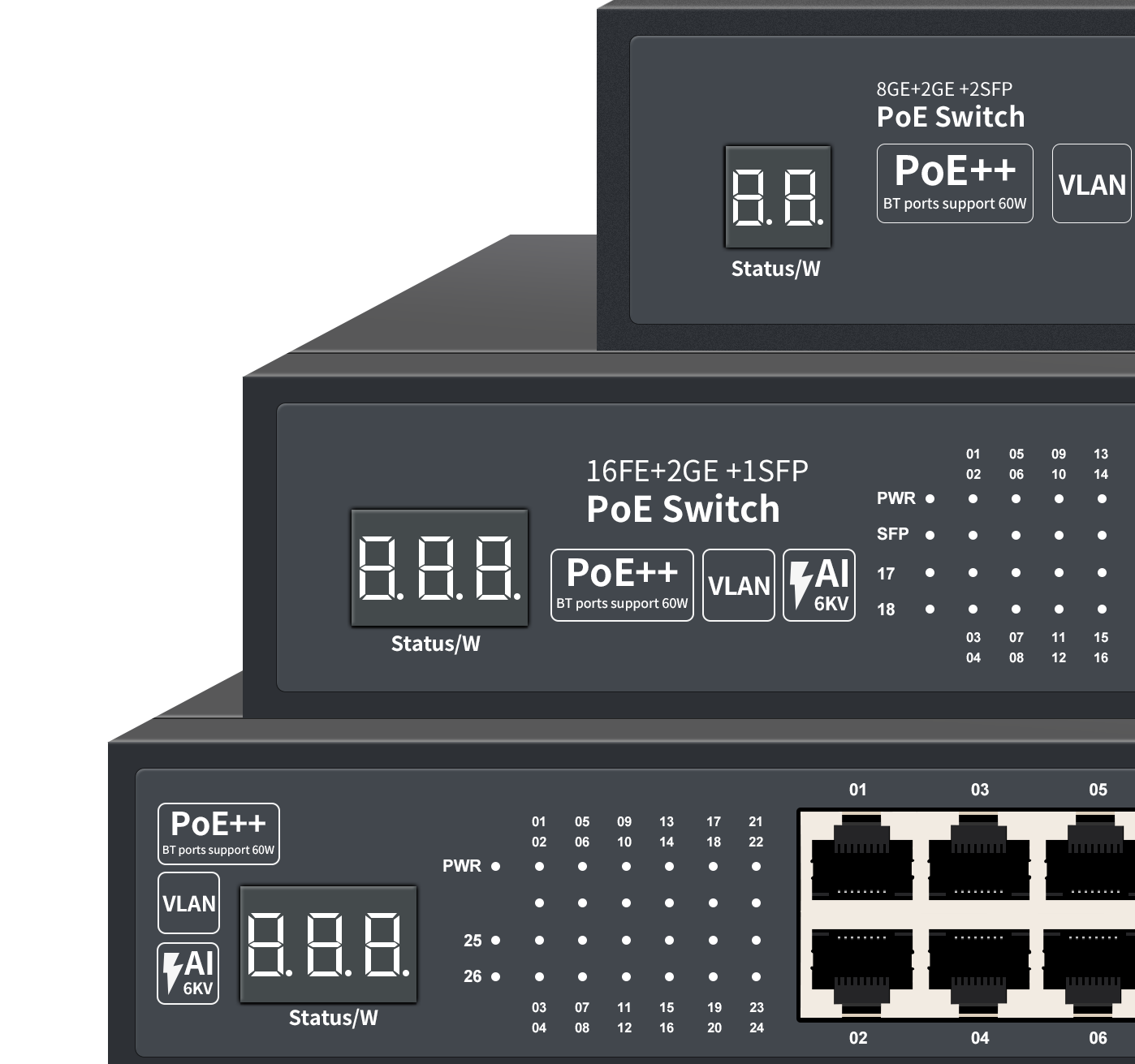
The switch uses redundant 12-48VDC Phoenix terminal power inputs with reverse-polarity protection and supports a fault alarm connection for cabinet monitoring. A 6 kV port lightning protection rating and industrial EMC protection help reduce risk from electrical disturbances, while front-panel LEDs show power, system, copper link, and fiber activity at a glance. It can be installed on a DIN rail or desktop, and the reset button provides one-key factory recovery when a configuration issue requires a clean restart.
For IT administrators, system integrators, and industrial network buyers, this 16-port full gigabit managed industrial ethernet switch DIN rail offers a straightforward way to build a copper-and-fiber network with VLAN segmentation, redundant paths, access control, and centralized monitoring. It is a suitable choice for intelligent transportation, rail transit, utilities, mining, petroleum, shipping, metallurgy, and green energy projects where stable communications and manageable field deployment matter.