

Managed Industrial Fiber Switching for Dense Access Networks
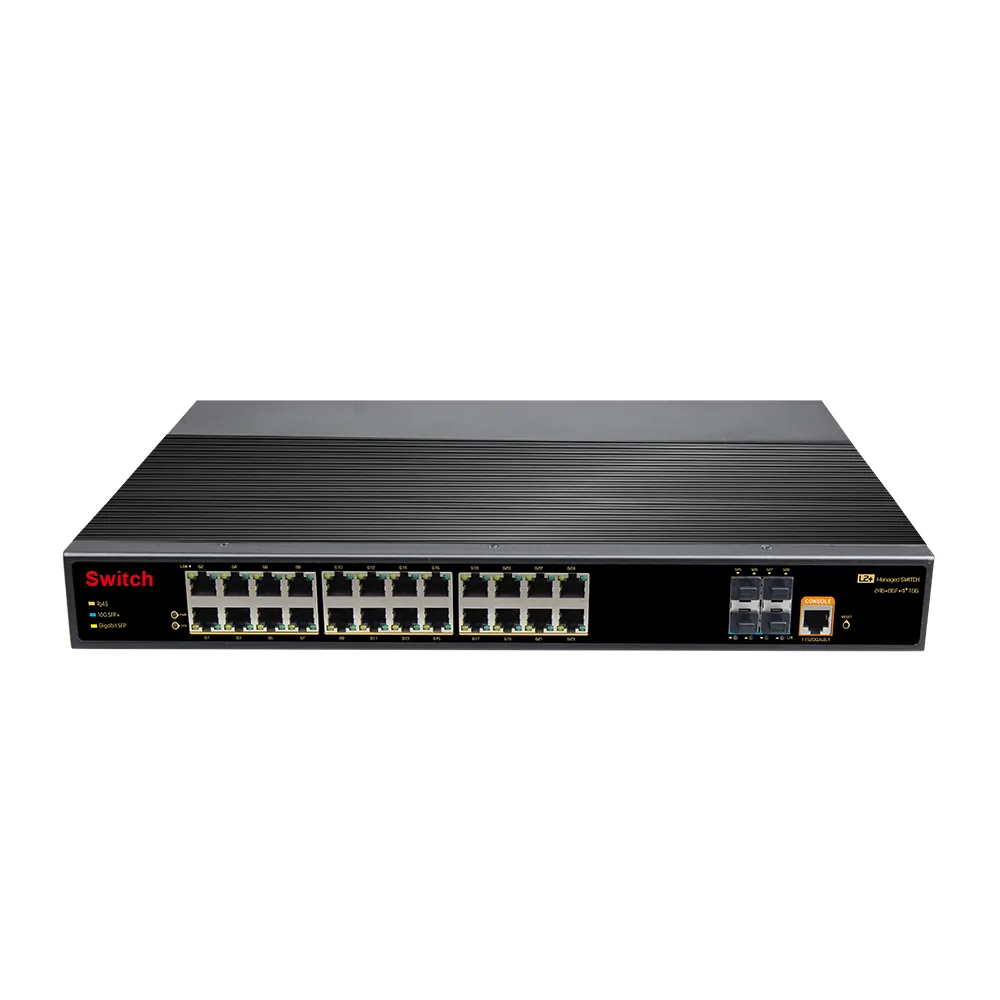
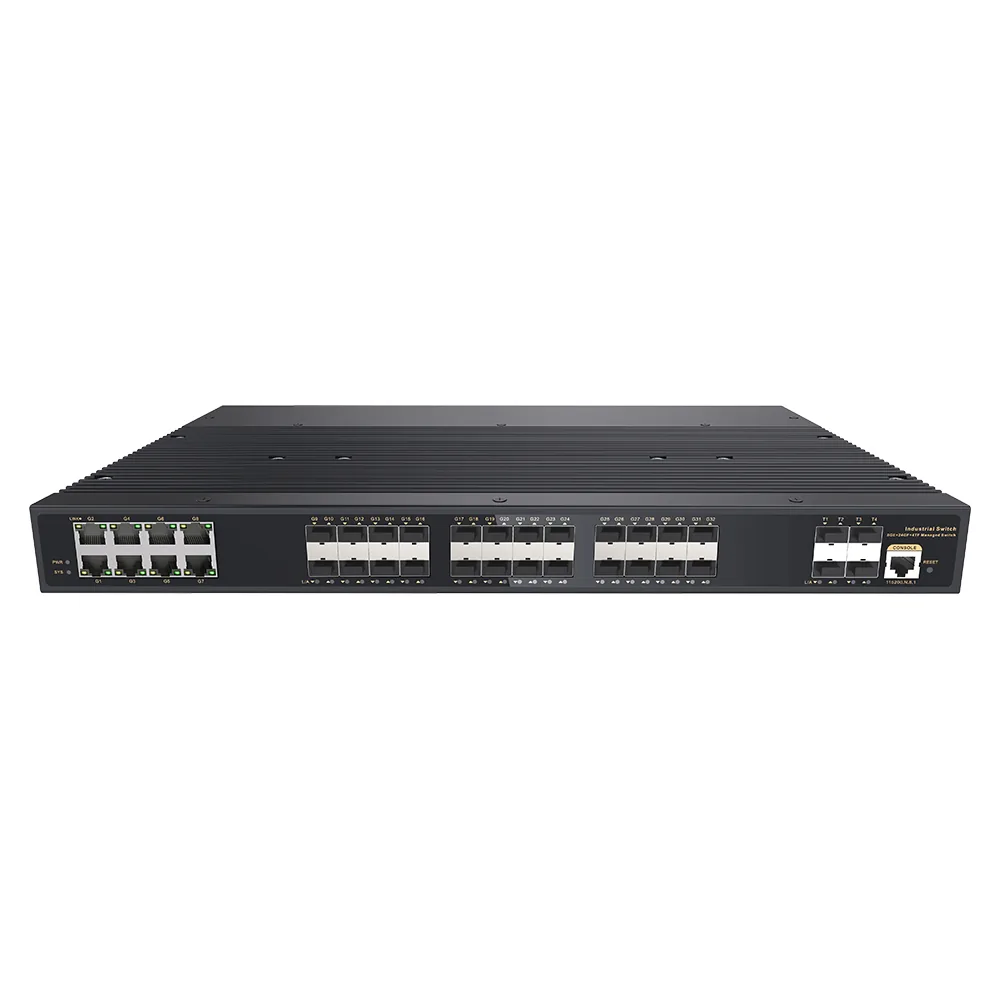
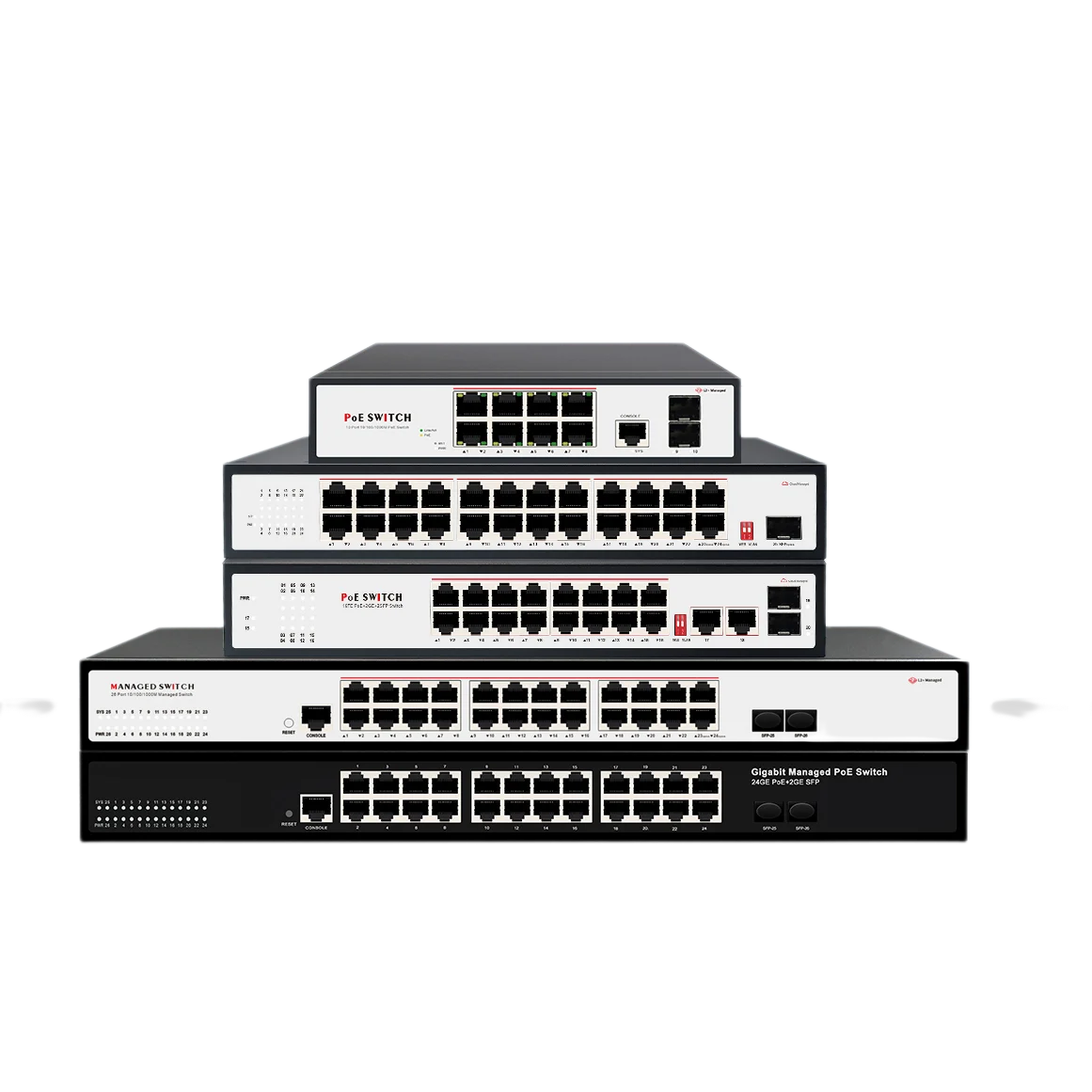
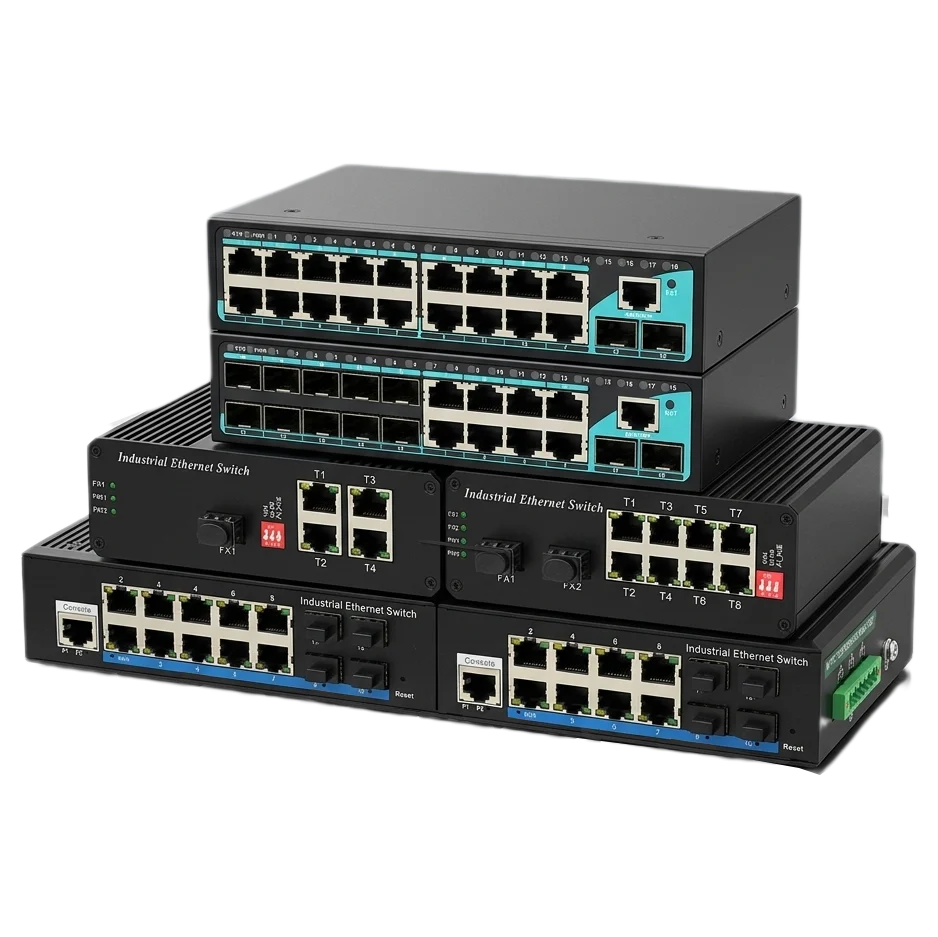
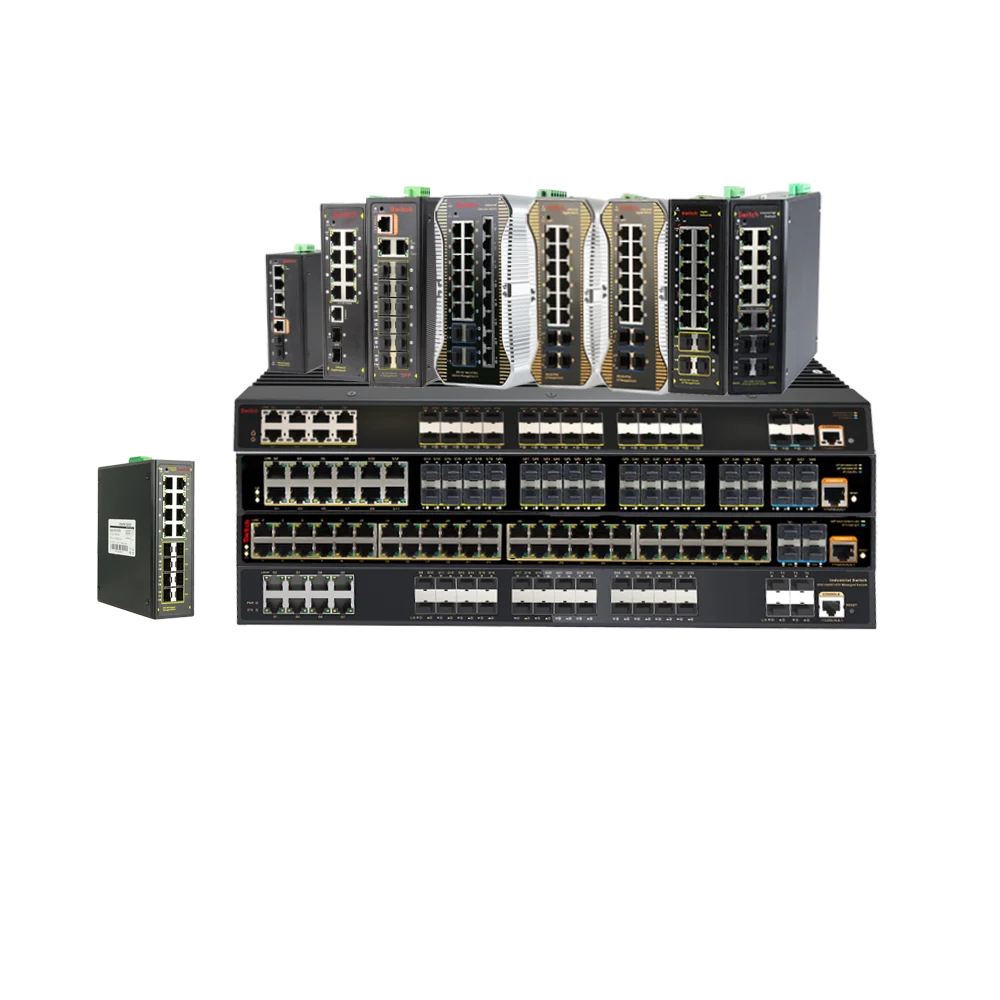
The IS730-12E28F4F-60W is built for network teams that need many fiber access ports without giving up 10G backbone capacity. It combines 12 Gigabit copper ports, 28 100/1000M SFP slots and 4 1/10G SFP+ slots in a 1U rack-mount chassis. Every port supports wire-speed forwarding, so traffic from cameras, PLCs, access switches, servers and control systems can move through the network without an artificial switching bottleneck.
Some buyers search for a 36-port 10G uplink managed industrial fiber switch with 8 RJ45 24 SFP 4 SFP+. This model uses a different, higher-density configuration: 44 Ethernet ports in total, including 12 RJ45, 28 SFP and 4 SFP+ interfaces. That distinction matters when planning rack space, fiber termination and future port capacity. The switch does not include SFP modules, allowing the installer to select single-mode or multimode optics, single-fiber or dual-fiber modules, and transmission distances suited to the site.
Practical Control for Industrial and Enterprise Networks
As an L2+ managed industrial fiber switch, it gives administrators control over segmentation, routing and traffic behavior rather than leaving the network to basic plug-and-play forwarding. IEEE 802.1Q VLAN, protocol-based VLAN, MAC-based VLAN, Voice VLAN and QinQ help separate production equipment, video streams, office users and management traffic. Access, Trunk and Hybrid port modes make it easier to connect mixed infrastructure during phased upgrades.
Static routes and a default route support simple IPv4/IPv6 management and Layer 3 soft-routing requirements at the network edge. LACP and static link aggregation can combine up to 8 ports in an aggregation group, with up to 22 groups available. This is useful where a distribution switch, server cluster or surveillance platform needs more bandwidth or a backup link without redesigning the whole network.
Fast Recovery When a Link Fails
Industrial sites rarely have the luxury of stopping production to troubleshoot a cable. STP, RSTP and MSTP support standard spanning-tree designs, while ITU-T G.8032 ERPS can restore ring communication in less than 20 ms under the stated network conditions. Up to 250 rings can be configured, with up to 254 devices in each ring. For transportation, power, mining, petroleum, marine and renewable-energy deployments, this gives maintenance teams a practical way to keep critical communication running when one path is interrupted.
Security and Traffic Handling That Fit Daily Operations
Network access can be controlled with 802.1X and MAC authentication, AAA/RADIUS, IP-MAC-VLAN-Port binding, DHCP snooping, ARP inspection, IP source protection and port isolation. L2 to L4 ACL rules can filter traffic by MAC address, IP address, protocol, TCP/UDP port, port range and VLAN. Storm control, MAC learning limits and anti-DoS protection help contain abnormal traffic before it affects other devices.
For video surveillance, multicast control is equally important. IGMP Snooping, MLD Snooping and multicast VLAN functions reduce unnecessary multicast flooding. QoS provides eight output queues per port, 802.1p/DSCP mapping, priority marking and SP, WRR or SP+WRR scheduling. Administrators can prioritize voice, control data or real-time video instead of treating every packet the same.
Designed for Rack Deployment and Remote Maintenance
The galvanized steel enclosure supports desktop or 19-inch 1U rack installation. It operates from -40°C to +80°C and uses active fan cooling for demanding industrial environments. The built-in 60W AC power supply accepts 100–240V input, while two 12V DC inputs provide an additional power path with reverse-polarity protection and automatic switching when the AC input is unavailable. The FAULT alarm contact and front-panel LEDs help technicians check power, system and link status before opening a cabinet or travelling to a remote site.
Web management over HTTPS, CLI through Console, Telnet or SSH, and SNMP v1/v2c/v3 support different operation habits. LLDP, RMON, system logs, NTP, port statistics, CPU and memory monitoring, ping testing and cable diagnostics help isolate faults faster. For small and medium-sized businesses, industrial integrators and IT administrators, this managed 10G uplink fiber switch provides the port density and management depth needed for a stable network that can be expanded without replacing the core chassis.