
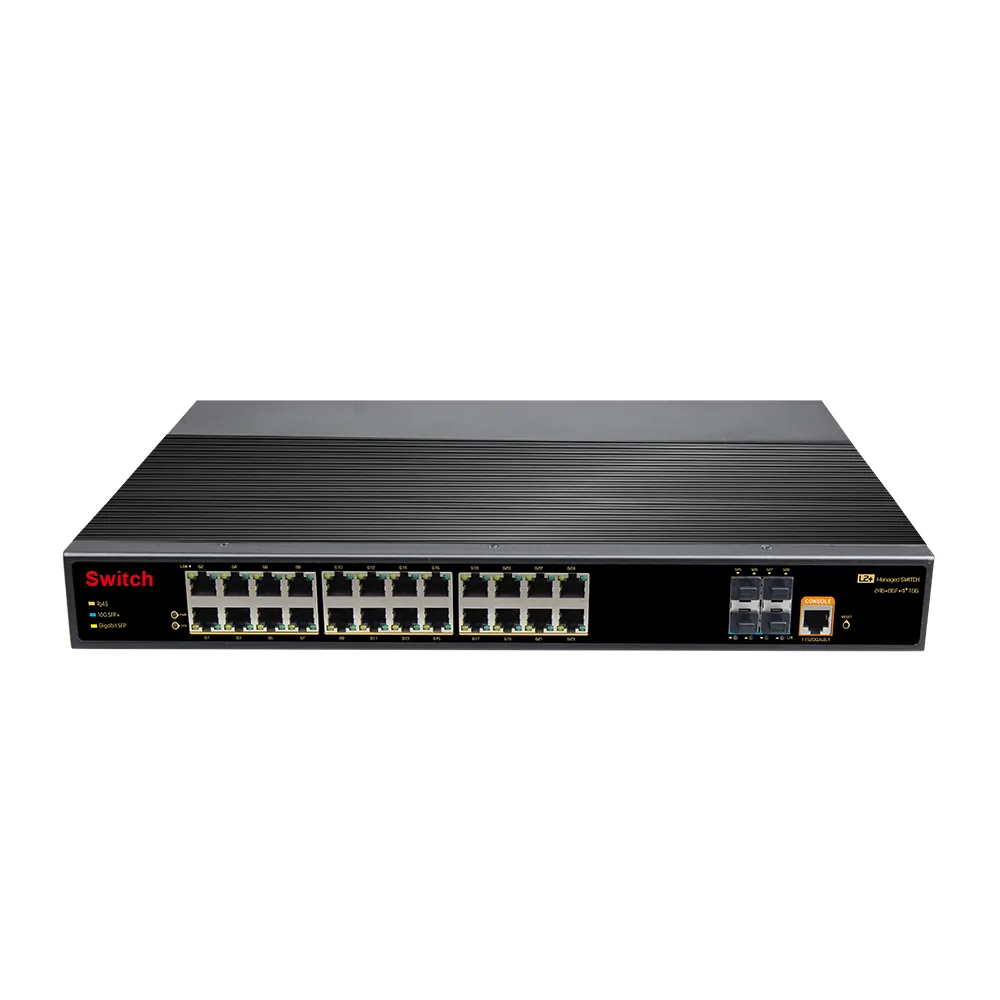
Managed Gigabit Access with 10G Fiber Uplinks
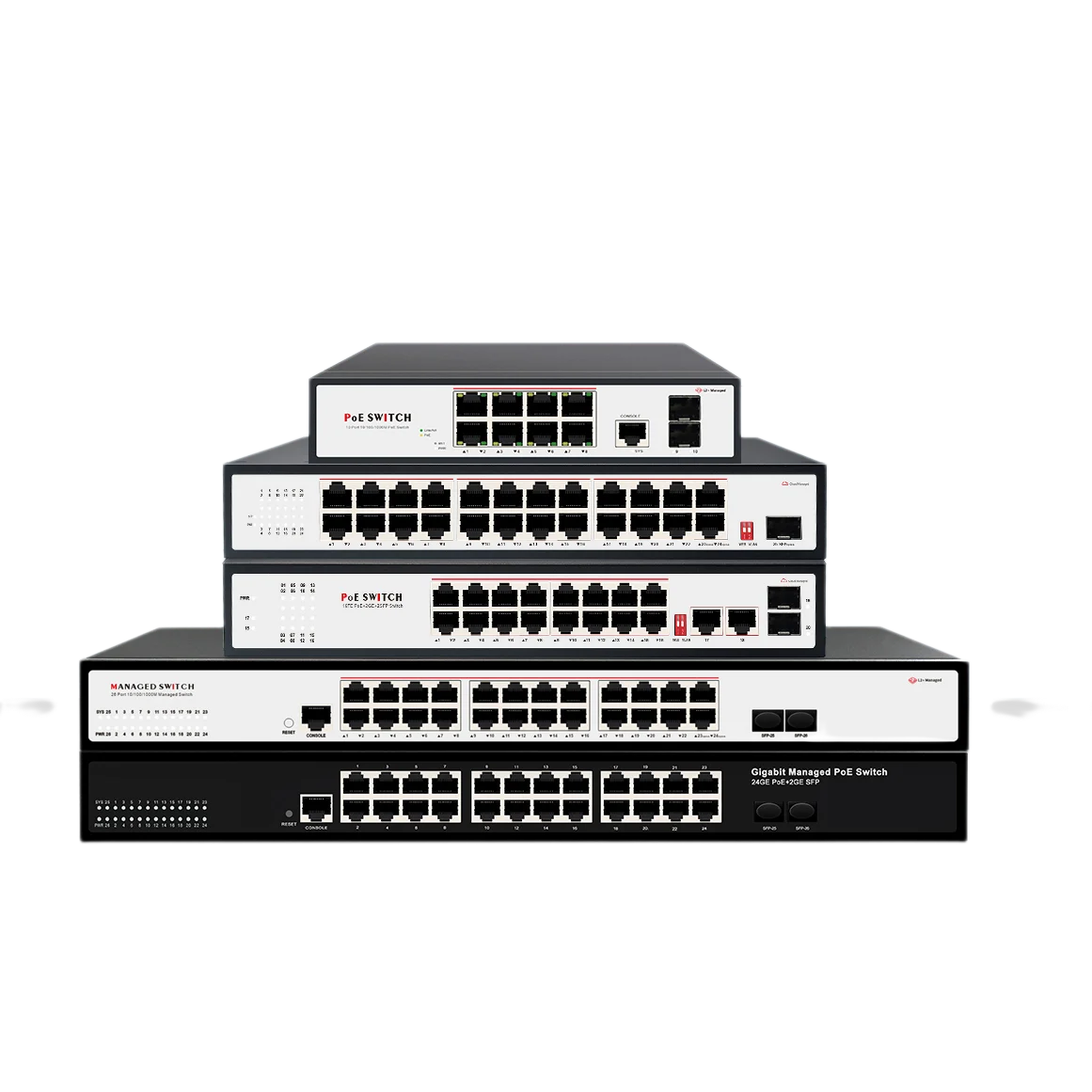
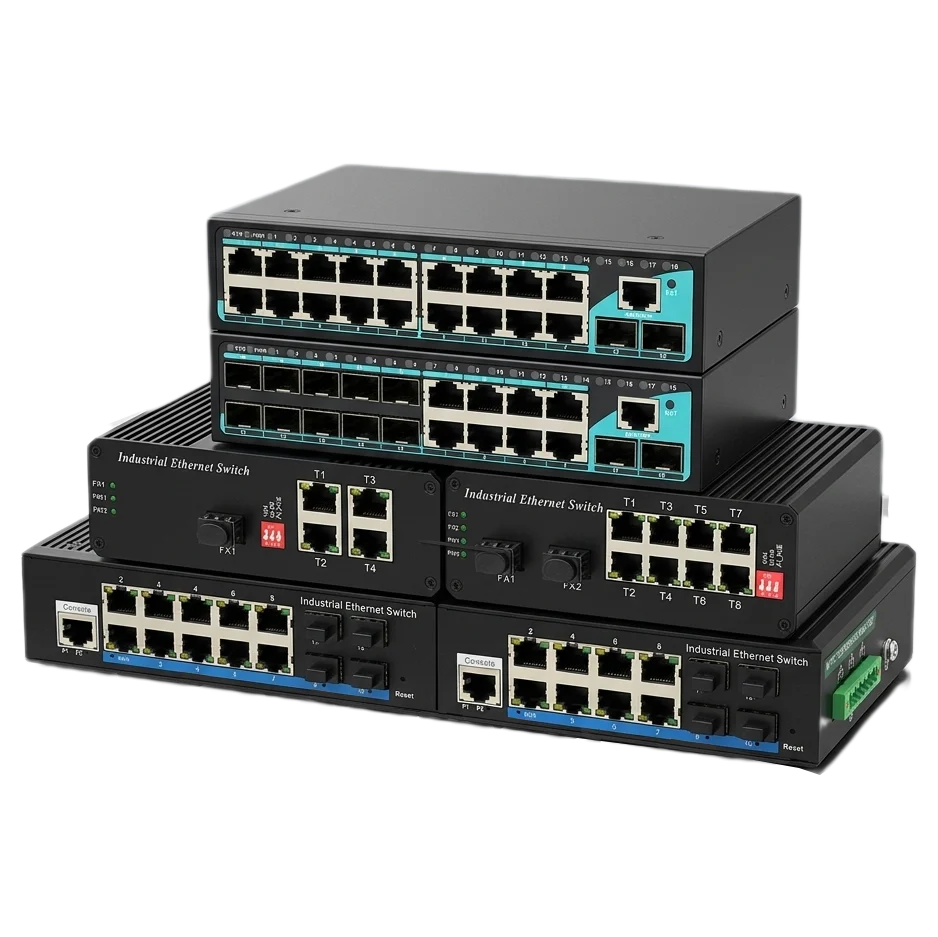
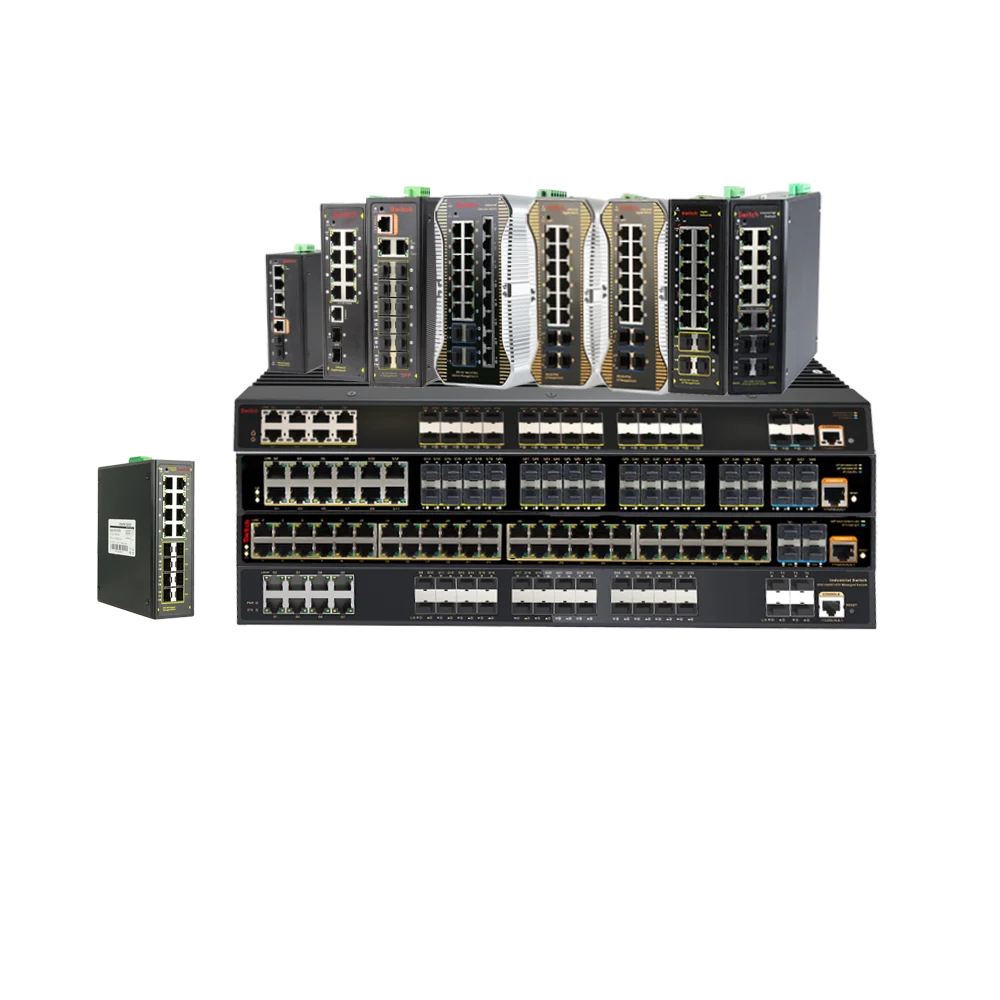
The IS730-24E4F-60W is built for industrial networks that need more than basic connectivity. It provides 24 auto-sensing 10/100/1000Base-T RJ45 ports for cameras, controllers, access points, workstations and other Ethernet devices, plus 4 SFP+ slots that support 1G or 10G optical uplinks. With non-blocking switching, the switch can move traffic at wire speed, helping prevent an access-layer bottleneck when several Gigabit devices share the same aggregation link.
Some project searches use the phrase 36-port 10G uplink managed industrial ethernet switch with 8 SFP 4 SFP+ rack mount. For accurate planning, this model has 24 copper access ports and 4 shared 1/10G SFP+ uplink slots. It is a practical choice when the actual requirement is a 24-port Gigabit managed industrial Ethernet switch with high-speed fiber aggregation. Optical modules are ordered separately and can be selected for single-mode or multimode links, single-fiber or dual-fiber transmission, and distances up to 120 km according to the installed module.
Designed for Industrial Network Operations
In a factory line, traffic from PLCs, industrial computers and IP cameras often has different priorities. The switch lets network administrators separate services with 802.1Q VLAN, Voice VLAN, protocol-based VLAN, MAC-based VLAN and QinQ. QoS supports 802.1p and DSCP mapping, eight output queues per port, and SP, WRR or SP+WRR scheduling. This gives control traffic a better path when video or file transfers consume bandwidth.
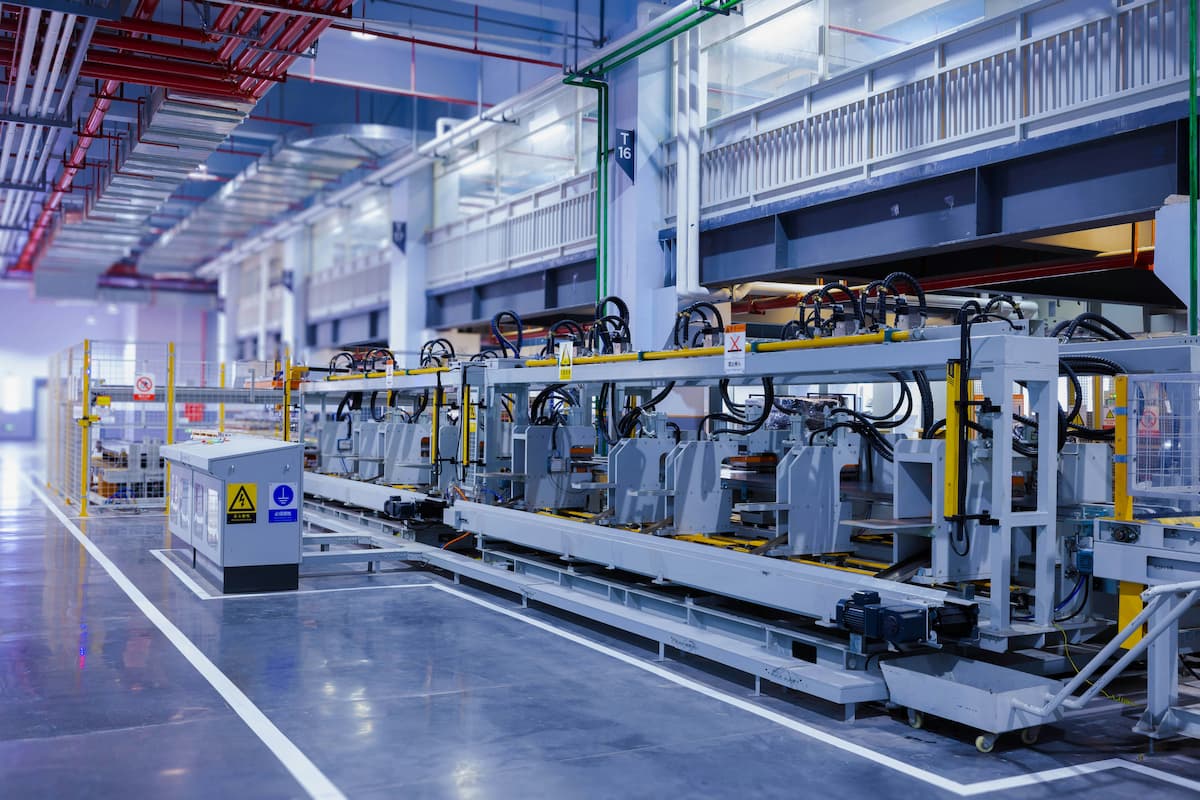
For ring networks, ERPS based on ITU-T G.8032 can restore communication in less than 20 ms after a link failure. STP, RSTP and MSTP are also available for conventional redundant topologies. Static aggregation and LACP combine links between switches or servers, while IGMP/MLD snooping helps keep multicast traffic from flooding every port. These functions are useful in transportation, power, mining, oil and gas, marine, metallurgy, renewable energy and plant automation deployments where a short interruption can affect production or monitoring.
Security and Troubleshooting Without Extra Appliances
Access control can be applied from Layer 2 to Layer 4 using MAC addresses, IP addresses, protocols, TCP/UDP ports, VLANs and other matching rules. IEEE 802.1X, MAC authentication, RADIUS, IP-MAC-VLAN-Port binding, DHCP snooping, ARP inspection, port isolation and storm control help reduce unauthorized access and abnormal traffic. Administrators can use HTTPS, SSH, SNMPv1/v2c/v3, CLI, LLDP, system logs and RMON for routine management. Cable diagnosis, ping testing, CPU and memory monitoring, port statistics and one-key factory recovery make fault checks easier for a small IT team.
Rack-Ready Hardware for Harsh Locations
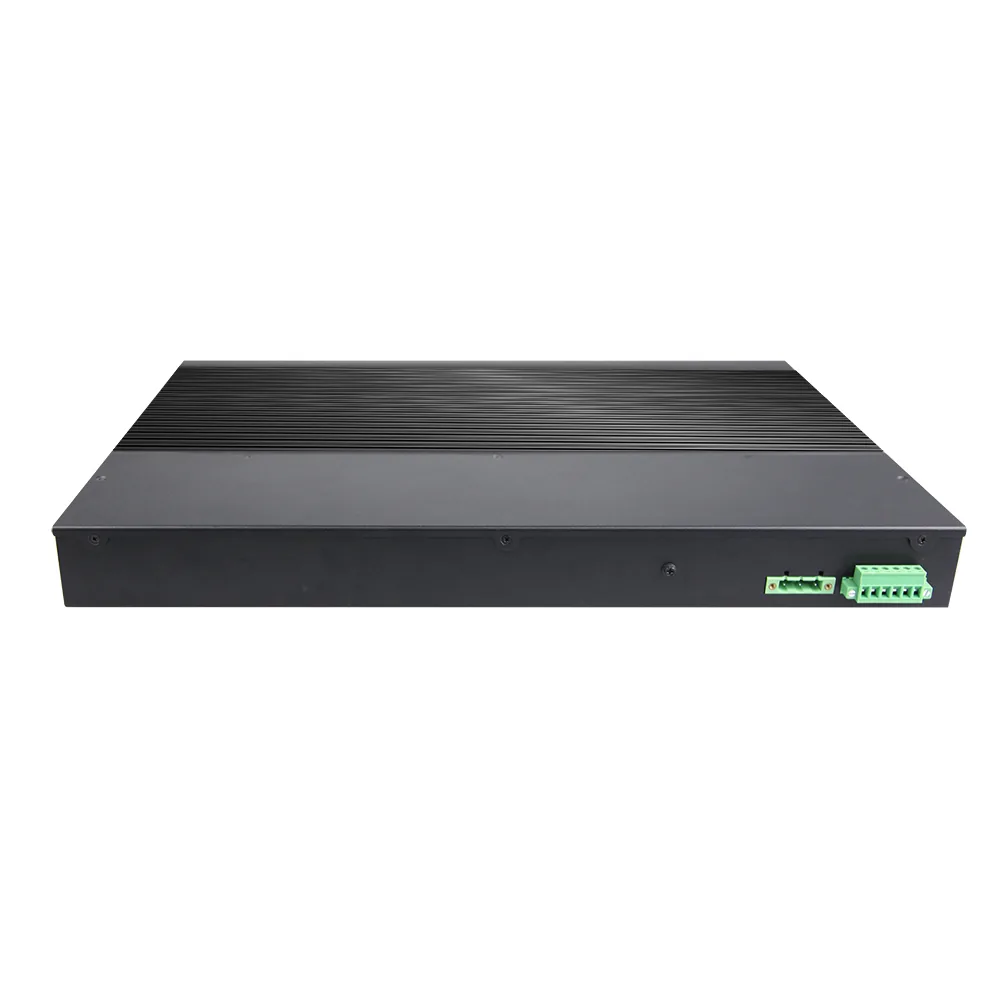
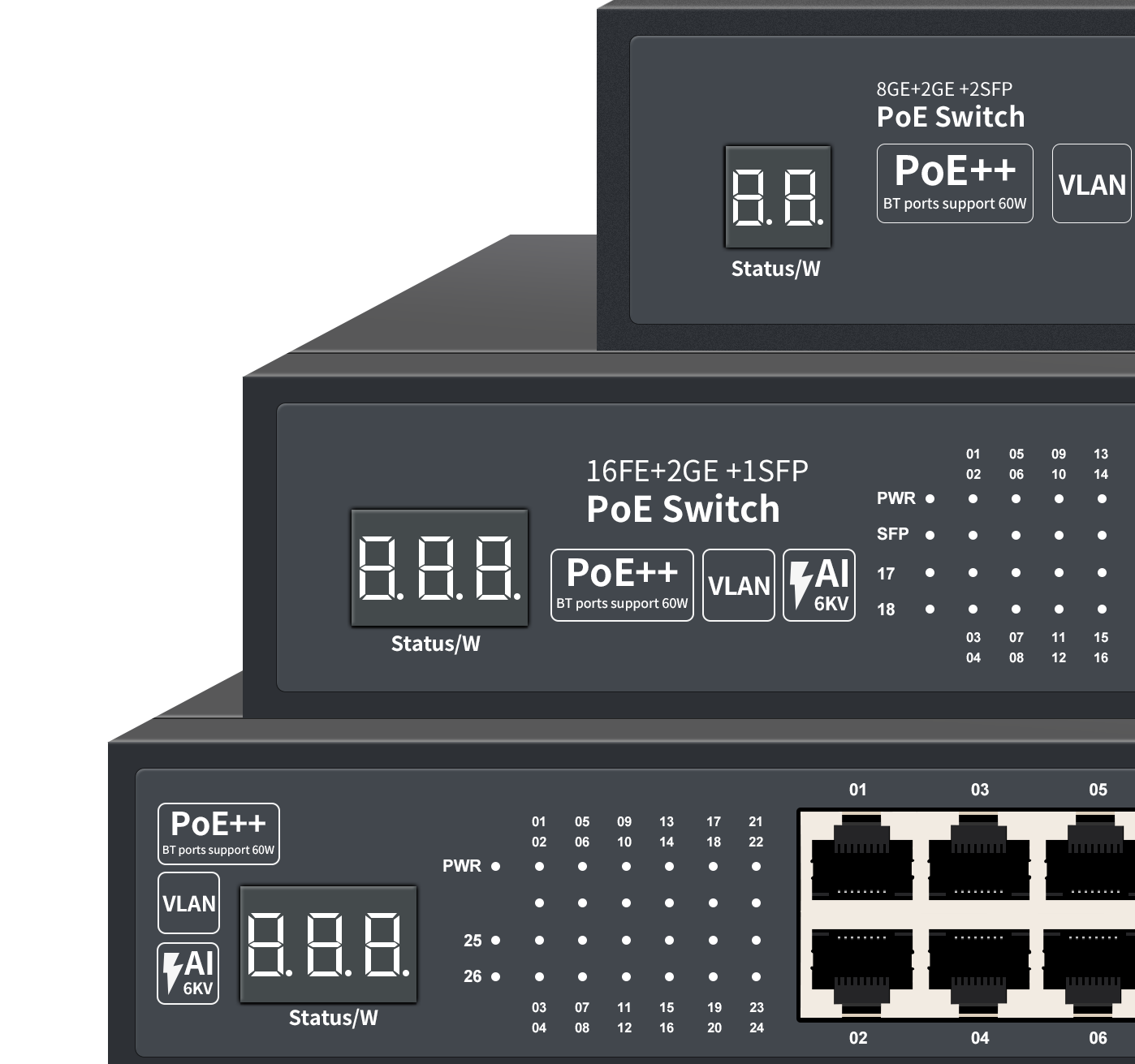
The fanless aluminum enclosure reduces moving parts and limits maintenance inside a cabinet. The built-in AC 100–240 V supply works alongside two 12–48 V DC inputs. AC has priority, and the switch can automatically change to the DC connection if the AC input fails; reverse-polarity protection is included on the DC inputs. With a -40°C to +80°C operating range, 6 kV lightning protection and an IP40 enclosure, it suits control rooms, roadside cabinets, substations and industrial server rooms. The 1U rack-mount design keeps cabling organized while the front-panel LEDs provide an immediate view of power, system, copper link/activity and fiber status.