
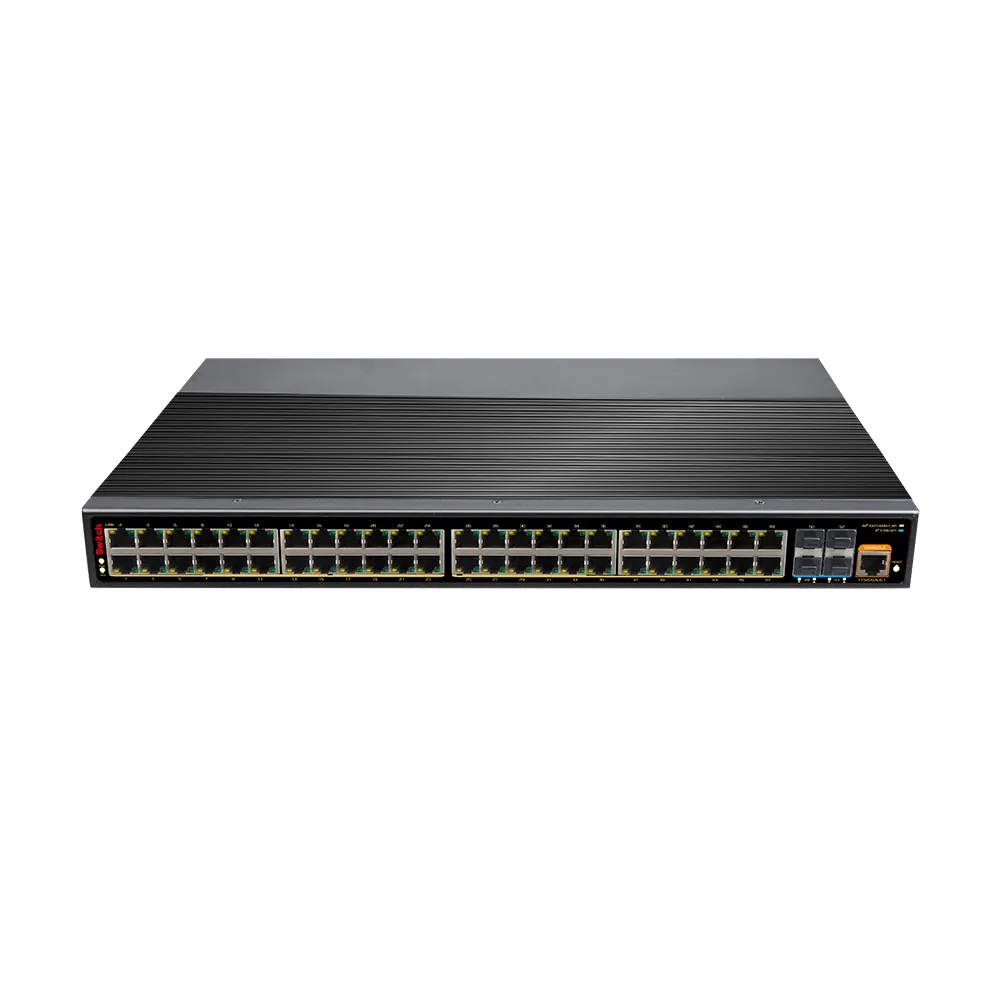
52-Port L3 Managed Industrial Ethernet Switch for Industrial Networks
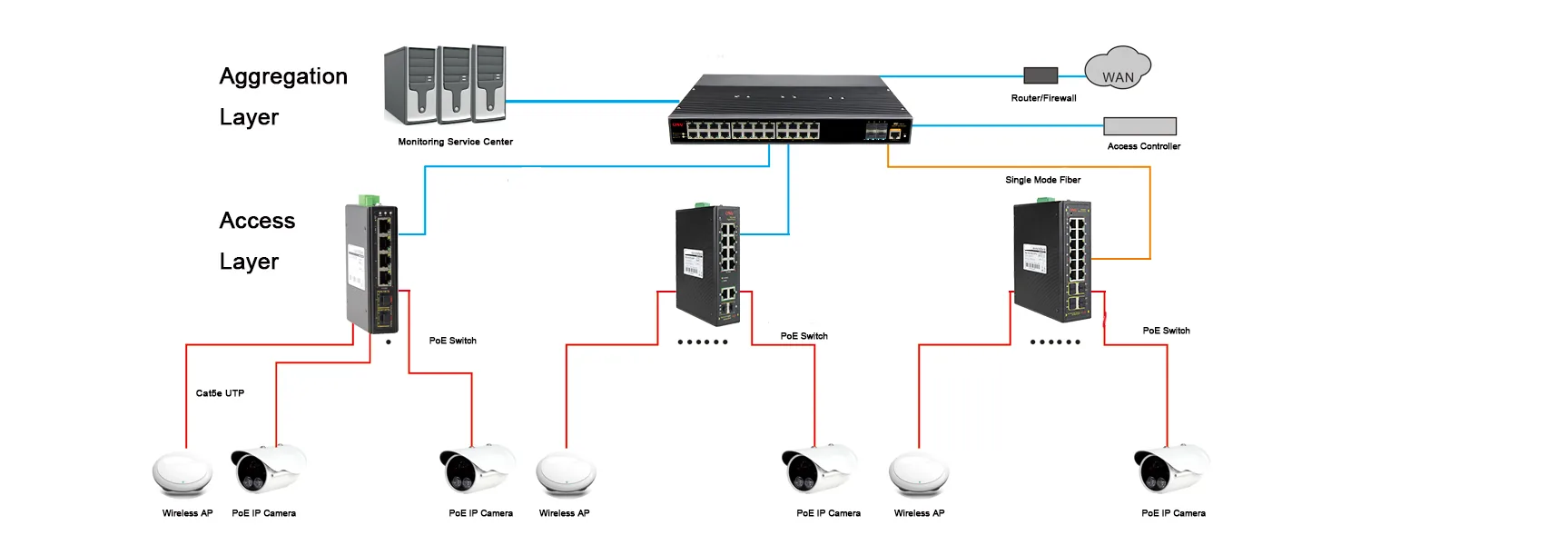
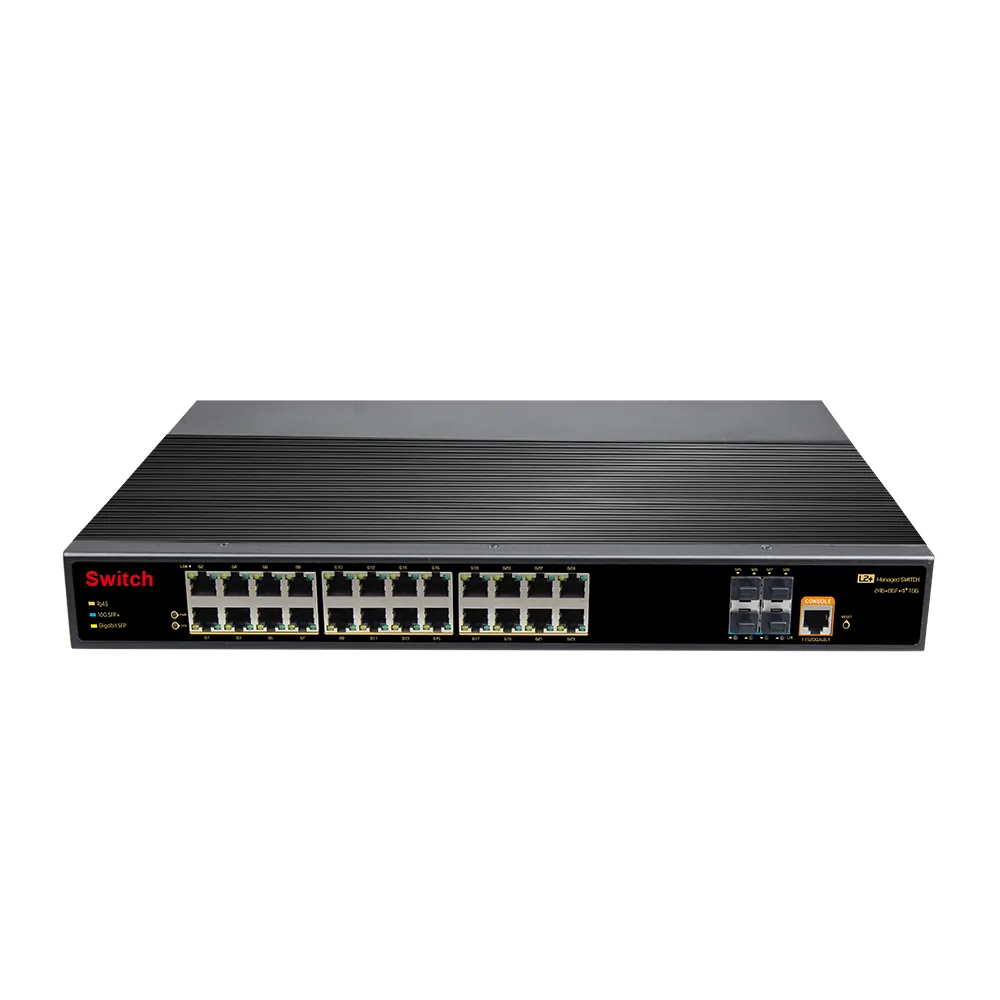
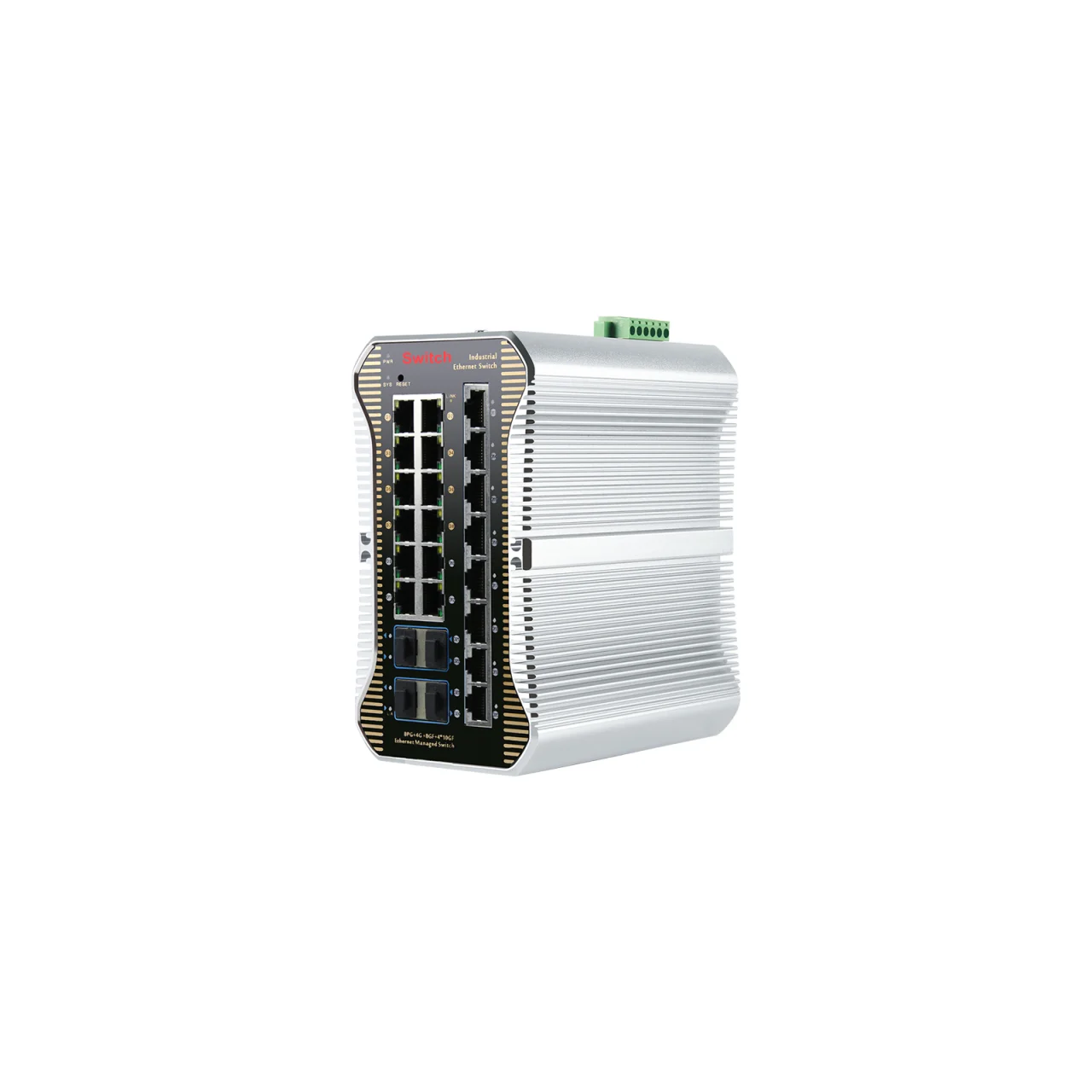
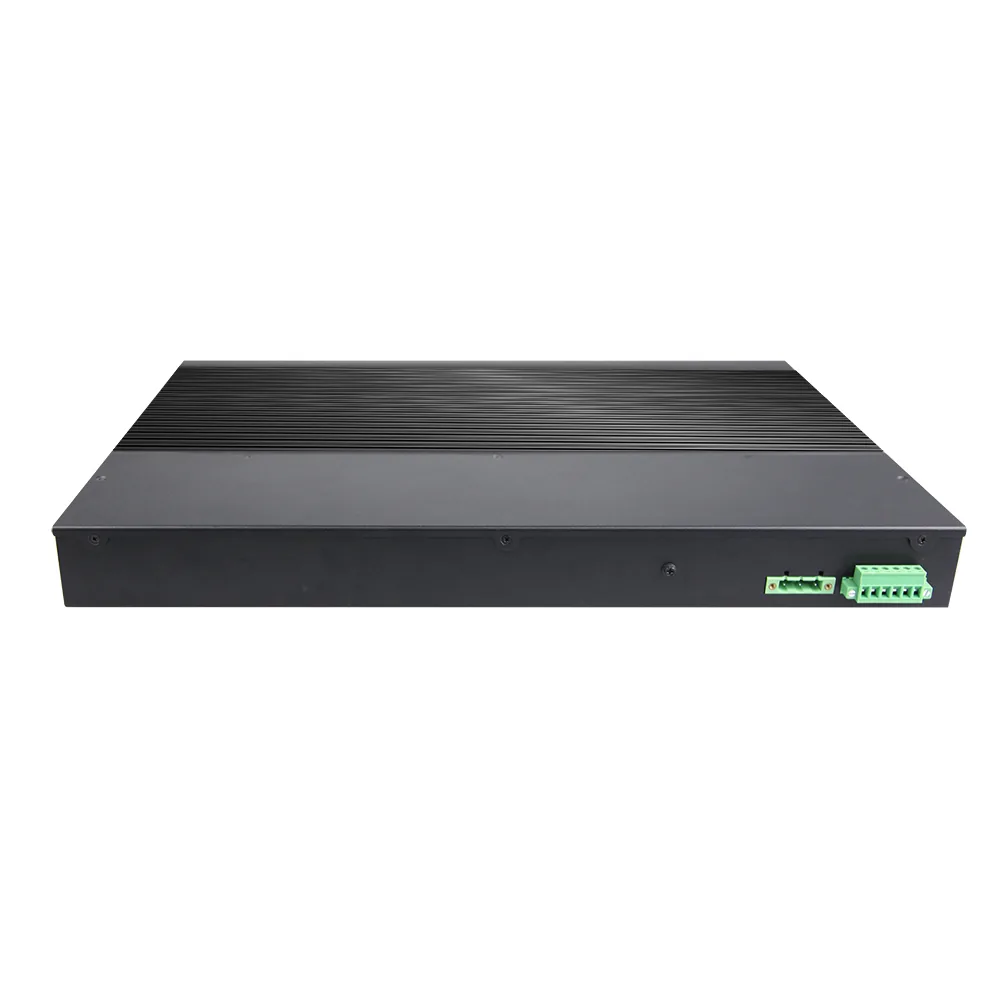
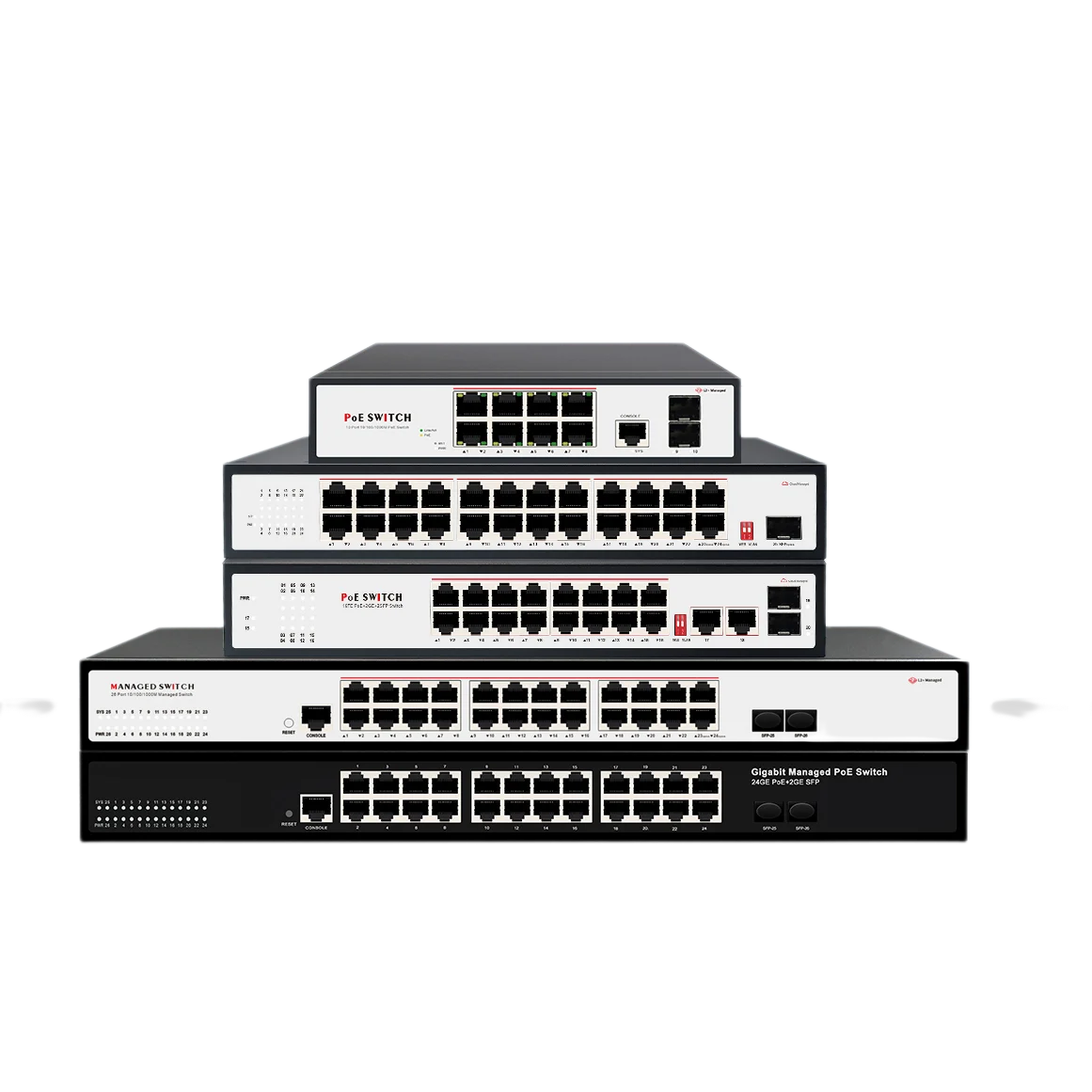
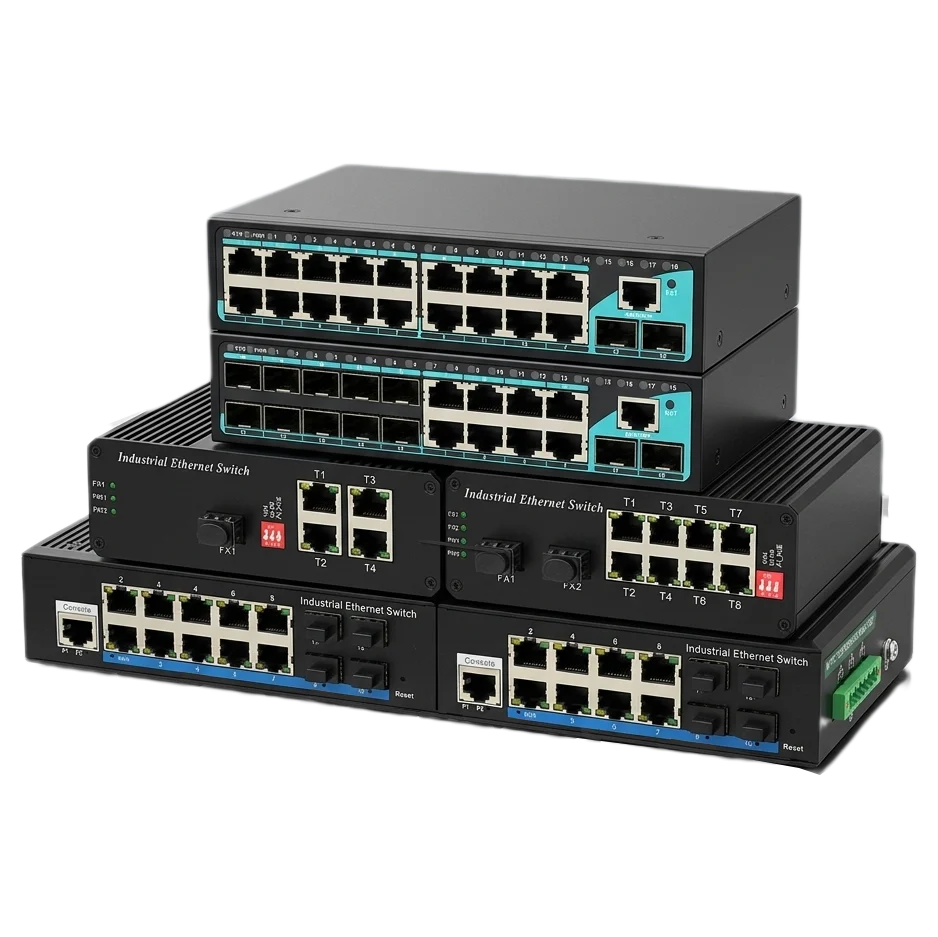
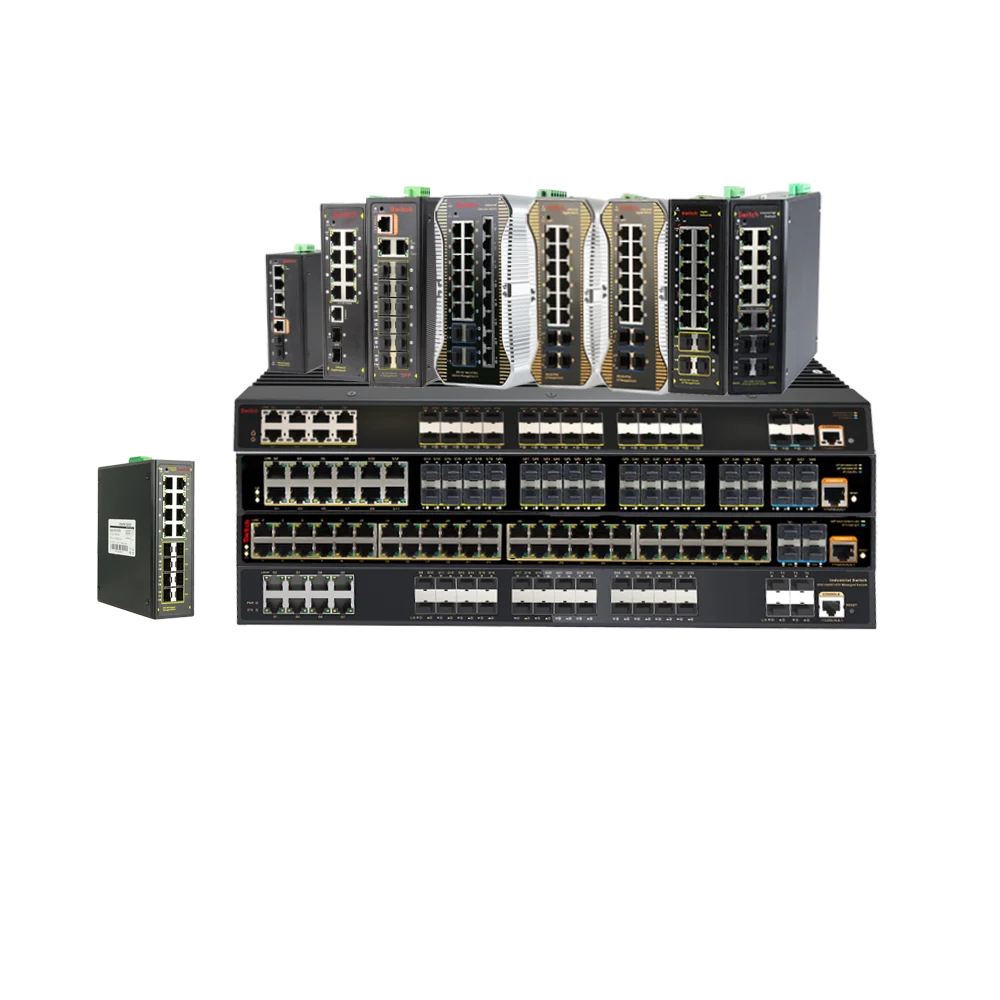
The IS830-48E4F is built for networks that need more than basic switching. This 52-port L3 managed industrial ethernet switch with 4 SFP+ 10G uplink rack mount combines 48 Gigabit copper access ports with four 1/10G SFP+ fiber uplinks. It gives plant-floor devices, IP cameras, access controllers, PLC gateways, servers, and aggregation switches room to connect without forcing an early network redesign.
For a busy factory, transport control room, power station, or small data room, the practical issue is usually not just port count. Traffic must move predictably, backup links must recover quickly, and the operations team needs a clear way to find faults. The switch provides non-blocking wire-speed forwarding, a 598 Gbps switching capacity, and up to 131 Mpps forwarding performance. Gigabit devices can connect at full speed while 10G fiber uplinks carry traffic toward a core switch, server cabinet, or control-center backbone.
Layer 3 Control Without Adding Another Box
As an L3 managed industrial Ethernet switch, the unit supports IPv4 and IPv6 management, static routes, default routes, and soft routing forwarding. This helps separate production equipment, office users, video surveillance, and guest or maintenance access into different VLANs while keeping inter-network traffic under local control. IEEE 802.1Q VLAN, protocol-based VLAN, MAC-based VLAN, Voice VLAN, QinQ, and Access, Trunk, or Hybrid port modes give network administrators practical options for phased deployments.
Traffic handling can be adjusted instead of left to chance. QoS supports 802.1p and DSCP priority mapping, eight output queues per port, and SP, WRR, or SP+WRR scheduling. Flow-based rate limiting and packet filtering help keep a high-volume camera stream or abnormal endpoint from affecting control traffic. IGMP Snooping and MLD Snooping are useful when multicast video, industrial data, or control applications share the same switching infrastructure.
Fast Recovery for Ring and Redundant Networks
Industrial links often follow a ring or dual-path layout because a single cable failure should not stop operations. The switch supports STP, RSTP, MSTP, and ITU-T G.8032 ERPS. ERPS recovery can be less than 20 ms under the specified network conditions, while STP-family protocols support more familiar enterprise and industrial topologies. Static aggregation and LACP can also combine links between switches or servers for additional bandwidth and link backup.
Power continuity is addressed at the hardware level. The switch uses an internal AC power supply and two 12–48 VDC inputs with reverse-polarity protection. AC has priority, and the device can automatically change to the DC connection when AC power is lost. This arrangement suits cabinets where utility power and control-system DC power are both available. The fanless galvanized steel housing reduces moving parts and helps keep routine maintenance simple.
Security and Day-to-Day Maintenance
Access control features include IEEE 802.1X, MAC authentication, AAA and RADIUS, IP-MAC-VLAN-port binding, DHCP Snooping, ARP inspection, IP source protection, port isolation, MAC learning limits, and anti-DoS measures. ACL rules can filter traffic from Layer 2 through Layer 4 using MAC addresses, IP addresses, protocols, TCP/UDP ports, VLANs, and related fields. These controls are useful when production assets must remain separated from general office or contractor devices.
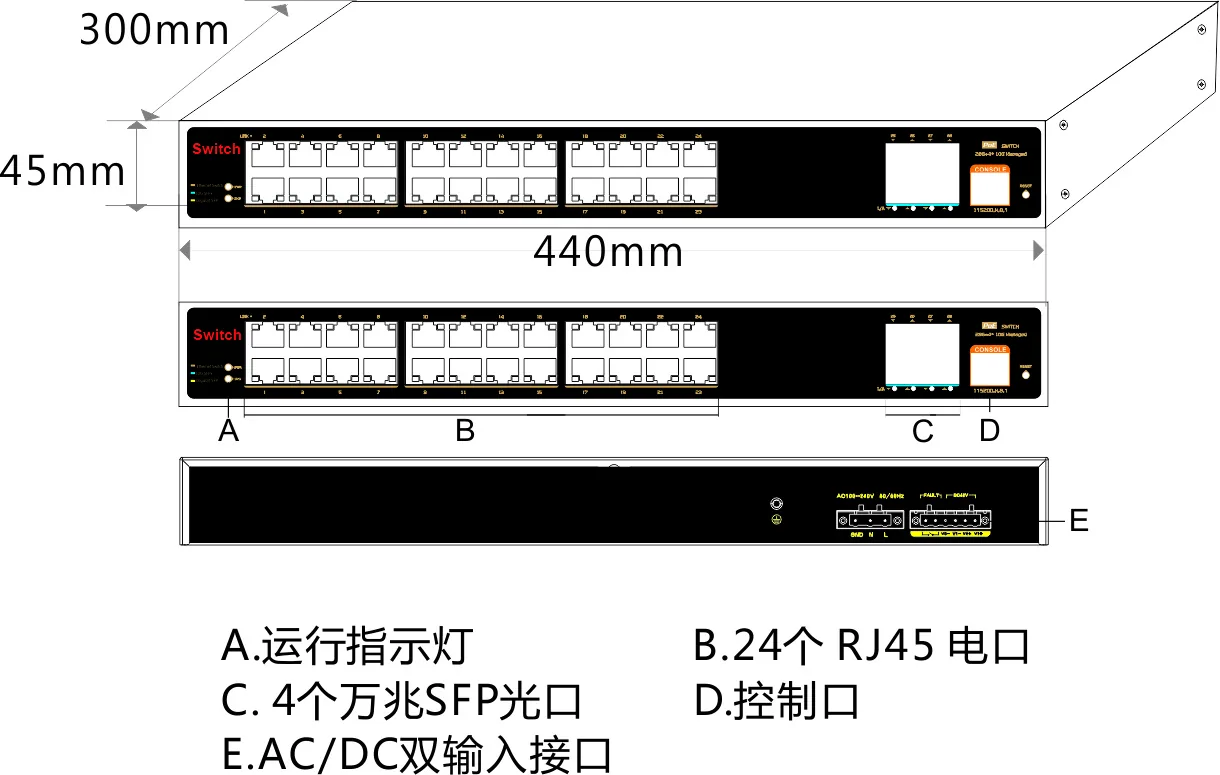
Web management over HTTPS, CLI through console, Telnet, or SSH 2.0, and SNMP v1/v2c/v3 give teams several ways to manage the network. LLDP, RMON, system logs, port statistics, CPU and memory monitoring, ping testing, and cable diagnosis help technicians check a problem before sending someone into a remote cabinet. The 440 × 298 × 44 mm chassis fits a standard 19-inch 1U rack or can be used on a desktop. With a -40°C to +80°C operating range, industrial protection testing, and a five-year warranty with lifelong maintenance, this 52-port industrial managed switch is suited to factory networks, intelligent transportation, rail transit, power, mining, oil and gas, marine, metallurgy, and renewable energy projects.