
Industrial Fiber Connectivity for Distributed Networks
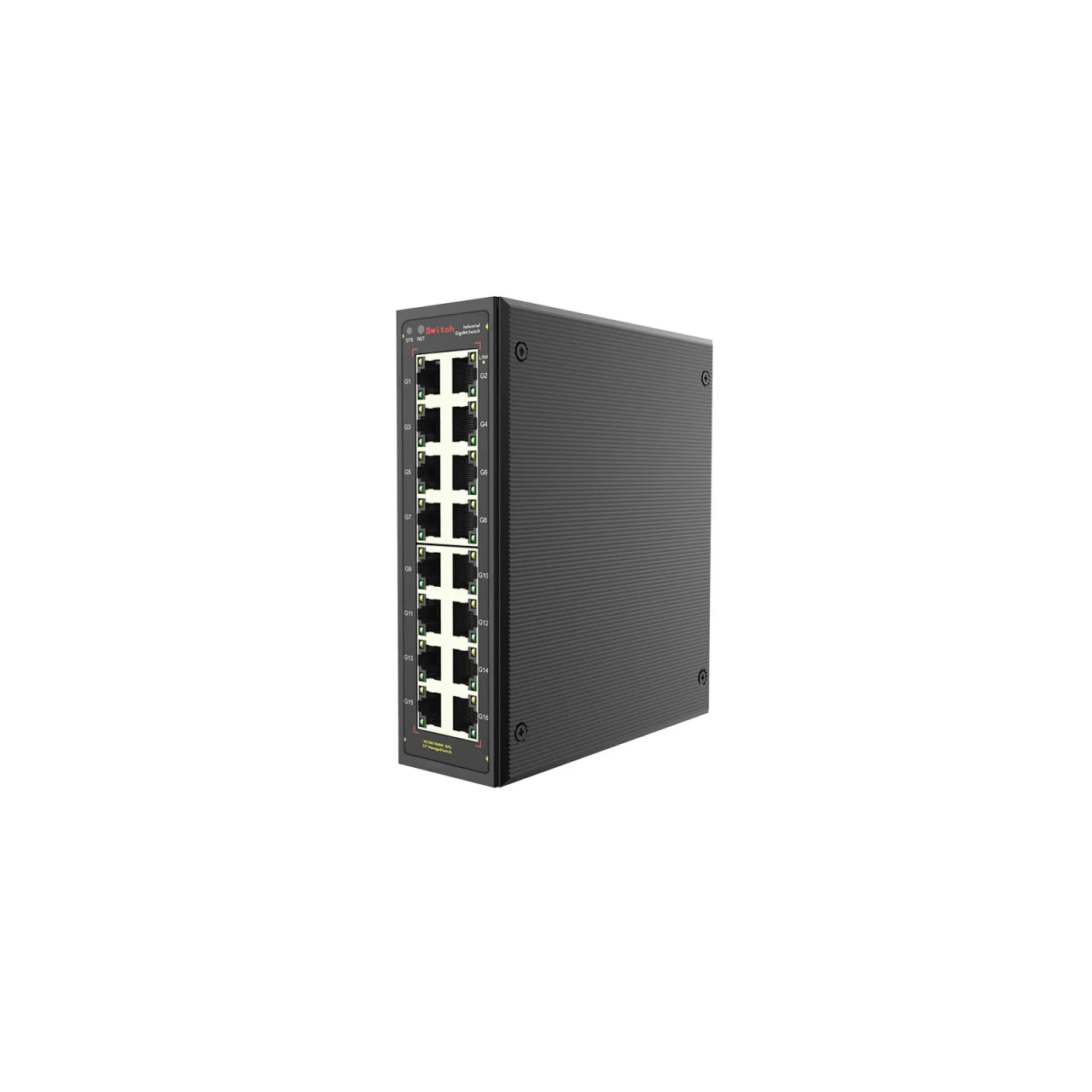
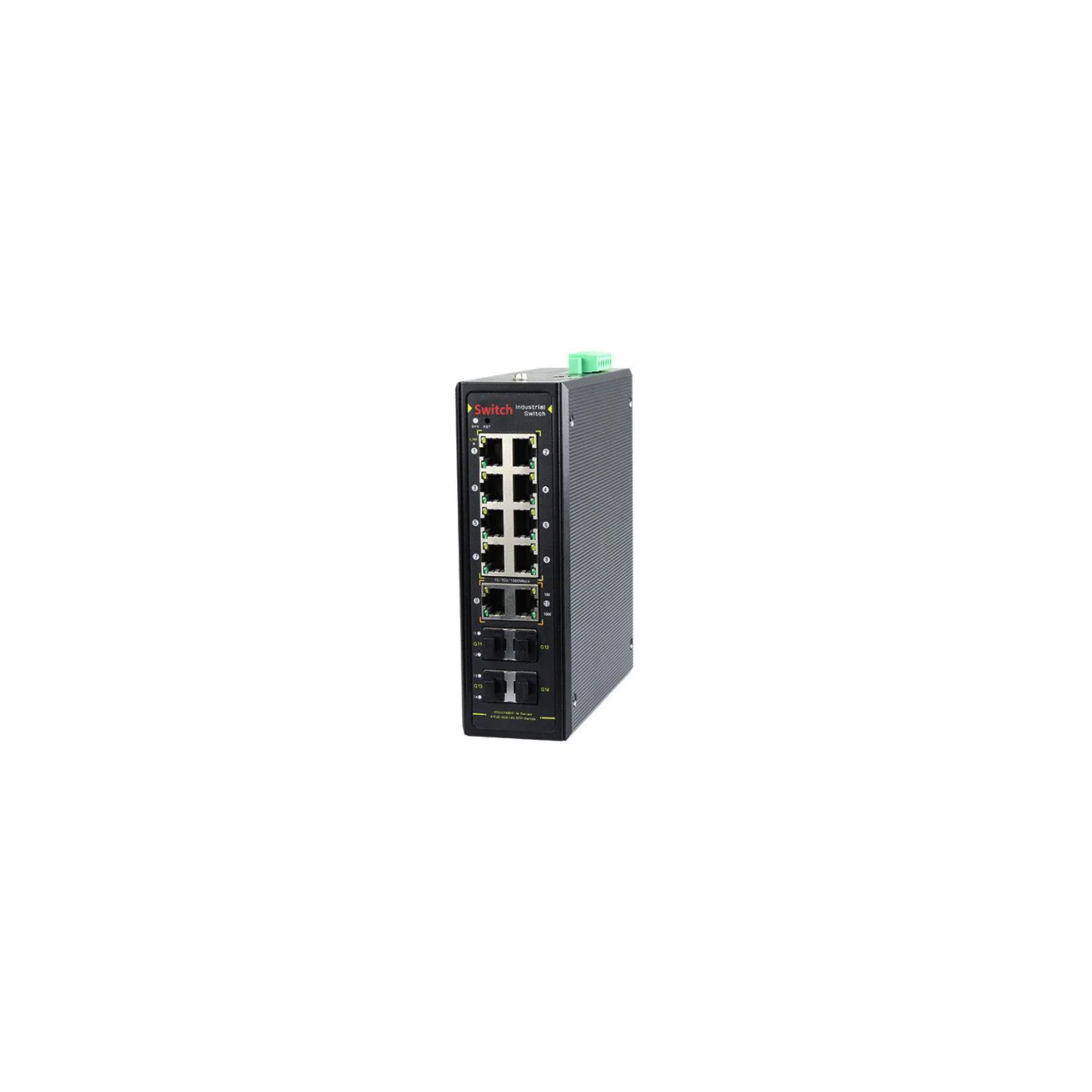
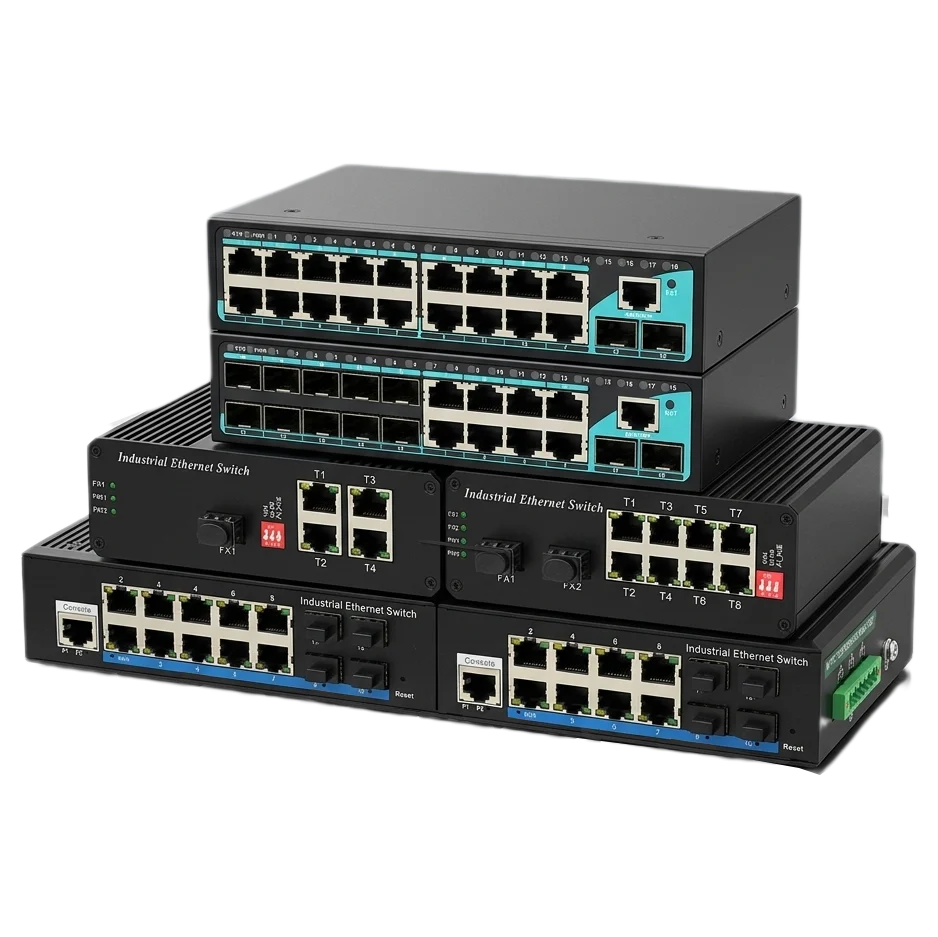
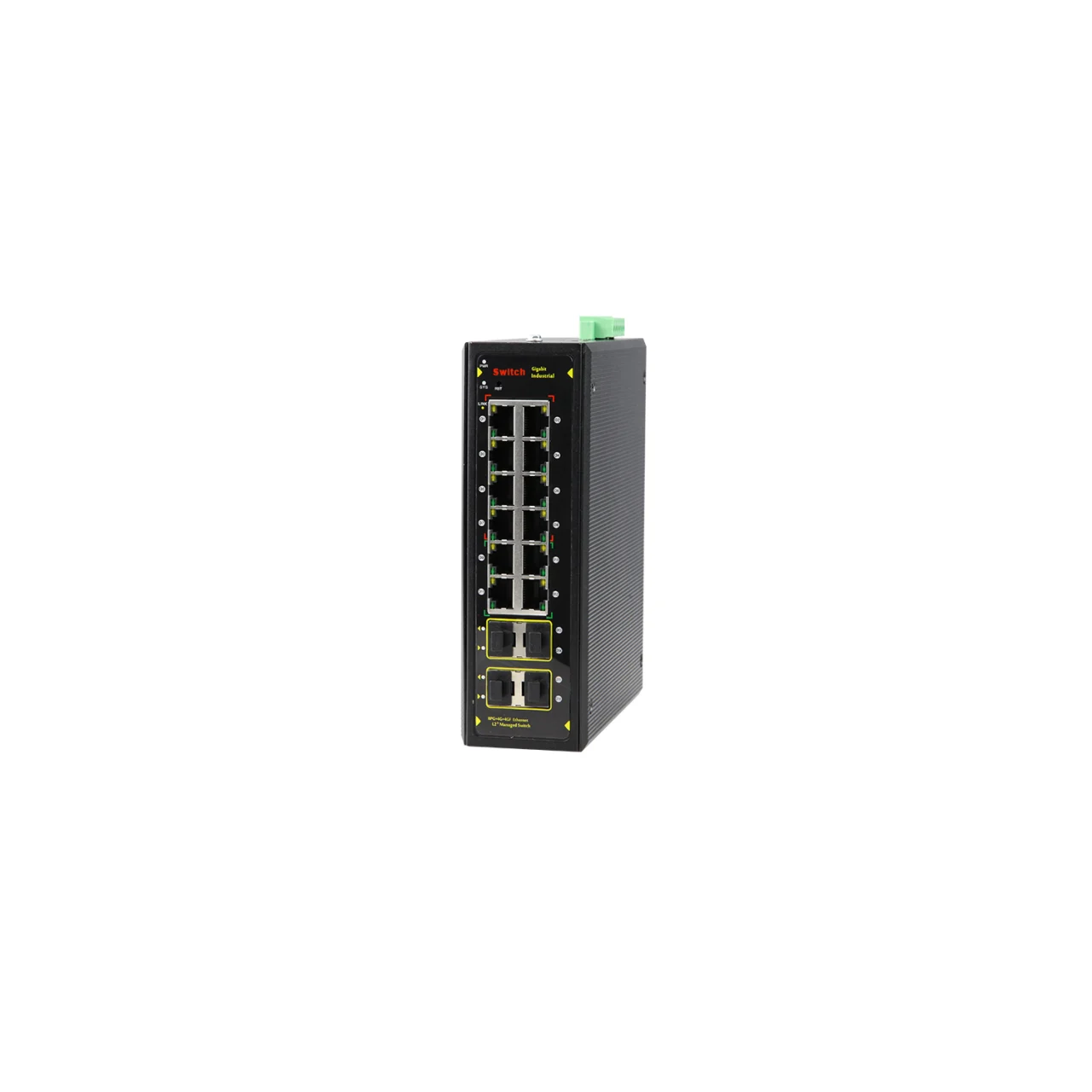
The IS700-8E8F is built for sites where copper access, fiber uplinks, and predictable recovery matter more than a basic plug-and-play switch. It combines 8 gigabit RJ45 ports with 8 gigabit SFP slots, giving installers room to connect local controllers, cameras, access points, and servers while sending traffic over fiber to another cabinet, building, or production area. For buyers comparing a 14-port gigabit managed industrial fiber switch with 12 SFP ports, the actual port layout should be checked carefully: this model provides 16 data ports in total, including 8 RJ45 copper ports and 8 SFP fiber ports.
Each port supports wire-speed forwarding, so normal business, surveillance, and control traffic can move without an artificial throughput bottleneck inside the switch. The RJ45 ports auto-negotiate 10/100/1000 Mbps and support automatic MDI/MDI-X. SFP slots accept selectable single-mode or multimode modules, including single-fiber or dual-fiber options. Depending on the selected optics, fiber links can cover up to 500 m over multimode fiber or reach up to 120 km over single-mode fiber. This makes the switch suitable for both short cabinet interconnections and longer campus or industrial-site links.
Managed Control That Helps Operations Stay Organized
This is a managed industrial Ethernet switch with L2+ network management and IPv4/IPv6 management support. VLAN, QinQ, port aggregation, multicast control, QoS, ACL, DHCP functions, and static or default routing allow the network to be separated and controlled without adding another small switch at every location. For example, a maintenance team can place cameras, PLC devices, office terminals, and guest access on different VLANs, then apply priority and access rules according to the application.
When voice, video, or control traffic shares the same infrastructure, 802.1p and DSCP mapping with eight output queues per port helps keep delay-sensitive traffic moving. IGMP Snooping and multicast VLAN support are useful for IP surveillance and other one-to-many streams. Port isolation, IP-MAC-VLAN-Port binding, 802.1X, RADIUS, ARP inspection, storm control, and MAC learning limits give administrators practical tools to reduce unauthorized access and contain abnormal traffic.
Fast Recovery for Ring and Redundant Links
Network interruptions in a factory line, roadside cabinet, or security system can quickly become an operational issue. The switch supports STP, RSTP, MSTP, and ITU-T G.8032 ERPS. ERPS recovery can be below 20 ms under the stated network conditions, while STP-family protocols support common redundant topologies. Ports can be arranged in chain, star, dual-star, or ring-based layouts, allowing the network to continue after a single link is broken and reducing the need for manual intervention.
Designed for Cabinets, Control Rooms, and Field Sites
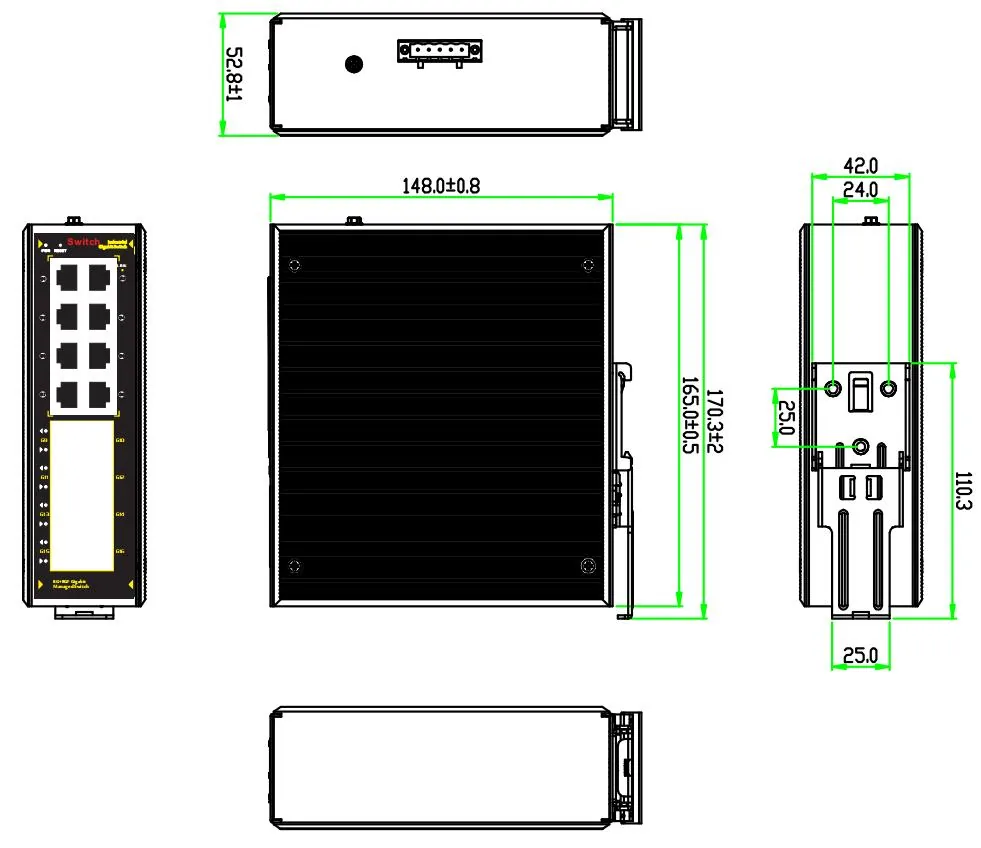
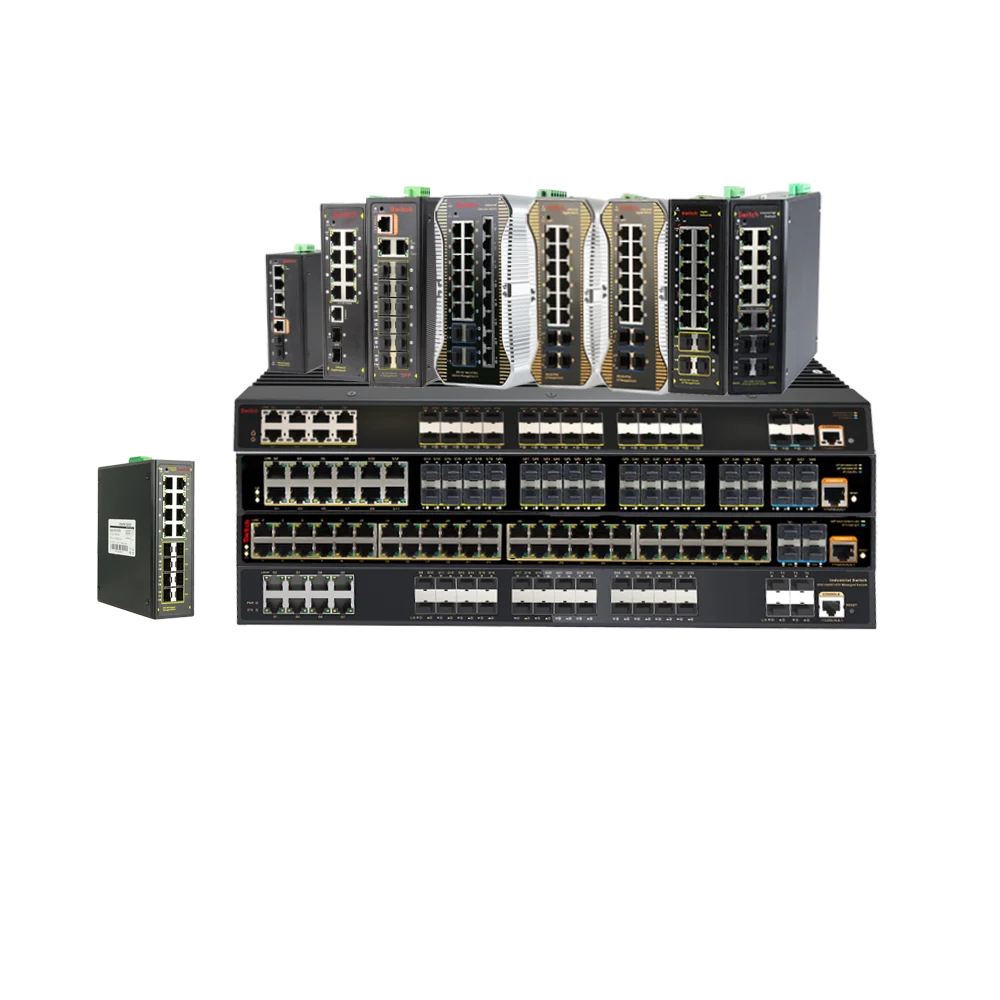
The fanless aluminum housing removes a common maintenance concern in dusty or vibration-prone locations: a rotating fan that can collect dust or fail. The switch operates from -40°C to +80°C, supports redundant 12–48 VDC input, and includes reverse-polarity protection. DIN-rail and desktop installation cover control cabinets, small server rooms, and communications enclosures. Port and power protection, an IP40 housing, industrial EMC performance, and a rated MTBF of up to 35 years support long-term deployment planning.
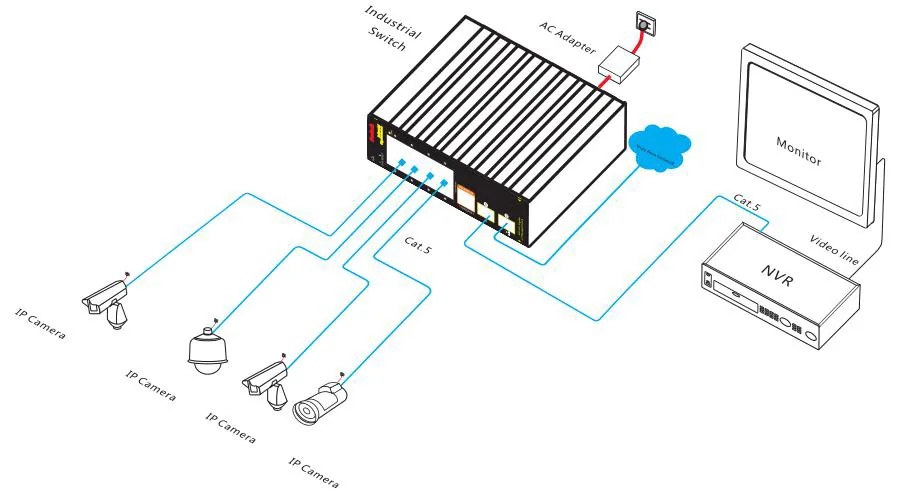
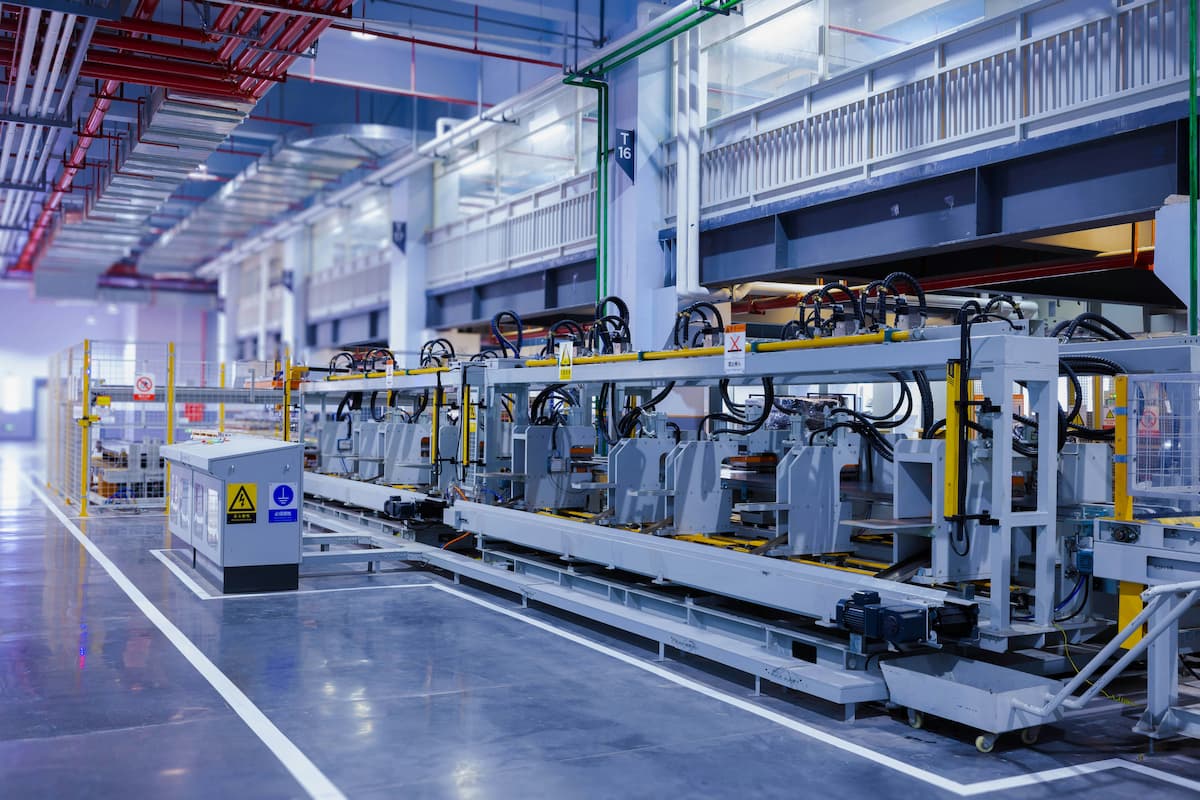
For day-to-day maintenance, administrators can use HTTPS web management, console, Telnet, SSH, SNMP v1/v2c/v3, LLDP, RMON, system logs, NTP, ping testing, cable diagnosis, and CPU or memory monitoring. The switch can also work with an NMS platform for centralized visibility. It is a practical fit for industrial automation, IP video surveillance, transportation communication, utility sites, building networks, and SMEs that need fiber expansion without giving up network control. A five-year warranty and lifelong maintenance further reduce replacement pressure for long-running projects.