
28-Port L3 Industrial Switch for High-Availability Networks
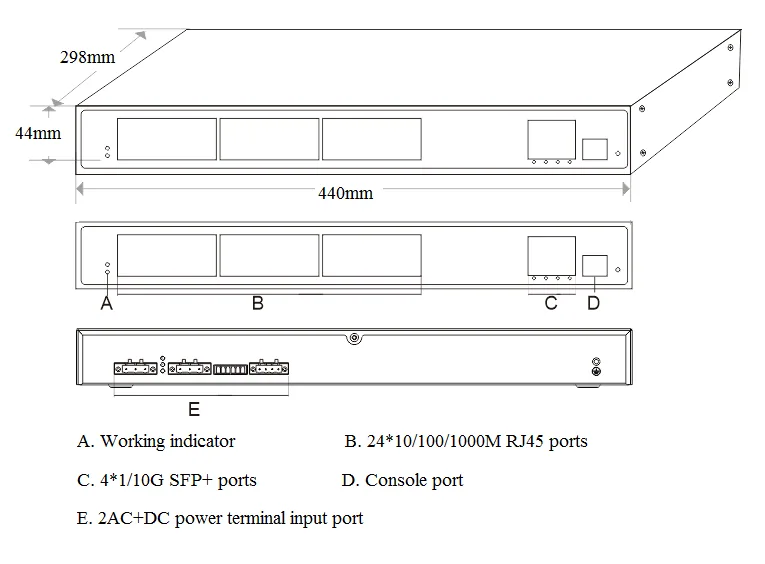
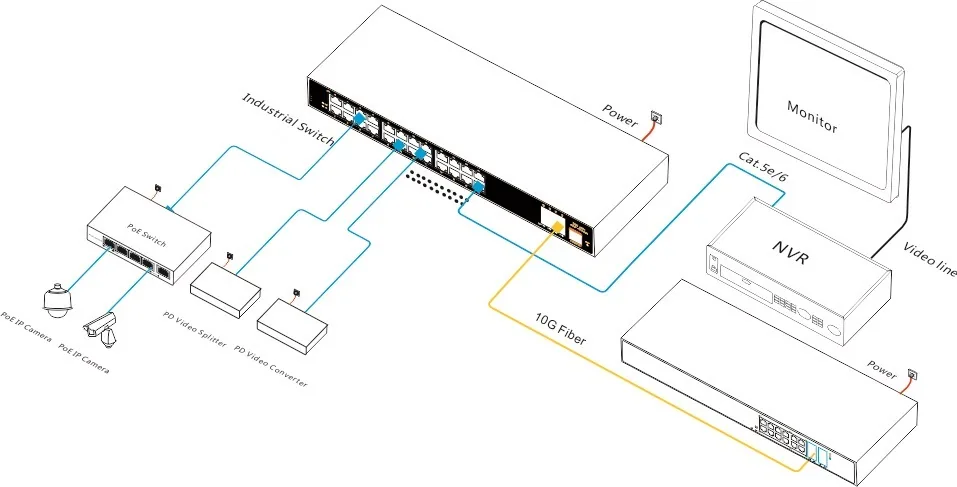
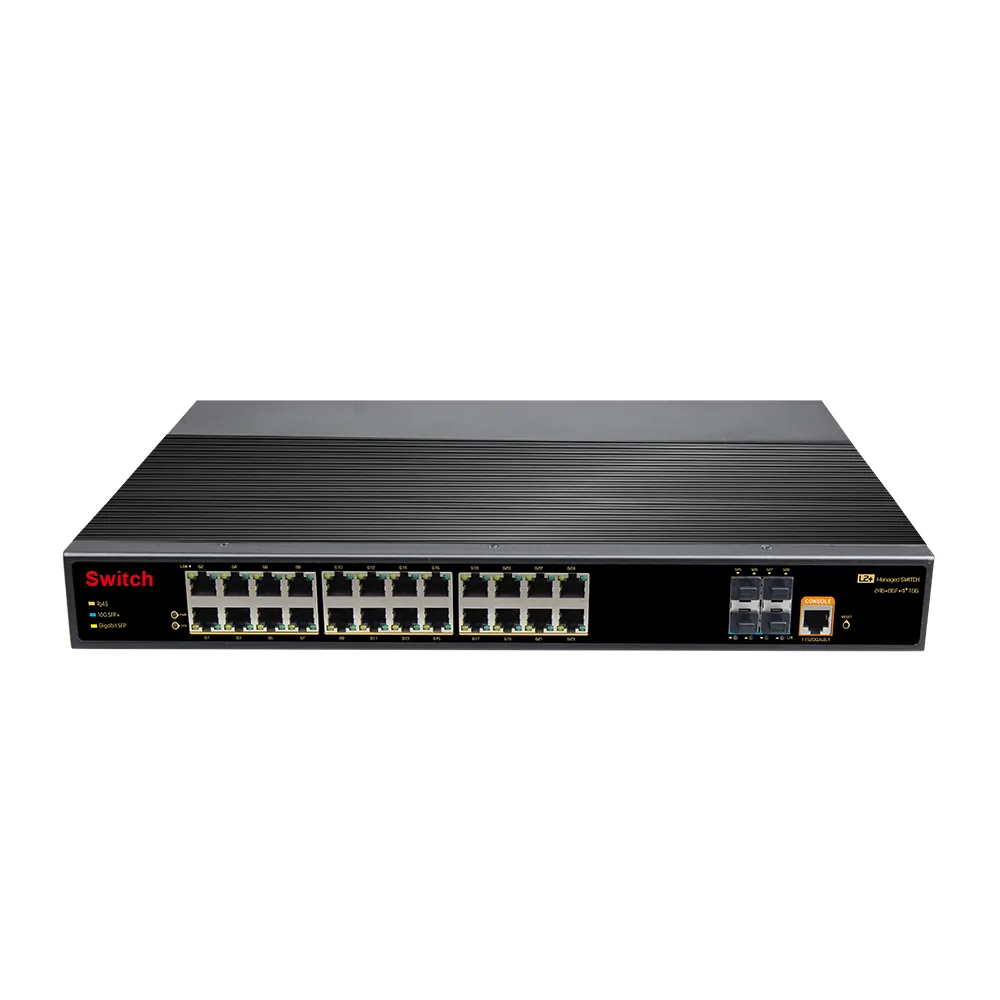
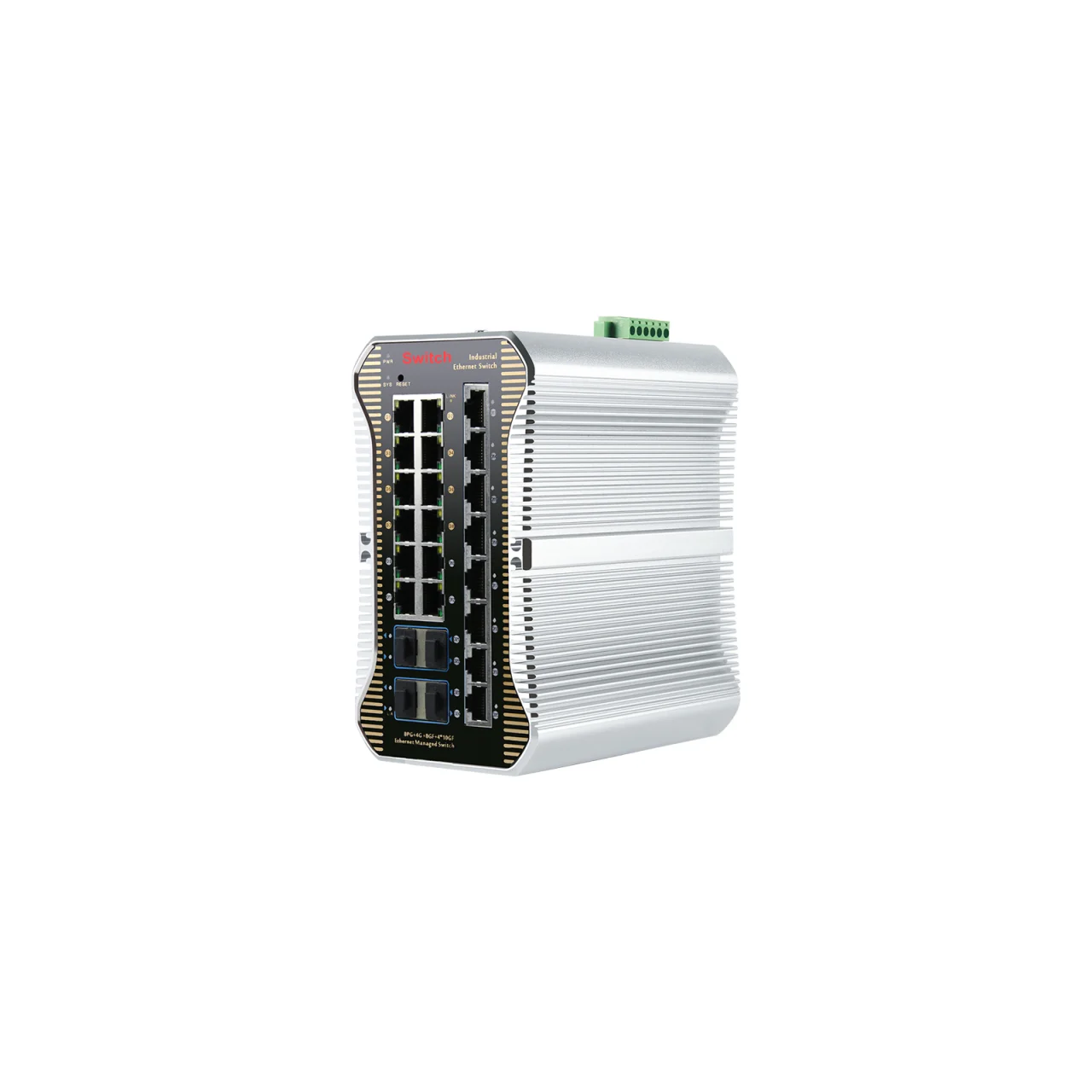
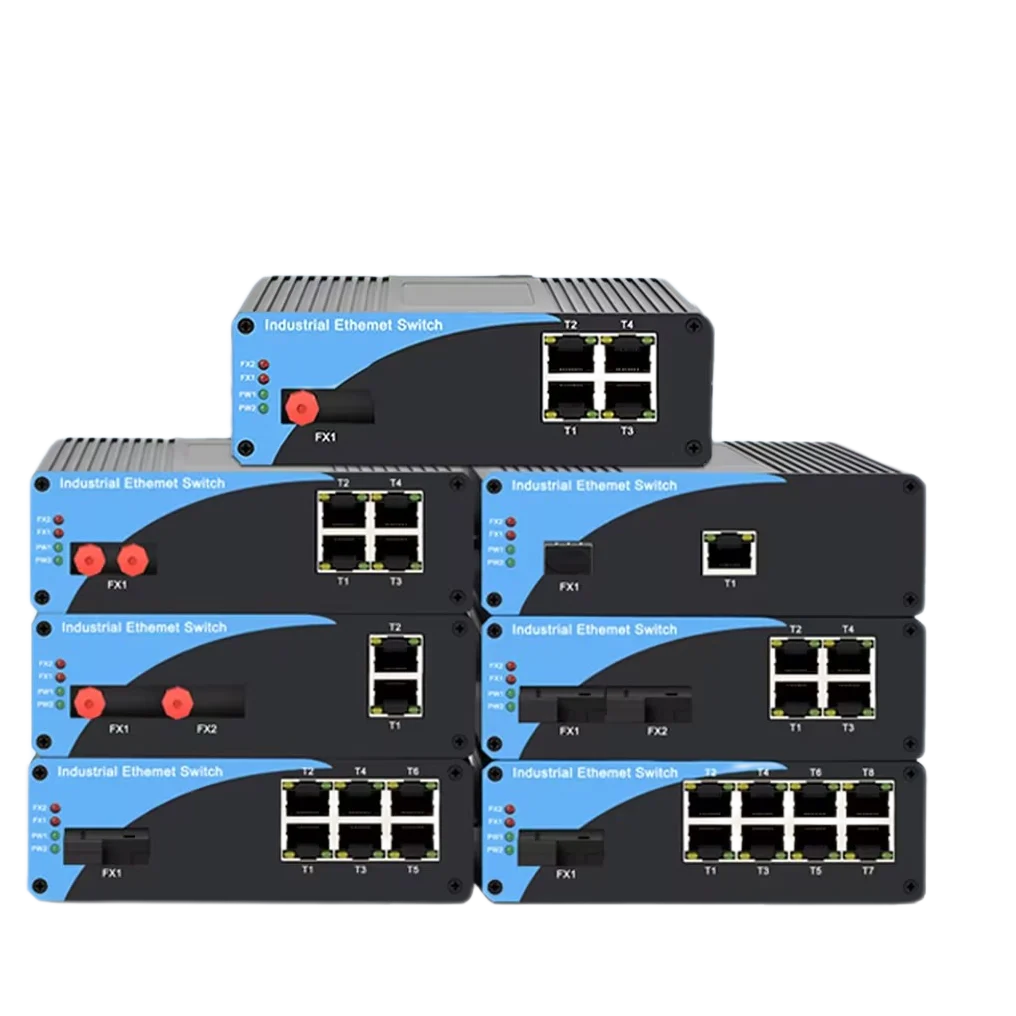
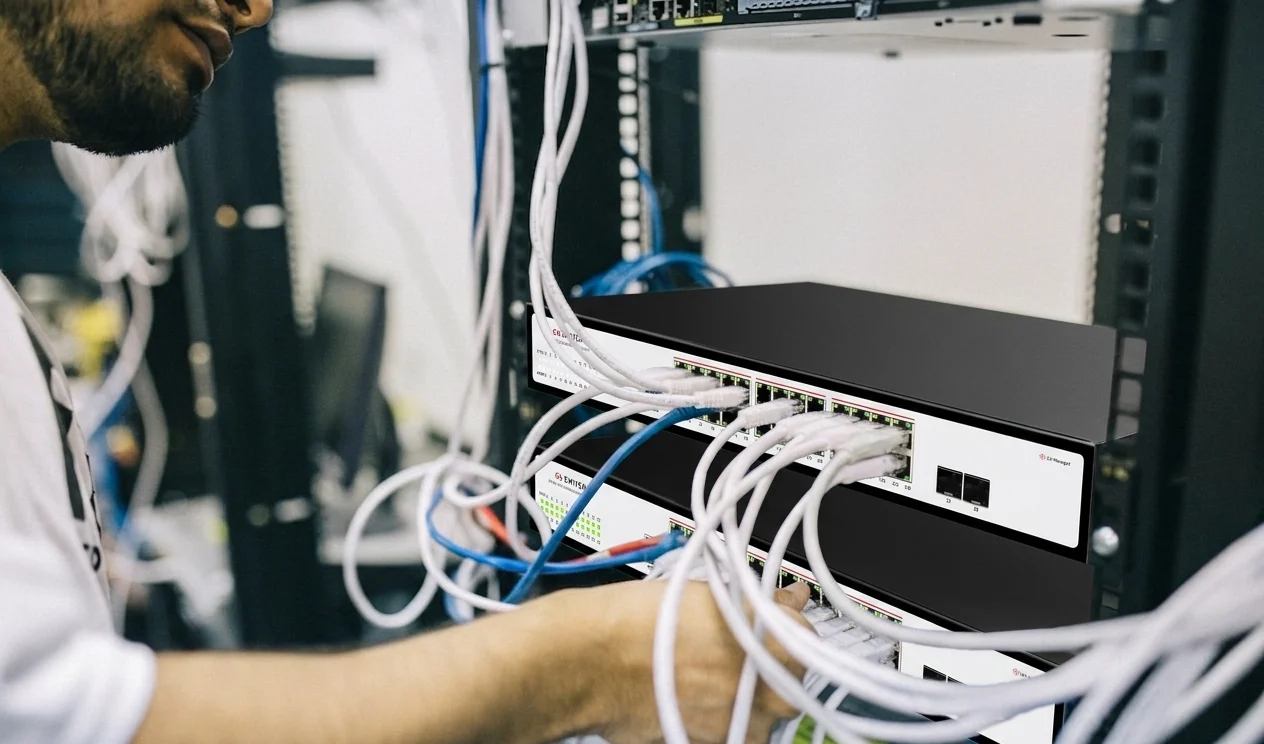
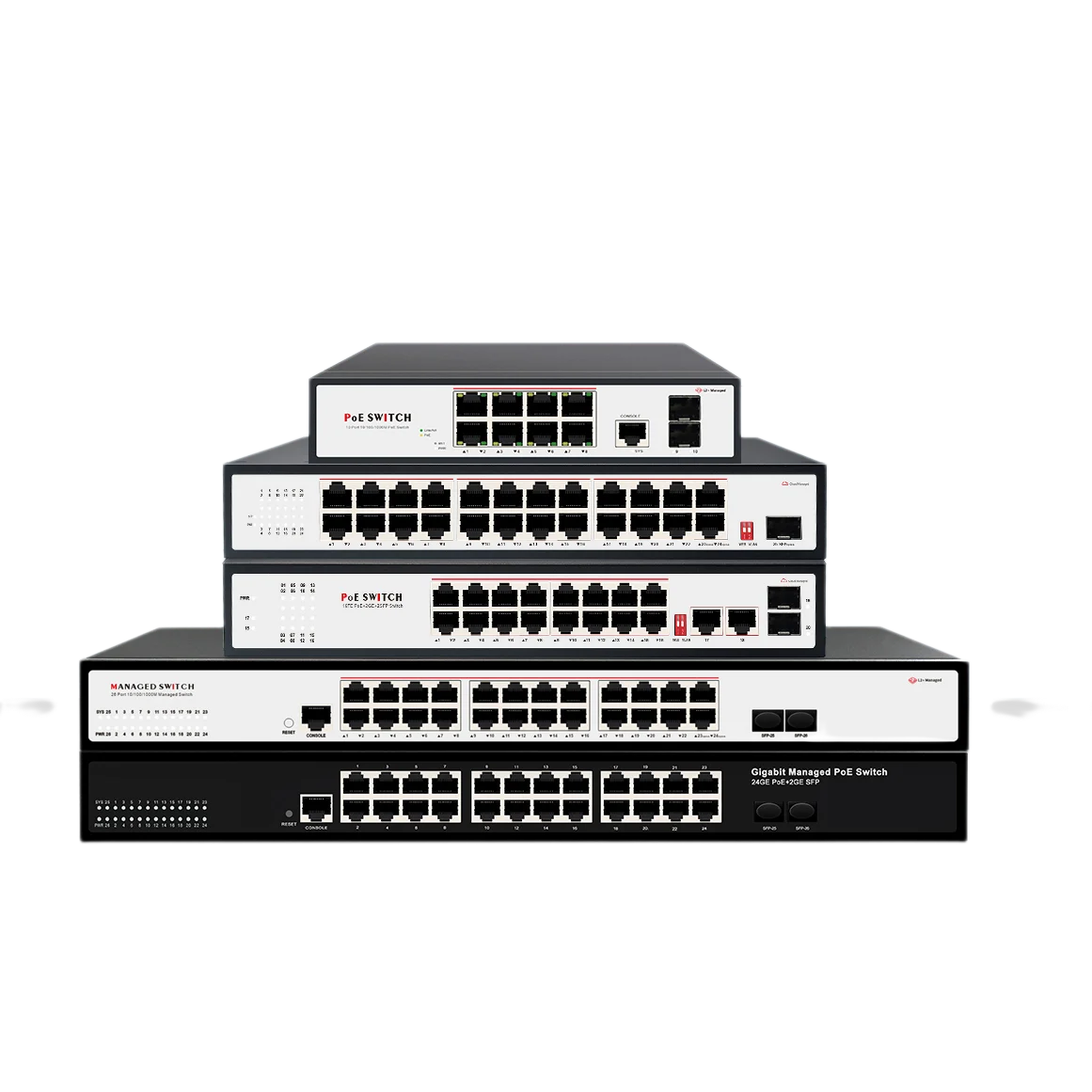
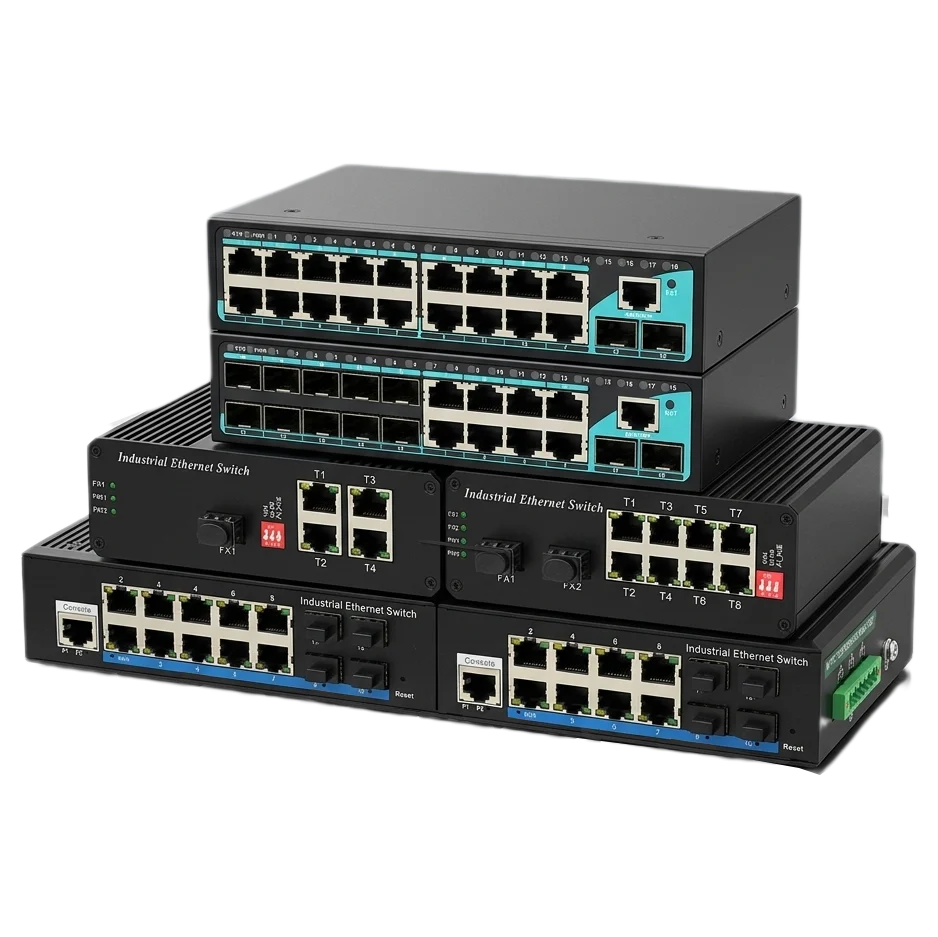
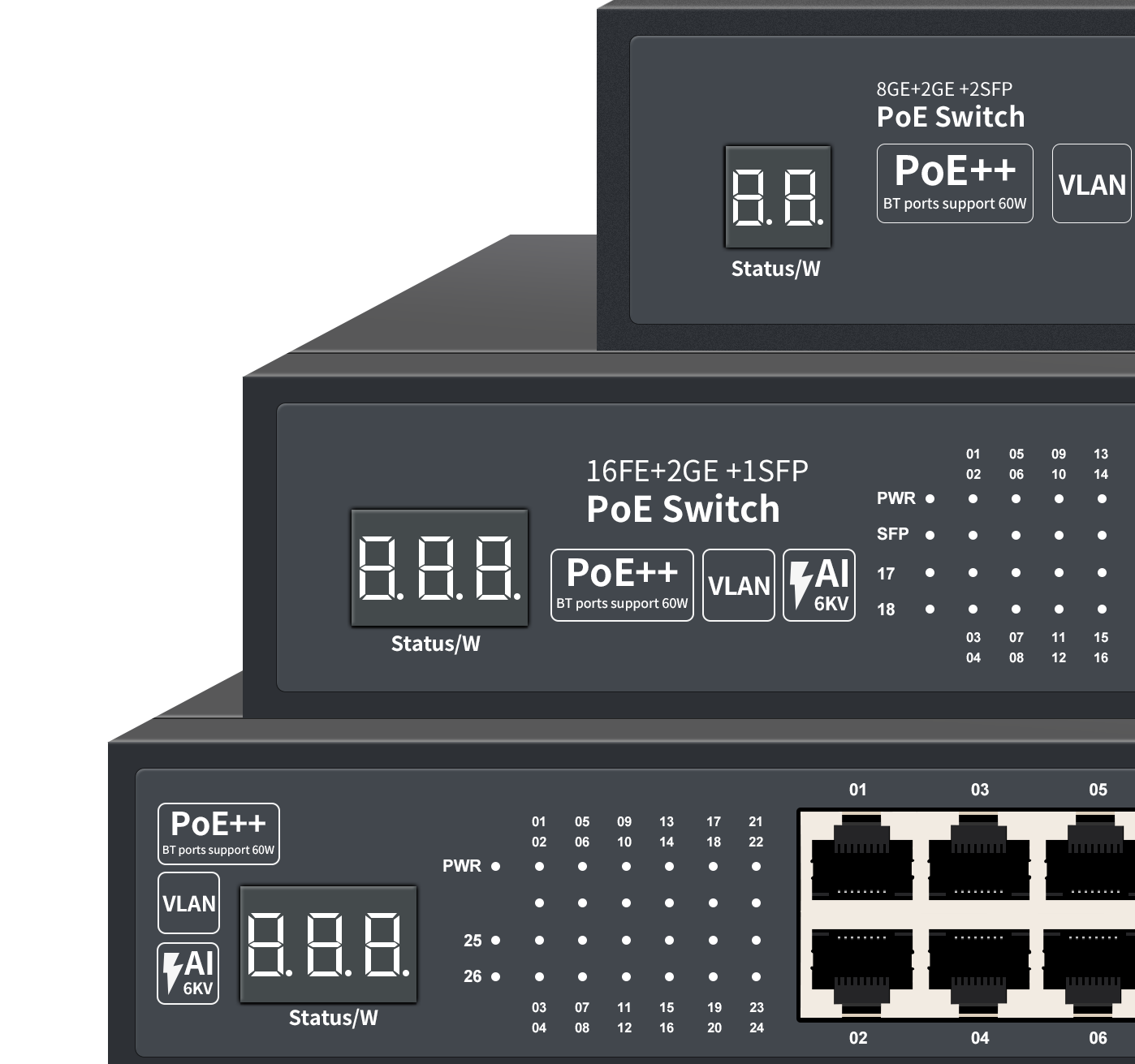
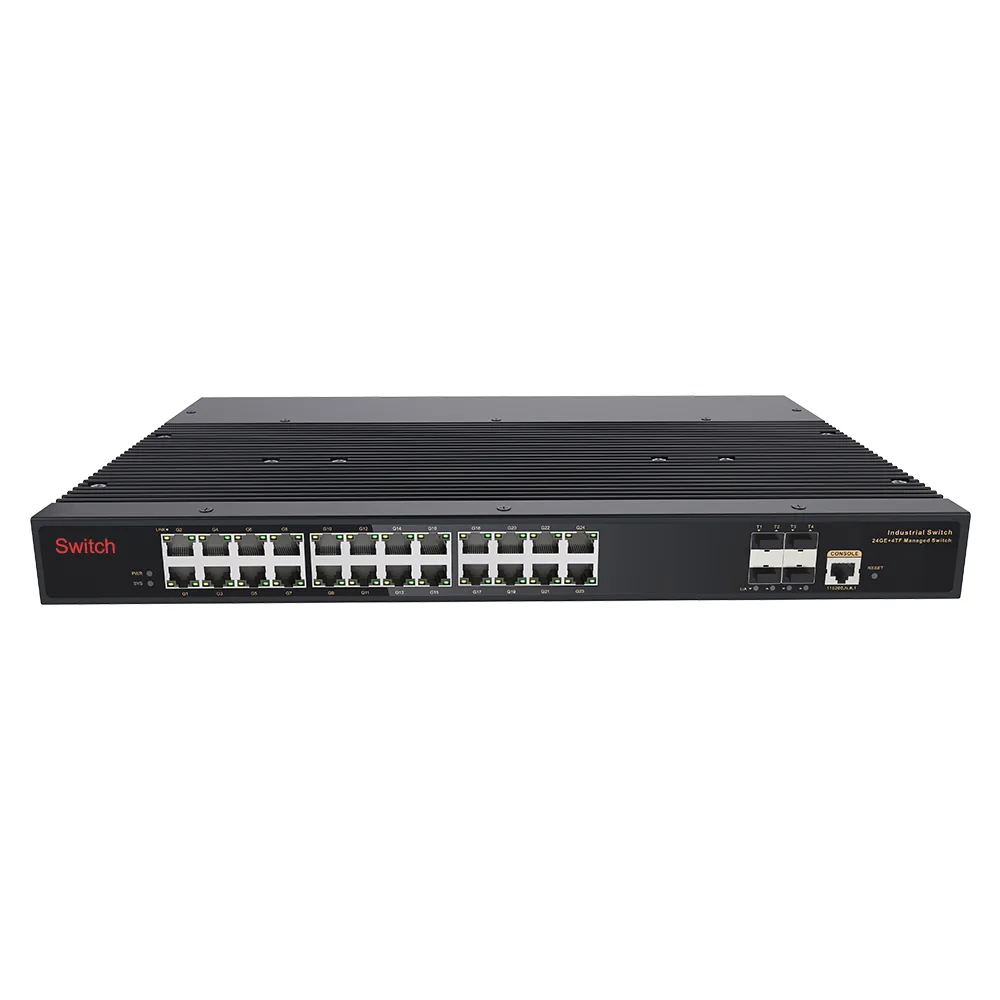
The IS830-24E4F-B is a 28-port L3 managed industrial Ethernet switch built for networks that need more than basic connectivity. It combines 24 auto-sensing 10/100/1000Base-T RJ45 ports with 4 dual-speed 1/10G SFP+ uplink slots. This layout gives installers plenty of Gigabit access ports for cameras, PLCs, control terminals, servers, and wireless equipment, while keeping high-volume traffic on fast fiber uplinks.
For a factory floor, rail-side cabinet, traffic control room, or utility substation, the practical issue is often not the number of ports alone. It is whether the switch can keep traffic moving when a link, route, or power source goes down. The IS830-24E4F-B addresses this with Layer 3 routing, ring protection, link aggregation, VLAN separation, and redundant power options. Its switching capacity reaches 336Gbps, with 95.23Mpps forwarding performance at 64-byte packets, so normal access traffic can pass at wire speed without creating a bottleneck at the aggregation layer.
Layer 3 Routing and Segmentation
This L3 managed industrial Ethernet switch supports IPv4 and IPv6 dual-stack management and routing between different VLANs and IP subnets. Static routes are useful for controlled plant or campus networks, while RIPv1/v2, OSPFv2, BGP4+, OSPFv3, BGP+, and RIPng support larger or more structured deployments. Up to 4,000 IPv4 routing entries and 1,000 IPv6 routing entries help network teams scale beyond a flat Layer 2 design.
With IEEE 802.1Q VLAN, Voice VLAN, QinQ, MAC-based VLAN, protocol-based VLAN, Access, Trunk, Hybrid, and GVRP support, administrators can separate video, control, office, voice, and guest traffic without adding a separate switch for every service. IGMP Snooping, MLD Snooping, multicast VLAN, and MVR help reduce unnecessary multicast traffic in IP surveillance, digital signage, and industrial video systems.
Fast Recovery and Traffic Control
Network availability is a daily operations concern. ERPS ring protection compliant with ITU-T G.8032 can restore a ring connection in less than 20ms when a link fails. STP, RSTP, and MSTP provide additional protection for tree and multi-instance topologies, while LACP and static aggregation allow several physical links to work as one logical connection. These options give network engineers room to design around cable routes, cabinet locations, and future expansion rather than relying on a single uplink.
QoS supports 802.1p and DSCP priority mapping, marking and remarking, eight output queues per port, and SP, WRR, or SP+WRR scheduling. This lets time-sensitive control, voice, and video traffic receive service before less urgent data. Port-based rate limiting, storm suppression, flow filtering, redirection, and ACL policies provide useful control when a device starts sending excessive or unwanted traffic.
Security and Straightforward Maintenance
For managed enterprise and industrial access, the switch supports IEEE 802.1X, AAA/RADIUS, SSH 2.0, HTTPS, SSL, IP Source Guard, ARP intrusion detection, port isolation, DoS protection, and IP-MAC-VLAN-port binding. ACL rules can match MAC addresses, IP addresses, protocols, TCP/UDP ports, VLANs, and other Layer 2 to Layer 4 fields. These controls help limit unauthorized access and make it easier to enforce the network policy already used by an IT or OT team.
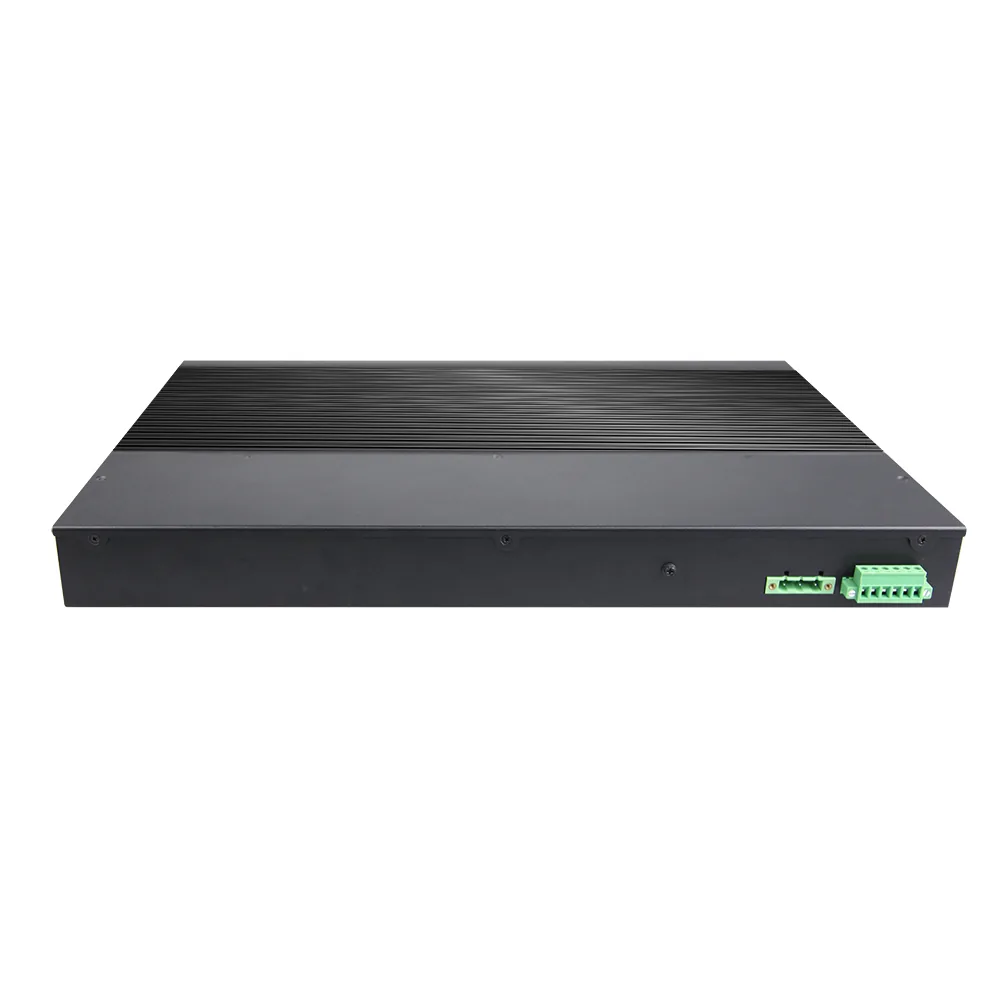
Web management, CLI through Console or Telnet, and SNMP v1/v2c/v3 cover both local commissioning and centralized monitoring. LLDP, RMON, system logs, port statistics, CPU and memory monitoring, Ping testing, cable diagnostics, SFP DDMI, NTP, and configuration file transfer through FTP, TFTP, Xmodem, or SFTP help reduce troubleshooting time. The fanless galvanized steel enclosure, 1U 19-inch rack-mount format, and -40°C to +75°C operating range suit control cabinets, equipment rooms, and other demanding installation areas. Dual AC inputs with DC backup provide power redundancy; AC has priority, and the switch automatically changes to the DC connection if AC power is lost.