
Executive Summary
Substation SCADA traffic links protection relays, intelligent electronic devices (IEDs), meters and station-control equipment. The network therefore has to do more than provide Ethernet ports: it must remain predictable in an electrically noisy switchyard and match the site’s temperature and DC-power conditions. This case study reviews an industrial Ethernet design for substation networking, explains the selection checks, and identifies the project evidence that should be recorded before handover.
Application: Substation automation and SCADA
Network question: How should industrial switches be selected for IED and station-level connectivity?
Design focus: EMC environment, operating temperature, DC power, fiber/copper uplinks and fault-domain boundaries
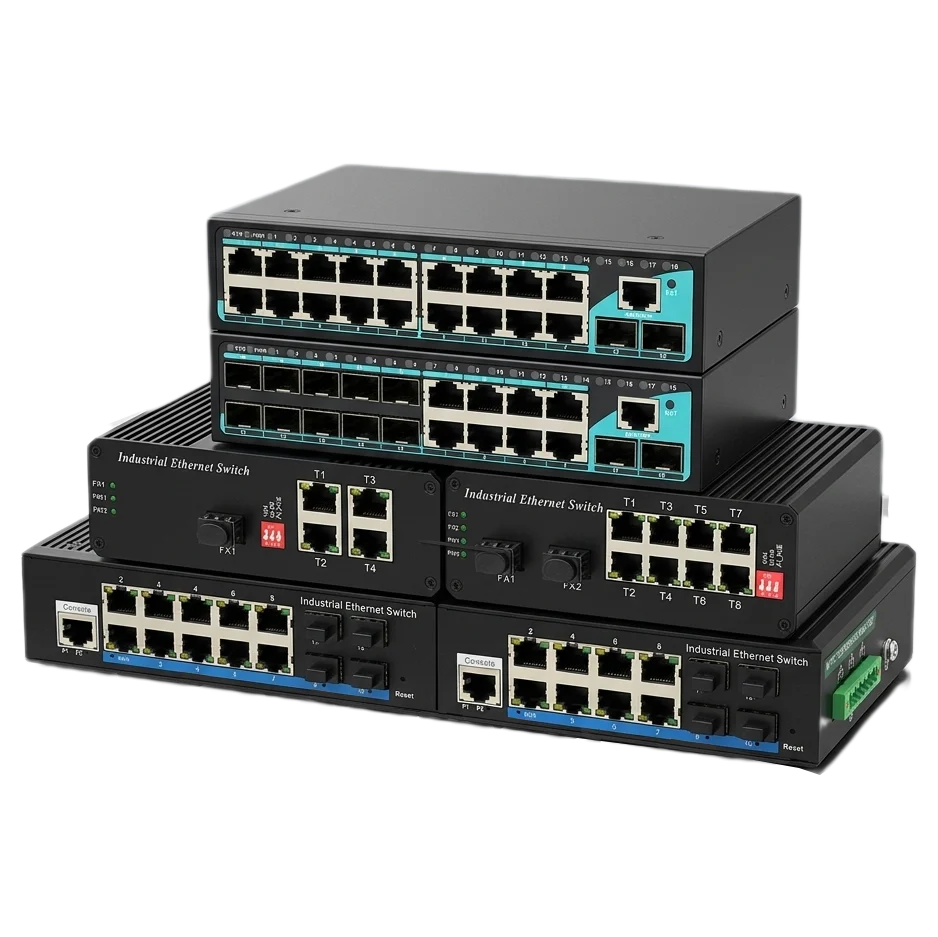
Case configuration: IES100-5E, IES300-2E2F and IS700-4E2F; confirm each role and final specification against the approved project record before publication.
1. Project Background & Technical Challenges
Substation SCADA systems depend on a steady stream of small, time-critical packets — breaker status, analog measurements, alarms and control commands — carried between protection relays, merging units and the station controller. These devices sit metres away from switchgear that switches tens of kilovolts, so the network is expected to work inside one of the most electrically hostile environments in industrial automation. The design brief for a substation network is therefore less about raw throughput and more about deterministic, interference-resistant delivery at low cost per node.
Typical engineering pain points for this class of project:
- High electromagnetic interference. Switching operations, transformers and high-current busbars generate strong transient fields. A switch that resets during a fault event can blind the station controller exactly when operators need telemetry most.
- SCADA real-time expectations. Telemetry and control traffic is small but time-sensitive; unnecessary latency or random packet loss degrades supervisory visibility and can delay fault capture.
- Power reliability inside control cubicles. Substation auxiliary supplies can dip or drop during events. A single-input switch becomes a single point of failure for the whole bay.
- Space and temperature in control rooms and outdoor cubicles. Relay and control panels have little spare room, and outdoor kiosk cubicles can swing from freezing to well above ambient in summer, ruling out fan-cooled consumer gear.
2. The Network Architecture & Solution Design
The design uses a simple, fault-tolerant pattern: bay-level access with unmanaged switches, and managed ring aggregation at the critical nodes. Inside each bay or control cabinet, a fiber-capable industrial unmanaged switch collects the local IEDs, relays and meters on copper and forwards them over a fiber uplink — unmanaged devices are chosen here because they are cost-effective, need no configuration in the field and have the fewest failure modes. At the station level, where several bay uplinks meet and traffic must be separated and protected, a managed Layer 2+ switch provides ring redundancy, VLAN segmentation and remote monitoring. This keeps the expensive, managed layer small and concentrated where it adds real value, while the many cheap access nodes stay simple — and the fiber uplinks remove the galvanic paths between bays and the station controller that strong EMC immunity demands.
Key Technical Implementation Details
- Galvanic isolation via fiber uplinks. Bay aggregation nodes that carry fiber ports (such as the IES300-2E2F) reach the station level over fiber, breaking ground loops and shielding SCADA traffic from copper-borne transients.
- Redundant DC power at each node. Dual DC inputs with redundant supply support (depending on the model) let access switches ride through a single auxiliary-supply failure.
- EMC-aware, wide-temperature hardware. Selected models use industrial EMC and surge-aware design and are rated for wide operating temperature ranges; IEC 61000-4-x immunity levels are commonly written into substation specifications as design targets.
- Segmentation only where it earns its keep. Managed switches at the station level separate SCADA, protection and engineering traffic by VLAN, while bay access stays unmanaged to minimise complexity.
3. Why Wanglink Switches Were Selected
| Engineering Requirement | Standard Commercial Switch | Wanglink Industrial Switch | B2B Value & Impact |
|---|---|---|---|
| EMC immunity in switchyard | Basic EMC protection | Enhanced EMC/surge design on selected models | Fewer resets and errors during fault events |
| Power redundancy | Single AC/DC input | Dual DC input with redundant supply support (depending on the model) | No single point of power failure per bay |
| Temperature in outdoor cubicles | 0–40 °C, fan-cooled | Wide-temperature, fanless design (selected models) | Reliable operation in unheated kiosks |
| Ring / segmentation at station level | Unmanaged only | Managed L2+ with VLAN and ERPS ring (IS700) | Fault-tolerant aggregation for critical nodes |
| Footprint in relay/control panels | Larger, fan-cooled housing | Compact DIN-rail, fanless metal housing | Fits space-constrained control cubicles |
| Service life | Consumer-grade components | Industrial-grade components (model-specific) | Longer service intervals, fewer truck rolls |
4. Deployment Outcomes & Engineering Value
- Design goal: uninterrupted SCADA telemetry. Bay access over copper into fiber-capable uplinks, plus station-level ring aggregation, is engineered so a single link or supply fault does not isolate a bay from the controller.
- Typical deployments target fewer EMC-induced resets by isolating switchyard interference behind fiber and using EMC-aware port designs on selected models.
- Lower per-node cost and simpler maintenance. Unmanaged access switches keep the price-per-IED low, need no field configuration, and let managed capability be reserved for the few aggregation points that genuinely need it.
- Scalable per bay. Additional IEDs can be added to a bay’s access switch — or a new bay node added to the ring — without redesigning the station backbone.
5. Recommended Products in This Case
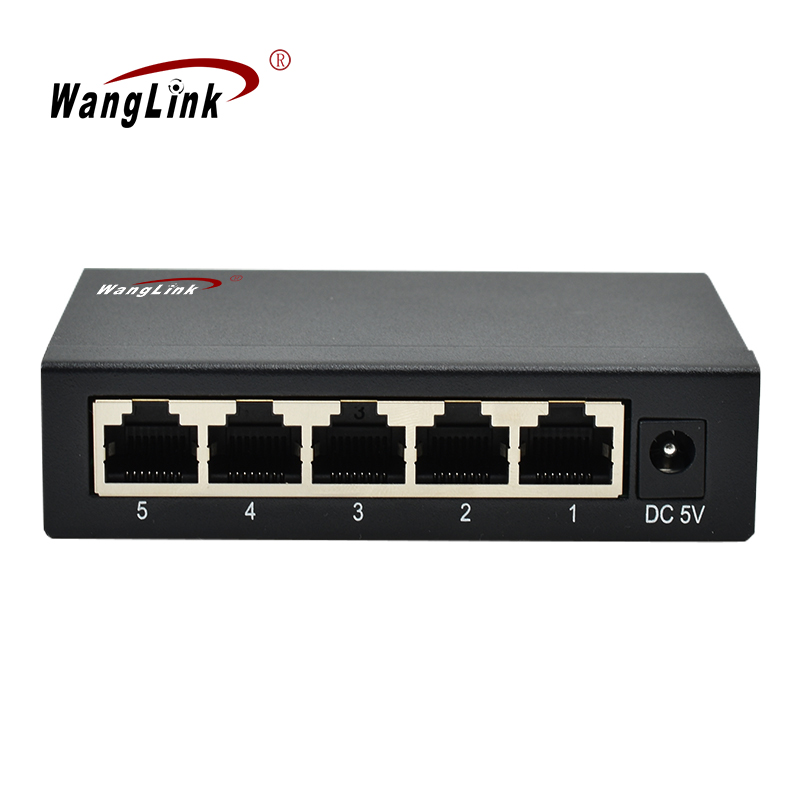
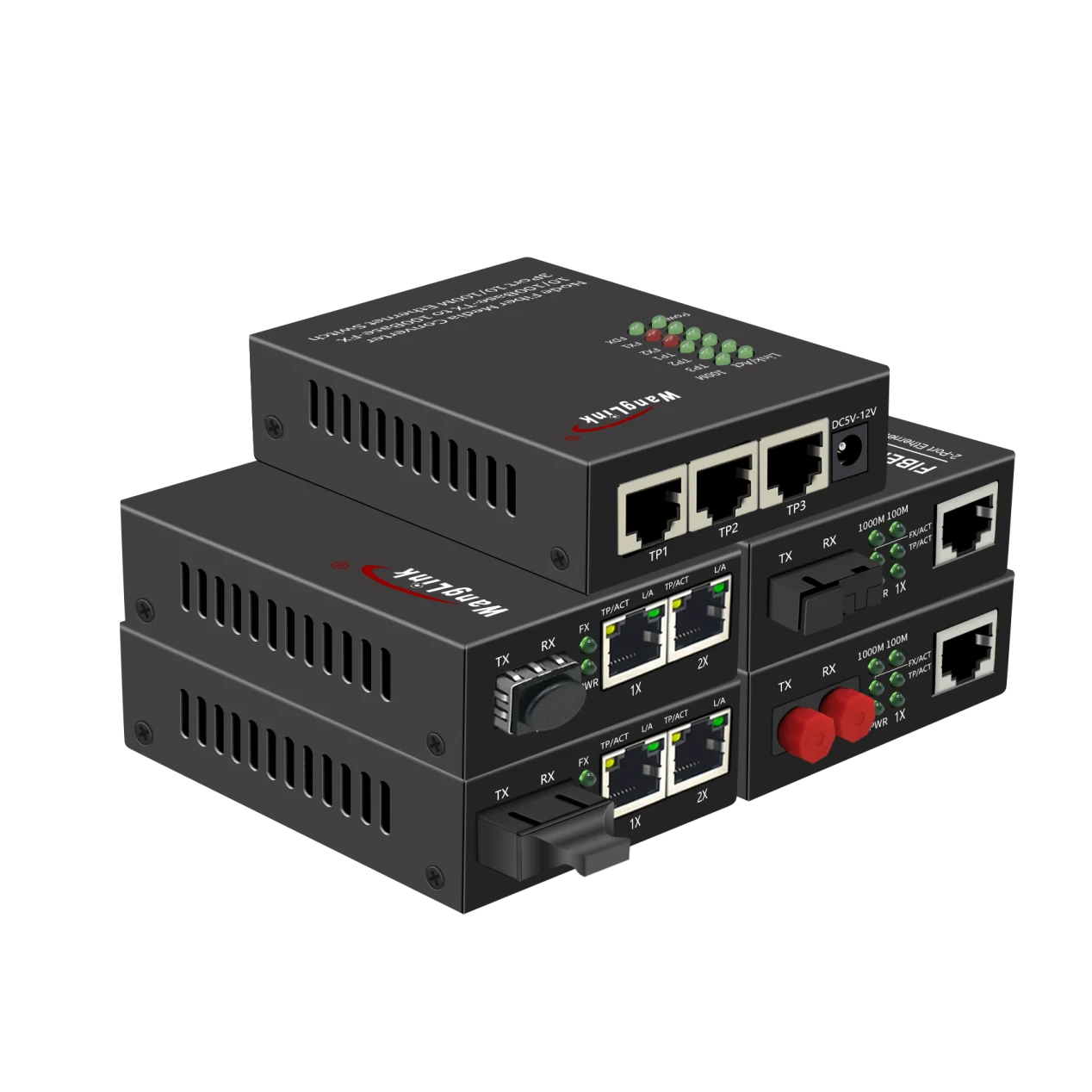
IES100-5E — 5-Port Industrial Fast Ethernet Unmanaged Switch
- 5 × Fast Ethernet (100 Mbps) RJ45 ports for IEDs, relays and meters
- Unmanaged, plug-and-play — no field configuration required
- DIN-rail mounted, fanless metal housing
- Dual DC power input with redundant supply support (depending on the model)
- Wide operating temperature rating on selected models
- Compact footprint for relay and control panels
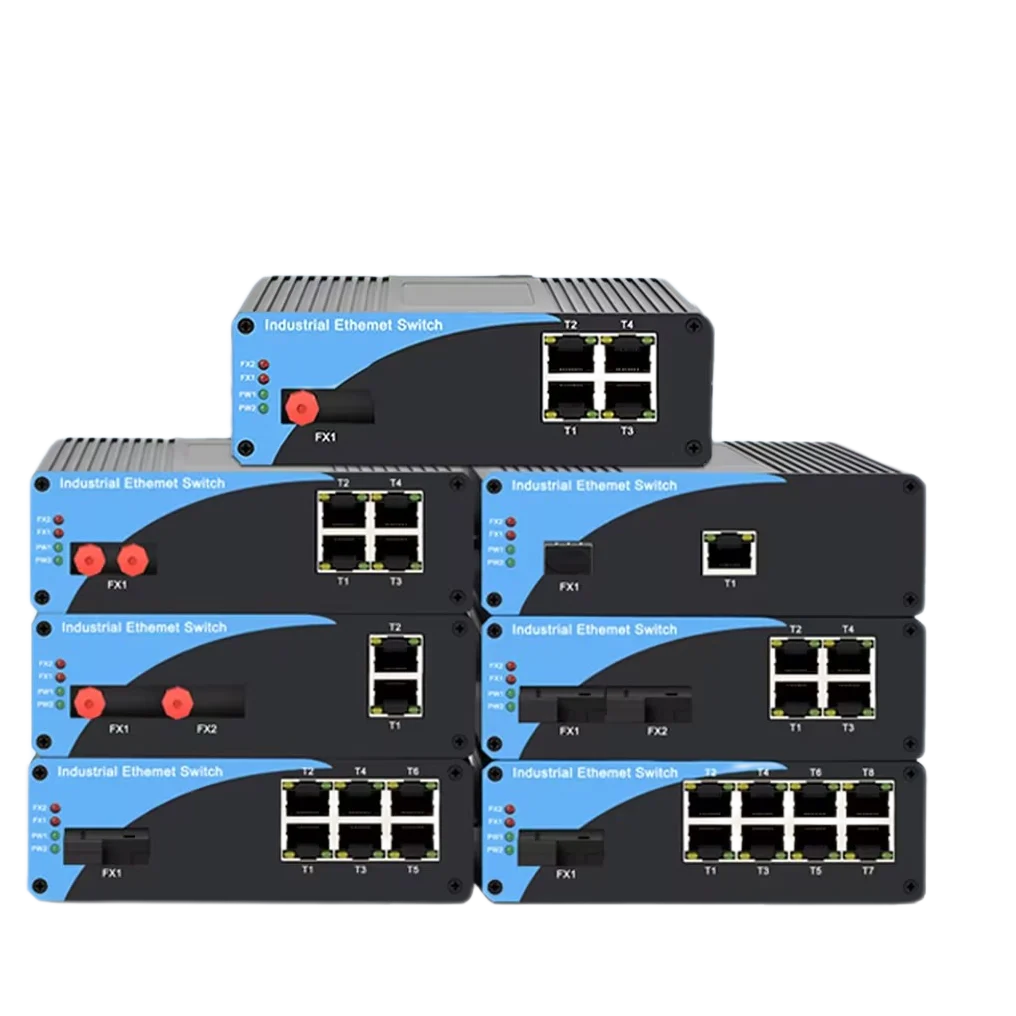
IES300-2E2F — Unmanaged 2-Port Gigabit Industrial Ethernet Switch
- 2 × Gigabit RJ45 ports plus 2 × fiber uplinks (SC/LC, model-specific)
- Unmanaged operation for low-maintenance bay aggregation
- DIN-rail mounted with dual DC input (depending on the model)
- Fiber uplinks provide galvanic isolation to the station controller
- Wide operating temperature rating on selected models
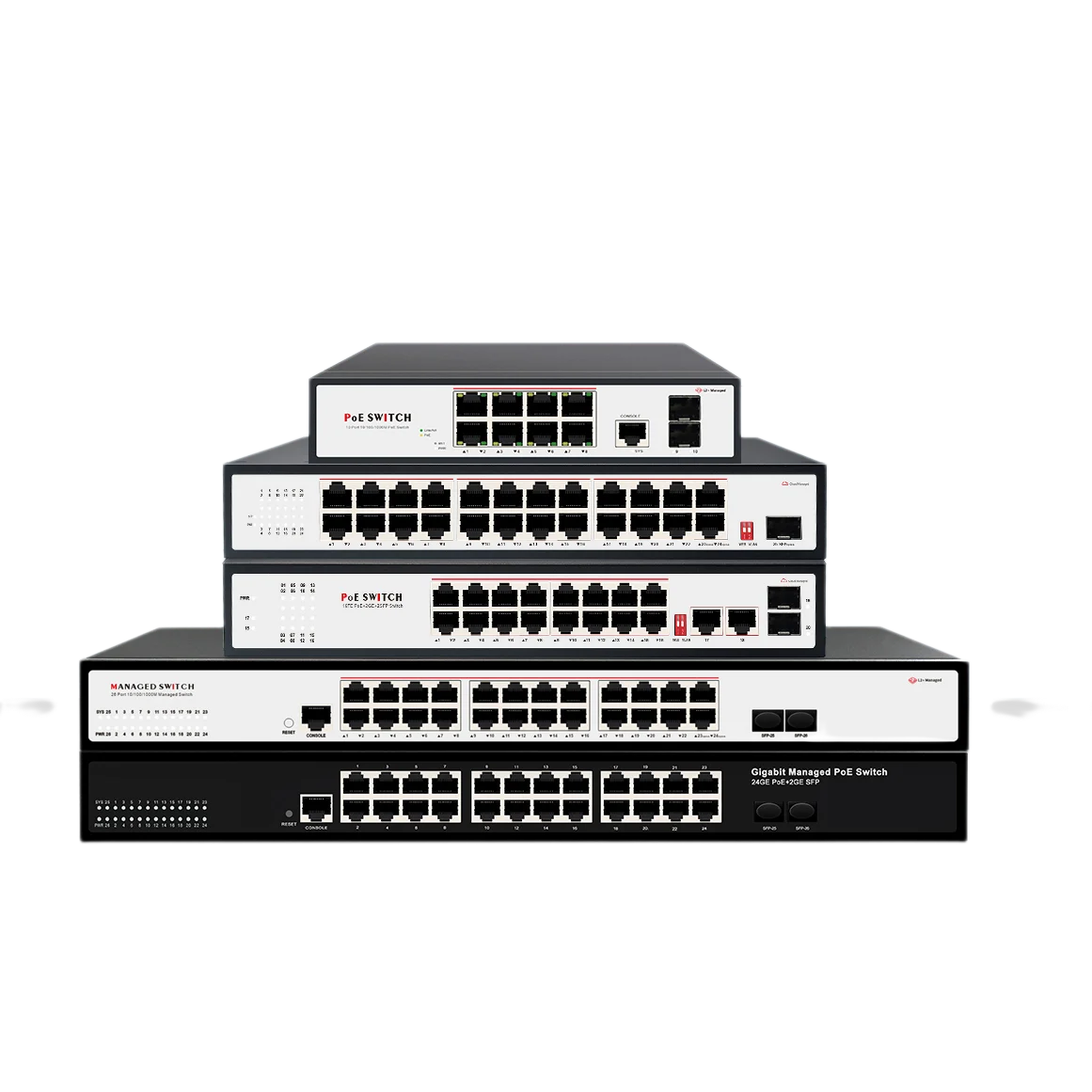
IS700-4E2F — Managed Gigabit Industrial Ethernet Switch (4 × RJ45)
- 4 × Gigabit RJ45 ports plus 2 × fiber uplinks for station-level aggregation
- Managed Layer 2+ with VLAN, QoS, SNMP and ERPS ring support
- Deployed at critical nodes where ring redundancy and segmentation are required
- DIN-rail mounted with dual DC input (depending on the model)
- Wide operating temperature rating on selected models
Industrial Network Design Checklist
Substation SCADA switch selection should document the electrical environment, cabinet temperature, DC input and redundancy, copper/fiber interfaces, traffic separation, and tested link or ring behavior before handover.
Build a More Resilient Substation Network
Modernising a substation SCADA network or a distribution automation rollout? Share your bay layout, device counts and redundancy requirements, and our engineers will help you match industrial unmanaged access switches with the right managed ring aggregation for your project. Request a solution consultation.