
Executive Summary
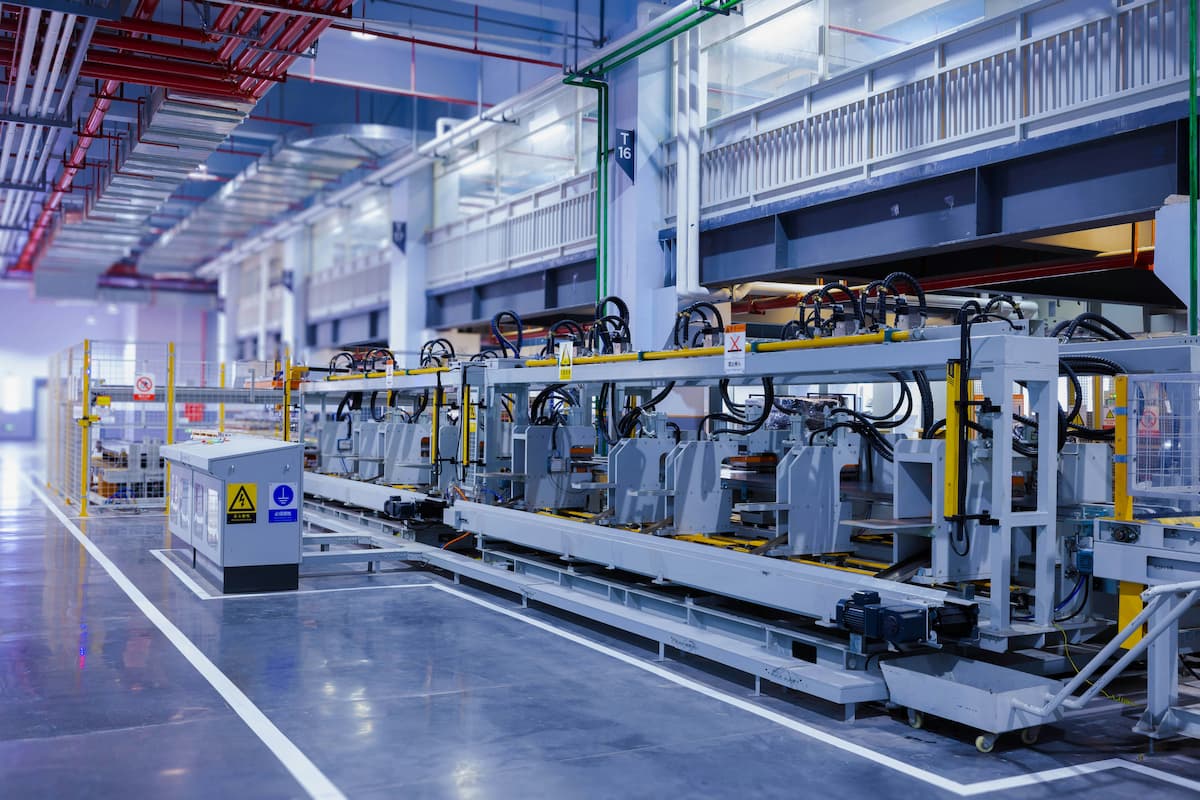
A mining network may connect conveyor controls, ventilation and pump systems, environmental monitoring, personnel tracking, dispatch and safety communications across underground and surface areas. Switch selection must start with the actual environment and topology: temperature, enclosure, electrical conditions, link distance, traffic separation, power and maintenance access. This case study presents a review framework for a wide-temperature industrial Ethernet design; model roles and performance claims require confirmation against the project record and current datasheets.
Application: Underground, open-pit and surface mining operations
Network question: How should an industrial switch be evaluated for mining monitoring and control networks?
Design focus: Environmental conditions, powered endpoints, uplink/resilience, segmentation and maintainability
Case configuration: IES100-5E, IS700-16E2F-30W, IS730-24E4F-60W and IS830-24E4F-B; confirm each role and final specification against the approved project record before publication.
1. Project Background & Technical Challenges
A modern mine runs on data as much as on machinery. Conveyor PLCs, ventilation and pump controls, personnel tracking, environmental sensors, dispatch systems, gas monitoring and safety communication all share the same network — and that network has to survive extremes far beyond a data centre: fine, conductive dust; temperatures that swing from -40 °C on a winter surface site to +75 °C underground; heavy vibration from crushers and conveyor drives; and electrical noise from large motors and variable-frequency drives. When the network fails, production stops and, in the safety systems, the stakes are far higher.
Typical engineering pain points for this class of project:
- Dust ingress and thermal load. Fine mineral dust clogs filtered, fan-cooled equipment quickly; the failure mode is usually thermal, not electrical, and it appears exactly when uptime matters most.
- -40 °C to +75 °C operating range. Underground workings, shafts and surface plants expose the same hardware to both deep-cold and high-heat conditions across a single site.
- Harsh electrical environment. Large motors, crushers and VFDs inject surges and transients; unprotected copper links are a recurring source of dropped connections.
- Long underground spans and single-point failures. Galleries can run for kilometres, so fiber uplinks are required — and any single broken link or failed supply must not isolate a production area or a safety subsystem.
2. The Network Architecture & Solution Design
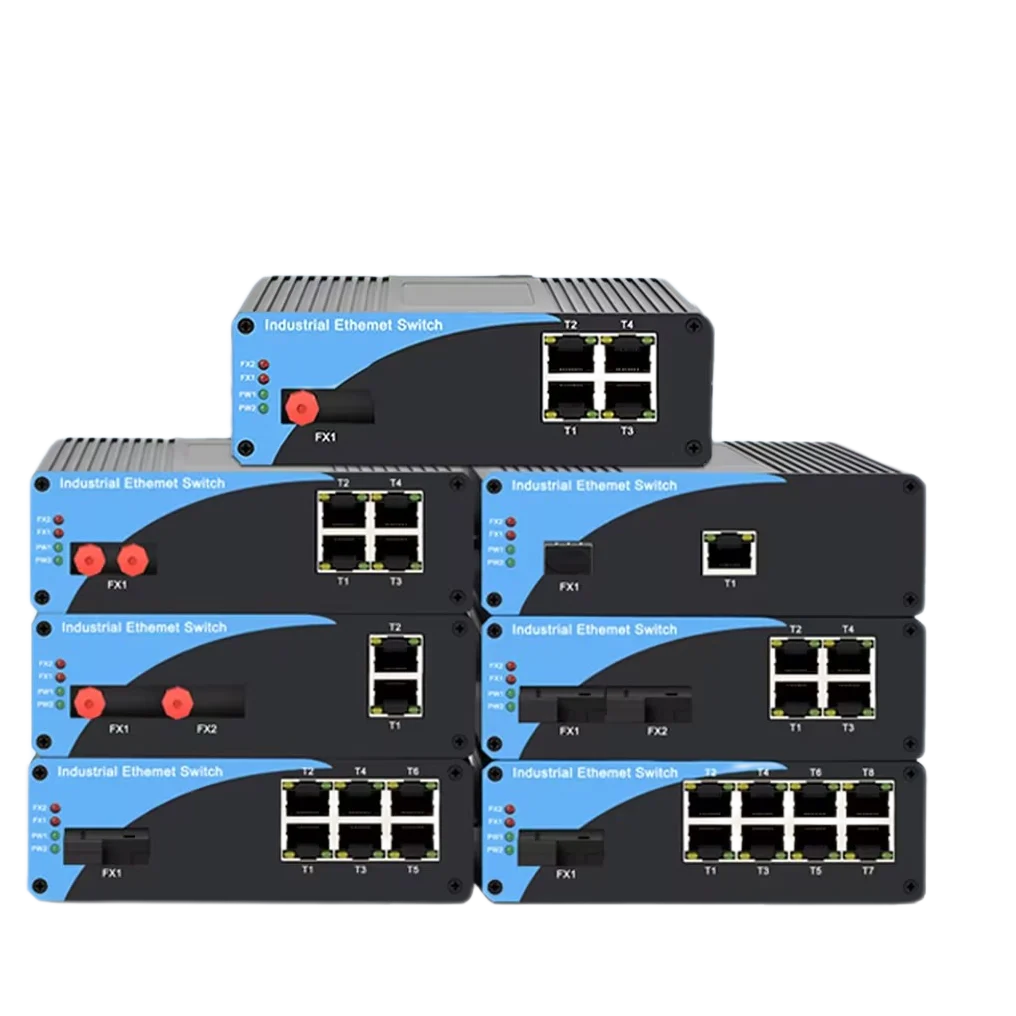
The solution uses fiber-ringed access with managed aggregation and optional PoE at the edge. Underground, compact industrial unmanaged switches collect local equipment — conveyors, pumps, sensors — over copper, then hand off to the fiber ring that runs between production zones through the managed aggregation switches. On that ring, managed switches provide the redundancy and segmentation that stops a single link or node failure from taking down a zone. Where cameras, VoIP handsets or PoE sensors are used, industrial PoE switches deliver power and data over the same cable, avoiding extra power wiring deep underground. At the surface control center, Layer 3 managed switches aggregate the underground and open-pit domains, route between the monitoring, control and safety VLANs, and hand traffic to the plant network. The design deliberately mixes cost-effective unmanaged access nodes with managed ring and Layer 3 aggregation, so redundancy and routing are concentrated where they protect the most — safety and production control.
Key Technical Implementation Details
- Fiber ring redundancy underground. Access switches aggregate over copper into a fiber ring built on managed switches with ERPS support, engineered so a broken gallery link is healed automatically rather than isolating a production zone.
- Wide DC input, dust-tolerant hardware. Wide-temperature, fanless hardware on selected models is intended to cover a -40 °C to +75 °C envelope, and sealed fanless designs remove the airflow and filters that trap conductive dust.
- Surge-aware port and power design. Selected models use surge-aware port design for the motor-and-VFD-heavy electrical environment, with IEC 61000-4-x levels commonly specified as project design targets.
- PoE and Layer 3 segmentation where they matter. Industrial PoE switches (30 W/60 W per port, depending on the model) power cameras, handsets and sensors over one cable, while managed L3 switches keep monitoring, equipment-control and safety traffic in separate VLANs.
3. Why Wanglink Switches Were Selected
| Engineering Requirement | Standard Commercial Switch | Wanglink Industrial Switch | B2B Value & Impact |
| Dust and particulates | Vented, fan-cooled | Sealed fanless metal housing (selected models) | Fewer clog and thermal failures in dusty areas |
| Wide temperature range | 0–50 °C | -40 °C to +75 °C design on selected models | One family for surface cold and underground heat |
| Surge & EMC exposure | Basic protection | Surge-aware port design (selected models) | Survives motor and VFD transients |
| Link redundancy | No ring support | Managed ERPS ring with fast failover | A single broken gallery link does not stop production |
| High-power edge devices | Low PoE budget | 30 W / 60 W PoE (depending on the model) | Powers cameras, handsets and sensors over one cable |
| Traffic segmentation | Unmanaged only | L3 managed on IS830 | Separates control, safety and monitoring traffic |
4. Deployment Outcomes & Engineering Value
- Design goal: continuous monitoring and safety communication. Fiber-ring access with managed aggregation is engineered so a single link or supply fault does not isolate a production area or a safety subsystem.
- Typical deployments target fewer dust- and heat-related outages by removing fans and filters in favour of sealed, fanless wide-temperature hardware on selected models.
- Reduced cabling cost underground. Industrial PoE switches deliver power and data over one cable run, avoiding additional deep-underground power wiring to cameras and sensors.
- Wider service envelope and scalability. A -40 °C to +75 °C design envelope on selected models simplifies spares across surface and underground locations, while ring and Layer 3 aggregation leave room to add new zones without re-engineering the core.
5. Recommended Products in This Case
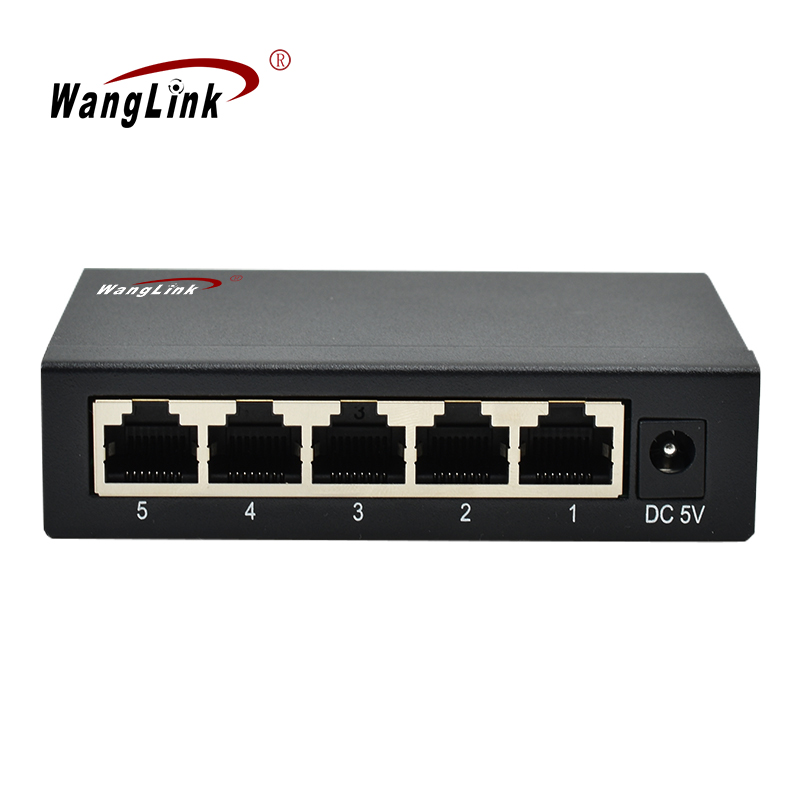
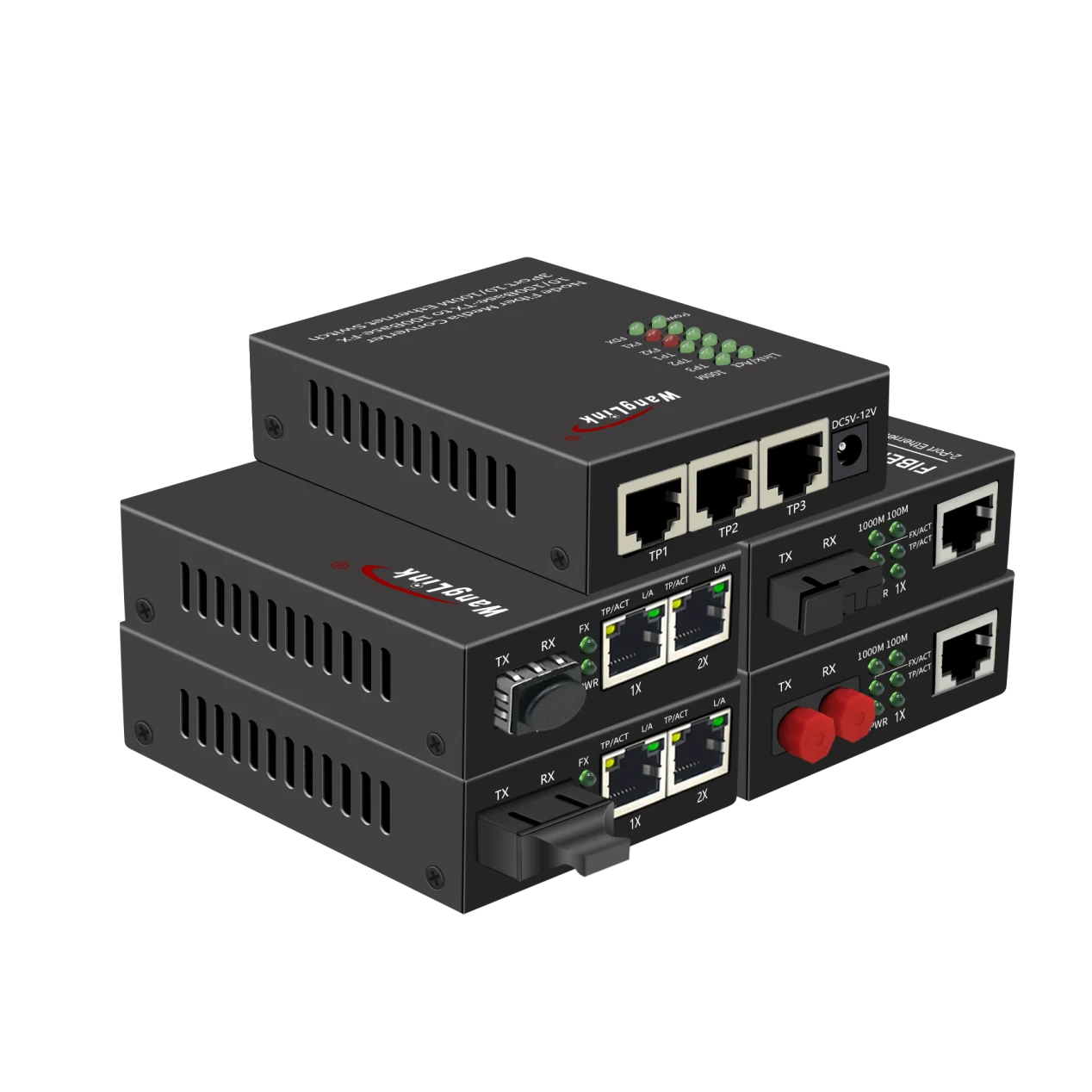
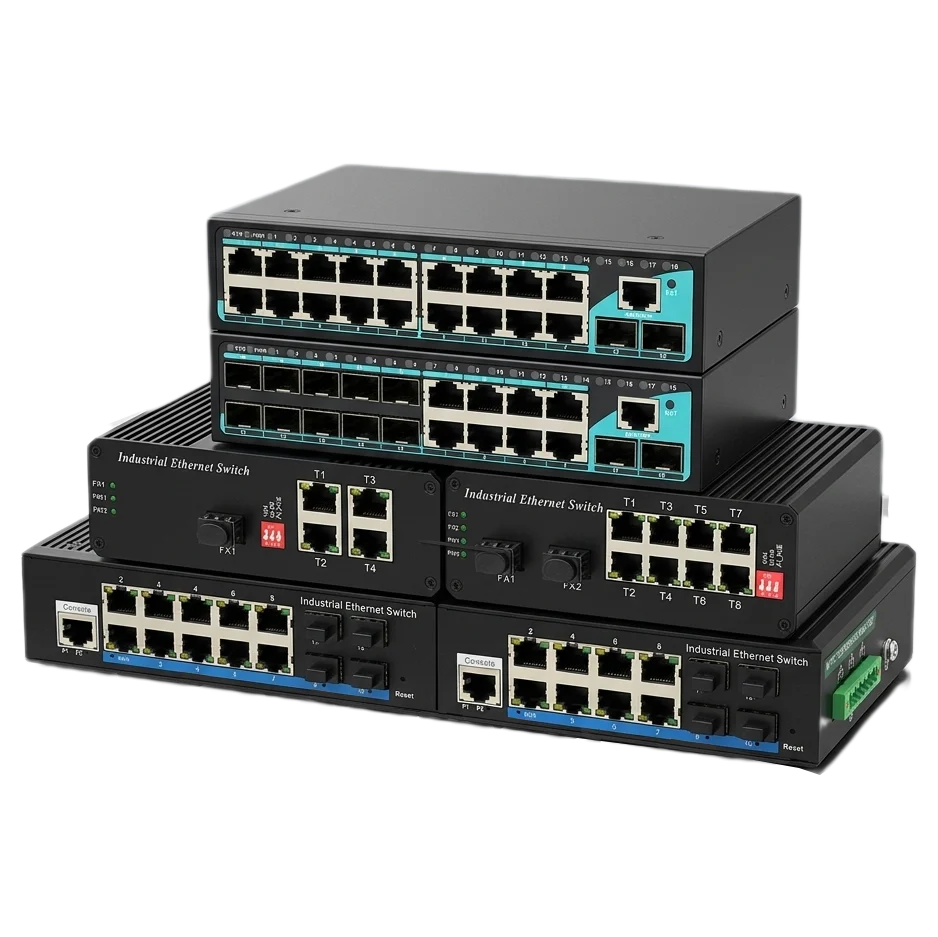
IES100-5E — 5-Port Industrial Fast Ethernet Unmanaged Switch
- 5 × Fast Ethernet (100 Mbps) RJ45 ports for sensors, PLCs and local equipment
- Unmanaged, plug-and-play — no field configuration required
- DIN-rail mounted, sealed fanless metal housing for dusty areas
- Dual DC power input with redundant supply support (depending on the model)
- Wide operating temperature rating on selected models
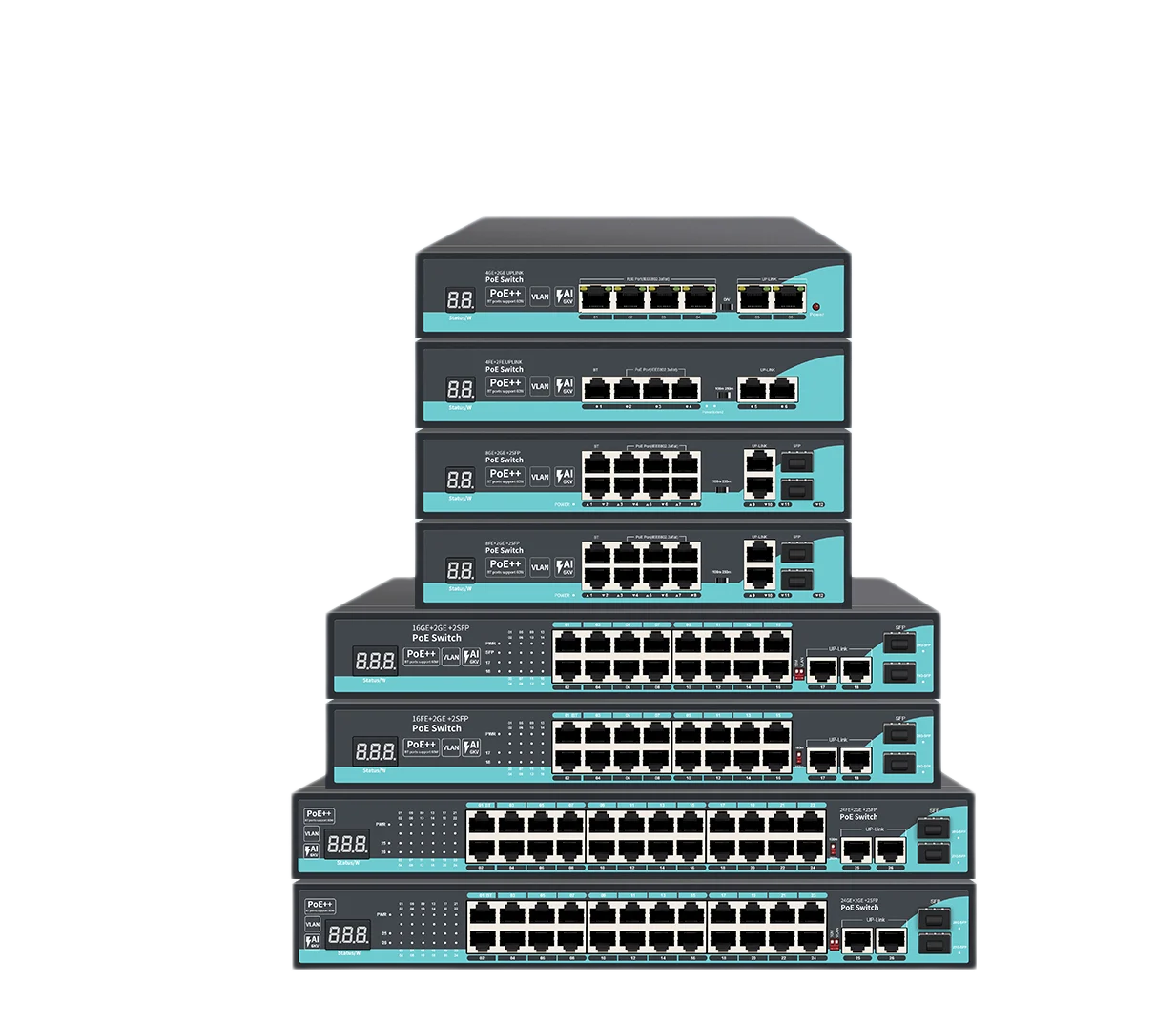
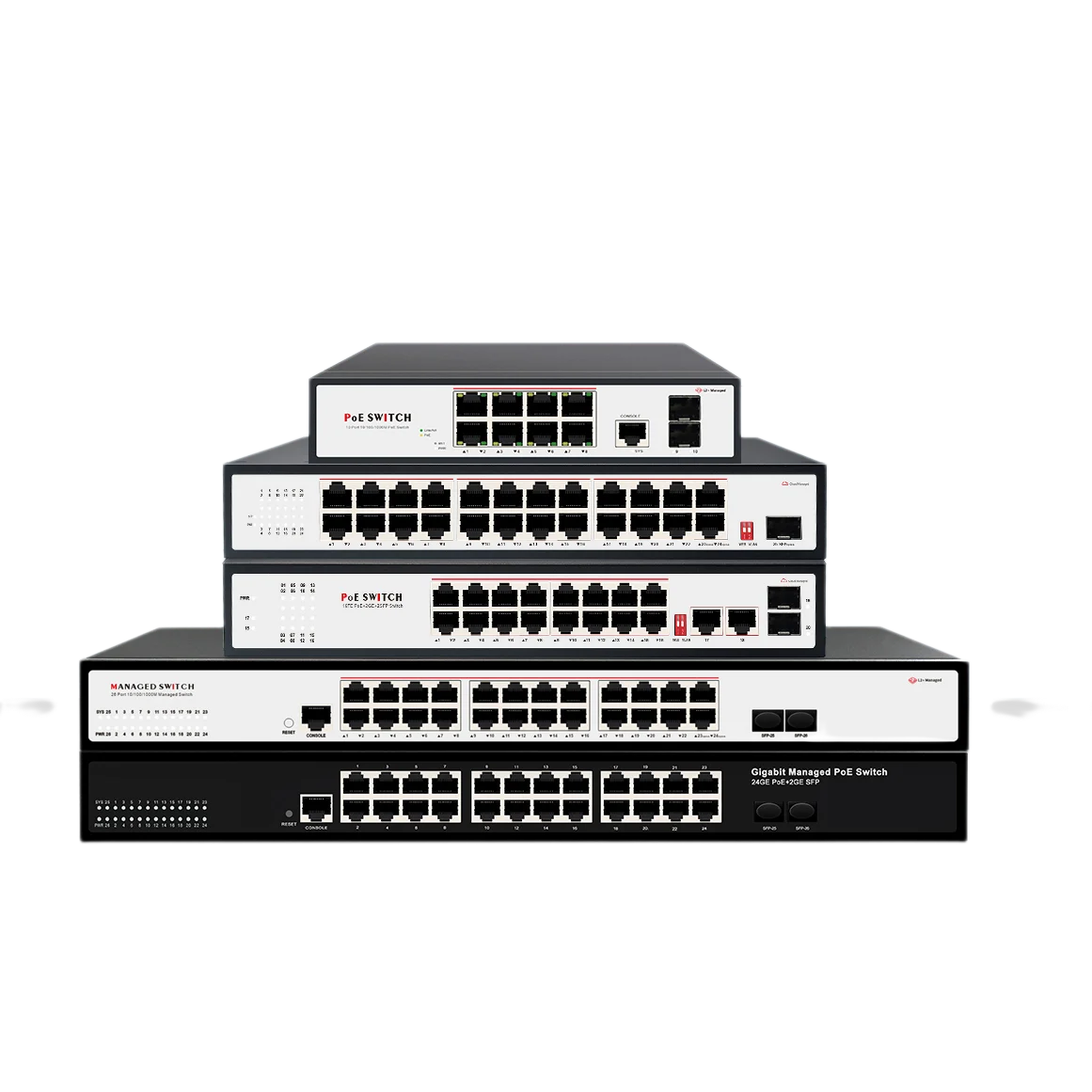
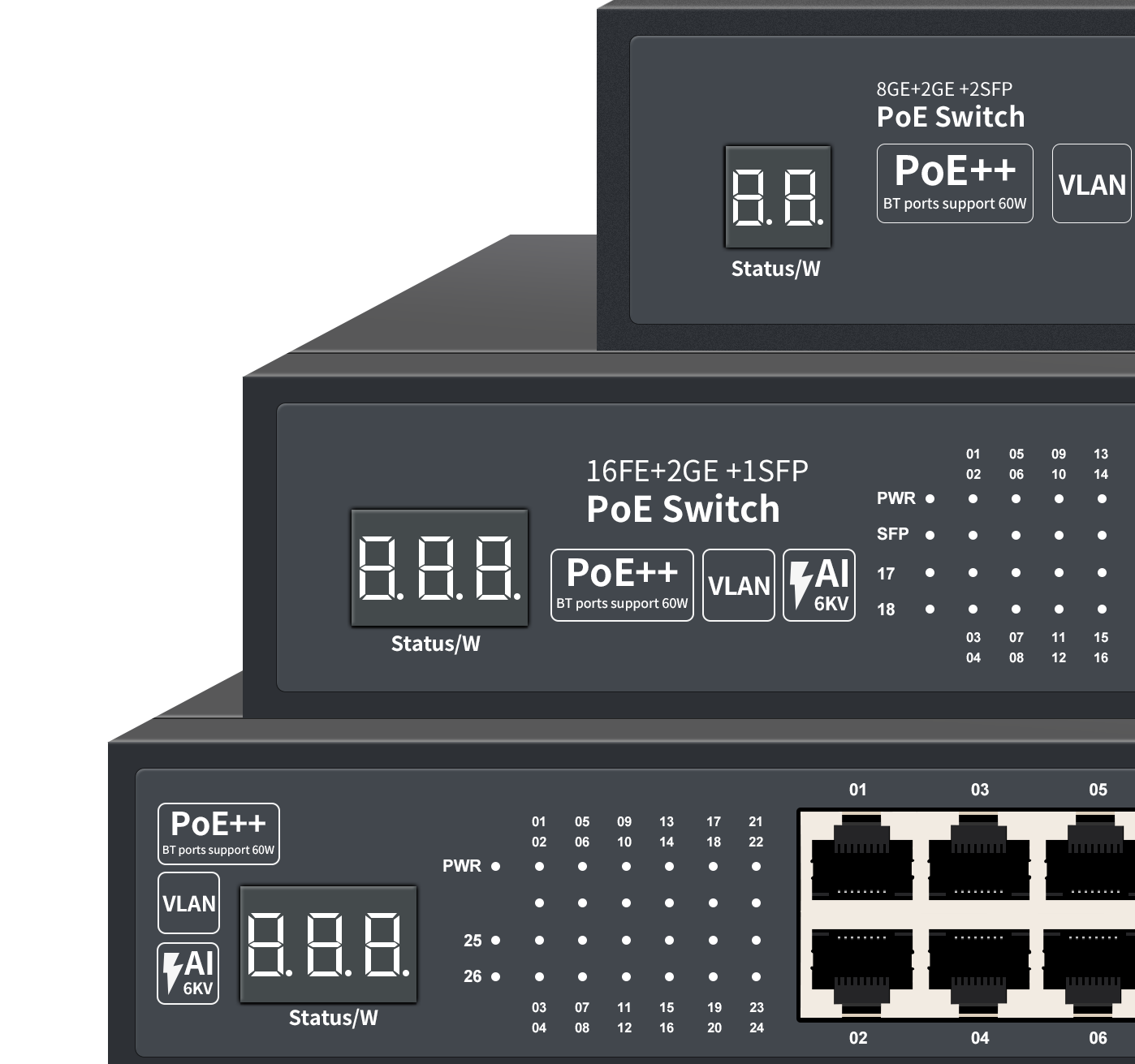
IS700-16E2F-30W — Managed 16-Port Gigabit Industrial PoE Switch (30 W)
- 16 × Gigabit RJ45 PoE ports plus 2 × fiber uplinks
- IEEE 802.3af/at PoE up to 30 W per port (depending on the model) for cameras, handsets and sensors
- Managed Layer 2+ with ERPS ring, VLAN and QoS
- DIN-rail mounted, fanless metal housing for dust-exposed cabinets
- Wide operating temperature rating on selected models
IS730-24E4F-60W — Managed 10G-Uplink Industrial Ethernet Switch, 24-Port PoE (60 W)
- 24 × Gigabit PoE ports (up to 60 W per port, depending on the model) with 4 × 10G uplinks
- Higher power budget for high-power devices such as PTZ cameras and wireless APs
- Managed Layer 2 with ring support and QoS for mixed traffic
- 10G uplinks for high-capacity aggregation between zones
- Wide operating temperature rating on selected models
IS830-24E4F-B — Managed 24-Port Layer 3 Industrial Ethernet Switch
- 24 × Gigabit RJ45 ports plus 4 × fiber uplinks
- Layer 3 routing to segment monitoring, equipment-control and safety-communication traffic
- Managed feature set with ring support and advanced QoS
- DIN-rail mounted with redundant DC input (depending on the model)
- Wide operating temperature rating on selected models
Industrial Network Design Checklist
Mining switch selection should record the installation area, temperature, dust and moisture controls, endpoints, power, uplink medium, traffic separation, redundancy tests and maintenance plan before handover.
Build a Mining Network That Keeps Production Moving
Planning network infrastructure for an underground or open-pit operation? Share your zone layout, temperature envelope and PoE device count, and our engineers will help you match wide-temperature, dust-tolerant industrial switches with ring redundancy to your project. Request a mining network consultation.