

Why Outdoor Barrier Gates Demand Industrial-Grade Unmanaged PoE Switches
Vehicle barrier gates sit in the worst spots on any site. Direct sun, dust, rain, and the occasional pressure washer. The control board, RFID reader, ANPR camera, and intercom all need power and a stable network uplink. Running separate AC power and Ethernet to each device turns a simple gate into a cabling nightmare. That’s where an industrial unmanaged PoE switch earns its keep.
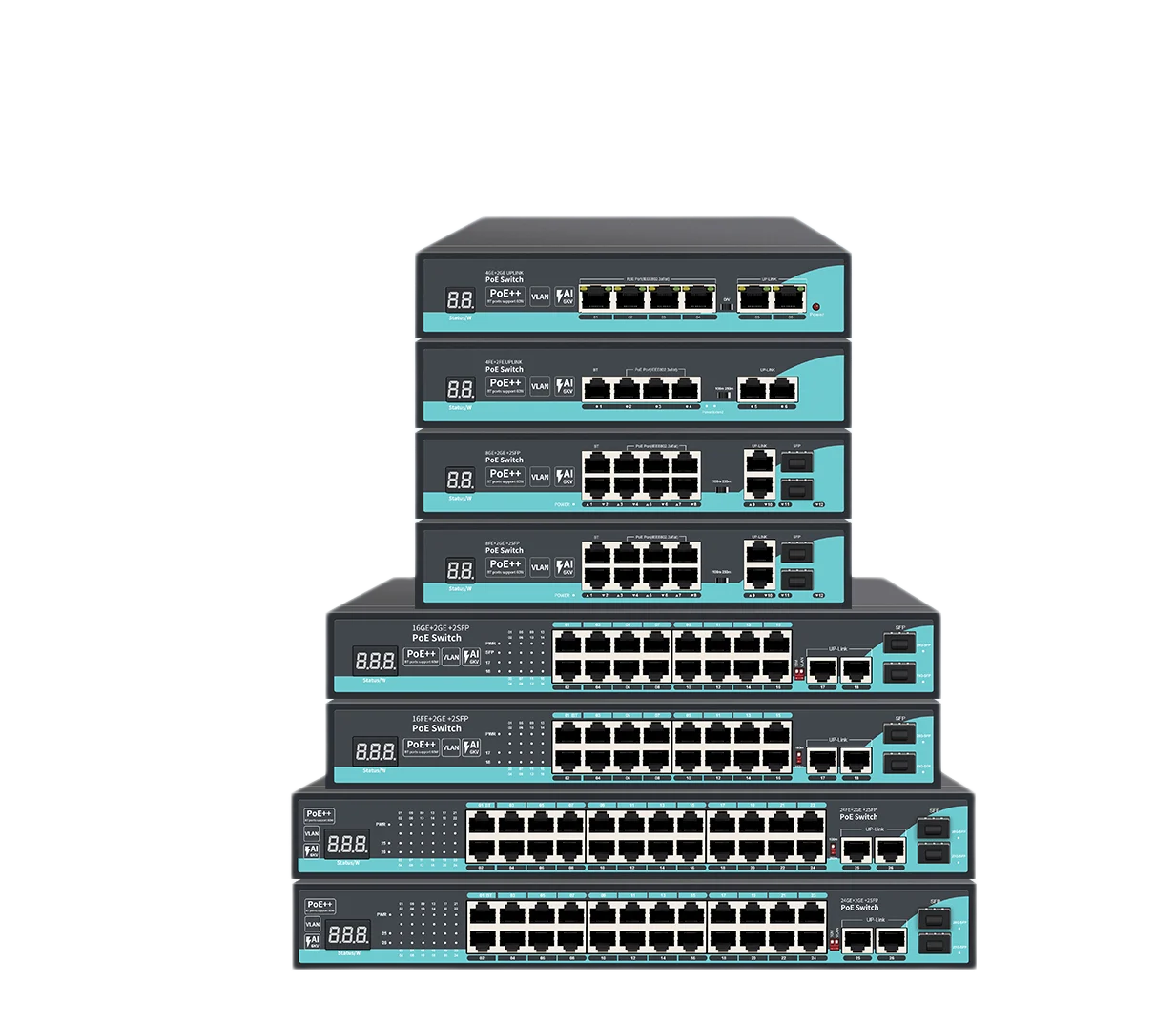
System integrators and WISPs we work with tell us the same story: “We just want something that doesn’t die after the first thunderstorm.” An unmanaged PoE switch built for industrial workloads pushes power and data over a single Cat6 cable to every device at the gate—no configuration, no VLAN tinkering, no cloud subscription. You plug it in, the gate system comes online, and you drive away.
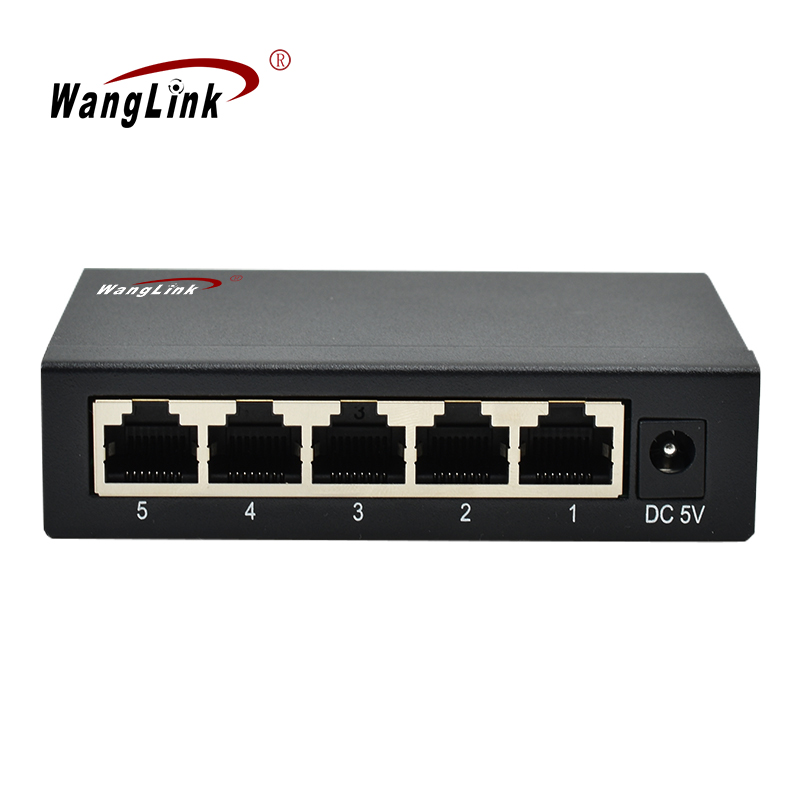
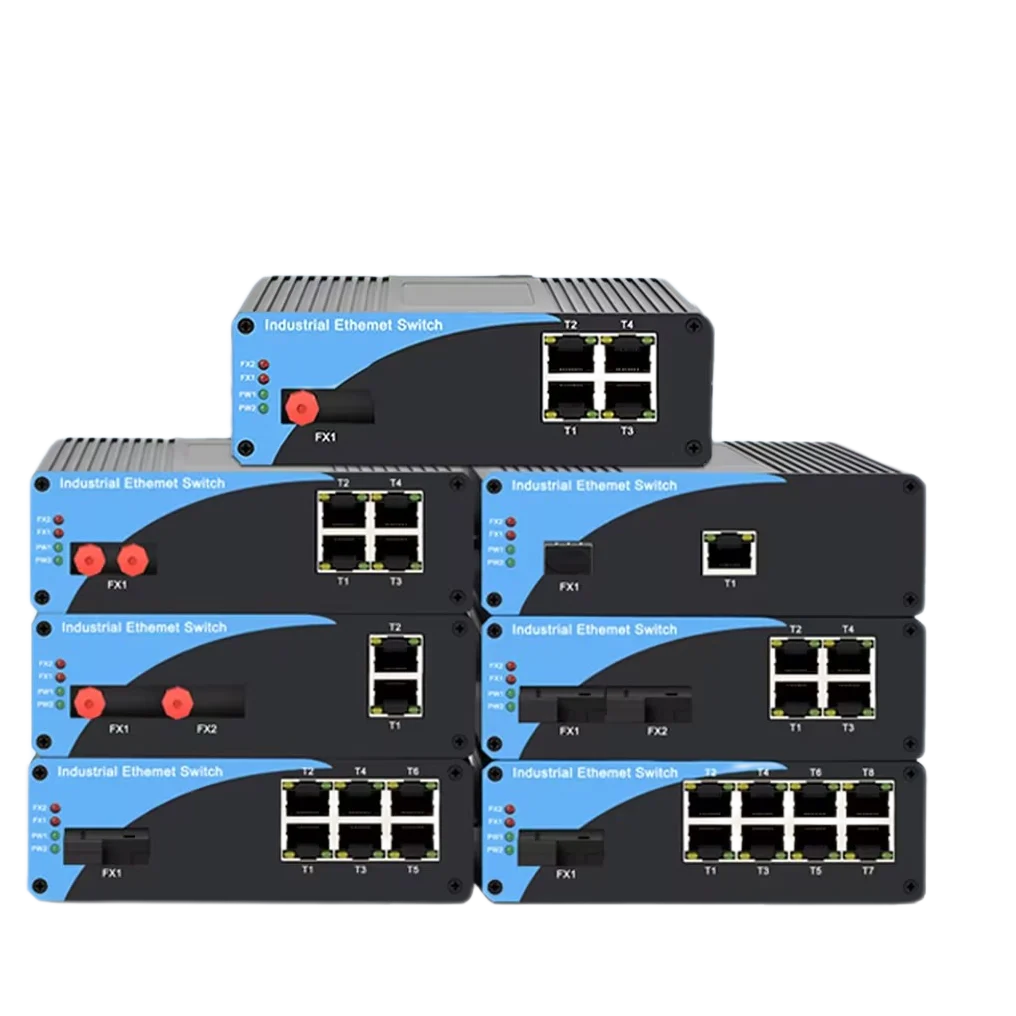
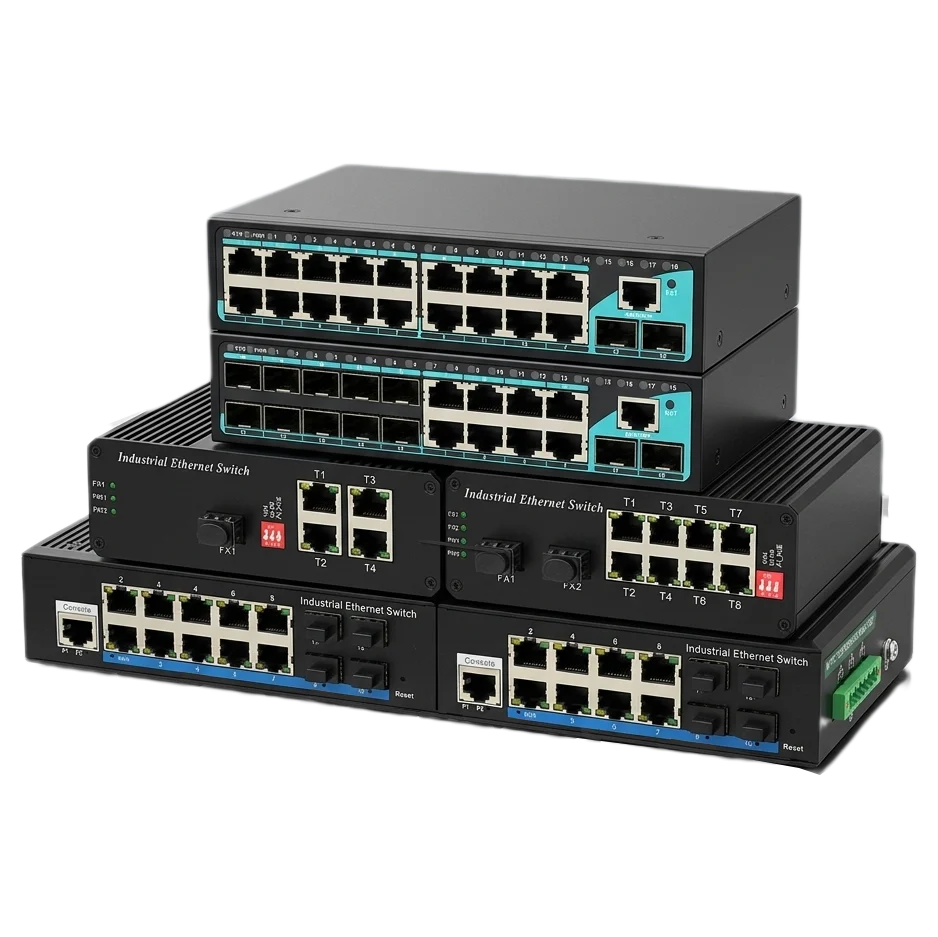
Wanglink has been manufacturing network hardware for 13 years, with 1,200+ weak-current and ISP projects behind us. We’ve seen what fails outdoors. Our industrial unmanaged PoE switches are built from the PCB up to handle exactly these edge-of-network pain points. No fans, no moving parts, just a sealed metal case and components rated for -40°C to 75°C. That’s the baseline, not a premium add-on.
Technical Must-Haves for Barrier Gate PoE Switching
Not all “industrial” switches can handle a barrier gate environment. Here’s what we test against in our own lab before a unit ships.
PoE Power Budget and Standards
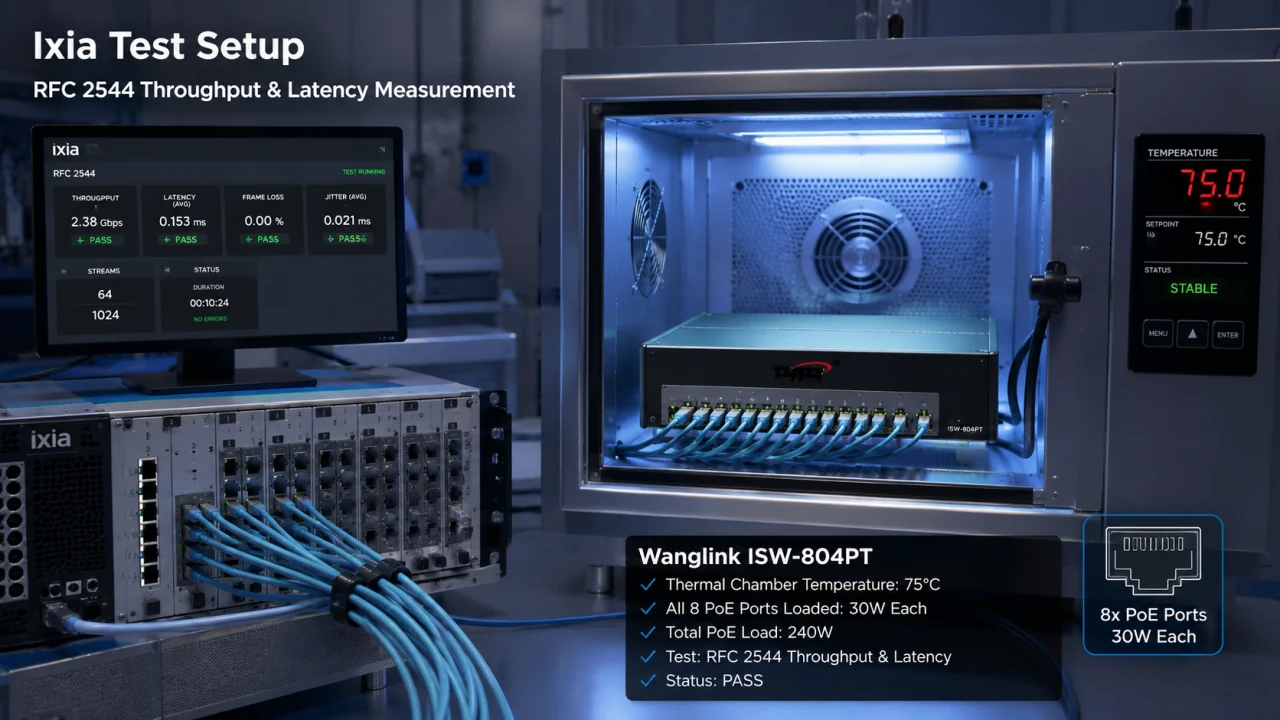
An outdoor gate typically pulls 15–30W for a PTZ camera with IR, 8–15W for an ANPR controller, and 5–10W for the barrier arm motor controller if it supports PoE. That adds up fast. A switch with a 120W total power budget sounds fine on paper, but if it can’t deliver stable power at 60°C ambient, you’ll get random reboots. Wanglink’s industrial unmanaged PoE switches use per-port IEEE 802.3at (PoE+) as standard, with select models supporting 802.3bt (60W per port) for heated cameras or gate controllers that need more juice. We rate our power budget at full load across all ports simultaneously, tested inside a thermal chamber at 75°C for 72 hours—not just at room temperature.
Environmental Hardening: IP40, Wide Temp, and Surge Immunity
IP40 keeps out tools and wires; the real protection for outdoor gate cabinets is the enclosure. What matters is how the switch electronics handle condensation, temperature swings, and voltage spikes. We design to IEC 61000-4-5 surge immunity: our ports withstand ±6 kV line-to-ground, compared to the typical 2 kV you’ll find in office-grade switches. Every unit goes through a 4-hour burn-in test with PoE load at 100% before packaging. MTBF is calculated at >100,000 hours based on Telcordia SR-332, using component stress data from our SMT line and field return rates across 5,000+ deployed ports (Wanglink R&D lab database, 2022–2024).
Non-Blocking Throughput and Low Latency for Real-Time Control
When a vehicle triggers the loop detector, the barrier must react in milliseconds. A switch that introduces latency or drops packets during burst traffic from multiple cameras will cause gate control delays. Our unmanaged PoE switches use non-blocking wire-speed switching fabric. We validate this with RFC 2544 tests using an Ixia traffic generator. The table below shows how Wanglink’s ISW-804PT industrial unmanaged PoE switch stacks up against typical commercial switches used in outdoor cabinets.
| Metric | Industry Benchmark (Commercial Switch) | Wanglink ISW-804PT Measured |
|---|---|---|
| Switching Capacity | 16 Gbps (claimed) | 16 Gbps (wire-speed, zero-loss) |
| 64-Byte Frame Latency | ≤ 15 μs (typical) | ≤ 8 μs (avg. across 8 ports, full load) |
| PoE Power Budget (75°C) | Often derated to 60% | 120W sustained, no derating |
| Surge Protection (IEC 61000-4-5) | 2 kV (line-to-ground) | 6 kV (line-to-ground) |
| MTBF | ~50,000 hours (fan-based) | >100,000 hours (fanless, per SR-332) |
Data sources: Industry benchmarks from aggregated datasheets of three leading commercial switch vendors (2023). Wanglink measurements from internal RFC 2544 test suite, Ixia XGS12 chassis, sample size n=48 units, 2024Q1. MTBF calculated per Telcordia SR-332 Issue 4, using Wanglink BOM stress data and field failure rate (0.18%) from 2022–2024.
Wanglink’s Manufacturing Edge: From PCB to Full-Load Burn-In
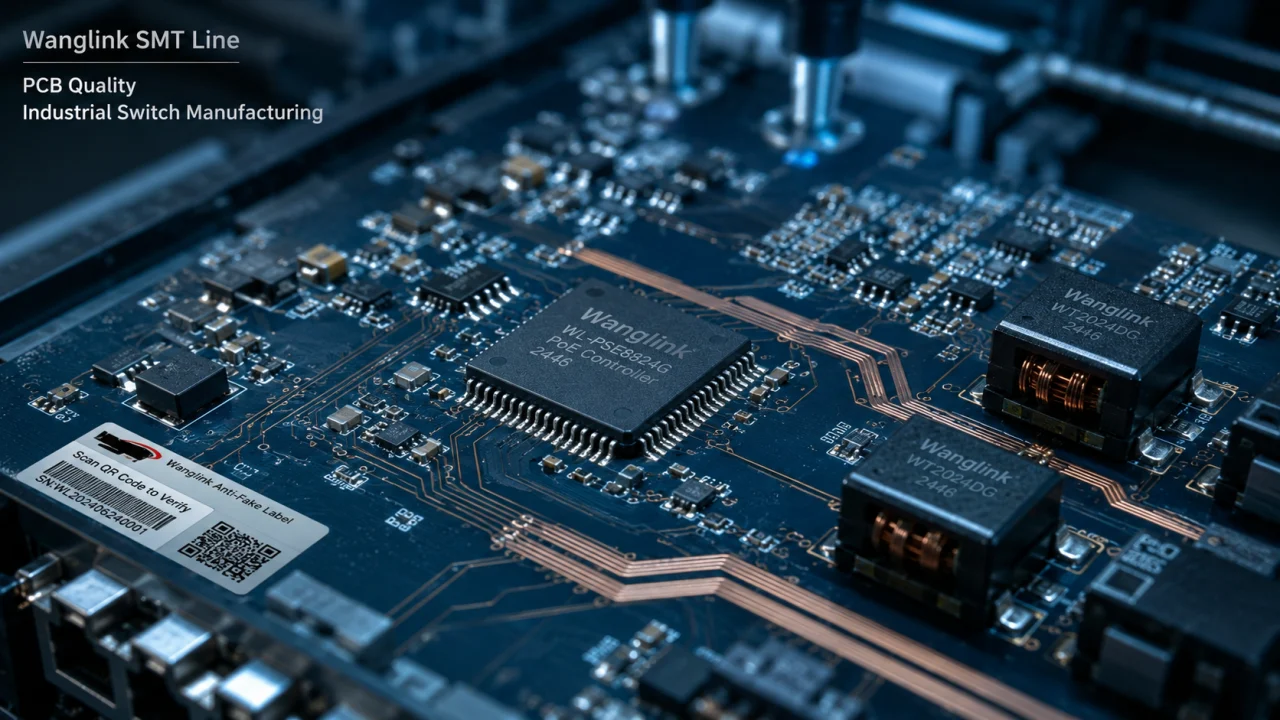
We don’t buy generic boards and slap our logo on them. Our Shenzhen factory runs the full chain: PCB layout, SMT assembly, wave soldering, and final system test. For industrial PoE switches, the PCB stackup and isolation between PoE power circuits and data lines matter. We use 2 oz copper on power planes and keep creepage distances above 2.5 mm to handle humidity and dust accumulation inside outdoor cabinets. Every board gets automated optical inspection (AOI) and X-ray for BGA joints if present.
After assembly, each switch goes through a 4-hour burn-in at 55°C ambient with all ports running PoE at max load. We log per-port voltage and current, and drop any unit that drifts more than 2%. This isn’t a spot check—it’s 100% of production. Our on-time delivery (OTIF) to B2B buyers runs at 98.5%, versus an industry average of 92% for networking hardware (source: S&P Global Supply Chain Benchmarking, 2023). Our defect rate over the last 12 months is 0.18%, confirmed by RMA tracking across 12,000+ units shipped. That’s what direct control over SMT and test gives you.
Real-World Deployment: A WISP’s Parking Lot Barrier Project
One of our WISP clients in Southeast Asia manages network infrastructure for a chain of 23 shopping mall parking lots. Each lot has 4–8 barrier gates, each gate equipped with an ANPR camera, a PoE-powered LED display, and a barrier controller. The original setup used commercial PoE switches inside poorly ventilated metal cabinets. During the rainy season, lightning-induced surges killed switches regularly, and the high cabinet temperatures caused PoE shutdowns at noon.
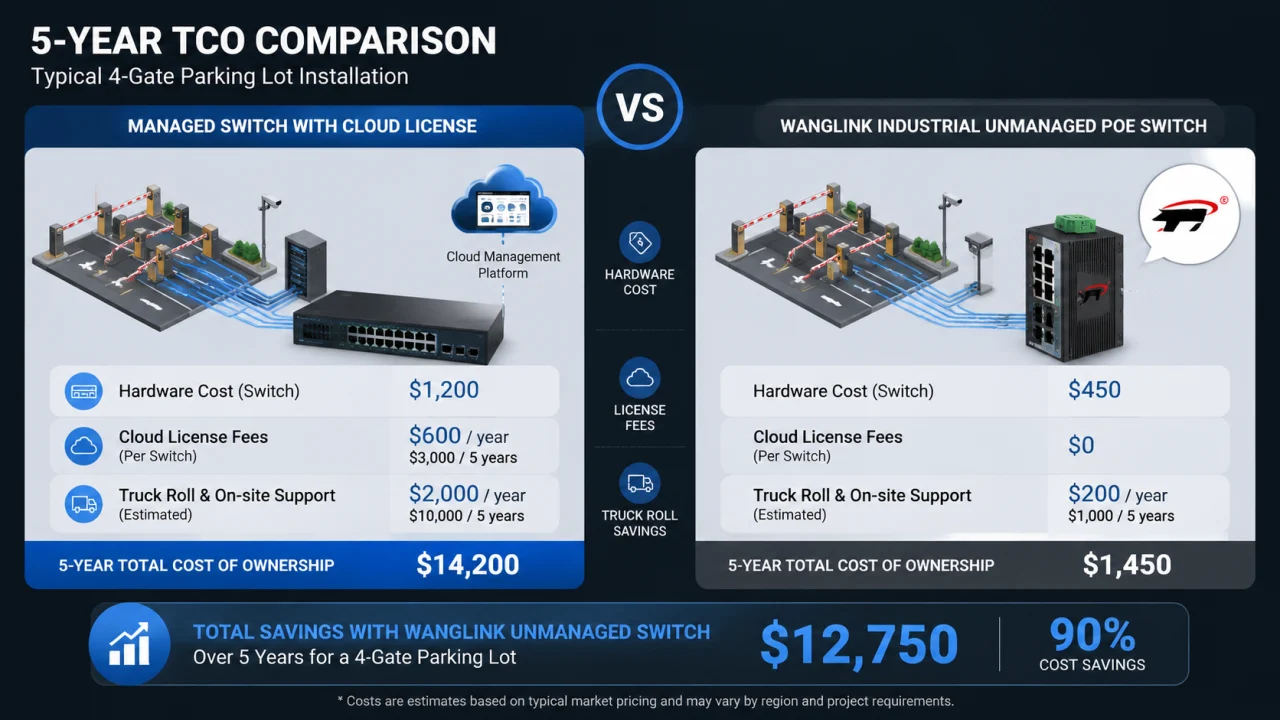
Our team proposed the Wanglink ISW-804PT, an 8-port industrial unmanaged PoE switch with 6 kV surge protection and a fanless design. We pre-staged the switches, but the integrator simply mounted them on DIN rails inside the existing cabinets, plugged in the cameras and gate controllers, and the network came up without a single configuration step. Over a 12-month period (project started Q2 2023), the site recorded zero switch-related outages. The local integrator reported a 70% drop in field service calls for gate network issues, and the total cost of ownership per gate dropped by 35% when factoring in truck rolls and replacement hardware (data source: Client project close-out report, 2024Q2 + Wanglink production execution data). The client has since standardized on Wanglink industrial PoE switches for all new parking projects.
TCO Comparison: Unmanaged Industrial PoE vs. Managed Switches with Cloud Licensing
Some vendors push managed switches for every outdoor location, citing remote monitoring. But for a barrier gate, the network requirement is simple: power the devices and pass traffic to the control room. A managed switch adds cost, configuration complexity, and often a recurring cloud license fee. One major brand charges $120/year per switch for cloud management—for a gate that might run untouched for 5 years, that’s $600 extra per unit, more than the switch itself. Wanglink’s industrial unmanaged PoE switches deliver the same hardware reliability without any license. They just work. If you do need remote monitoring, our optional free cloud platform covers basic status and PoE power cycling without subscriptions. We’d rather earn your repeat business on the hardware than lock you into a SaaS fee for a parking lot gate.
FAQ: What System Integrators Ask About Industrial Unmanaged PoE Switches
How do I ensure PoE compatibility with different barrier gate controllers and cameras?
Stick to IEEE 802.3af/at/bt standards. Our switches perform active PoE negotiation per the standard—they won’t fry a passive-only device. We also test with a compatibility lab that includes 50+ common IP cameras, access points, and gate controllers. If you have a specific device, ship it to us; we’ll validate and send you a test report within 5 working days.
What’s the RMA process for outdoor switches damaged by lightning or surge?
We know lightning hits even with protection. Our standard warranty covers manufacturing defects for 3 years. For surge-damaged units, we offer a fast-track replacement at 40% of list price, no questions asked, as long as the unit was installed with proper grounding. Just email your account manager with the serial number and a photo of the installation; we ship a replacement within 48 hours from our local warehouse in your region.
Can I get these switches with custom labeling or pre-configured VLANs?
Yes. Our OEM/ODM service supports custom front-panel branding, color, and even a pre-loaded configuration file if you need a specific VLAN or QoS setting burned in at the factory. MOQ for custom labeling is 100 units. For full ODM projects, we can modify the PCB layout and PoE budget—typical lead time is 6–8 weeks after design lock.
What is the minimum order quantity (MOQ) for Wanglink industrial unmanaged PoE switches?
Sample orders of 1–5 units are welcome for evaluation. For volume pricing, MOQ is 50 units. We hold buffer stock of popular models in our US and EU warehouses, so repeat orders under 200 units usually ship same day.
Conclusion: Why Wanglink Powers Critical Outdoor Access Infrastructure
Outdoor barrier gates are a small part of the network, but they’re highly visible when they fail. An industrial unmanaged PoE switch that’s built from the ground up for heat, surges, and constant load removes the most common failure points. Wanglink’s 13 years of in-house manufacturing, 100% burn-in testing, and field data from over 1,200 projects give system integrators and WISPs a partner who speaks their language. We don’t just ship boxes; we ship reliability you can measure—and we back it with real test data, not marketing slides. When you’re evaluating your next gate deployment, let’s talk about how our switches can cut your service calls and keep the barriers moving.