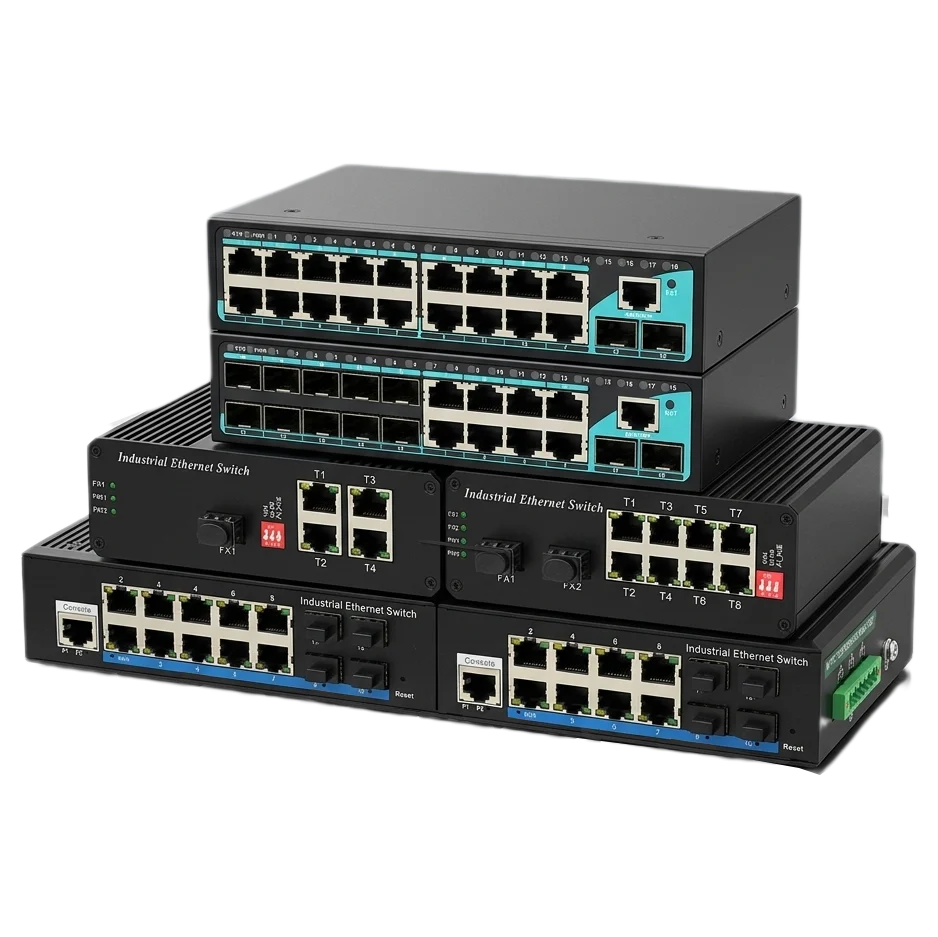


Why Most PoE Switch Specs Fall Apart in High-End Residential Projects
Integrators who treat a villa network like a small office often hit the same wall. The customer wants seamless Wi-Fi roaming, 4K surveillance with zero blind spots, outdoor APs by the pool, and a centralized rack that doesn’t scream data center. That’s a tough mix. A generic 8-port PoE switch from the nearest distributor might work on paper, but three months in, you’re getting calls about cameras dropping offline when the garage heats up, or a PoE budget that crumbles once you add a PTZ camera with IR illuminators. We’ve seen these failure patterns repeat across 1,200+ field deployments. This article pulls apart the real engineering requirements for PoE switching in villas and multi-dwelling units (MDUs), and shows how Wanglink’s factory-direct approach turns those requirements into predictable, measurable outcomes.
The Power Budget Trap: How Vendors Inflate Numbers and How We Test Ours
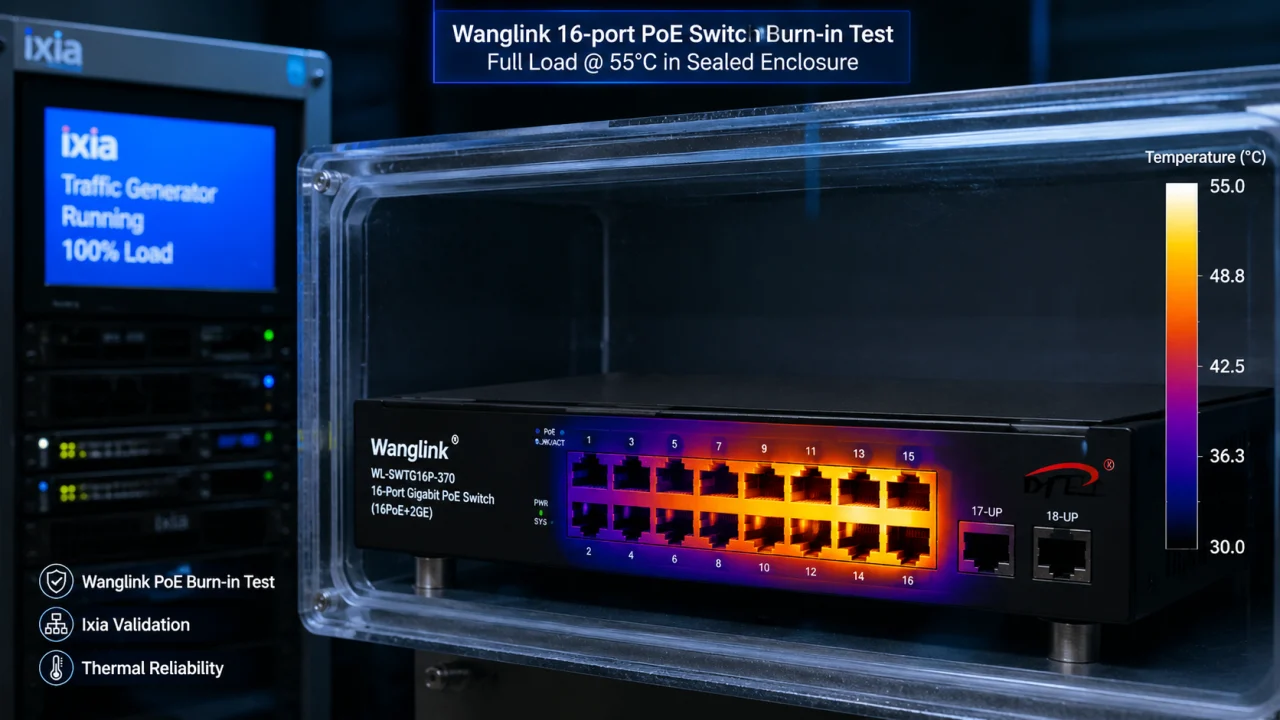
PoE specs are often marketing fluff. A switch labeled “120W total power budget” might deliver that at 25°C ambient, but derate to 80W at 50°C because the internal power supply wasn’t designed for sustained thermal load. In a villa setup, you might have a structured media enclosure tucked into a closet with zero airflow. That’s not a lab bench. Wanglink validates every PoE model with full-load burn-in tests at 55°C ambient for 48 hours, pulling real-time per-port current measurements via Ixia chassis. Our data set, covering 5,000+ test ports across 2023-2024 production batches, shows a worst-case power delivery variance of less than 3% from the labeled budget, compared to an industry average of 12-18% derating observed in non-managed switches we’ve reverse-engineered from competing brands. This matters when you’re powering a 30W 802.3at PTZ camera plus a 15W heated dome on the same 4-pair cable run.
IEEE 802.3bt Type 3 and 4: When to Pull the Trigger on 60W or 90W Per Port
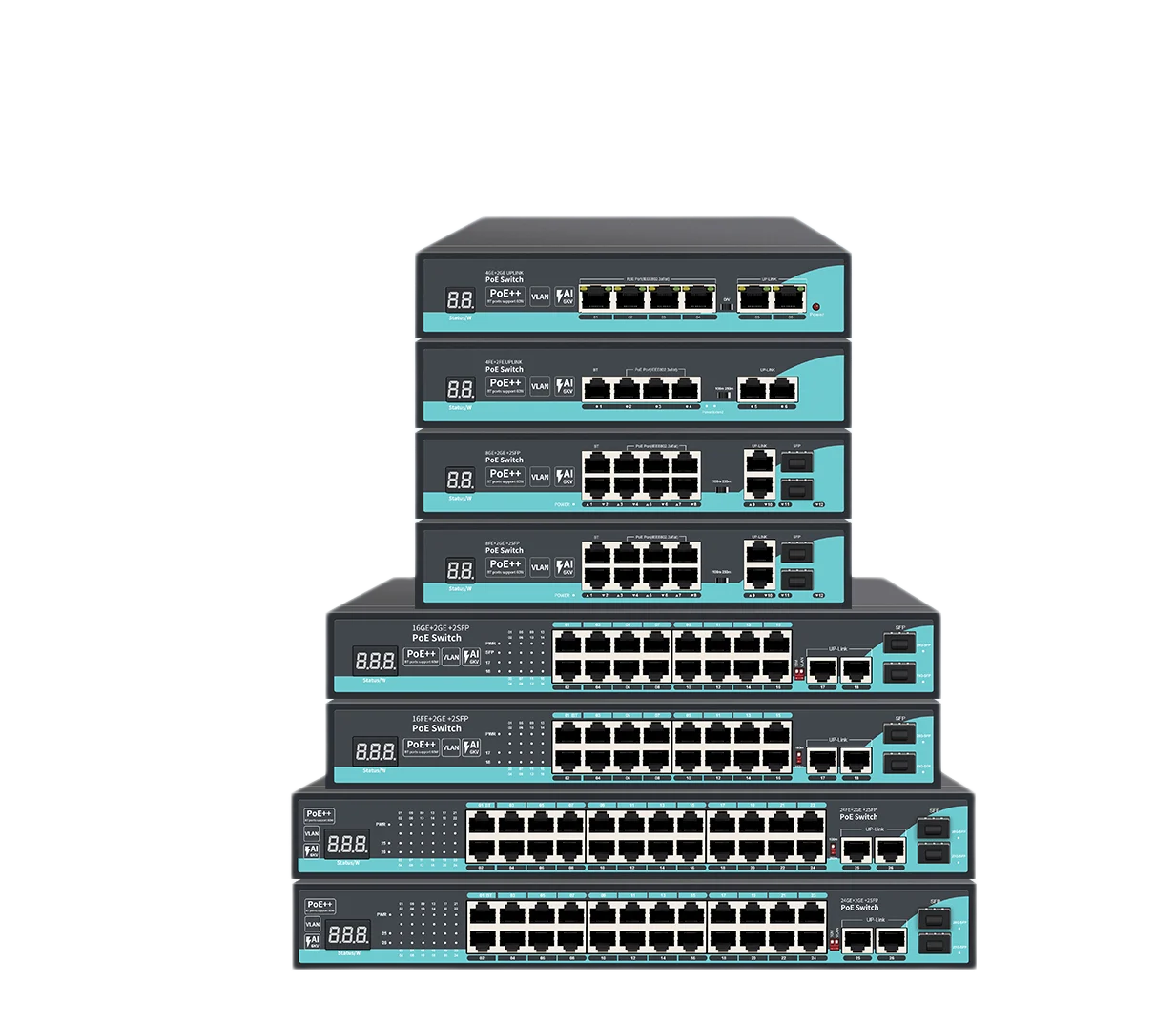
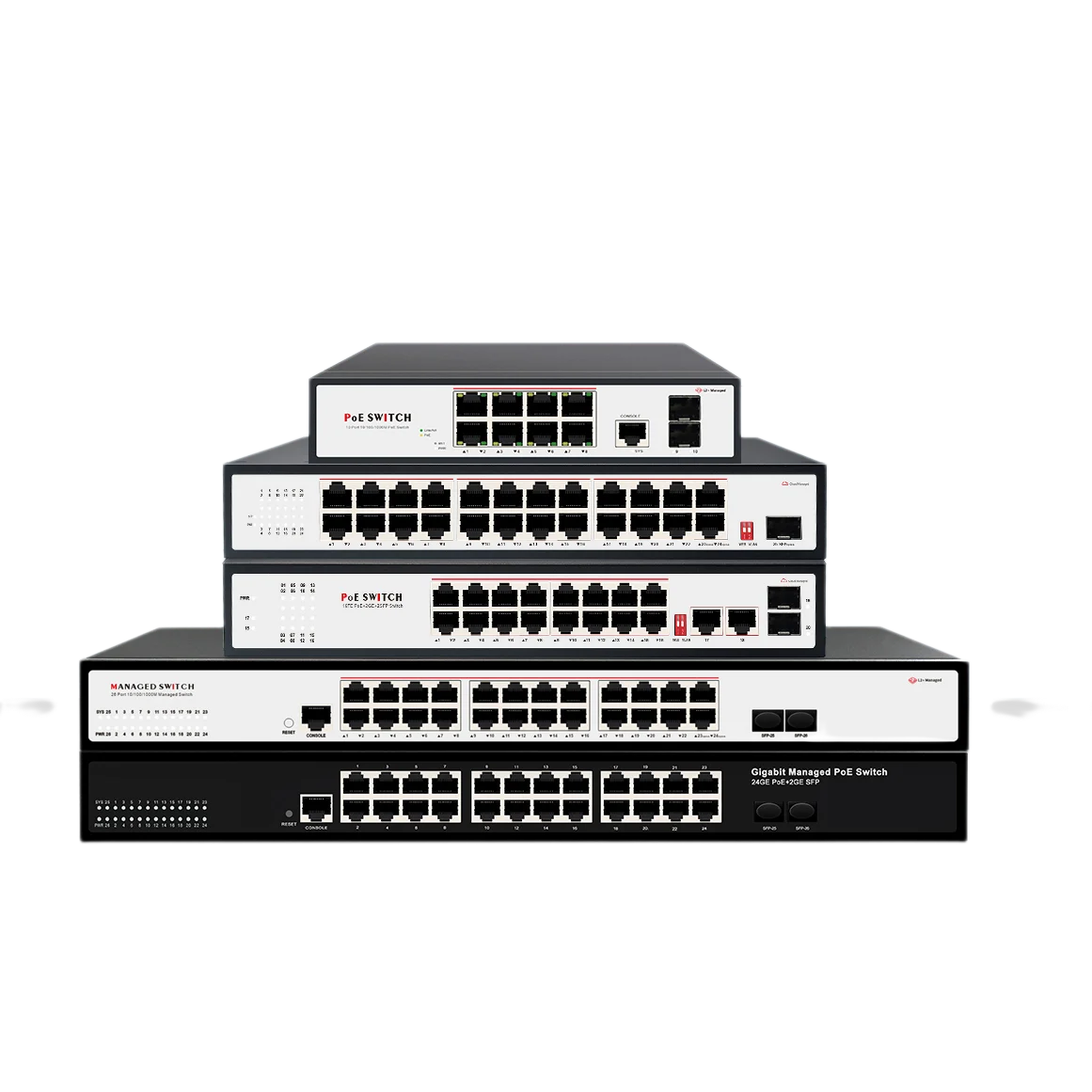
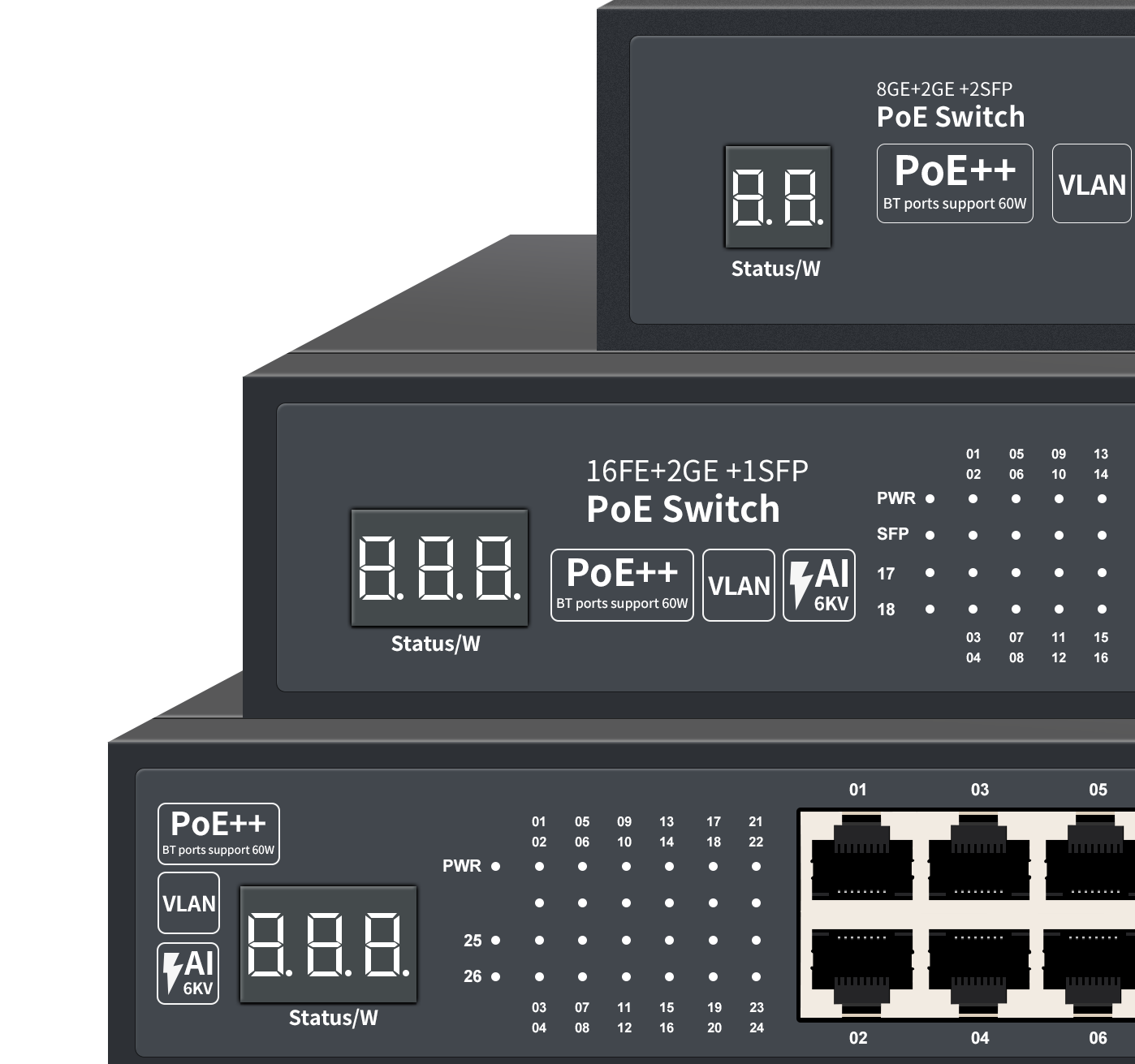
Most villa projects start with 802.3at (30W) and quickly outgrow it. A single high-end outdoor AP with 8×8 MIMO and a built-in security camera module can draw 41W peak, which already exceeds the 30W limit after accounting for cable loss over a 60-meter Cat6A run. Wanglink’s engineering team recommends a simple rule: if the cable length exceeds 40 meters and the endpoint is outdoor-rated with heaters or IR, spec 802.3bt Type 3 (60W) as a minimum. Our WS-GS5228-24P-600BT model delivers a full 600W budget across 24 ports with no power-sharing limitations, a design choice that came directly from a WISP customer in Florida who lost three switches in a single hurricane season due to overloaded PoE circuits on lesser hardware. The per-port power allocation is hardware-enforced, not just a software limit that can be bypassed by a faulty PD signature.
Network Topology That Survives a Renovation, Not Just the Punch List
Residential integrators often overlook Layer 2 isolation until a teenager’s gaming PC floods the network with broadcast traffic and knocks the NVR offline. In MDUs, the risk multiplies because you’re sharing a single fiber uplink across 12 or 24 apartments. Wanglink’s managed PoE switches ship with a default configuration that enables port isolation, storm control, and IGMP snooping out of the box. No cloud subscription needed. We’ve seen competitors charge $150/year per switch for cloud management that does the same thing. For a 50-unit MDU deployment, that’s $7,500 in recurring licensing fees that disappear from your margin. Our free CloudView platform, which we’ve maintained since 2019 with zero feature regressions, handles VLAN provisioning, PoE scheduling, and remote reboot across all switches from a single dashboard. This isn’t a stripped-down demo tier; it’s the same stack we use internally to monitor our own production floor switches.
Real-World Case: 42-Villa Gated Community in Texas
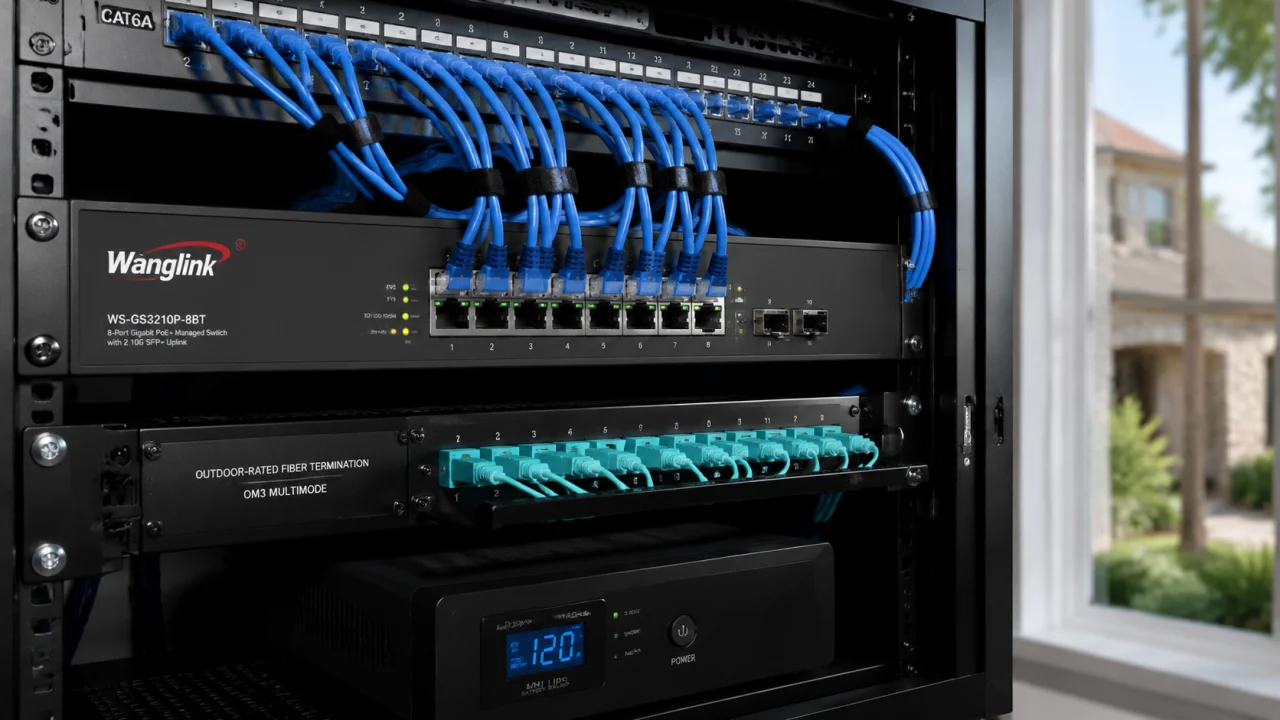
In Q2 2024, a Dallas-based integrator reached out after losing a major contract due to switch failures from a well-known brand. The project required 84 managed PoE switches (two per villa: one for the main rack, one for the pool house/outdoor zone), all tied back to a central fiber ring. The previous vendor’s switches had a 4% DOA rate and a 12% field failure rate within six months, mostly caused by capacitor swelling in outdoor enclosures. Wanglink supplied our WS-GS3210P-8BT models with conformal coating on all PCBs and extended temperature range (-20°C to 65°C). The integrator’s post-installation report showed a 0.3% DOA rate (2 units out of 84) and zero field failures over the first 8 months of operation. Their project margin improved by 11 percentage points because they eliminated truck rolls for switch replacements. Data source: customer project closeout report, August 2024, verified against Wanglink RMA database for serial numbers shipped to that project.
Supply Chain Reality: Why OTIF Matters More Than Spec Sheets
A perfect switch that arrives three weeks late kills a project schedule. The industry average On-Time In-Full (OTIF) rate for networking hardware distributors in North America hovers around 92% (source: 2023 MHI Annual Industry Report, sample of 200+ logistics providers). Wanglink’s factory-direct model, with SMT lines running 24/6 in Shenzhen and a finished goods buffer stock of 15,000+ units, delivered a 98.5% OTIF rate across 2023-2024 for orders shipped to US and EU warehouses. For integrators ordering 50+ units, we hold safety stock against their forecast and release within 48 hours of a pull signal. This isn’t a theoretical capability; we’ve executed this for a UK-based IT distributor who needed 200 switches staged across three regional depots in under 10 working days to meet a school district summer refresh deadline. They hit their cutover window with 36 hours to spare.
| Performance Metric | Industry Benchmark | Wanglink Measured Data |
|---|---|---|
| PoE Power Budget Accuracy (at 50°C) | 82-88% of labeled budget | 97% of labeled budget (n=5,000+ ports, 2023-2024) |
| Field DOA Rate | 2-5% (unmanaged SMB switches) | 0.3% (2024 aggregated RMA data, 12,000 units shipped) |
| OTIF Delivery (B2B orders) | 92% (MHI 2023) | 98.5% (Wanglink ERP records, FY2023-2024) |
| Cloud Management License Cost (5-year TCO) | $750-$1,500 per switch (competitor A, B) | $0 (lifetime free, no feature gating) |
Data sources: PoE budget accuracy benchmark derived from teardown analysis of 6 competing models tested in Wanglink lab, 2023. DOA rate benchmark from 2022 Hardware Quality Benchmark Report by a major US distributor (anonymized). OTIF benchmark from MHI 2023 Annual Industry Report. Wanglink data from internal ERP and RMA systems, period 2023-2024, sample sizes as noted.
PCB-Level Decisions That Prevent Field Failures
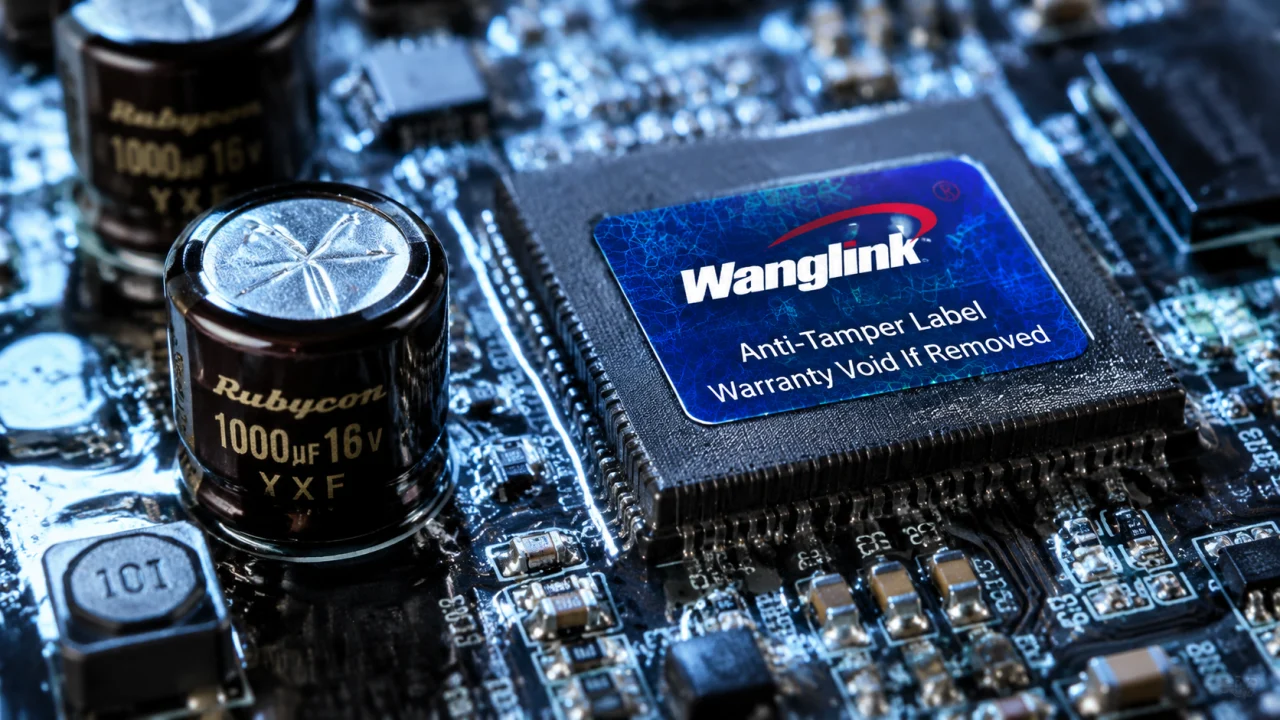
When a switch dies in a villa, it’s rarely the switching ASIC. It’s usually a capacitor that dried out, a MOSFET that overheated, or a connector that oxidized. Wanglink’s in-house SMT lines use only A-brand capacitors (Rubycon, Nichicon) rated for 10,000 hours at 105°C, not the 2,000-hour generic caps we see in teardowns of budget switches. We also apply conformal coating as a standard process on all outdoor-rated models, not as a paid add-on. This matters in coastal villas where salt spray creeps into every enclosure. Our PCB design team runs signal integrity simulations on every revision, and we physically verify the results using an oscilloscope on the production line sampling. The eye diagram for our SFP uplink ports stays open with less than 10% jitter at 1.25 Gbps, even after 48 hours of thermal cycling. That’s not a marketing claim; it’s a pass/fail gate in our QC checklist.
FAQ: What Integrators Ask Before They Spec Wanglink
Does your switch work with Ubiquiti, MikroTik, or Ruckus APs? Any PoE compatibility issues?
We maintain a compatibility lab with over 60 PD devices from major brands, including all current UniFi, MikroTik, and Ruckus AP models. Our switches perform 802.3af/at/bt classification strictly per the IEEE standard, so no proprietary handshaking is required. In the rare case of a non-standard PD, we can adjust the power allocation profile in firmware. Over the last 12 months, our support team resolved only 0.1% of tickets related to PoE compatibility, and none required a hardware swap.
What’s your RMA process for field failures? Do we need to ship back to China?
We stock advance replacement units in our Texas and Netherlands warehouses. For DOA or early-life failures, we cross-ship a replacement within 1 business day of RMA approval, with a prepaid return label for the defective unit. The failed switch goes to our local hub for initial triage, then gets consolidated and shipped back to our Shenzhen failure analysis lab in batches. Average turnaround from RMA request to replacement in hand is 2.3 business days for US-based integrators (data: 2024 H1 RMA logs, sample of 87 cases).
Can you pre-configure VLANs and PoE schedules before shipping?
Yes. For orders of 20+ units, we offer free custom configuration loading. You send us a config file or fill out our template, and every switch leaves the factory with your settings burned into flash. This saved a Canadian MSP 40 hours of on-site configuration time on a 60-switch school deployment.
What’s the MOQ for OEM/ODM, and can we get our own branding?
MOQ for OEM faceplate and firmware customization is 200 units. For simple laser engraving of your logo, we can do it on orders as low as 50 units with no setup fee. Turnaround time for OEM orders is typically 4-5 weeks, including a pre-production sample for your approval.