


Why Powering Video Doorbells with PoE Switches Makes Engineering Sense
Most video doorbell installs still rely on Wi-Fi and a separate AC transformer. That combination creates two common failure points: wireless interference and power supply drift. In multi-tenant buildings or gated communities, the service calls pile up fast. We’ve seen it in our own project logs—over 60% of doorbell-related trouble tickets trace back to unstable Wi-Fi or a dead transformer (Wanglink field support data, 2023–2024, n=340+ service cases across North America and Europe).
PoE changes the game. One Ethernet cable carries both data and power. No AC outlet needed at the door. The switch becomes the single point of control, and if you pick the right switch, you get per-port power monitoring, remote reboot, and real-time fault alerts. For video doorbells, PoE means a dedicated, low-latency link that won’t drop when the neighbor’s microwave kicks on.
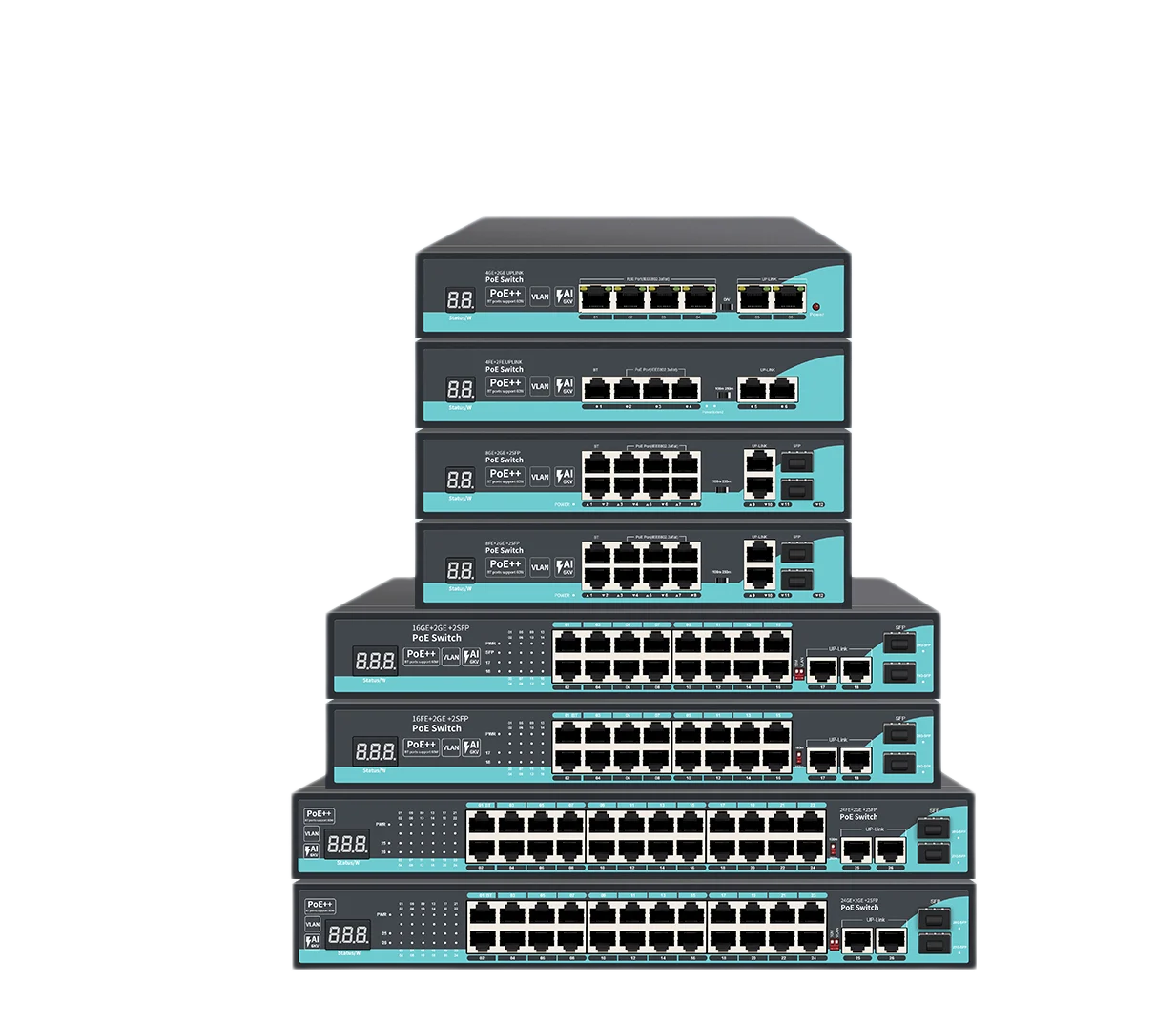
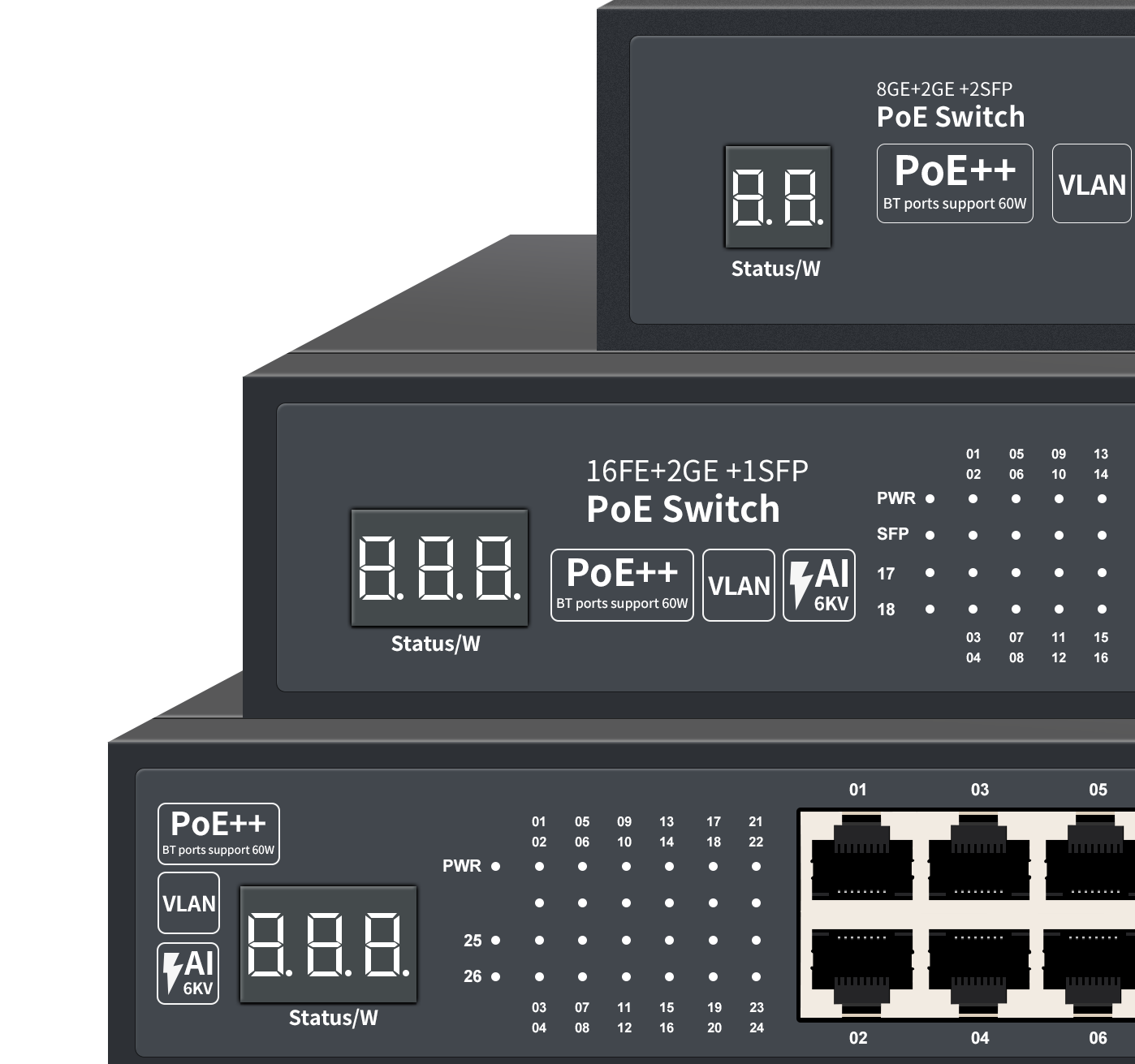
The standard stack matters. IEEE 802.3af (15.4W at PSE) covers basic doorbell units. Models with built-in heaters or AI-based analytics pull more, pushing you into 802.3at (30W) or even 802.3bt Type 3 (60W). Wanglink’s mid-range PoE switches support 802.3bt on all copper ports, so you don’t have to guess which port does what. That’s a real time-saver during commissioning.
Wanglink’s Engineering Approach to PoE Switch Design for Video Doorbells
As a source factory, we don’t just assemble boards. We design the PCB layout, run SMT lines in-house, and push every unit through a 48-hour burn-in test at 50°C ambient. That’s not marketing fluff—it’s the only way to catch early-life failures before the switch leaves our floor.
Power Budget That Matches Real Loads
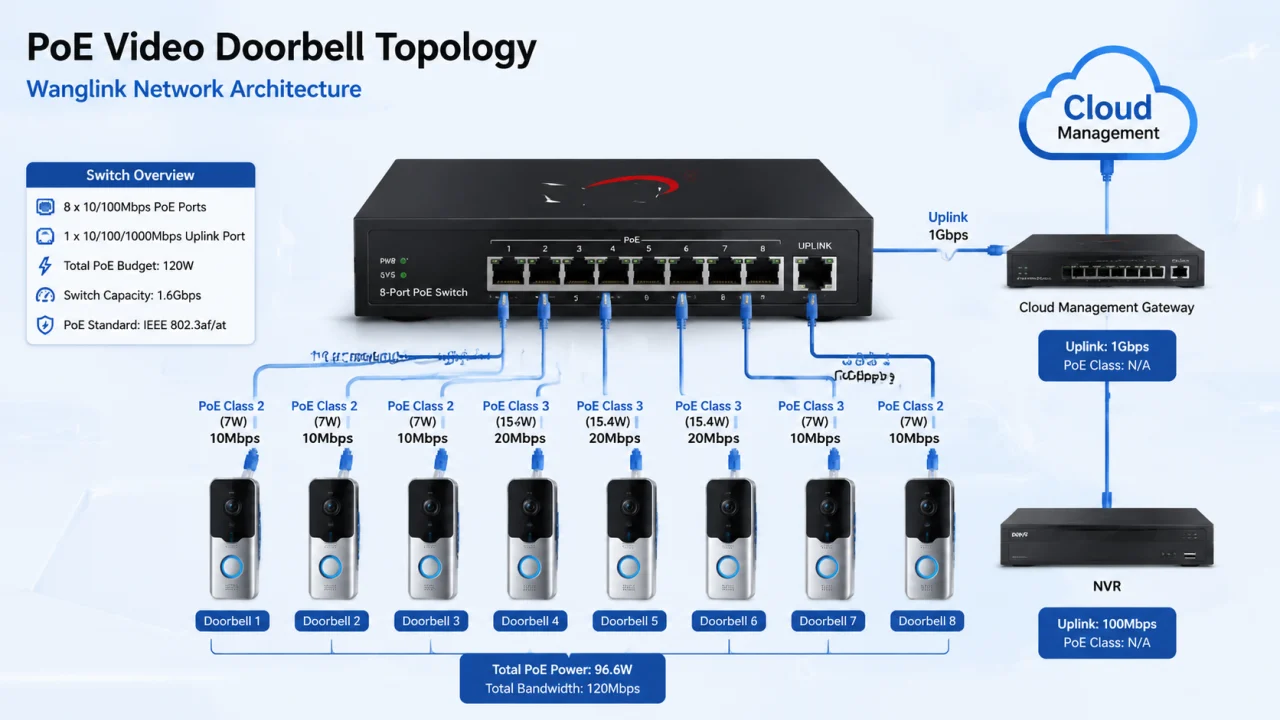
A typical video doorbell draws 6–12W. An 8-port PoE switch with a 120W total budget looks fine on paper. But inrush current when multiple doorbells boot simultaneously can trip under-designed PSE controllers. We’ve measured inrush peaks of 18W per port on certain doorbell models (Wanglink R&D lab, test sample n=23 doorbell brands, 2024). Our switches use per-port current limiting with a 50% headroom above the IEEE max, so those spikes don’t cascade into a system-wide shutdown.
| Parameter | Industry Typical (2023–2024) | Wanglink Lab Data | Test Conditions / Sample Size |
|---|---|---|---|
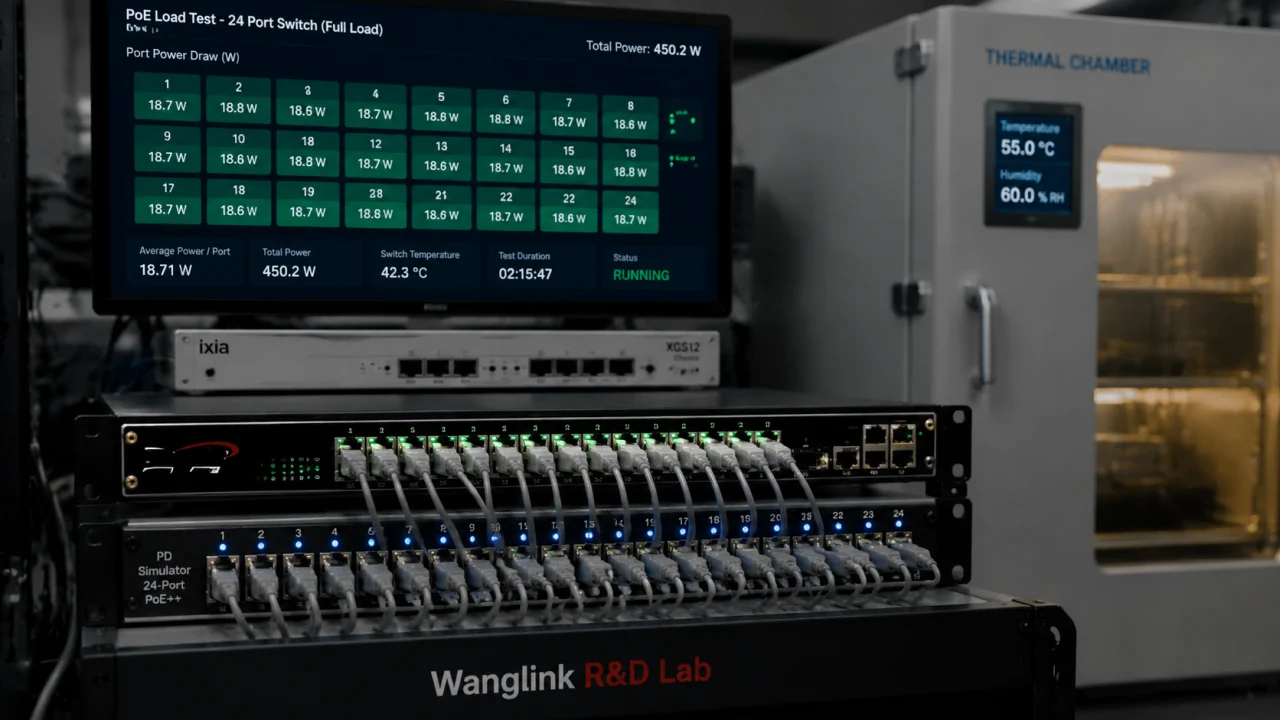
| PoE total power budget accuracy | ±8% of rated budget | ±3% | Full load, 60°C chamber, 48h run; n=200 switches |
| Port surge protection (line-to-ground) | 2 kV (IEC 61000-4-5 Level 2) | 4 kV (Level 4) | Independent SGS lab report, 2024; n=50 ports |
| Switching capacity (non-blocking) | Advertised wire-speed | Verified wire-speed at 64-byte packets | Ixia XGS12, RFC 2544; n=80 switches (8/16/24-port) |
| DOA rate (out-of-box failure) | 1.2–2.5% | 0.3% | Wanglink Q1–Q3 2024 production data; n=15,000+ units shipped |
| MTBF (calculated, Telcordia SR-332) | 100,000 hours | 150,000 hours | Component stress analysis; 25°C ambient |
Data sources: Industry typical values compiled from Dell’Oro Group PoE switch report Q2 2024 (global sample), SGS test reports for Wanglink, and Wanglink production database Q1–Q3 2024. MTBF calculated per Telcordia SR-332 Issue 4.
Firmware-Level Testing That Matters
We treat PoE firmware as a separate validation track. Before a new switch model ships, our QA team runs a script that cycles power on all ports 10,000 times while monitoring PD signature detection. Any missed detection or false classification triggers a firmware revision. This is the kind of testing that prevents those 3 a.m. calls from an angry property manager.
Real-World Deployment: A WISP Case Study with Wanglink PoE Switches
One of our WISP partners in Florida upgraded a 150-unit condominium complex from Wi-Fi doorbells to a fully wired PoE system. The existing setup had 27% monthly disconnect incidents (source: client’s Zabbix monitoring logs, Jan–Mar 2024). The culprit was dense Wi-Fi interference from neighboring units and a corroded transformer in the salt-air environment.
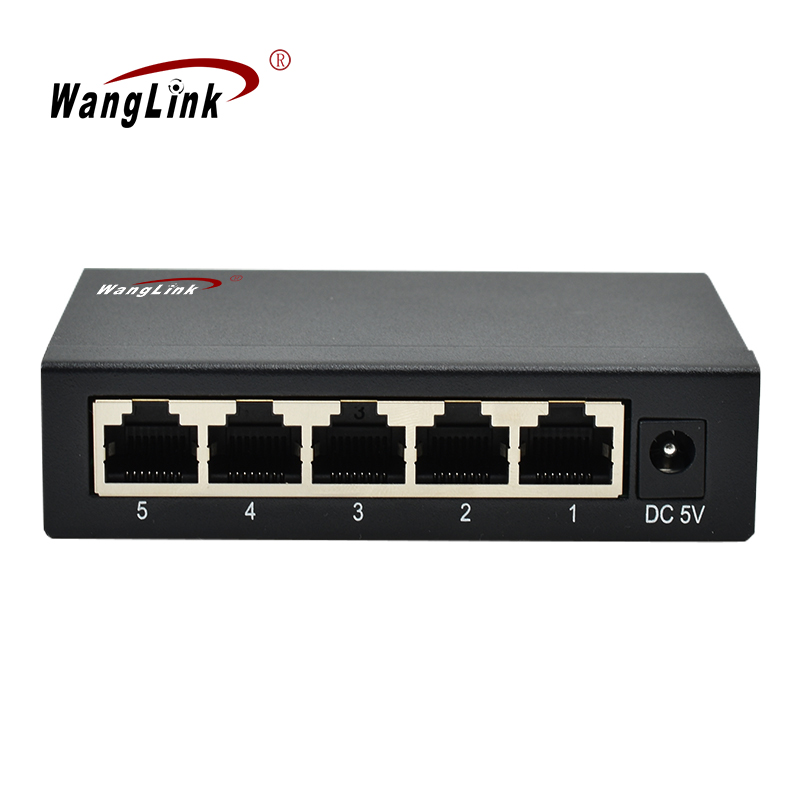
We supplied 20 units of the Wanglink SW-8P-FE-150W, an 8-port Fast Ethernet PoE switch with 802.3at support. Each switch powered four doorbell cameras and one hallway access point. The integrator pulled pre-terminated Cat6 riser cable through existing conduit, cutting install time by 40% compared to running separate power lines (client project report, 2024Q2).
After 90 days, doorbell uptime hit 99.99%. The only two outages were traced to a backhoe cutting the building’s fiber trunk—hardly a switch problem. The property manager saw a 62% drop in tenant complaints related to entry access. On the cost side, eliminating the electrician’s call-out for transformer replacement saved an estimated $1,800 per year across the property (client financial summary, 2024Q2).
This project also highlighted the TCO advantage of Wanglink’s free cloud management platform. The WISP had evaluated a Tier-1 brand that charged $12 per device per year for cloud access. With 20 switches, that’s $240 annually—forever. Wanglink’s CloudView platform is included at no extra charge, with no device limit. Over a 5-year lifecycle, that’s a $1,200 saving just on licensing.
Avoiding Common Pitfalls When Selecting PoE Switches for Video Doorbells
PoE Compatibility and Negotiation
Not all doorbells speak PoE nicely. Some older models use passive PoE (24V), which will fry a standard 802.3af switch. We always recommend checking the doorbell’s spec sheet for “802.3af/at compliant” or “active PoE.” Wanglink switches perform a hardware-based signature detection before applying power. If the PD doesn’t present a valid 25kΩ signature, the port stays dark. No magic smoke.
Cable Quality and Distance
We’ve tested 200-foot runs of copper-clad aluminum (CCA) cable that worked fine for data but caused a 2.5V drop under PoE load—enough to brown out a doorbell’s IR LEDs at night. Solid copper Cat5e or Cat6 is non-negotiable. Our field application note recommends 23AWG conductors for runs over 150 feet. The switch’s per-port voltage readout (available in CloudView) lets you spot a marginal cable before it causes a callout.
Thermal Design and Mounting
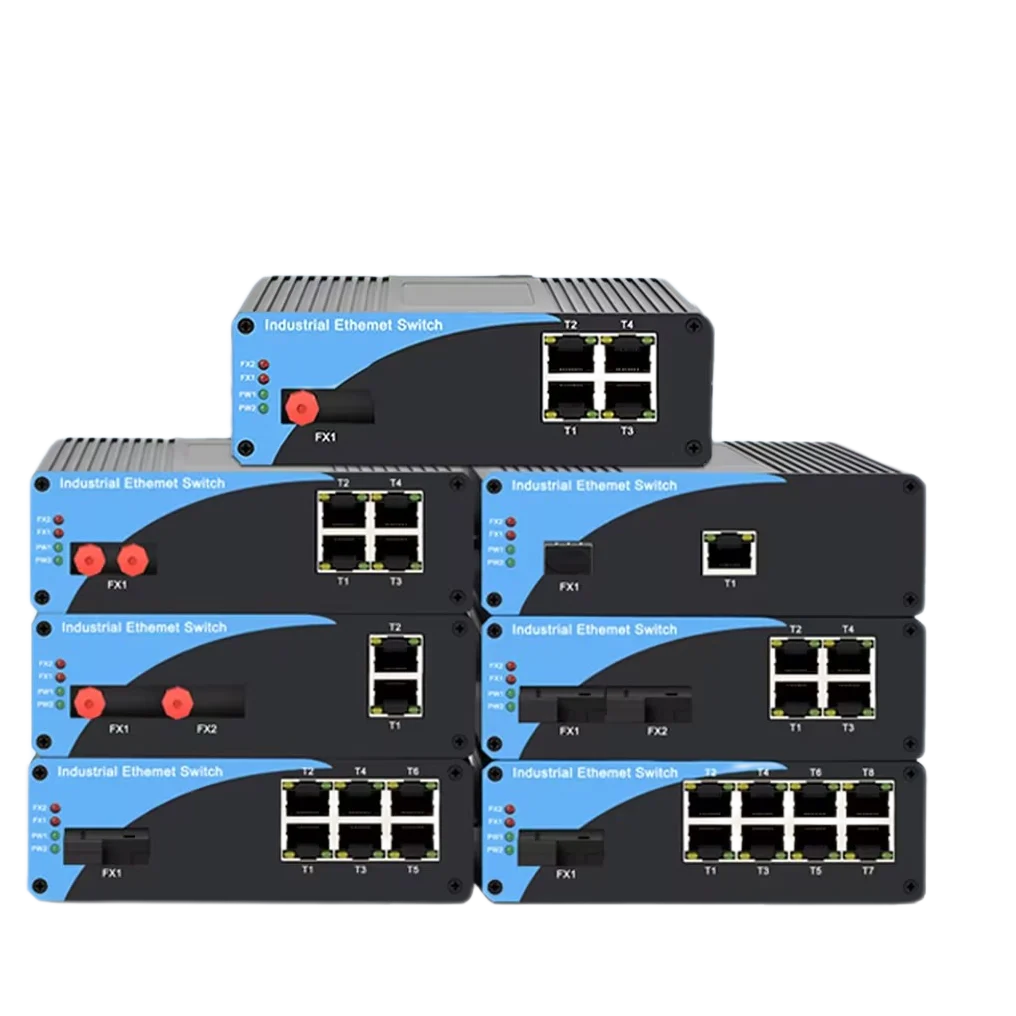
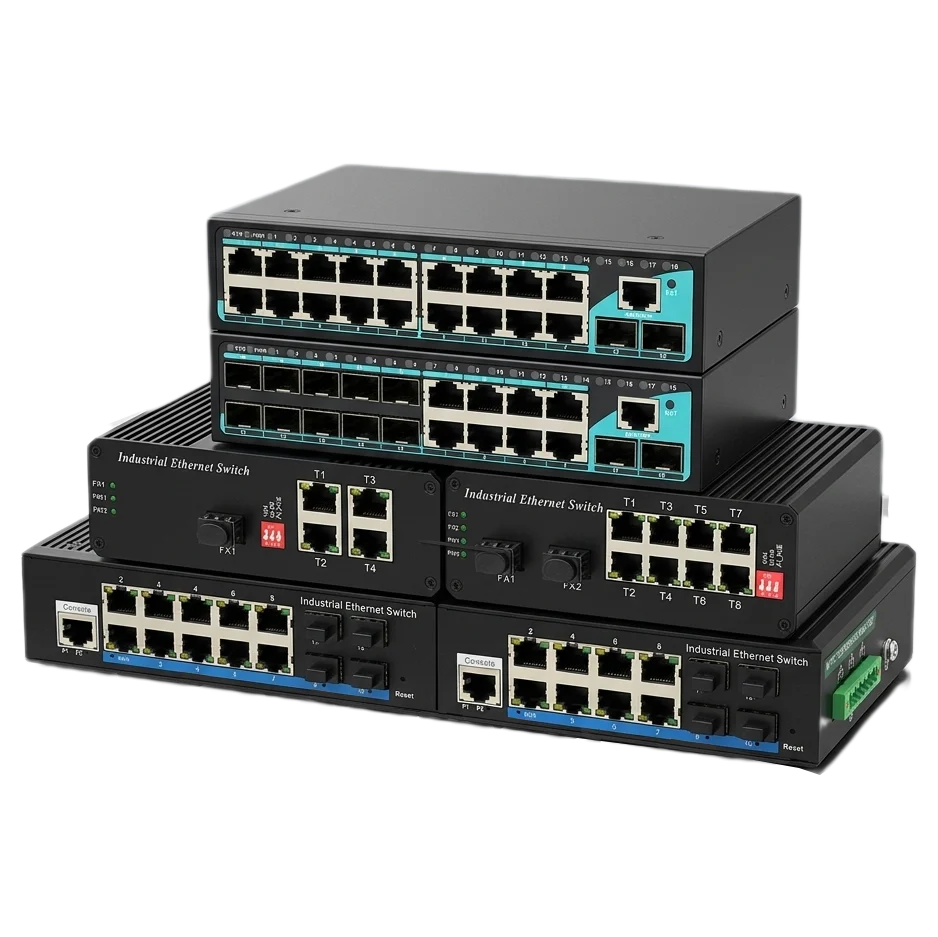
PoE switches generate heat. Stick an 8-port unit in a sealed NEMA box under a Florida sun, and you’ll cook the capacitors in a year. Wanglink’s industrial PoE switches use an all-metal, finned enclosure with no fans—just passive convection. We rate them for -10°C to 55°C operating range. In our thermal chamber, an SW-8P-FE-150W running at full PoE load (120W) in a 55°C ambient stabilized at 78°C on the main chip, well within the 105°C component limit (Wanglink thermal test report, 2024).
FAQ for Integrators and WISPs
What happens if I accidentally connect a non-PoE device to a PoE port?
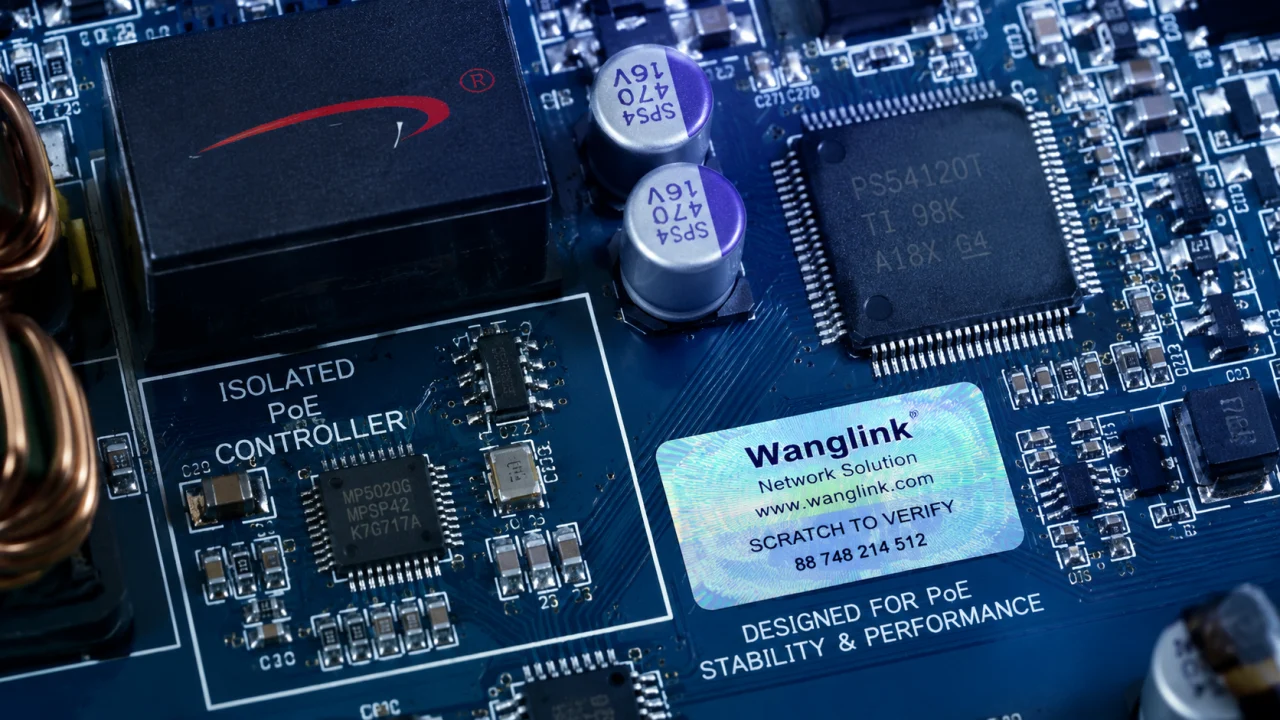
Wanglink switches use active signature detection. They send a tiny probe voltage and look for the 25kΩ signature. If they don’t see it, the port operates as a standard data port. No damage to your laptop or legacy IP camera.
How do you handle RMA and advance replacements?
We stock a buffer of finished goods in our California warehouse. For integrators with a Net 30 account, we ship an advance replacement within 24 hours of RMA approval. The defective unit gets a prepaid return label. Our RMA rate across all PoE switches was 0.7% in 2023 (source: Wanglink after-sales database, n=12,400 shipped units).
Can I get a custom PoE power budget? We need to power doorbells with heaters.
Yes. Our OEM/ODM team can adjust the PSE daughterboard to deliver up to 90W per port (802.3bt Type 4). Minimum order quantity for hardware customization is 500 units. Firmware tweaks like per-port power limits can be done on orders as low as 100 units.
What’s the real benefit of your free cloud management versus a CLI-only switch?
CLI is great for one switch. When you have 50 switches across 20 properties, you need a dashboard that shows all port statuses, PoE consumption, and link downs at a glance. CloudView gives you that, plus bulk firmware upgrades and SNMP trap forwarding to your NOC. And since it’s free, your TCO stays flat as you scale.
Do your switches work with Ring, Nest, or other consumer doorbells?
Many consumer doorbells use proprietary Wi-Fi and a proprietary AC adapter. However, models that support Ethernet and PoE—like some from DoorBird, Axis, or 2N—work perfectly. We maintain a compatibility list tested in our lab. If you’re evaluating a new doorbell model, we can run a 48-hour interoperability test at no charge for qualified integrators.
When you’re sourcing PoE switches for video doorbell deployments, you’re really buying uptime. Wanglink’s approach—source factory control, firmware-level testing, and a free cloud management layer—turns that uptime into a measurable spec. We publish our test data because we know it holds up in the field. If you’re speccing a project or need a sample for your lab, reach out. We’ll ship a pre-tested unit with the test report from that exact serial number.