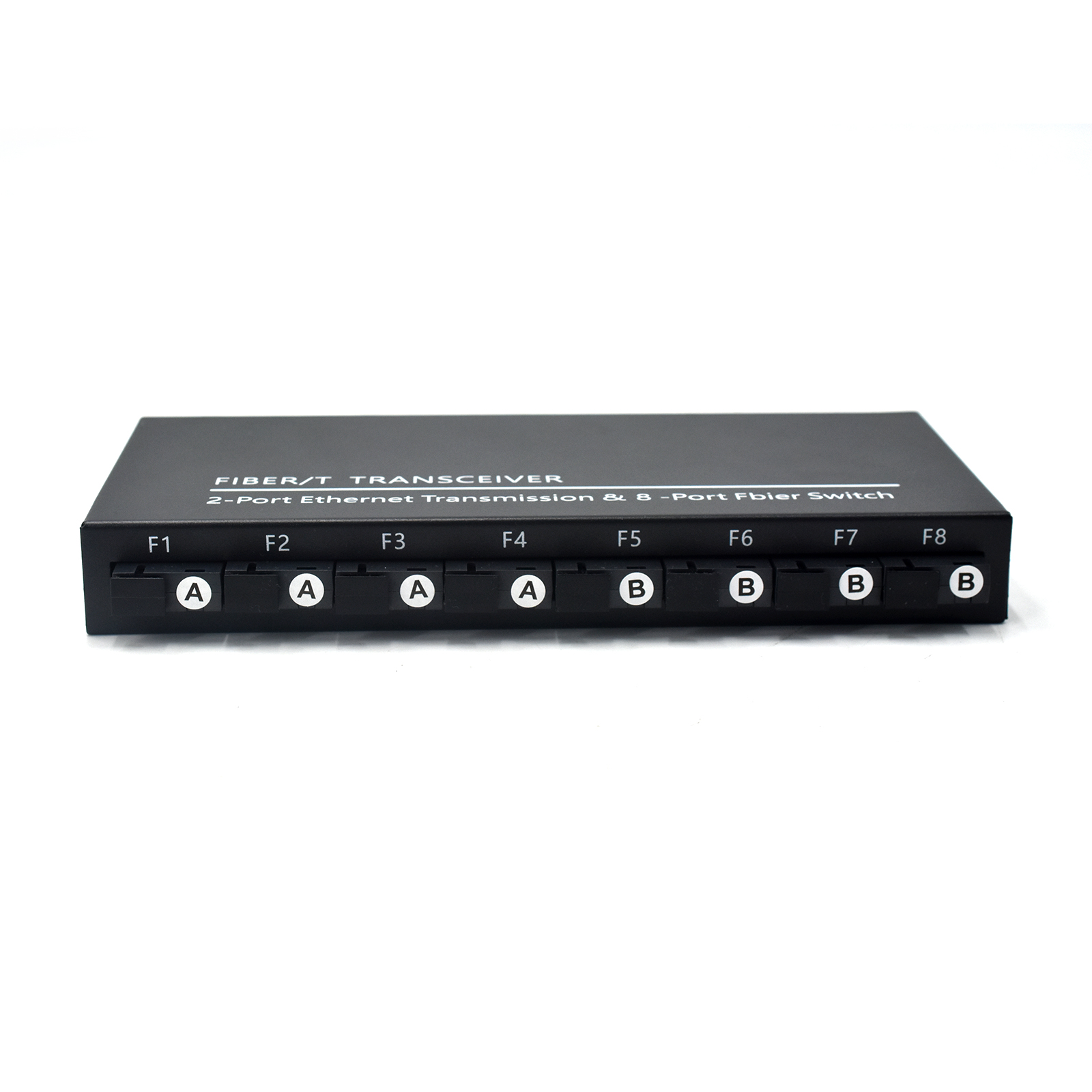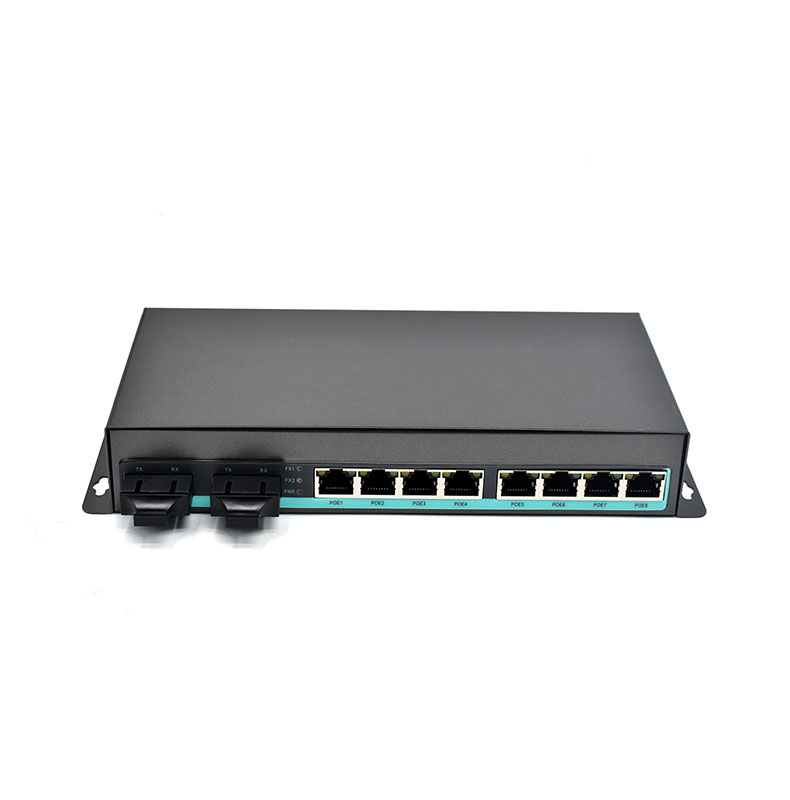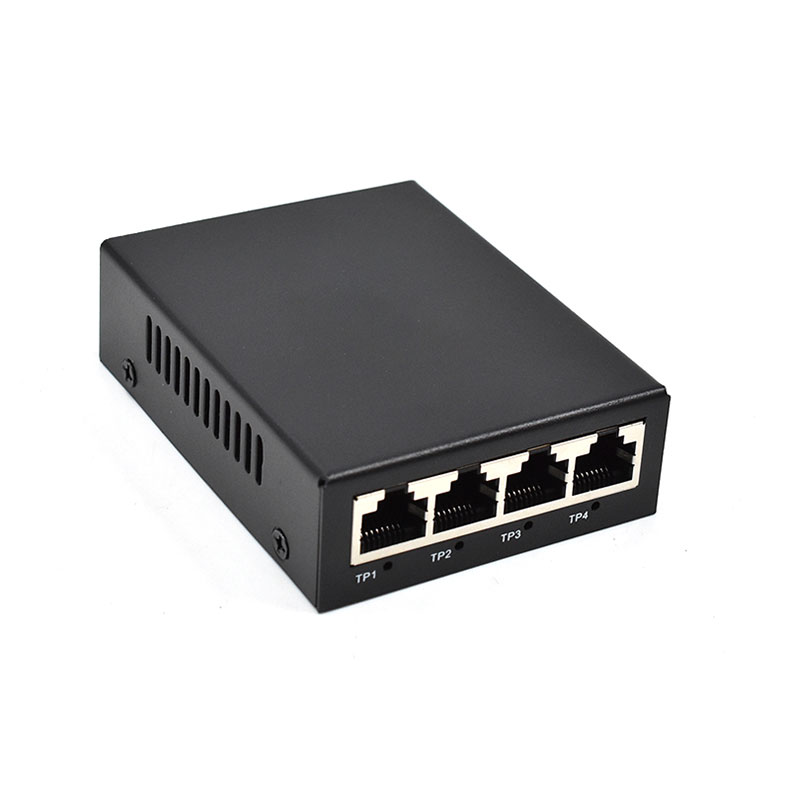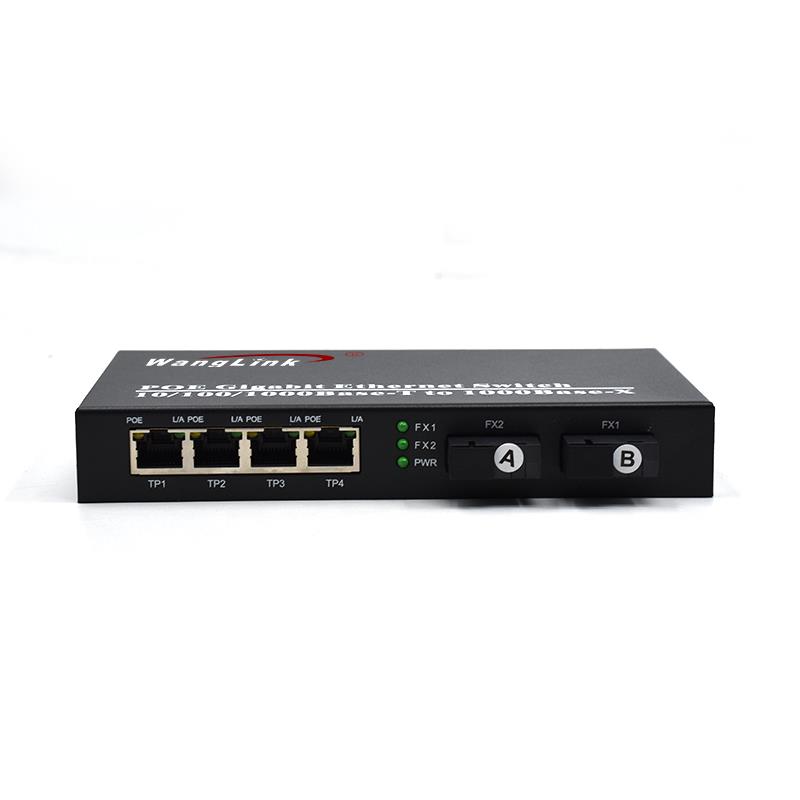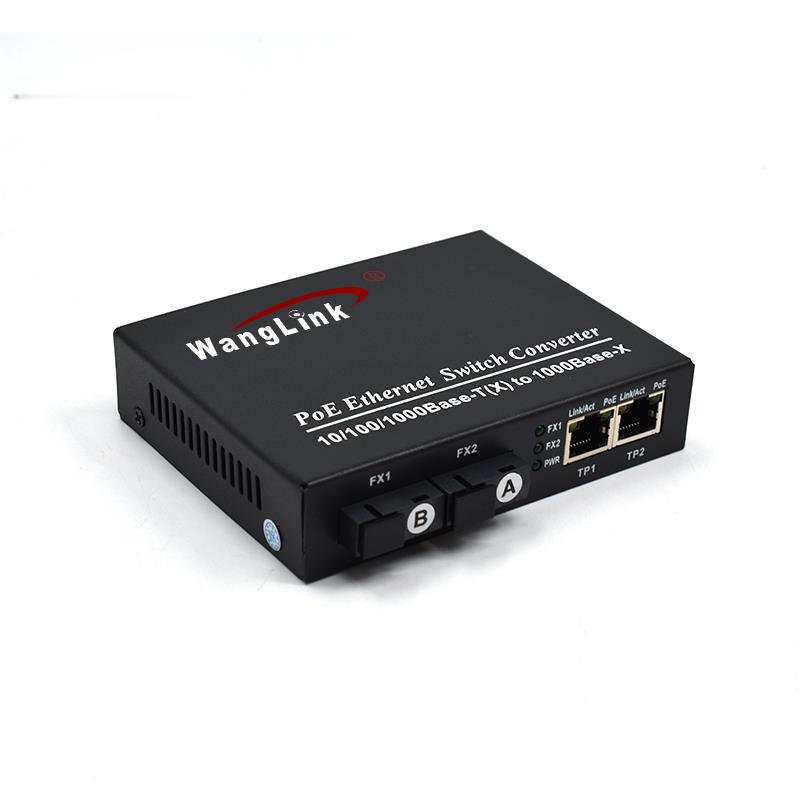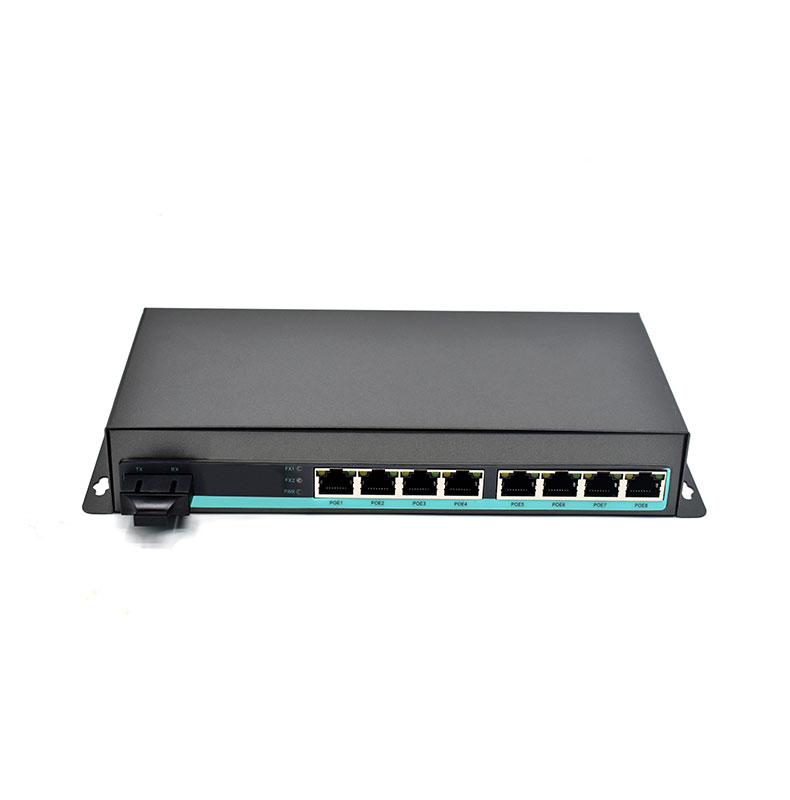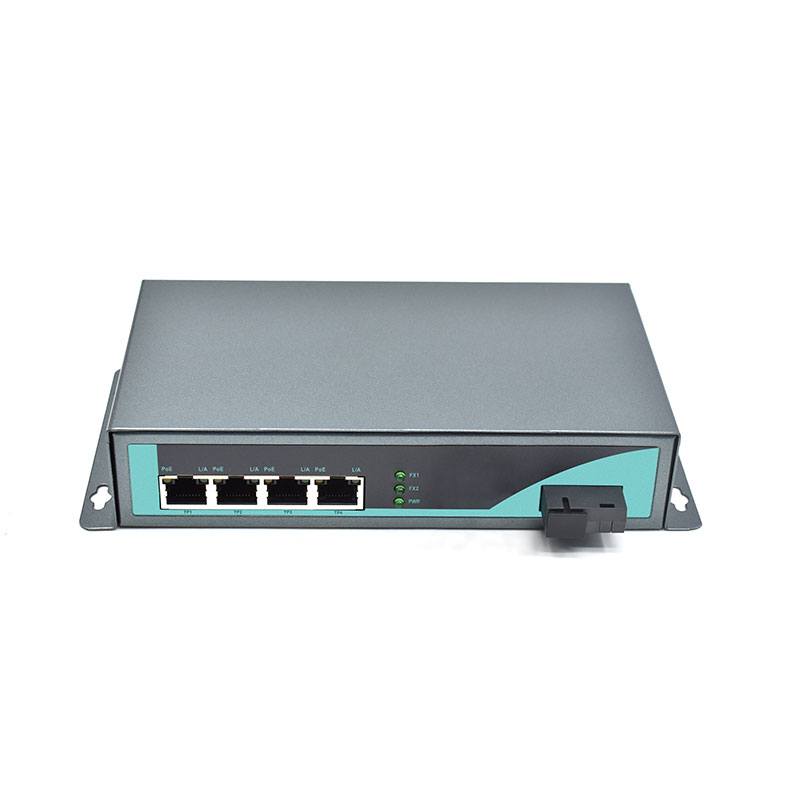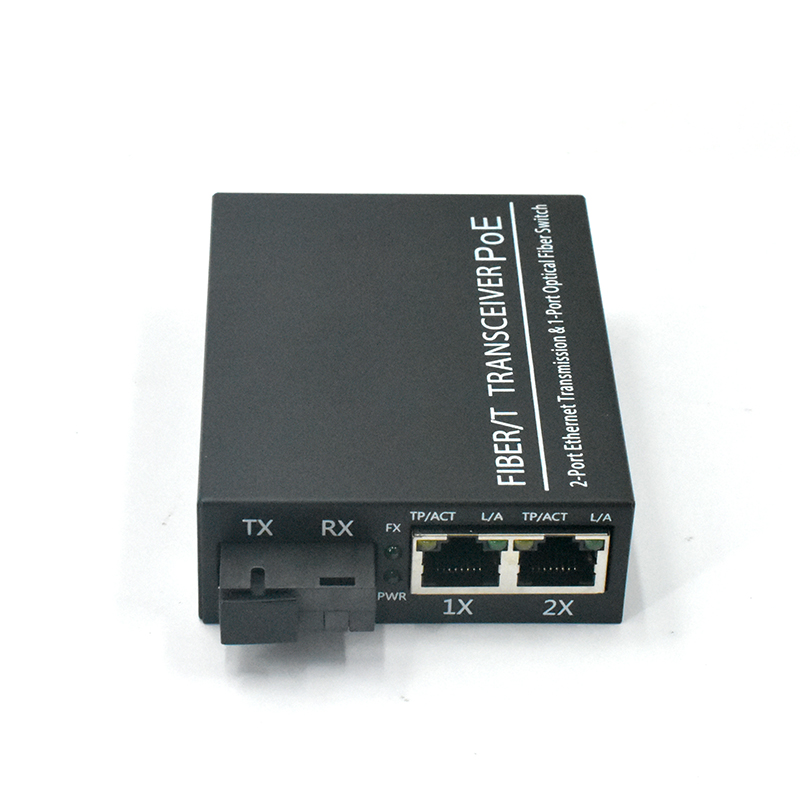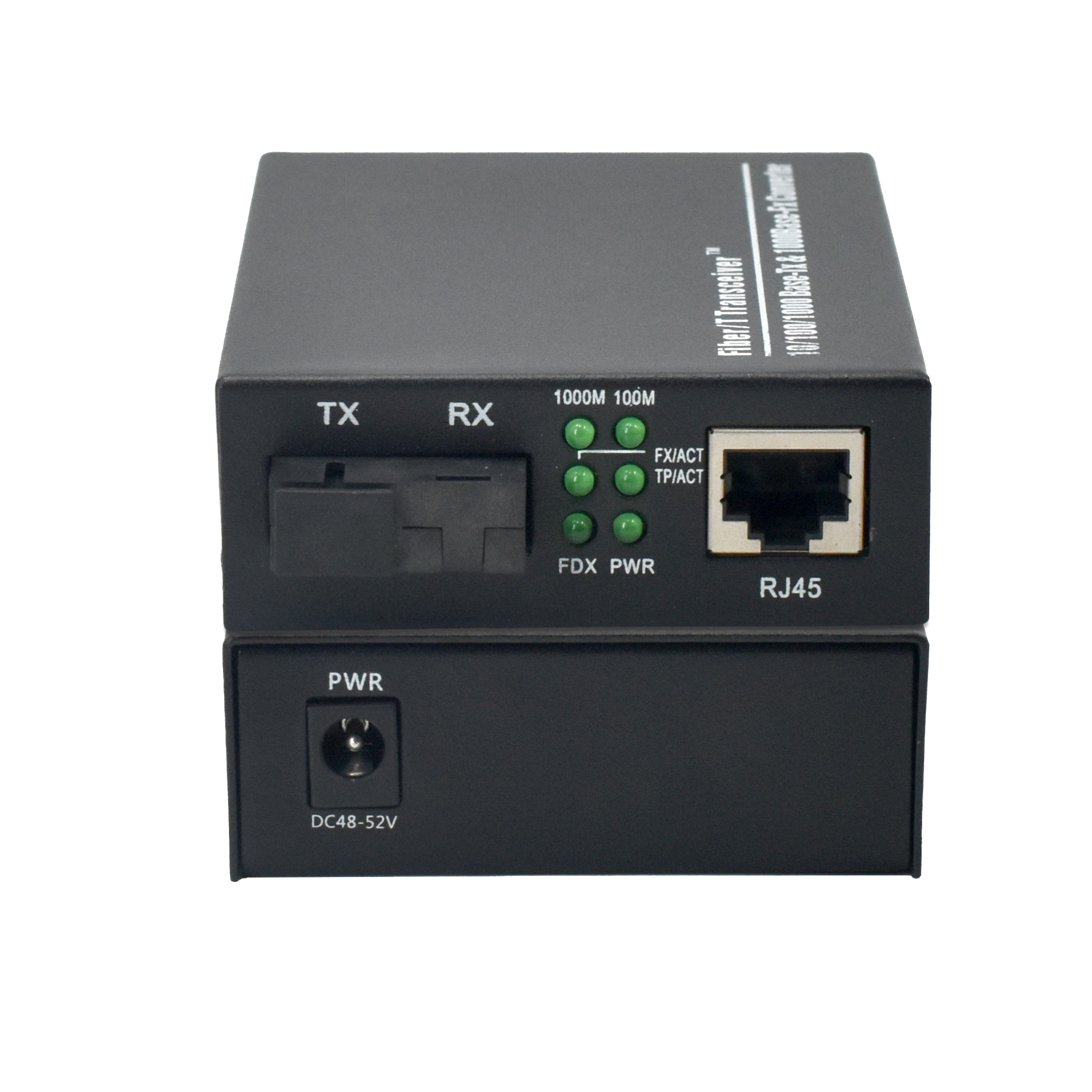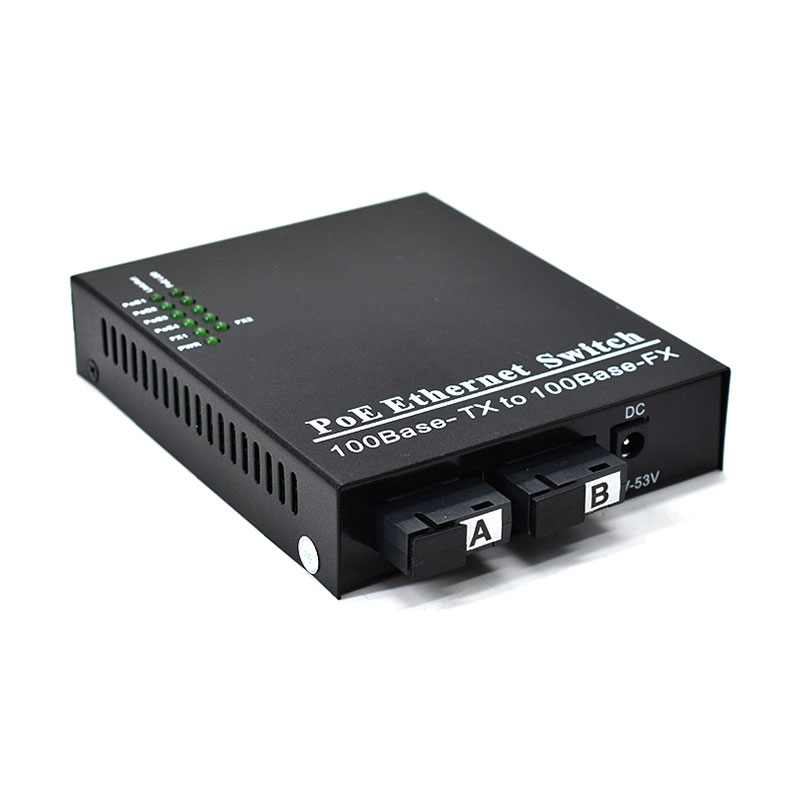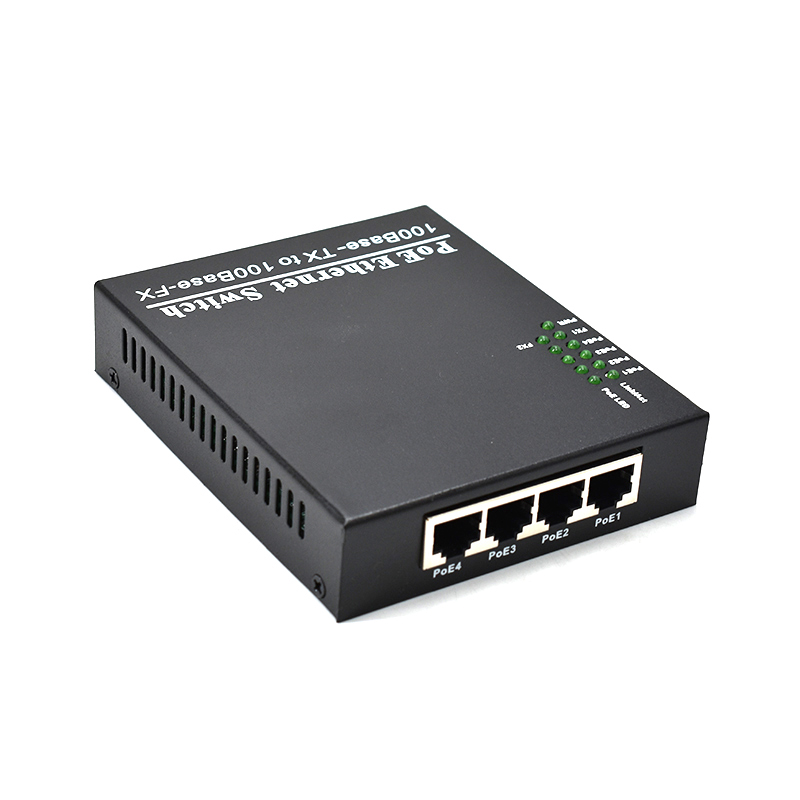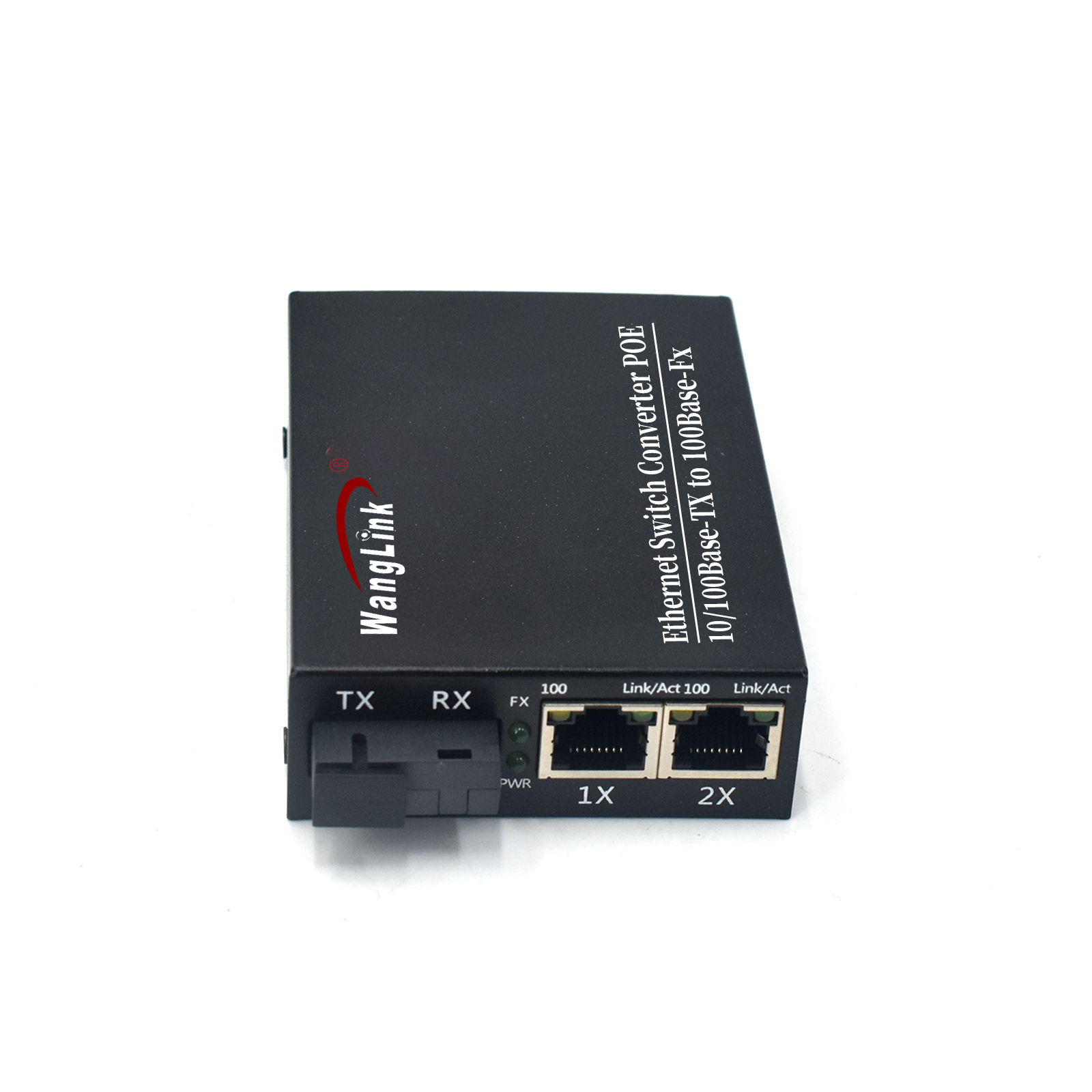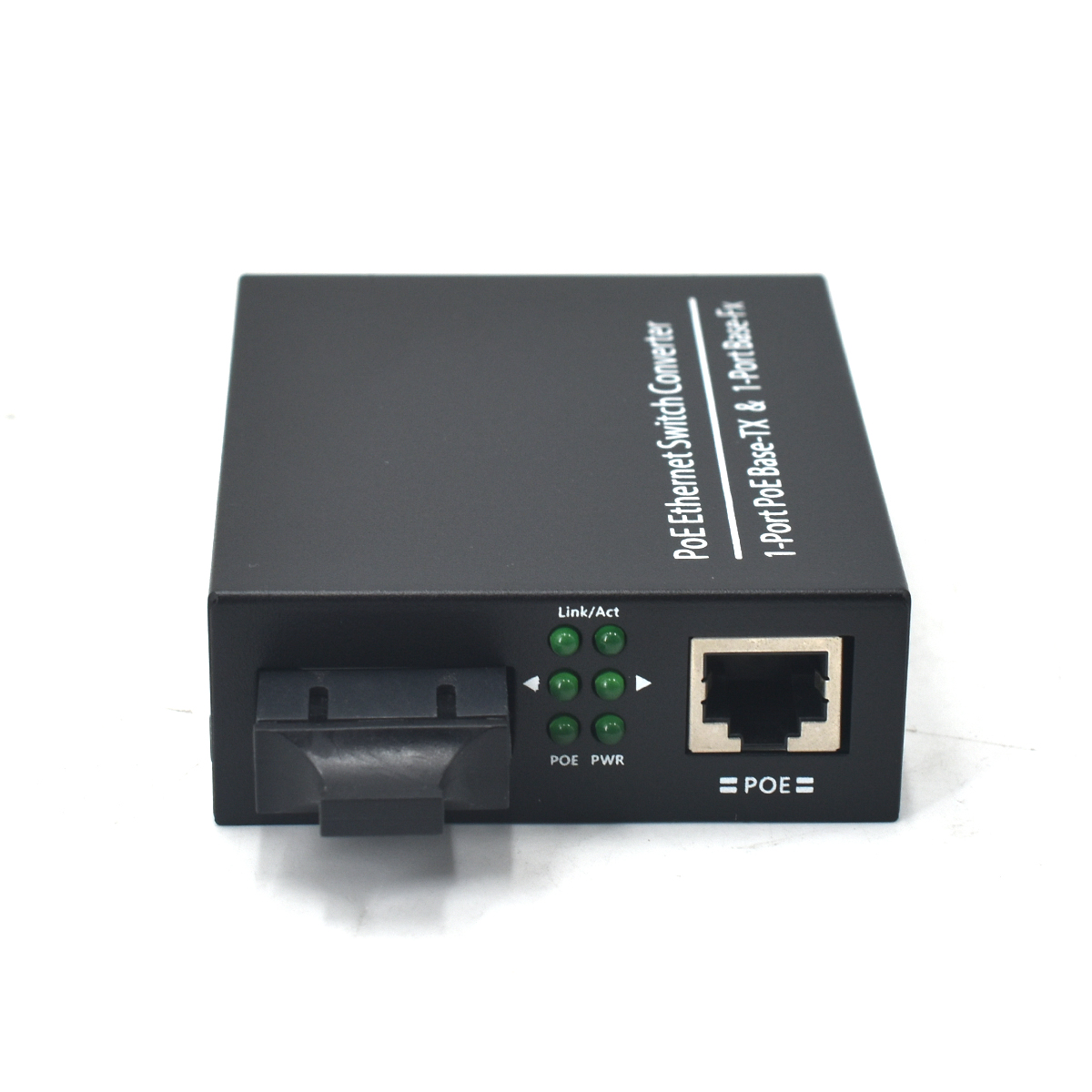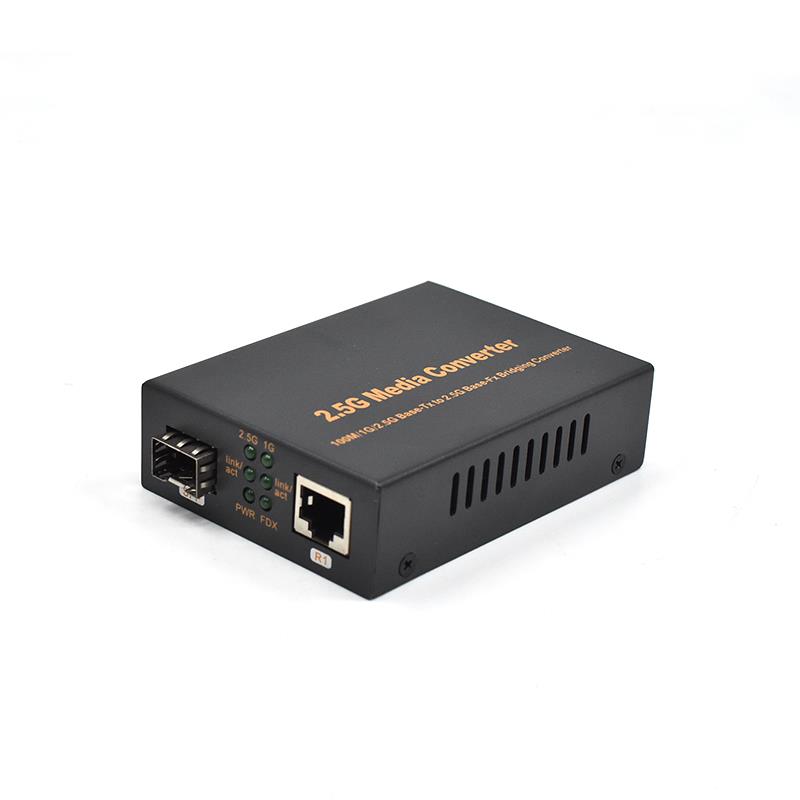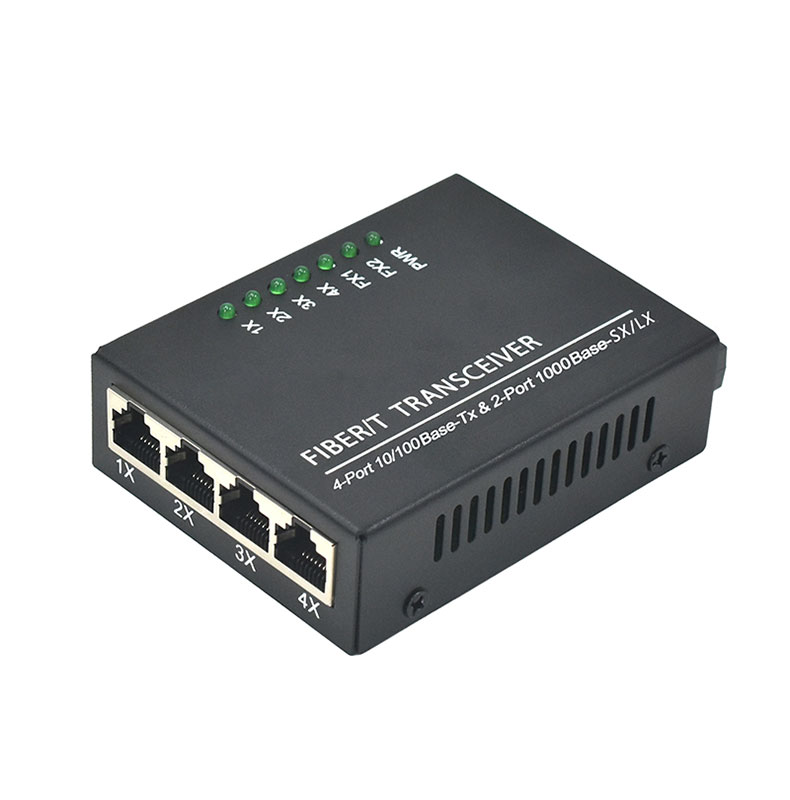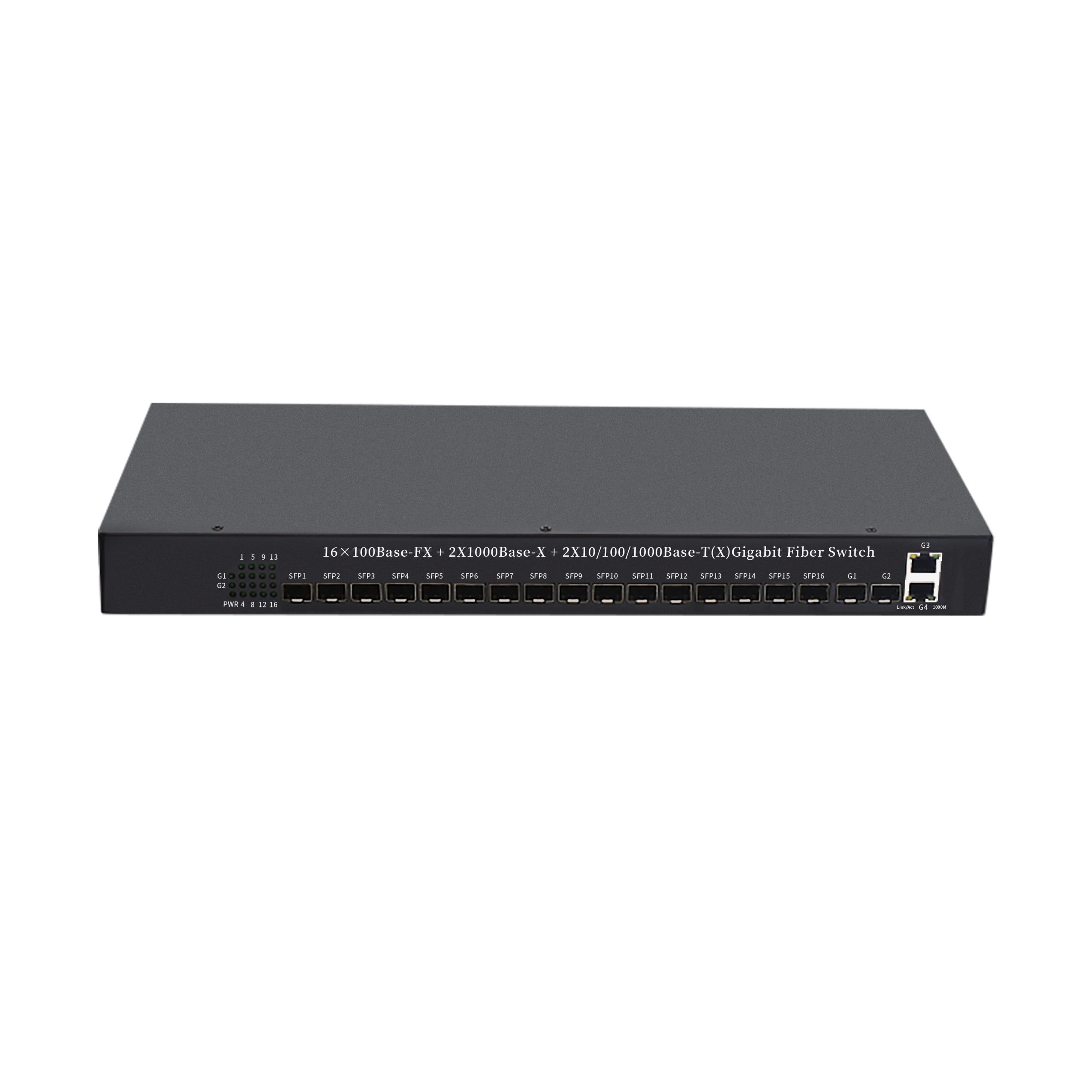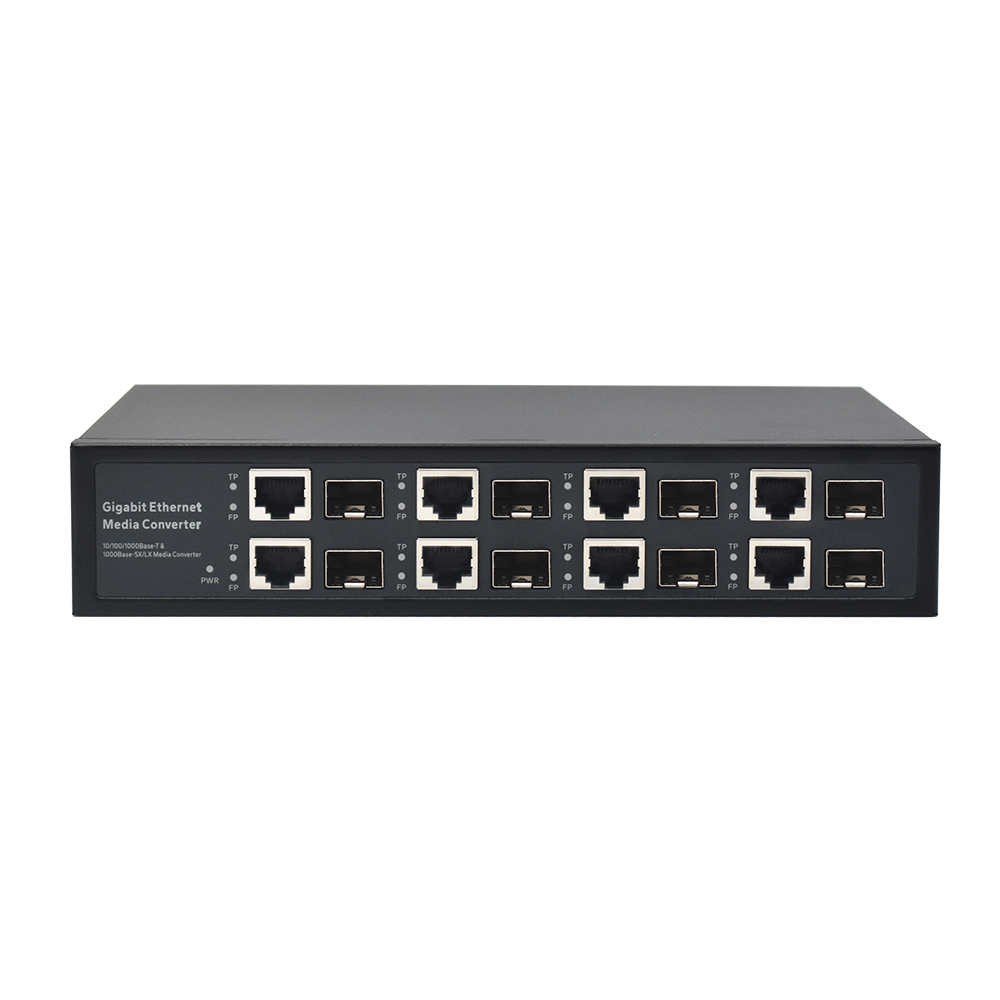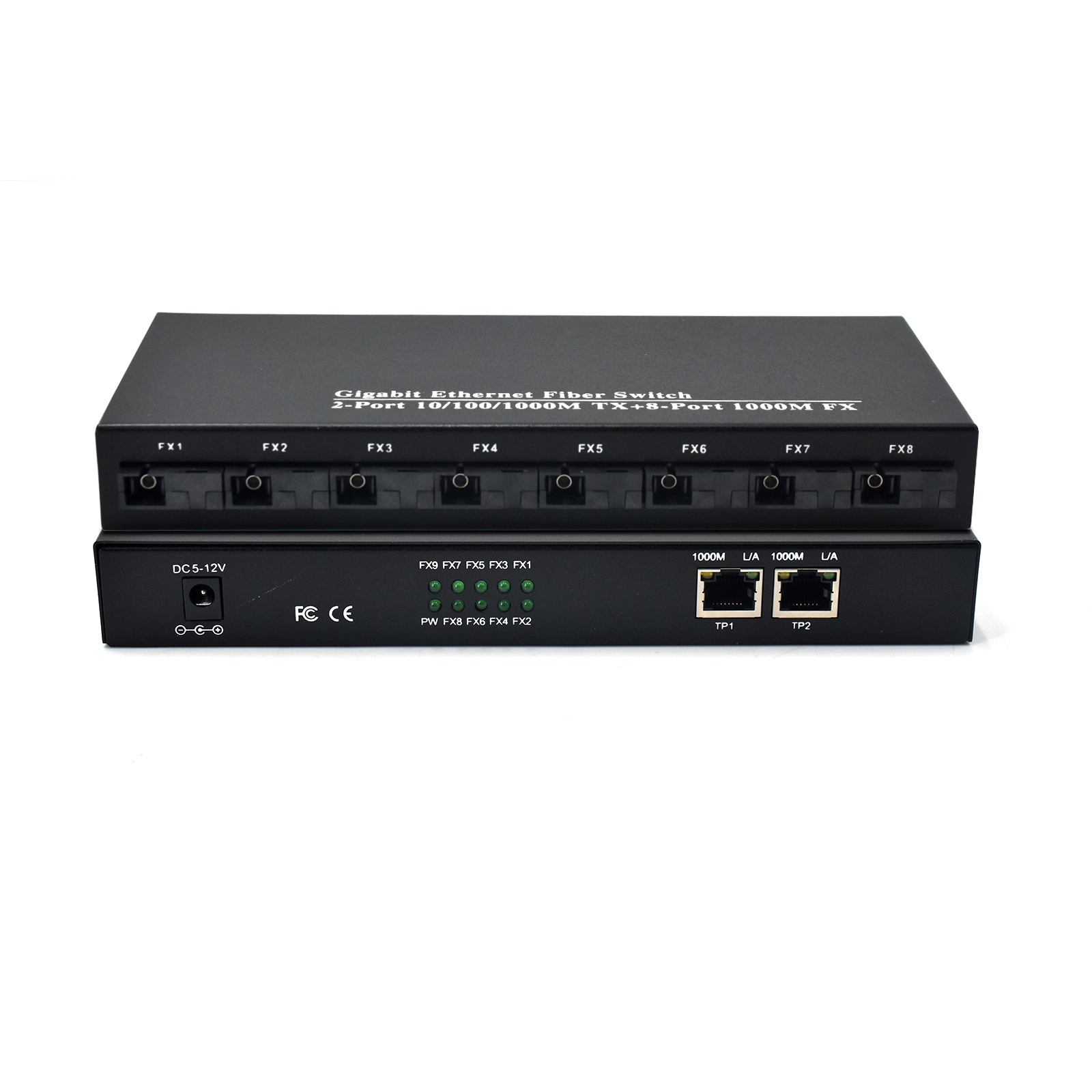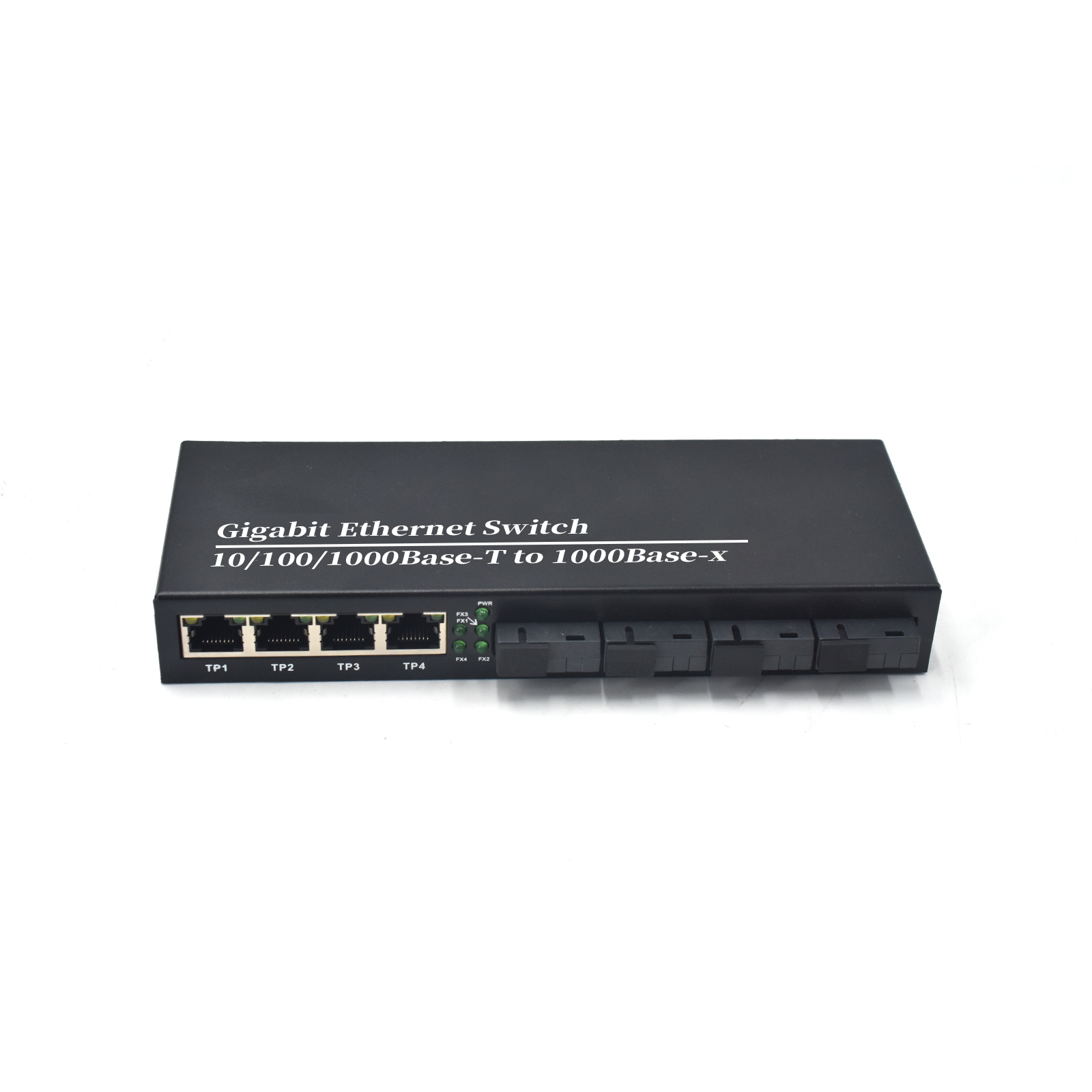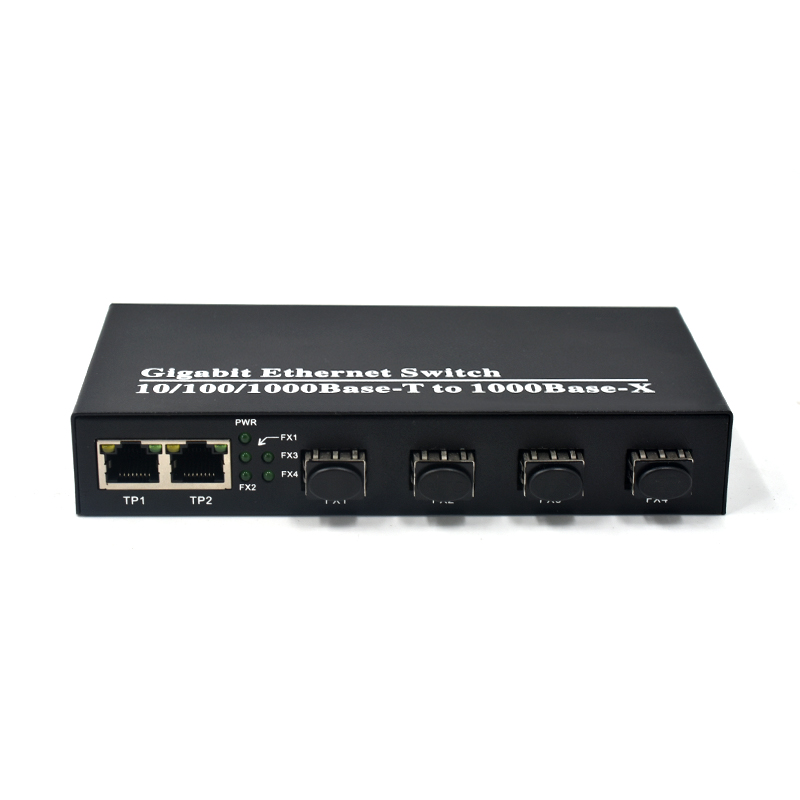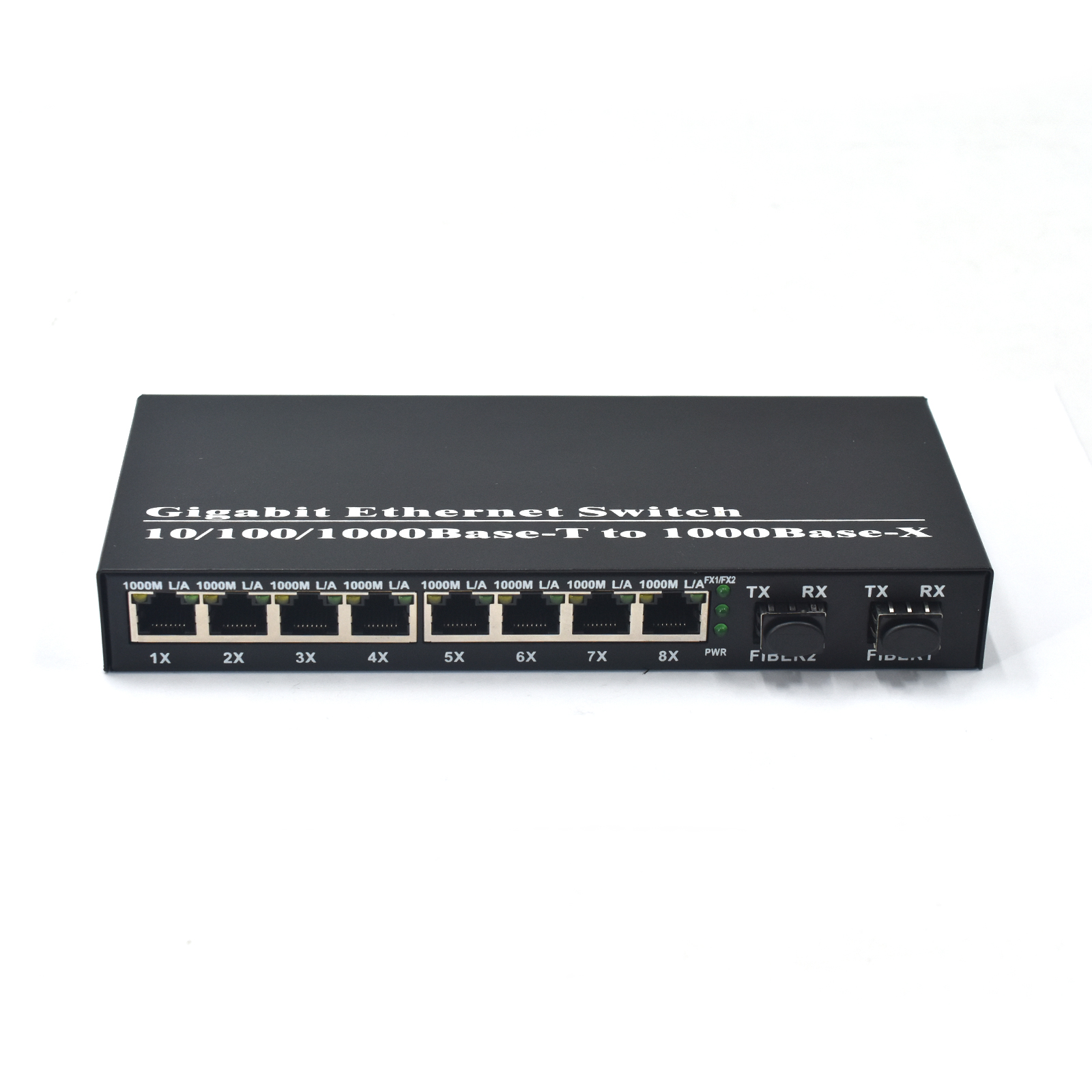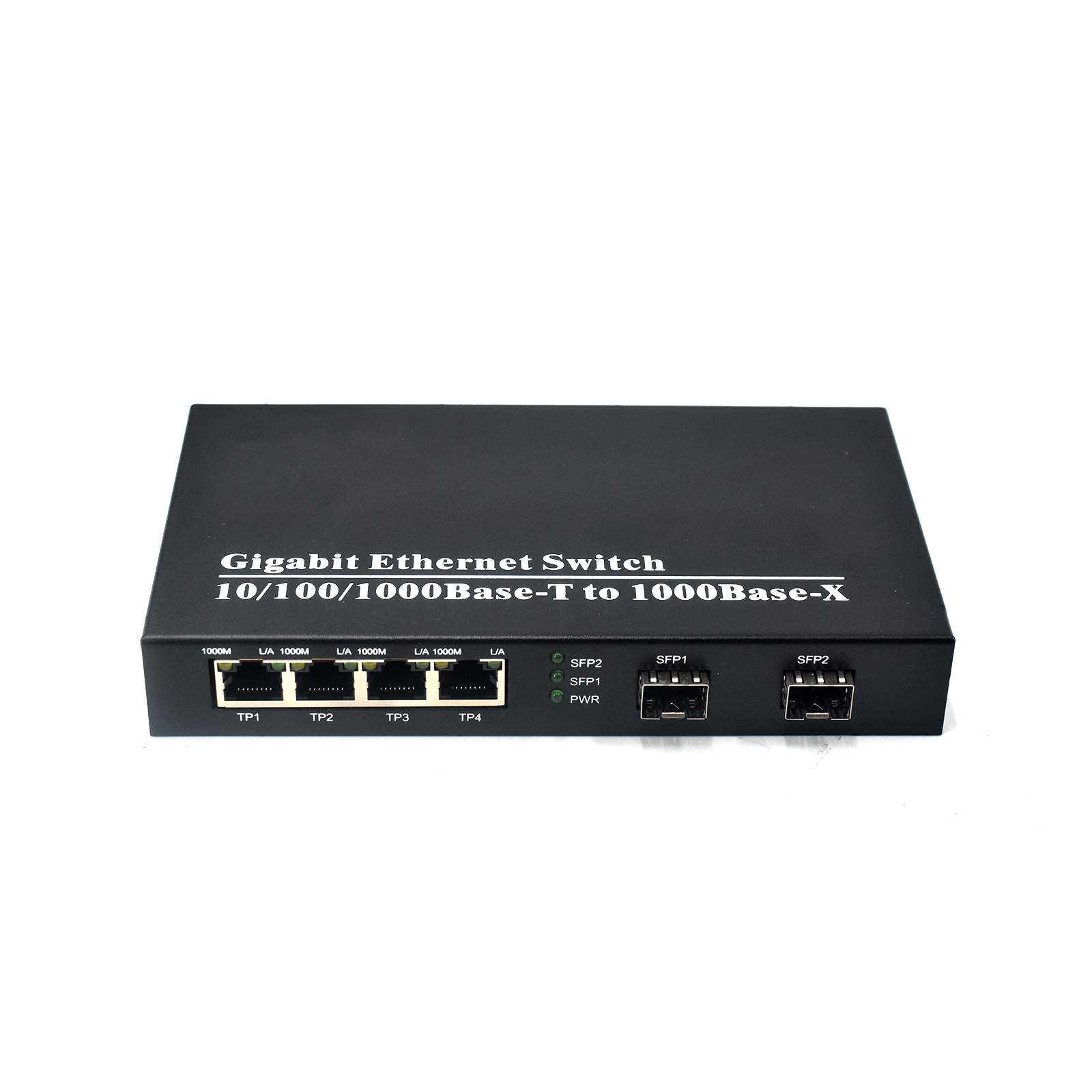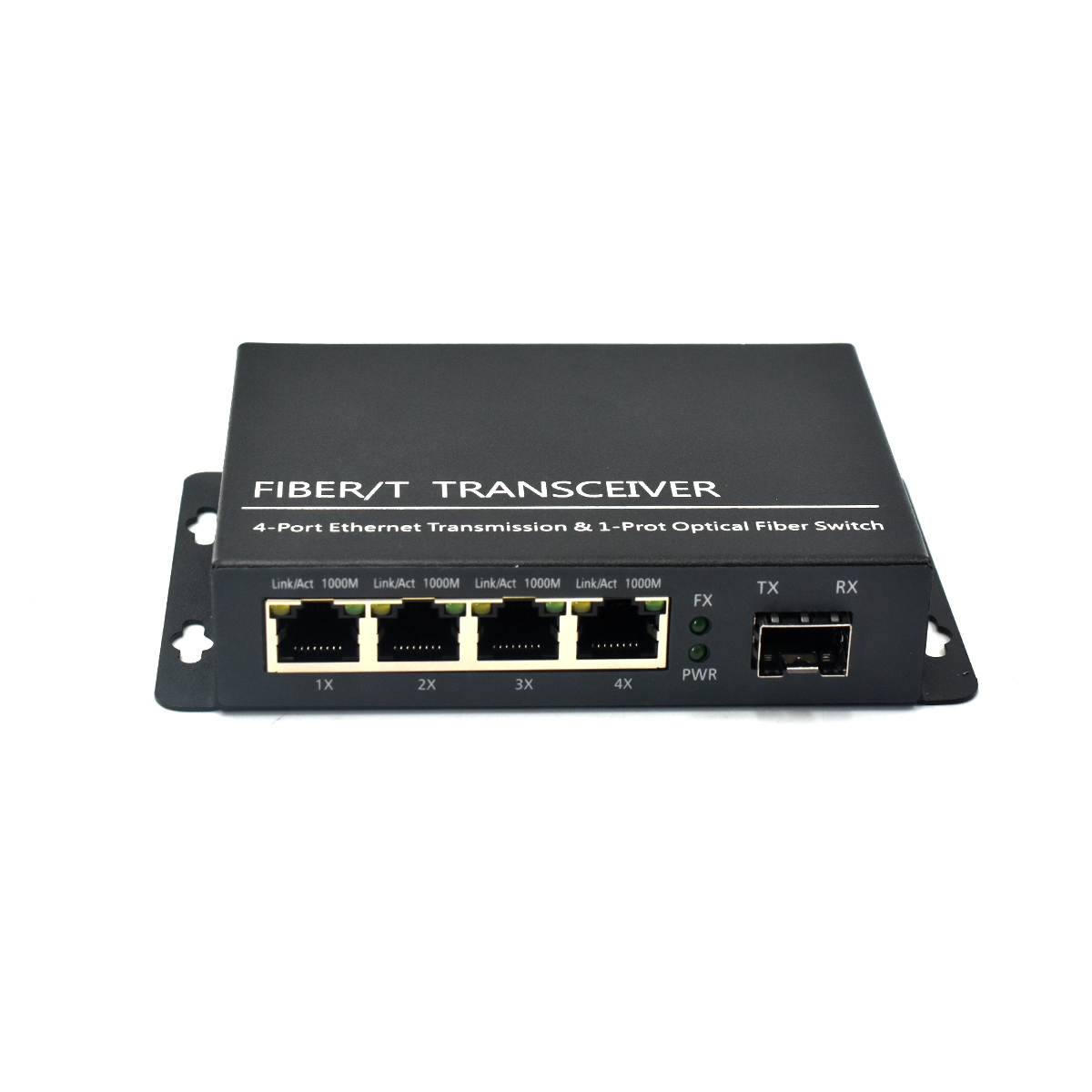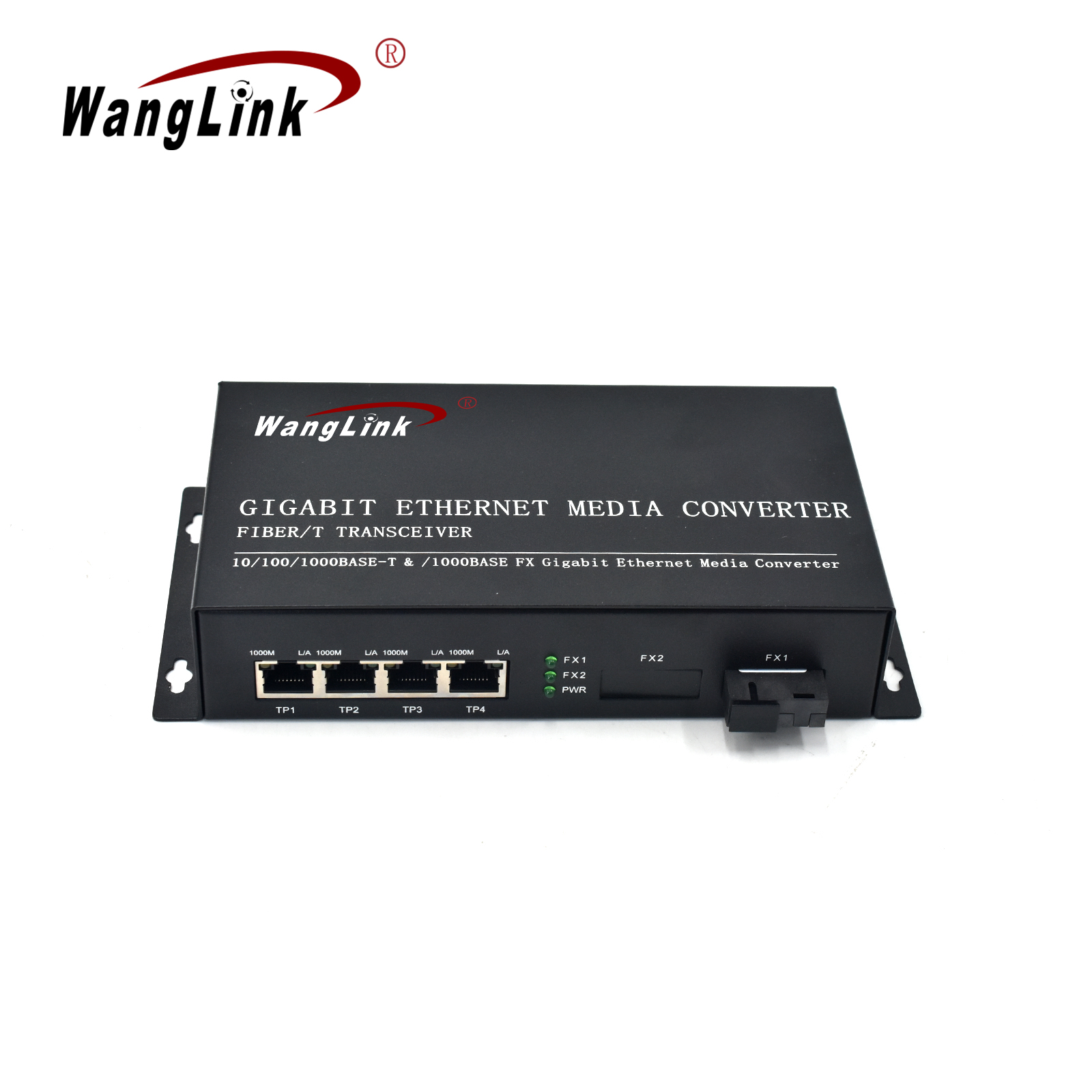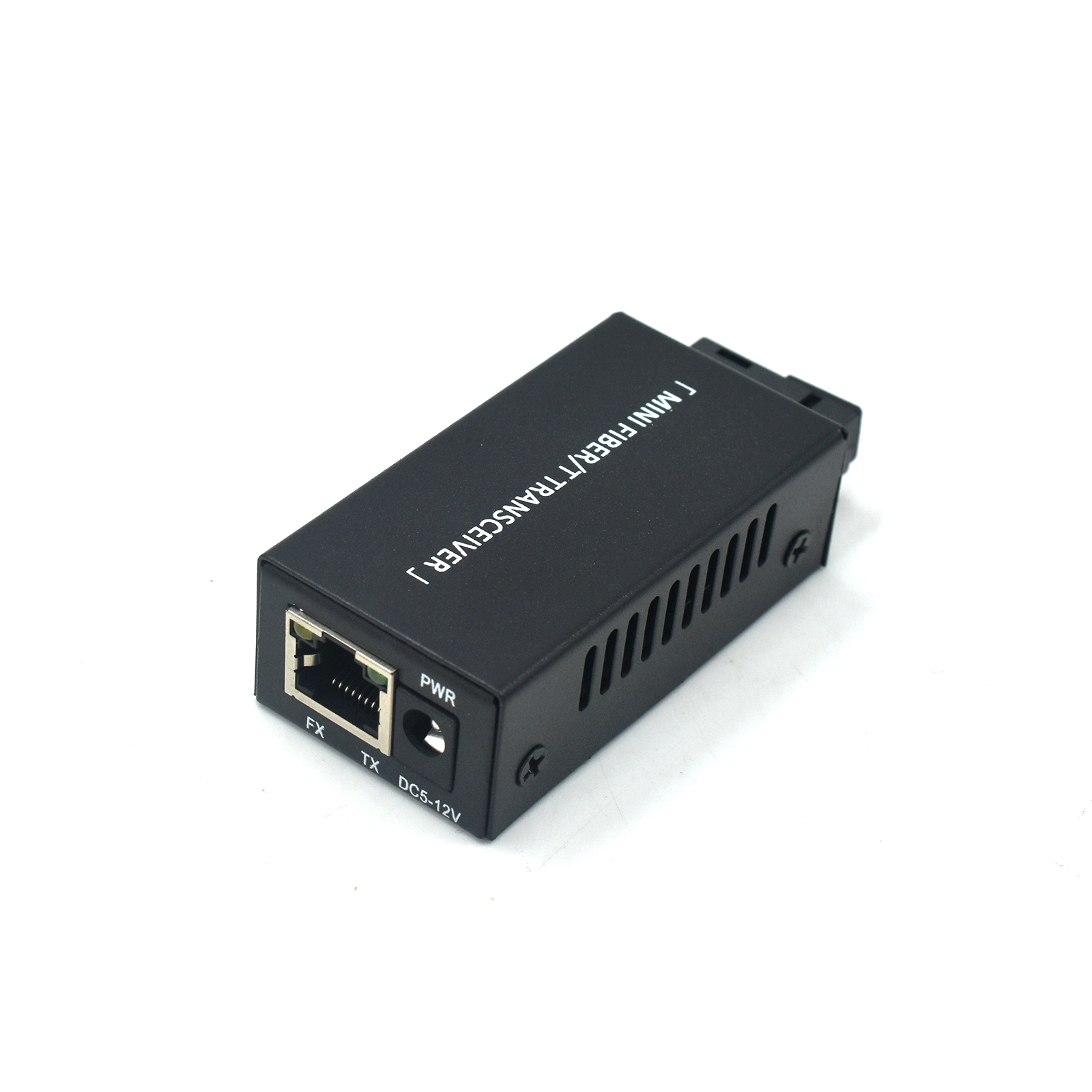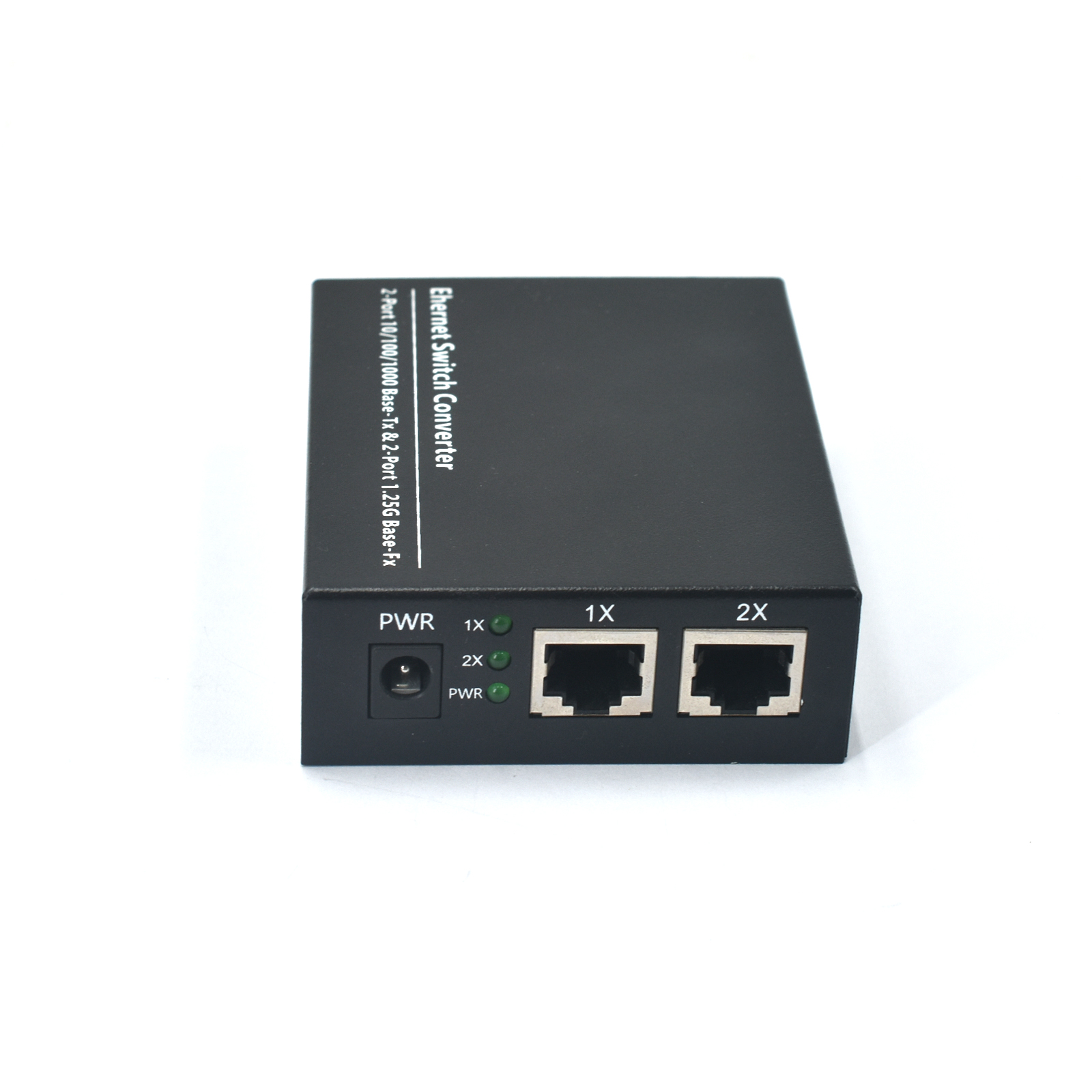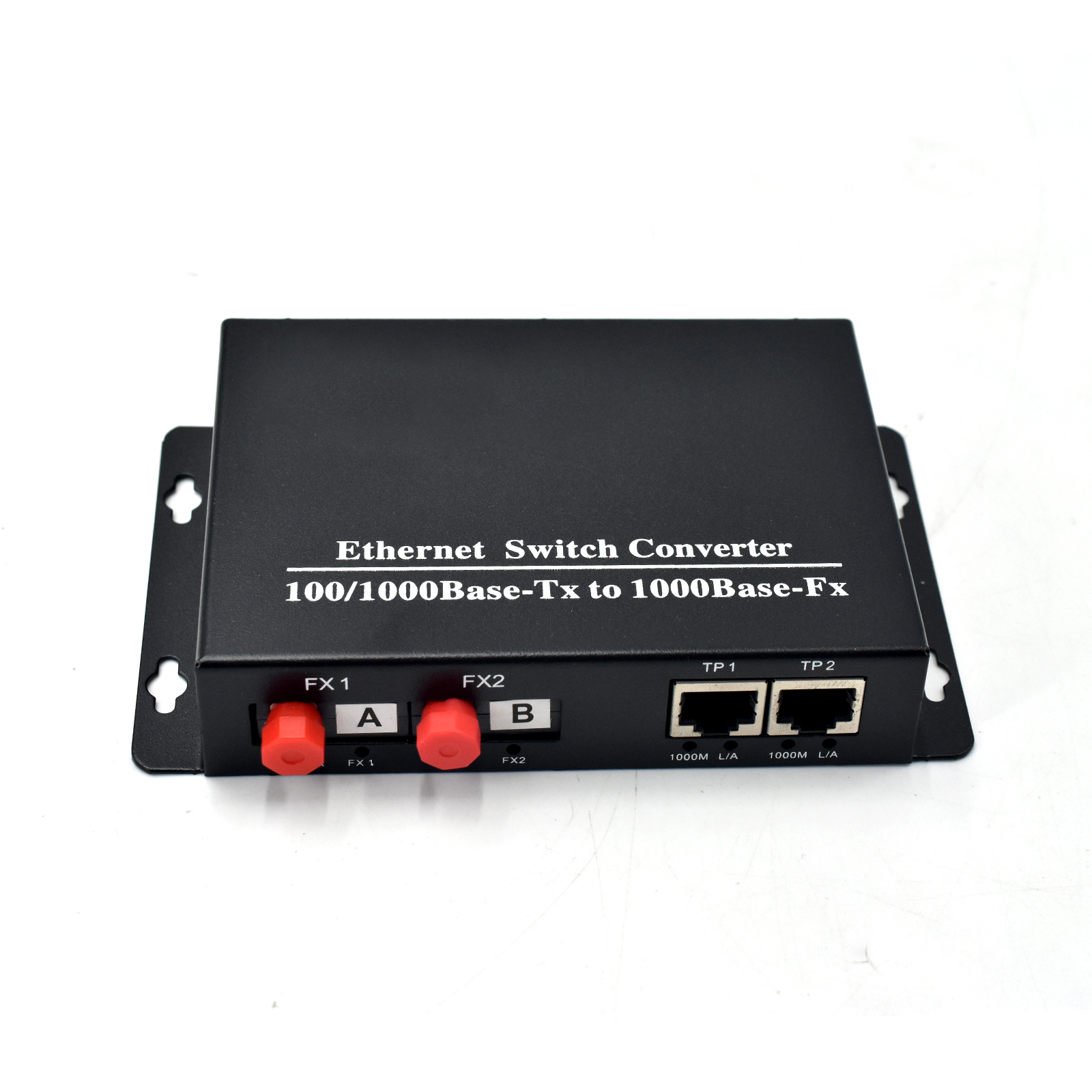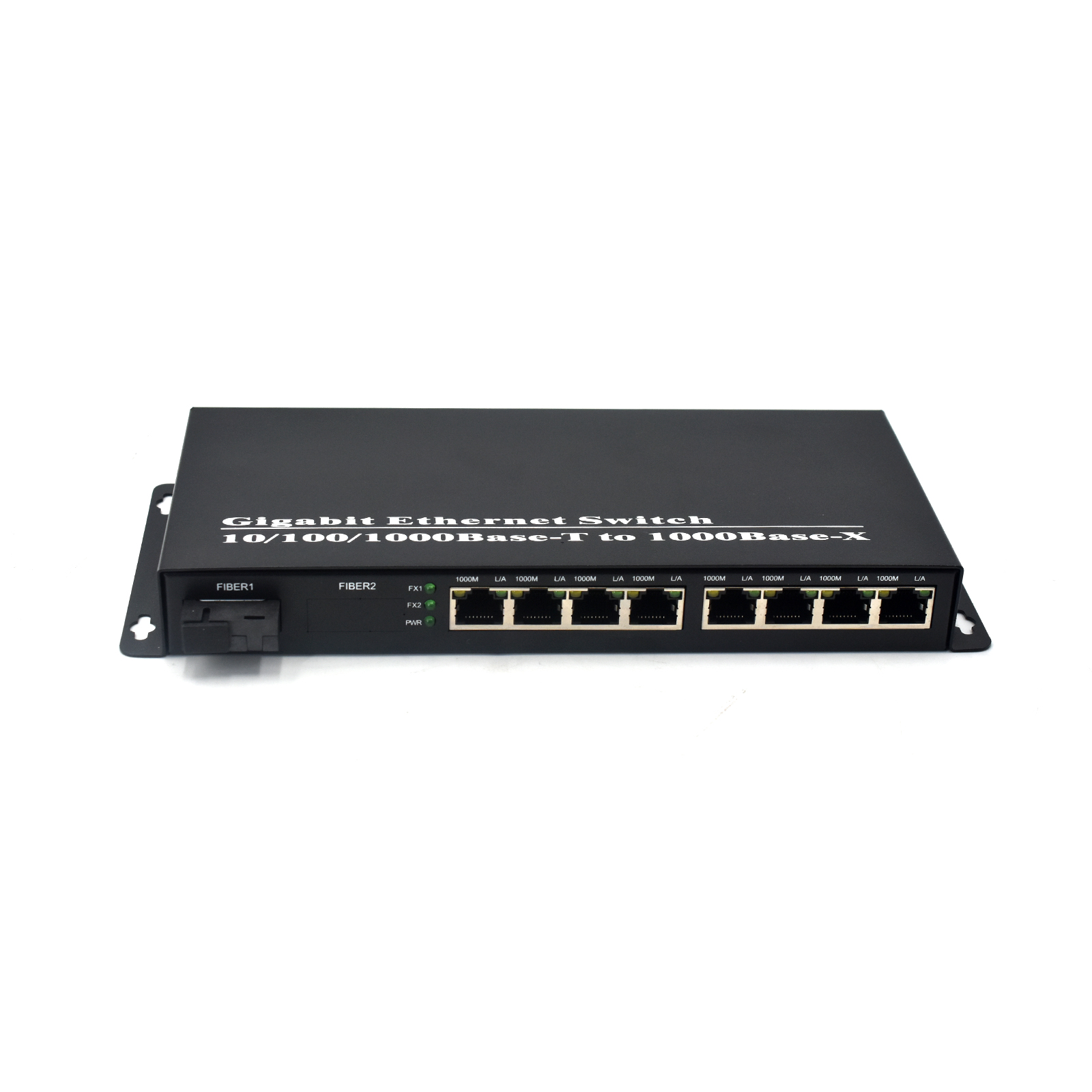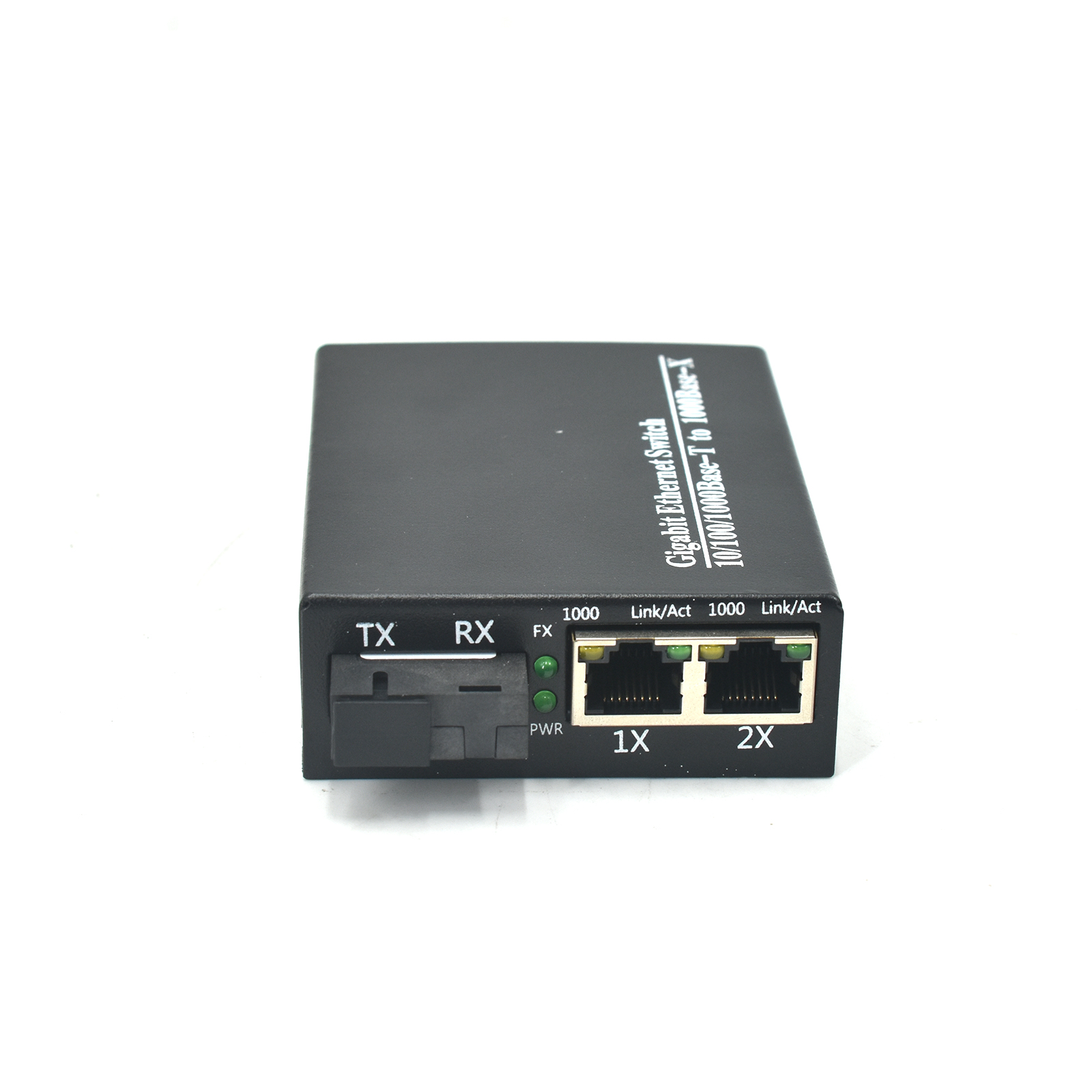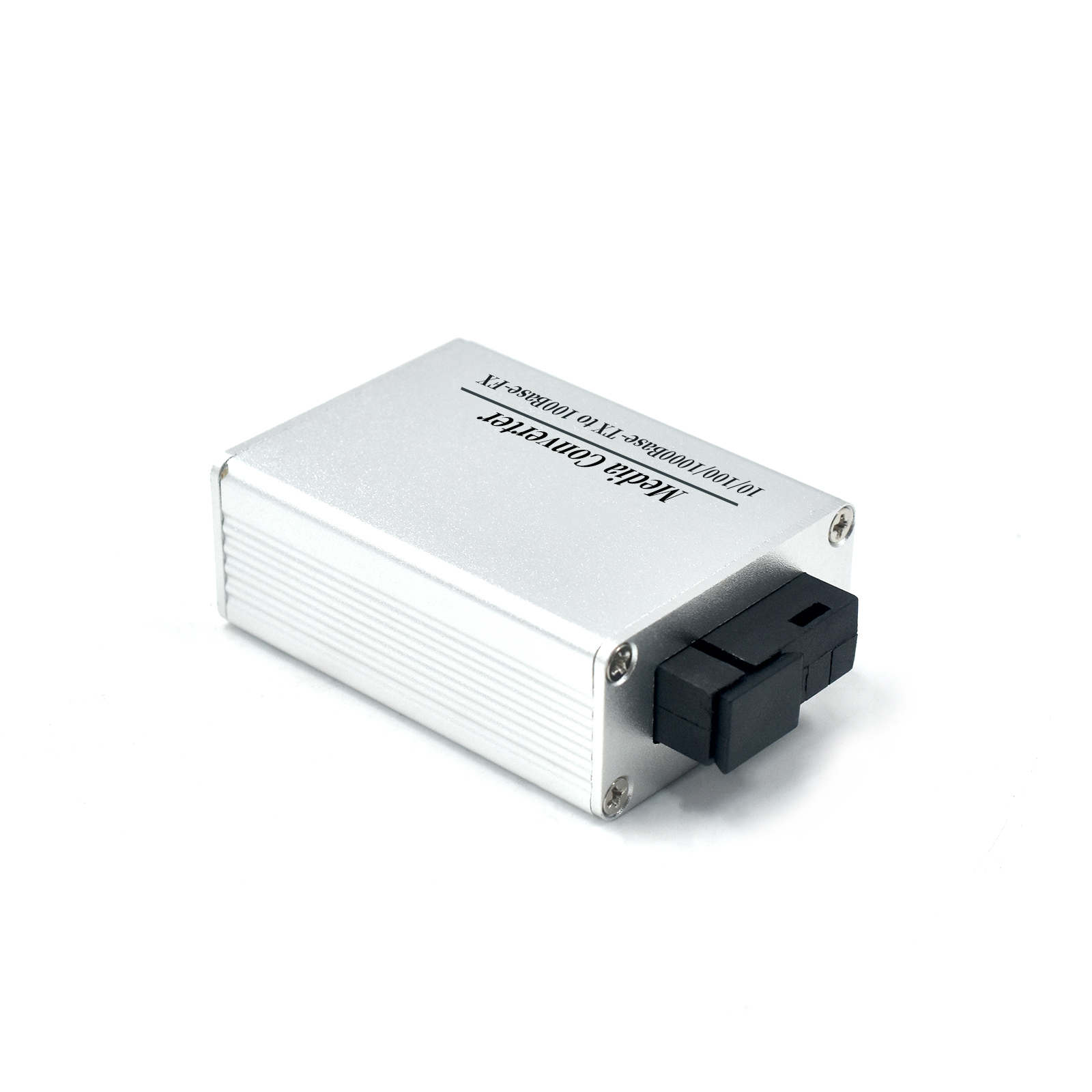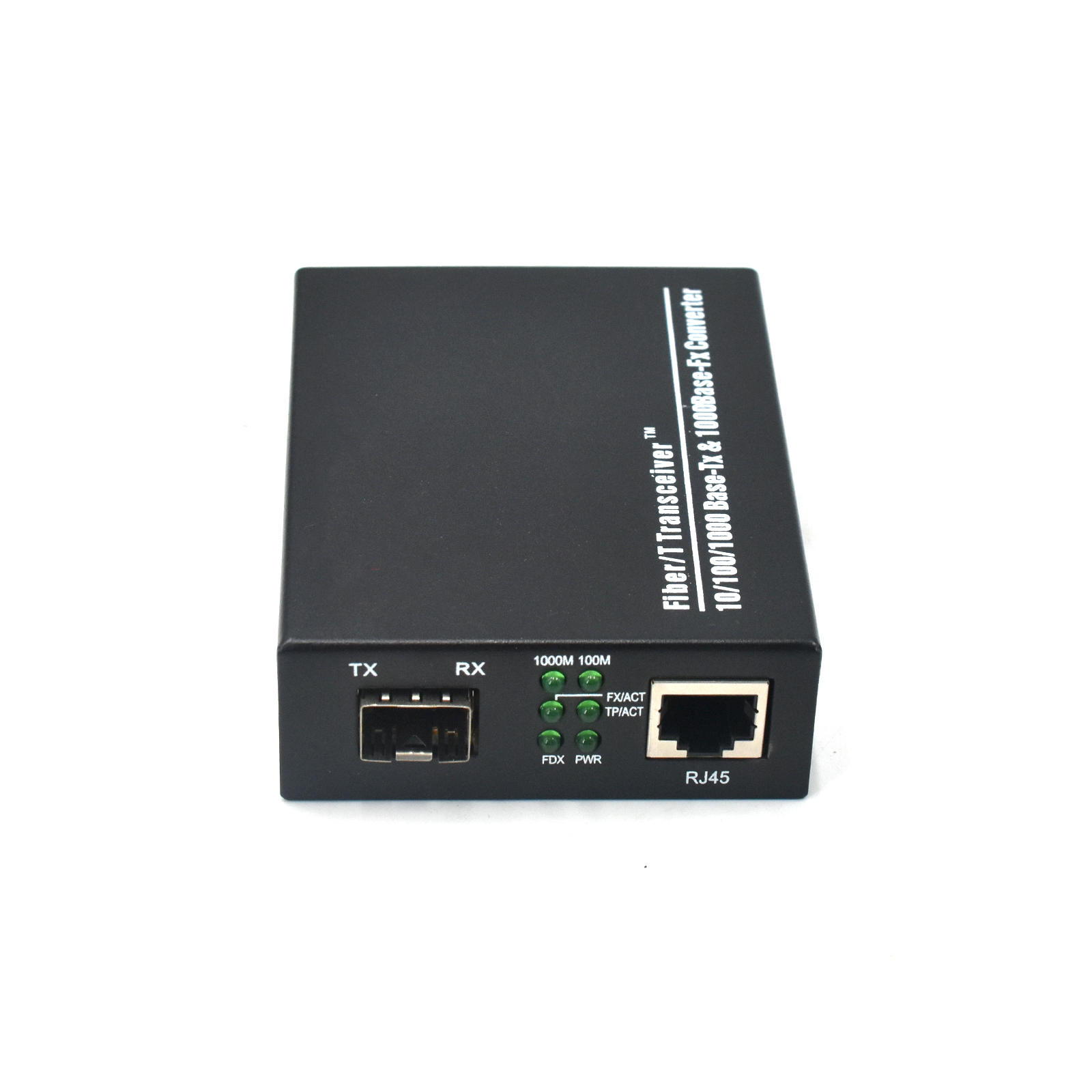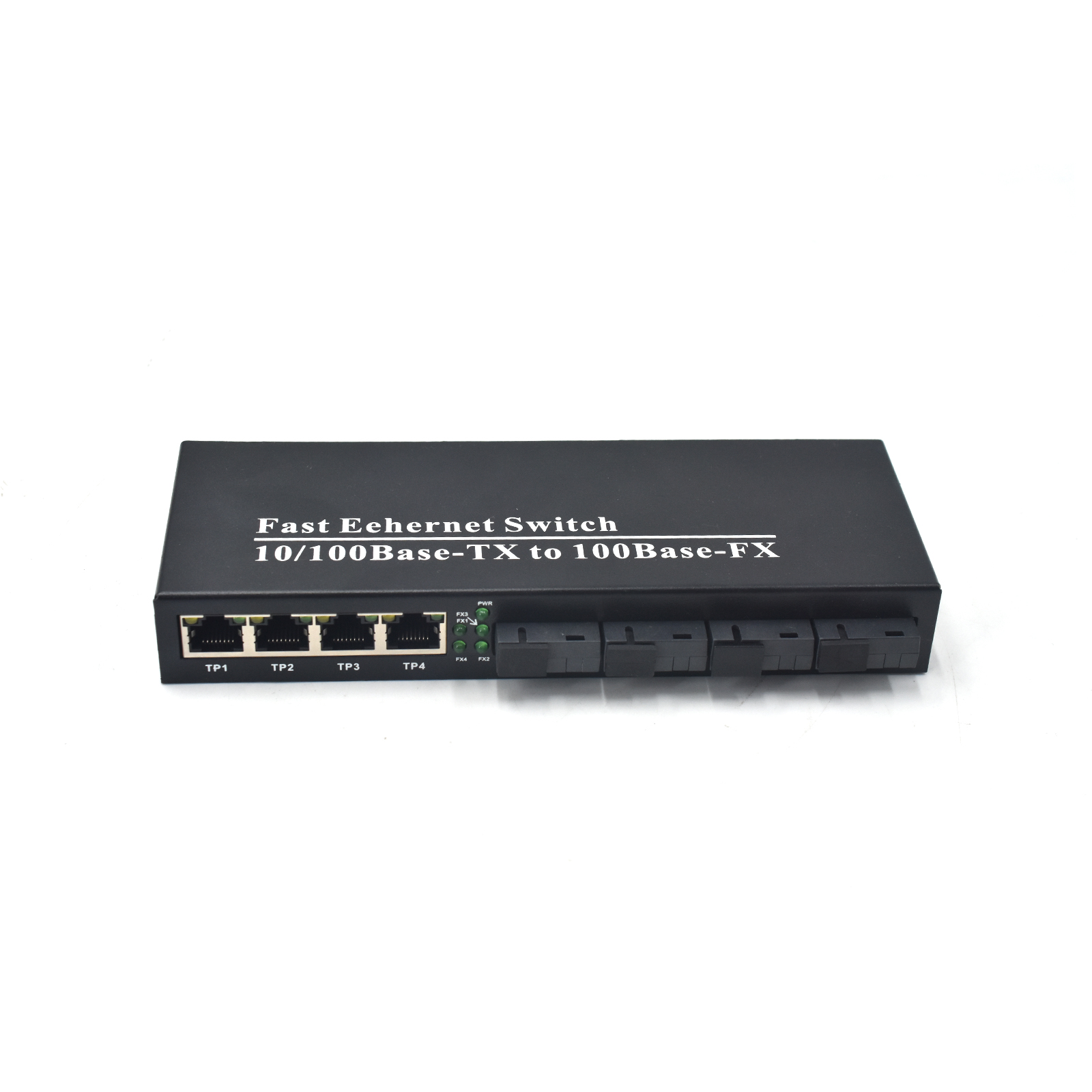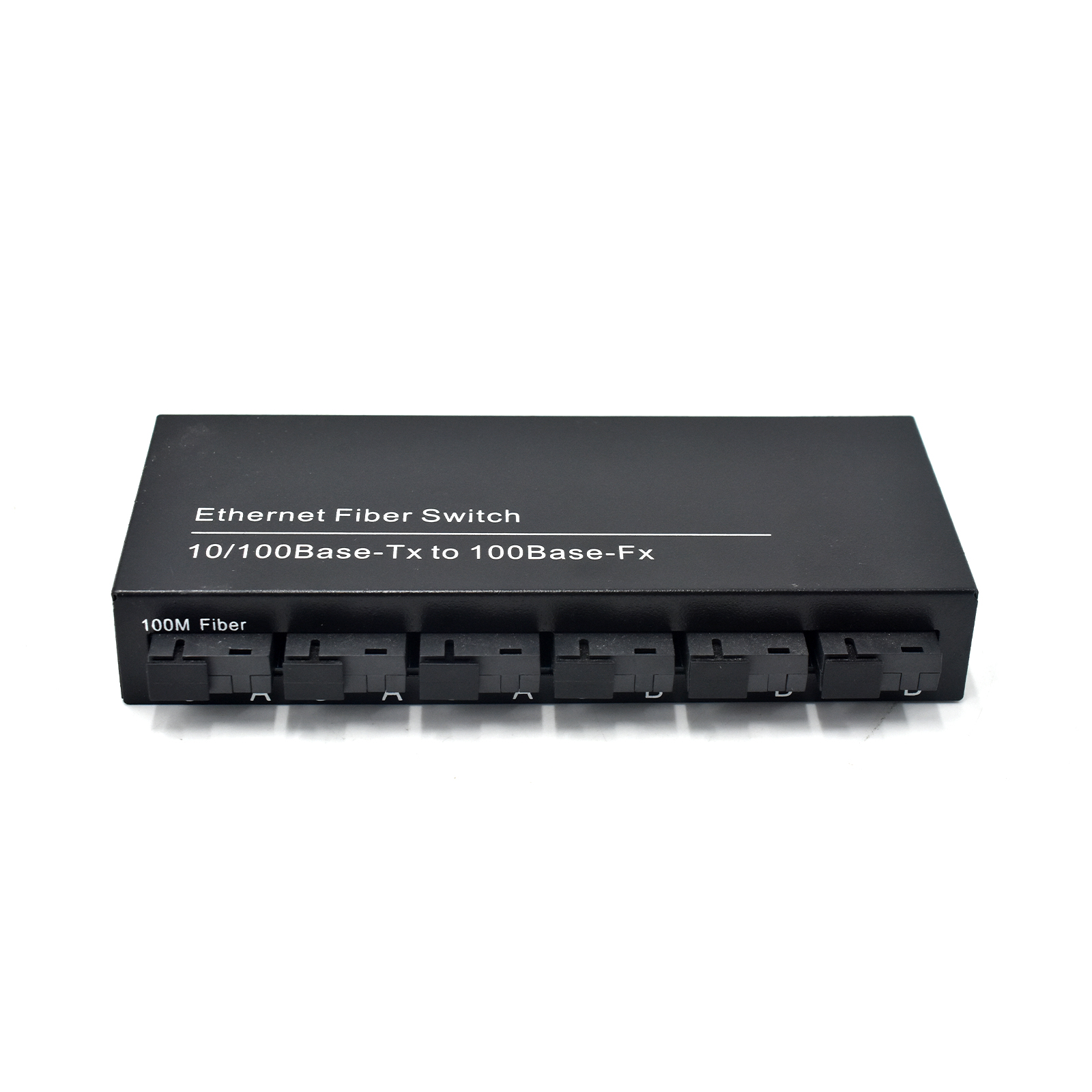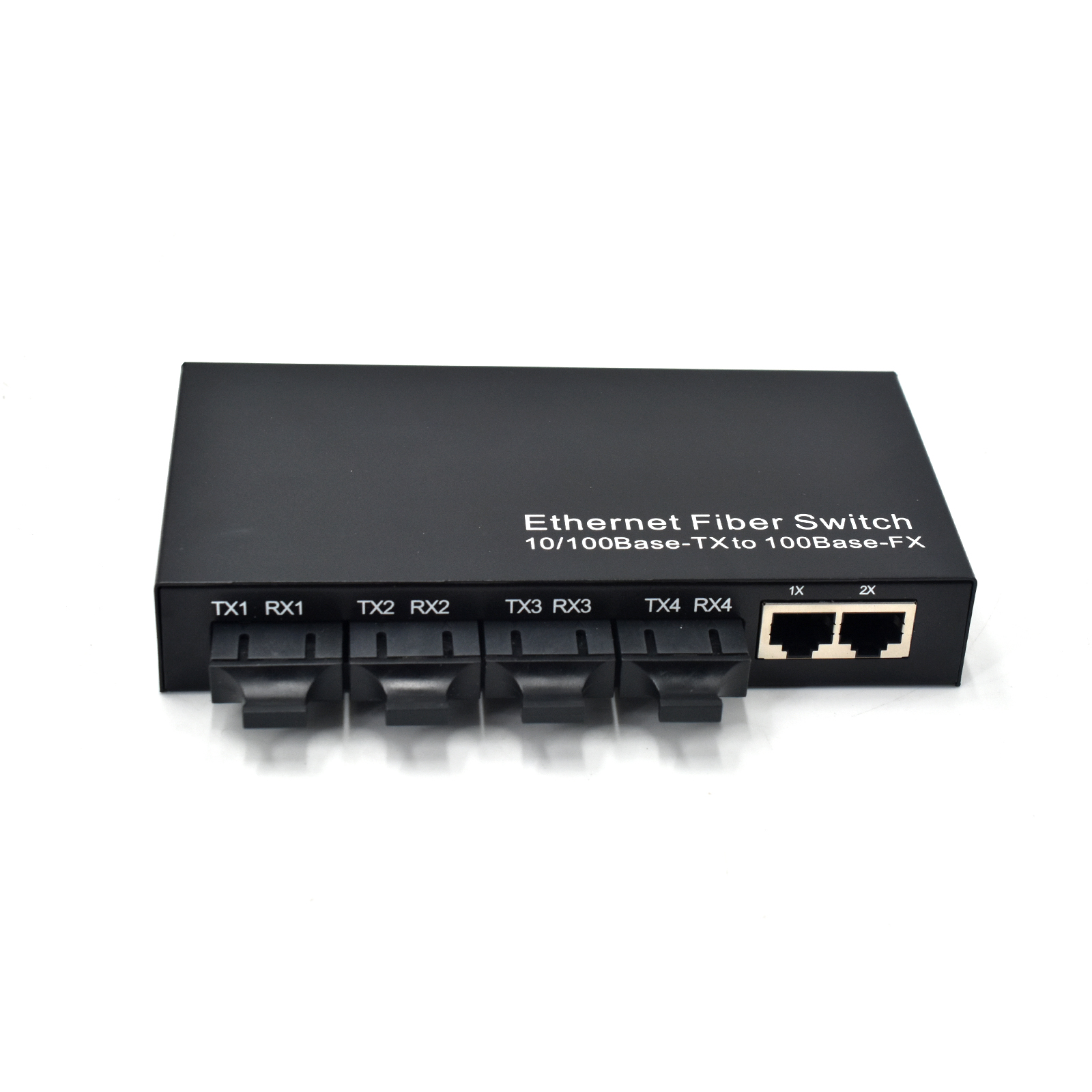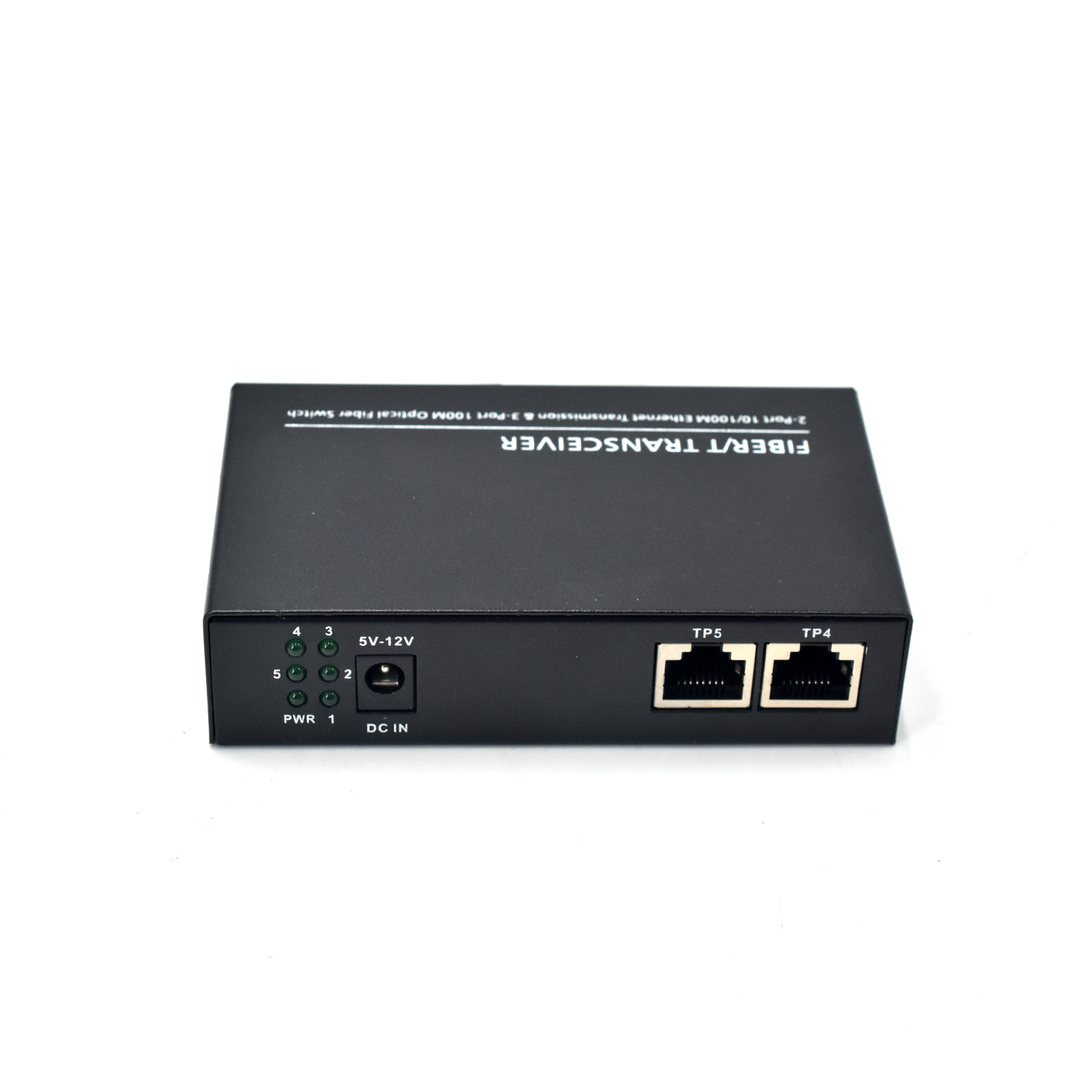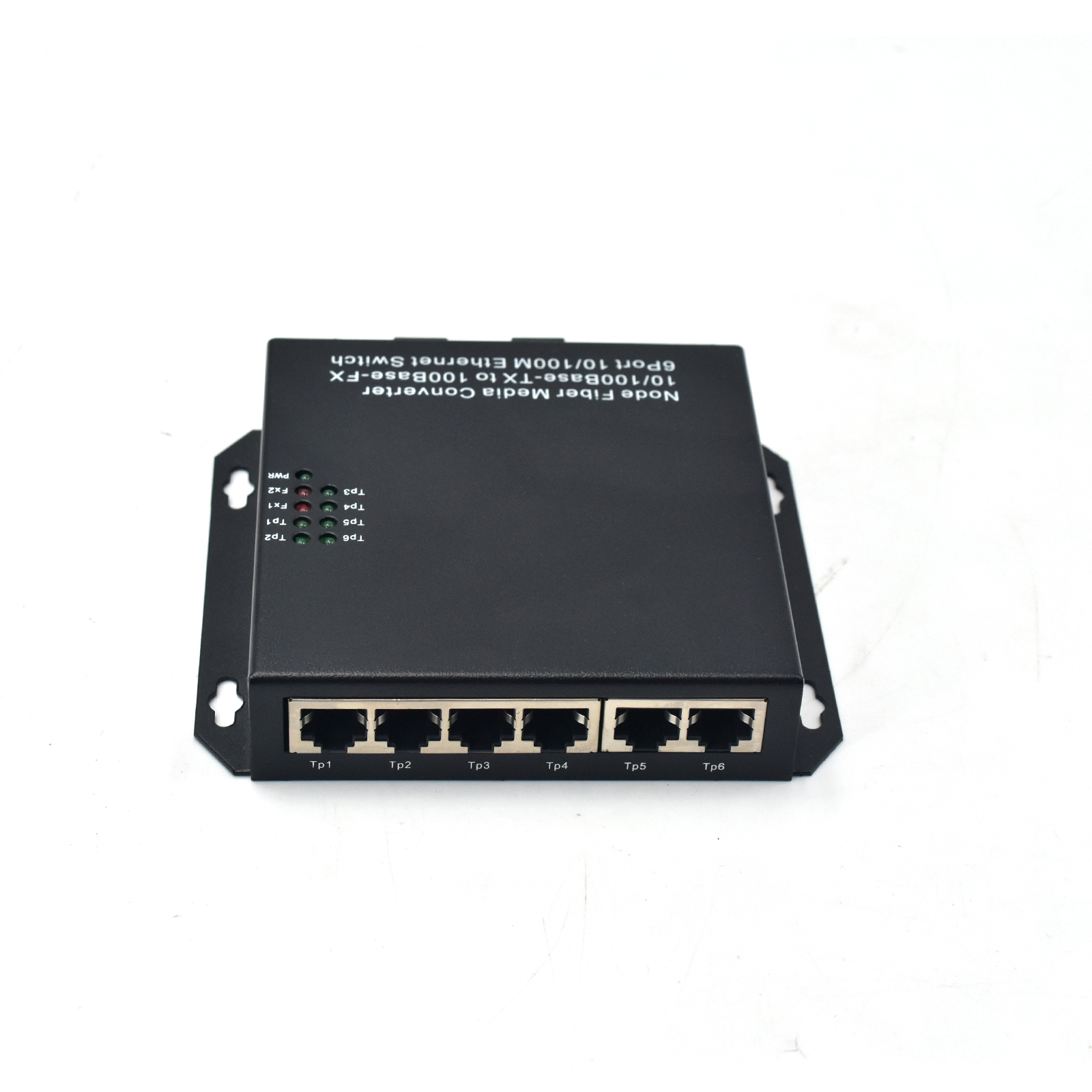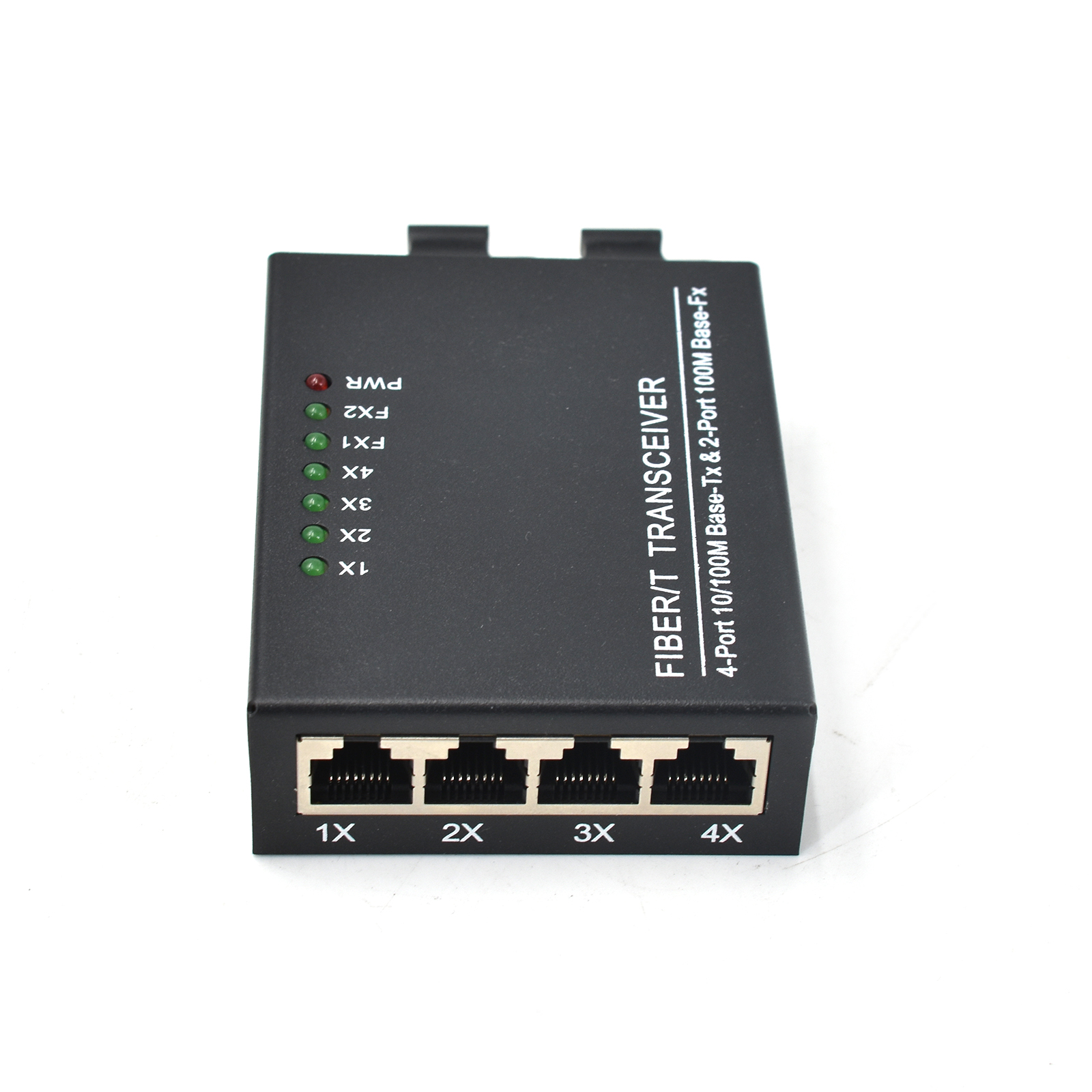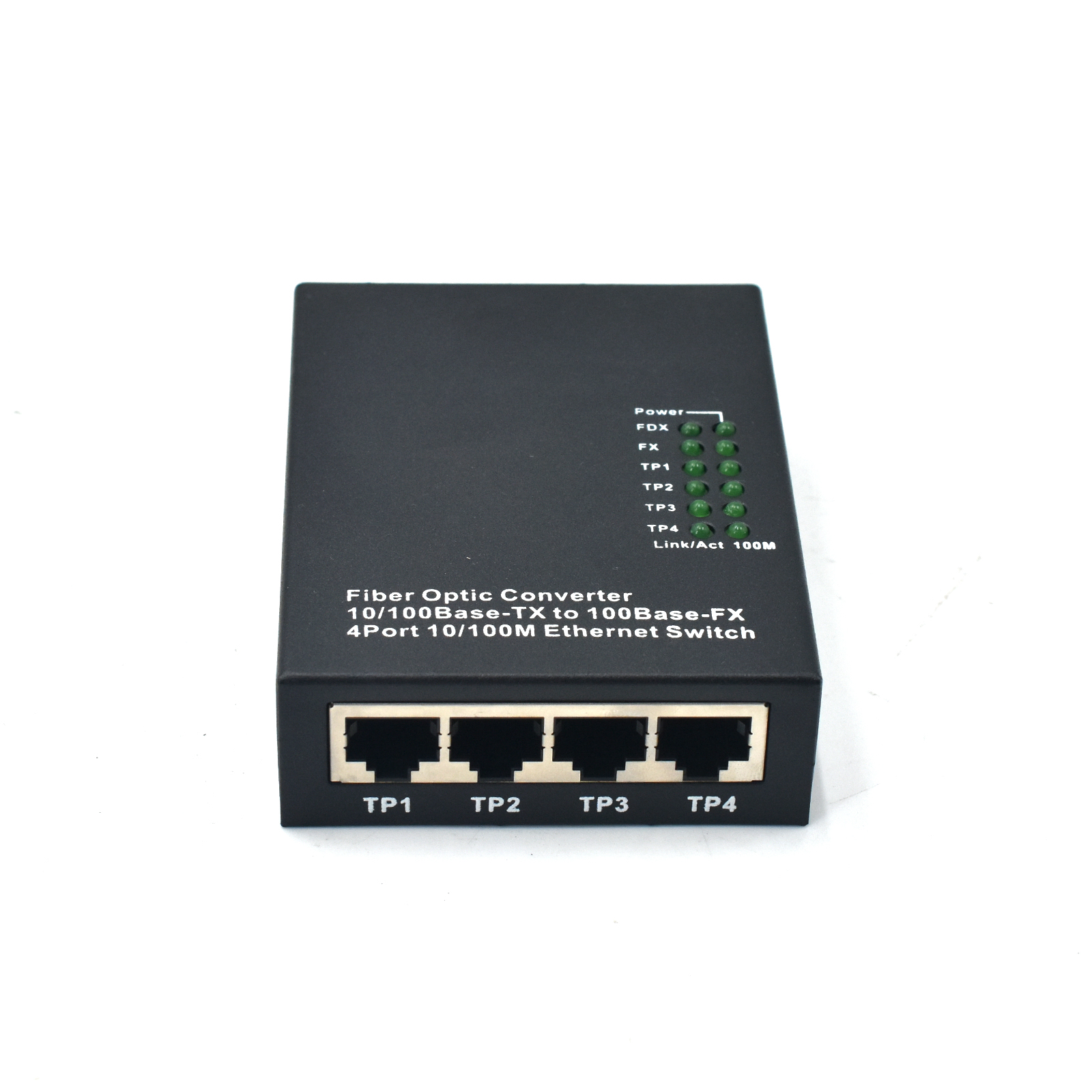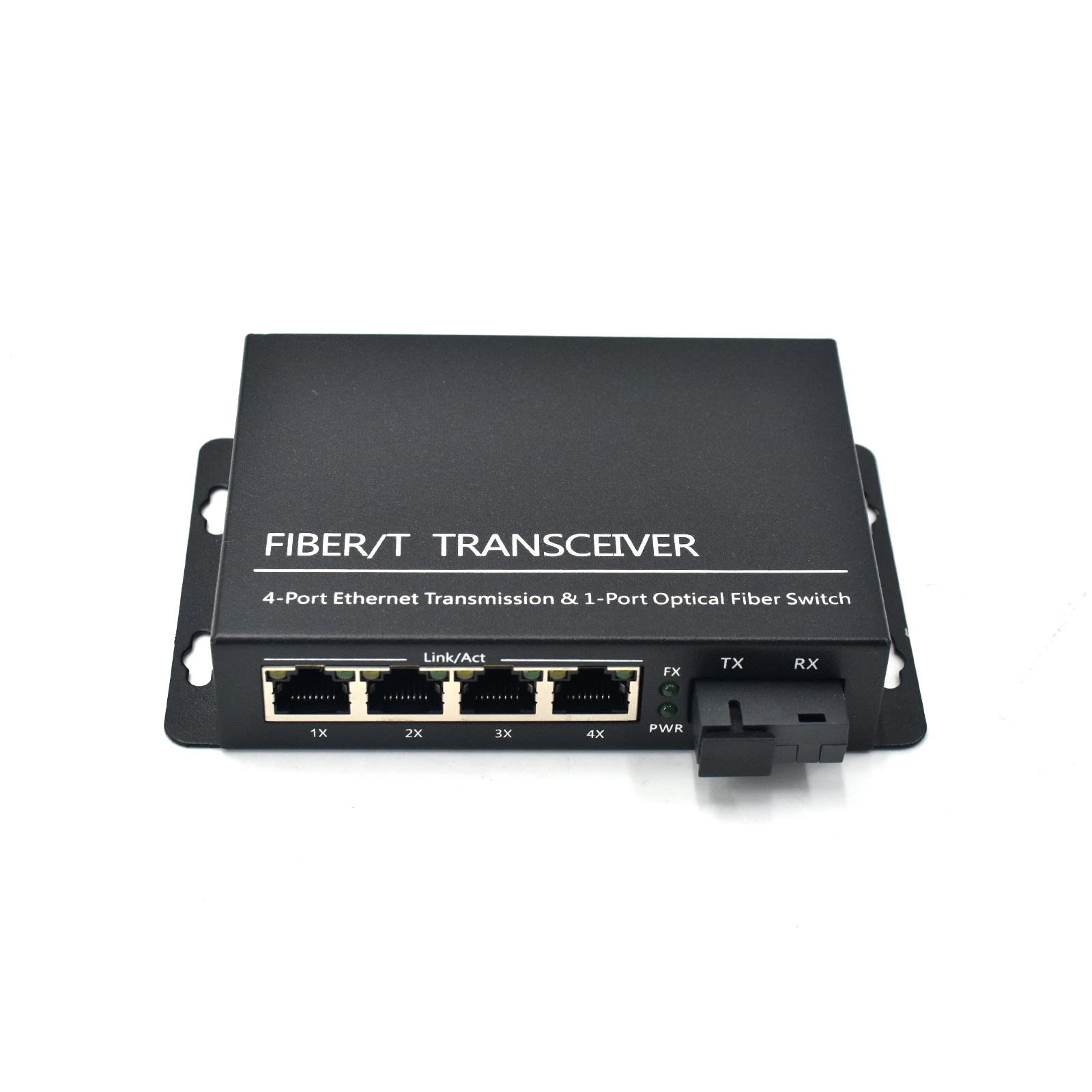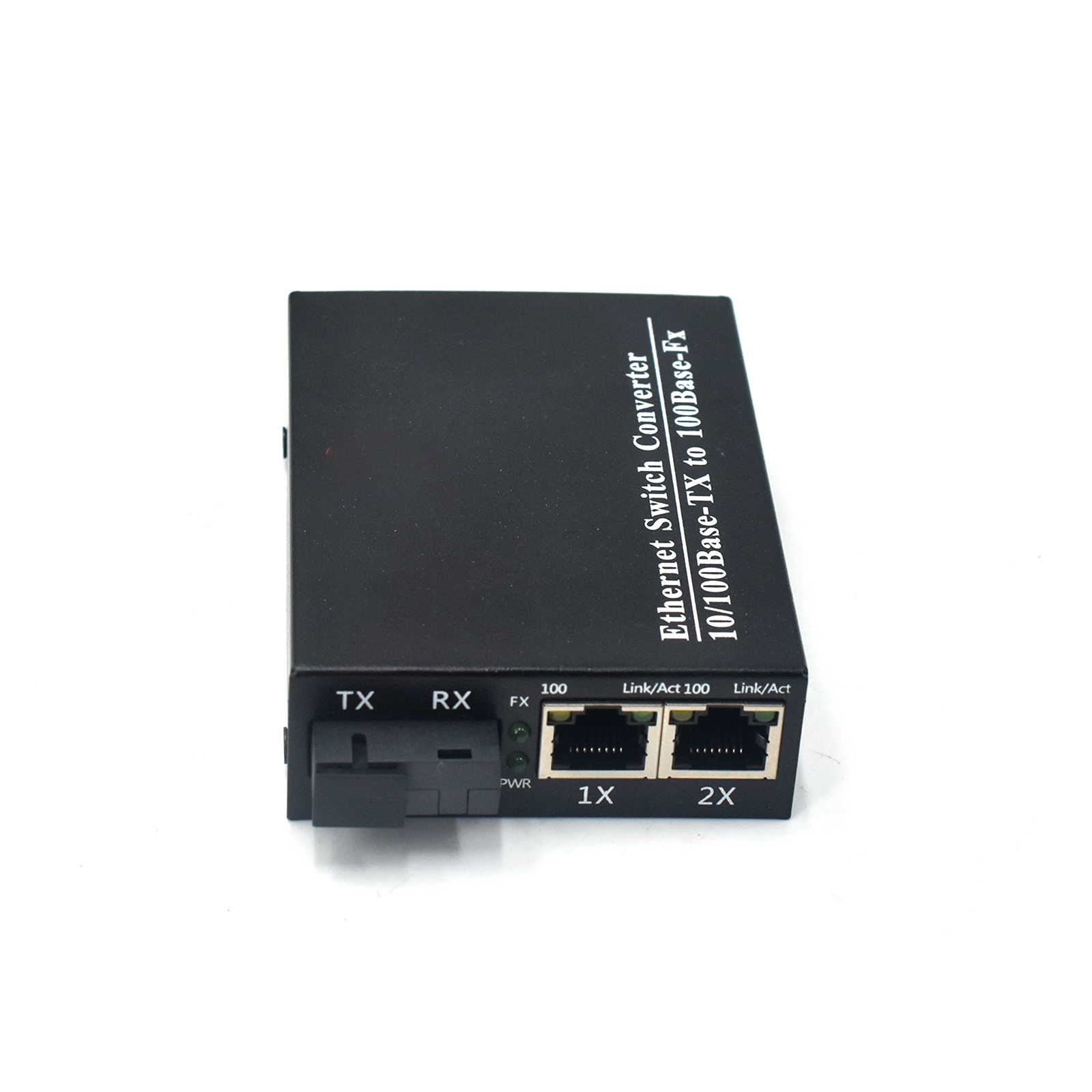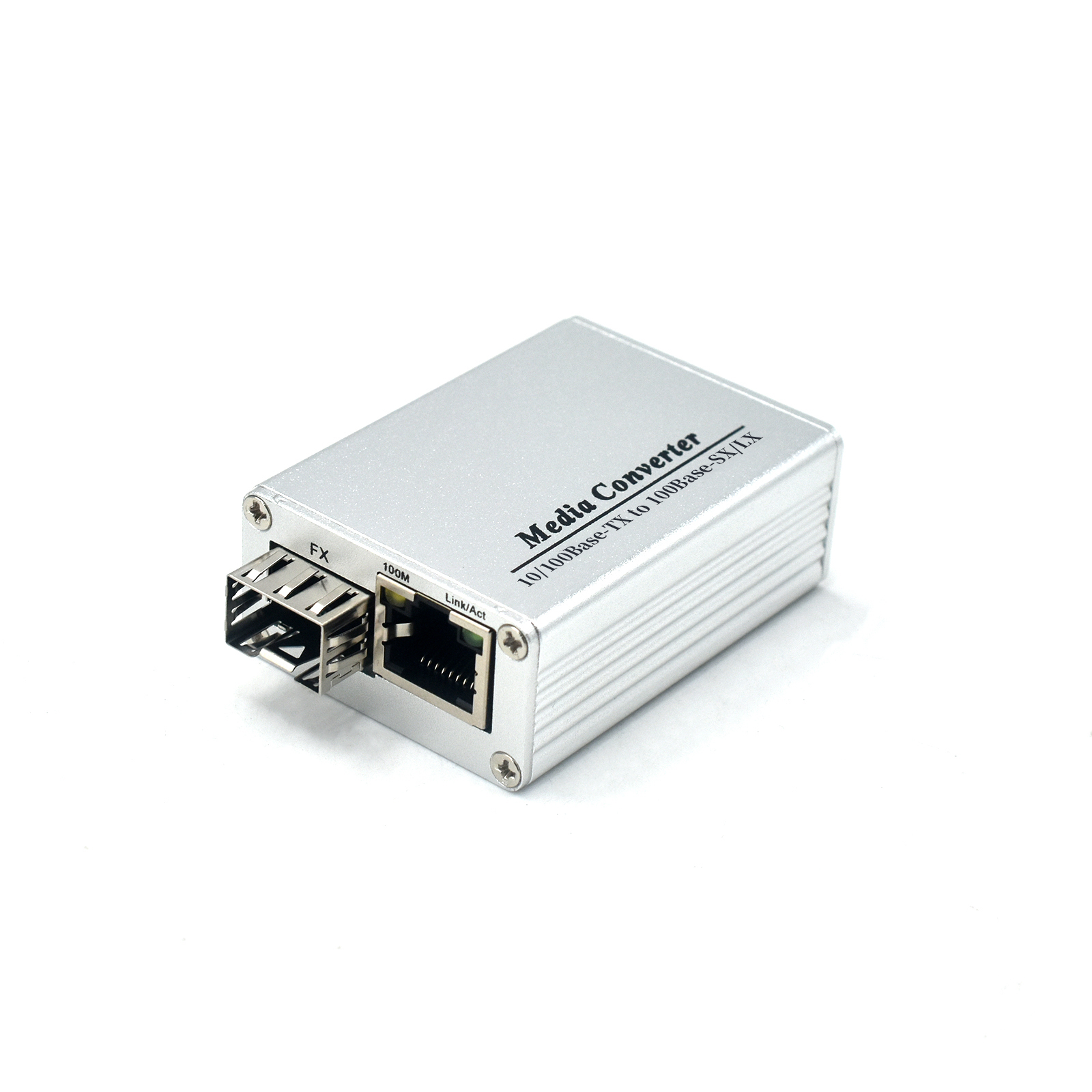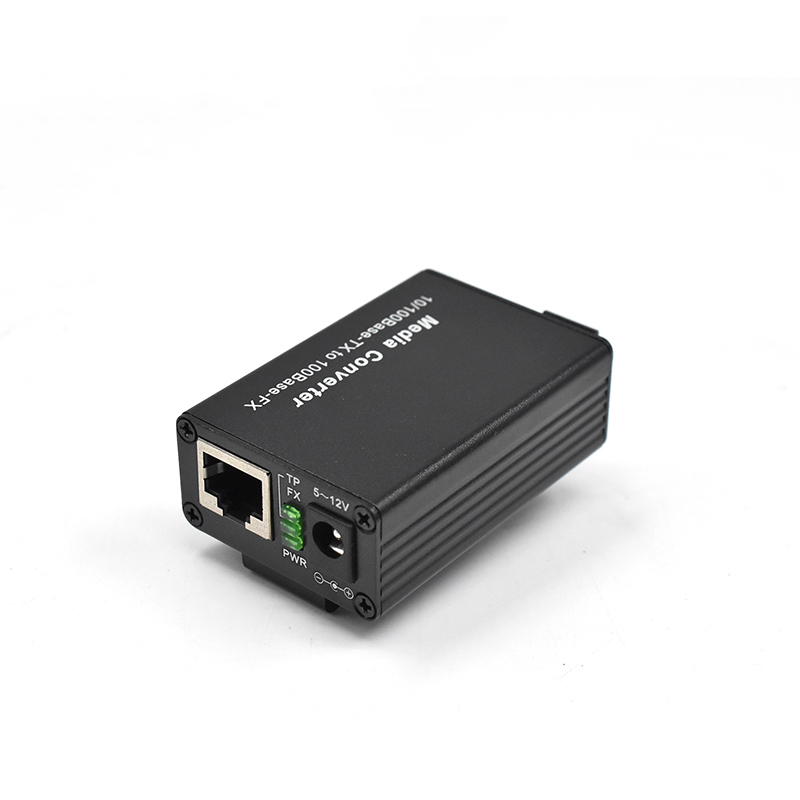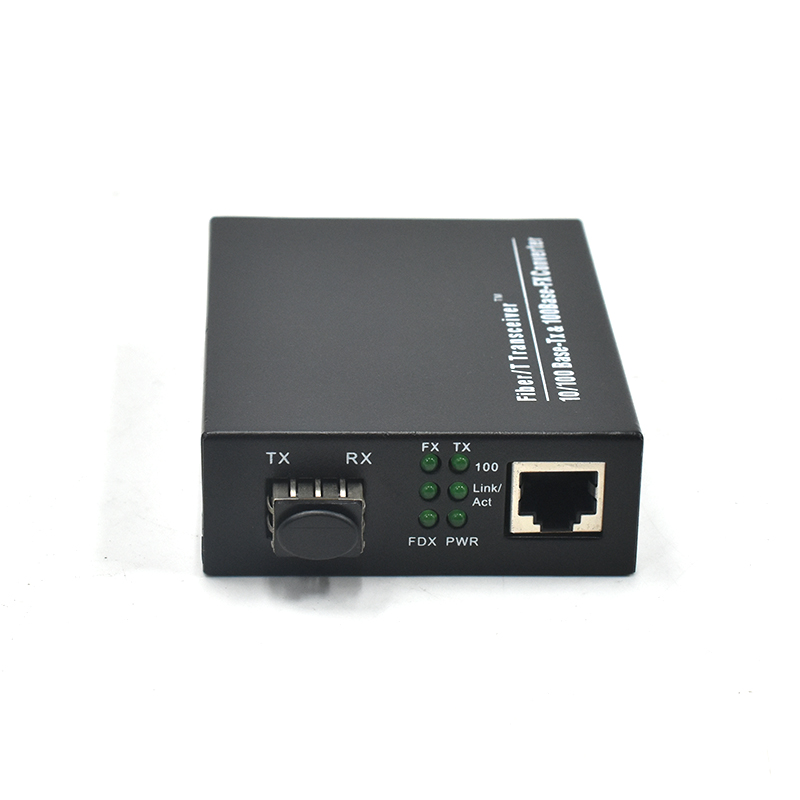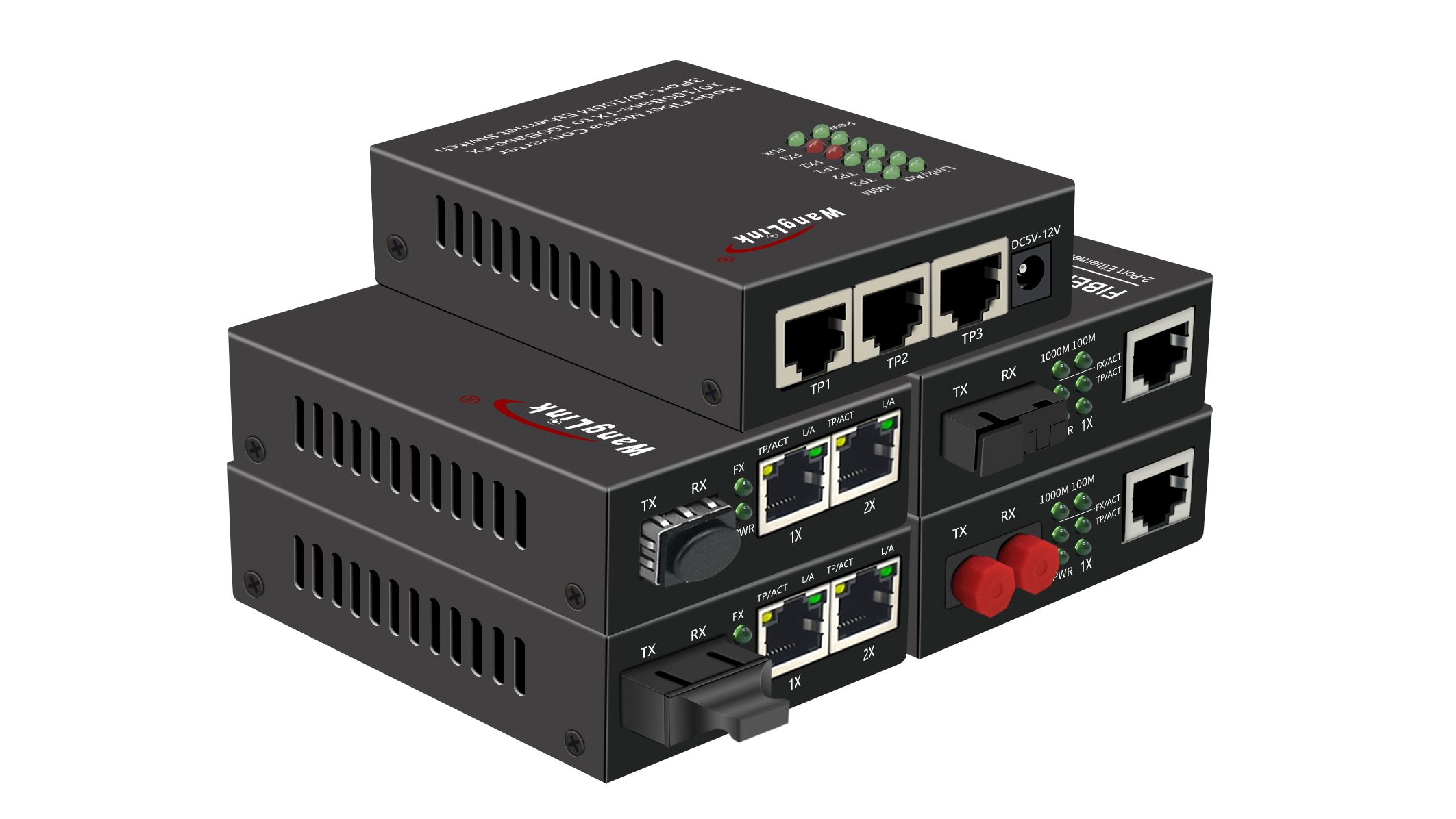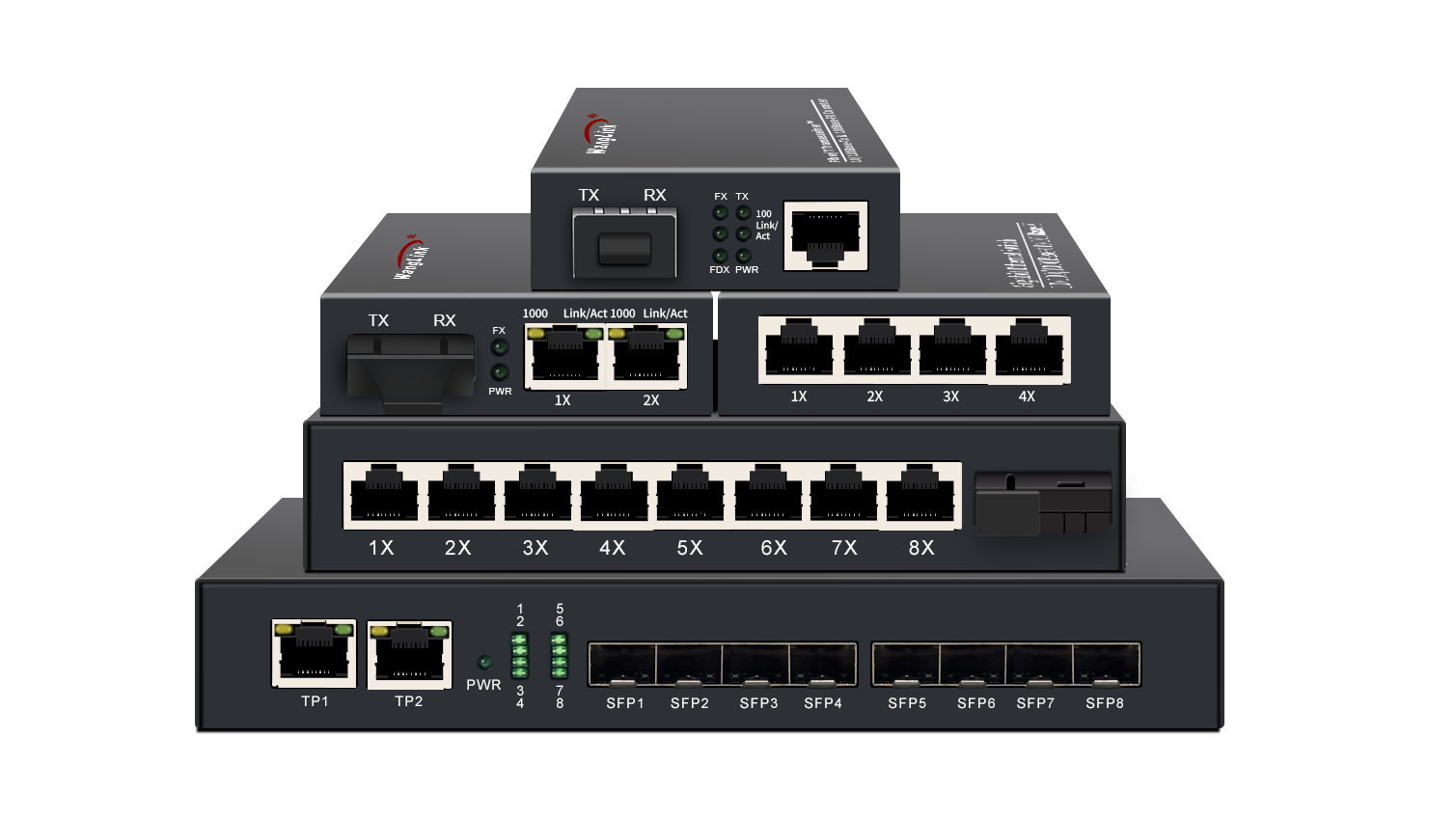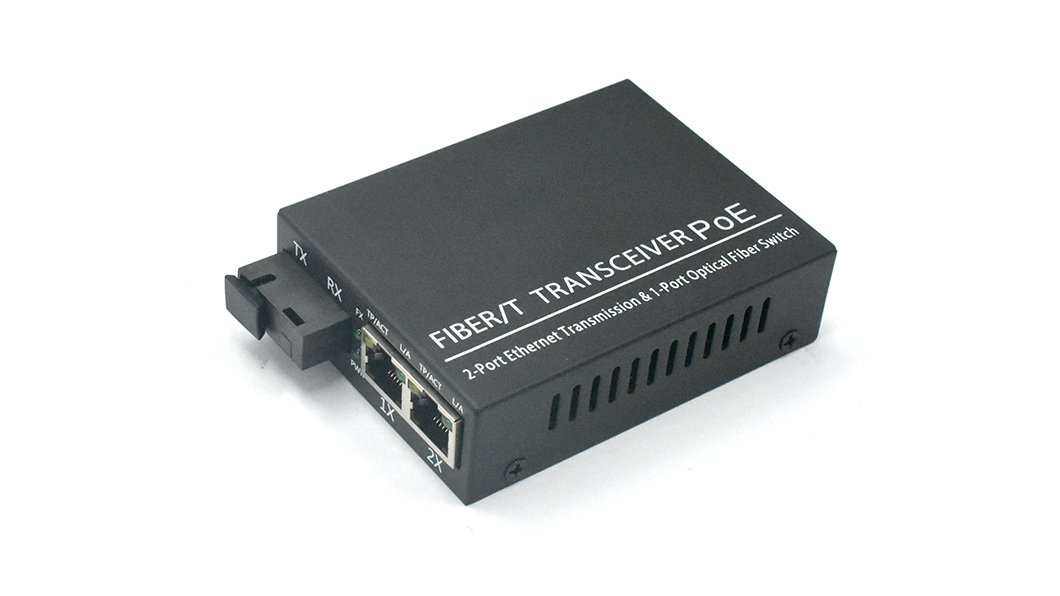
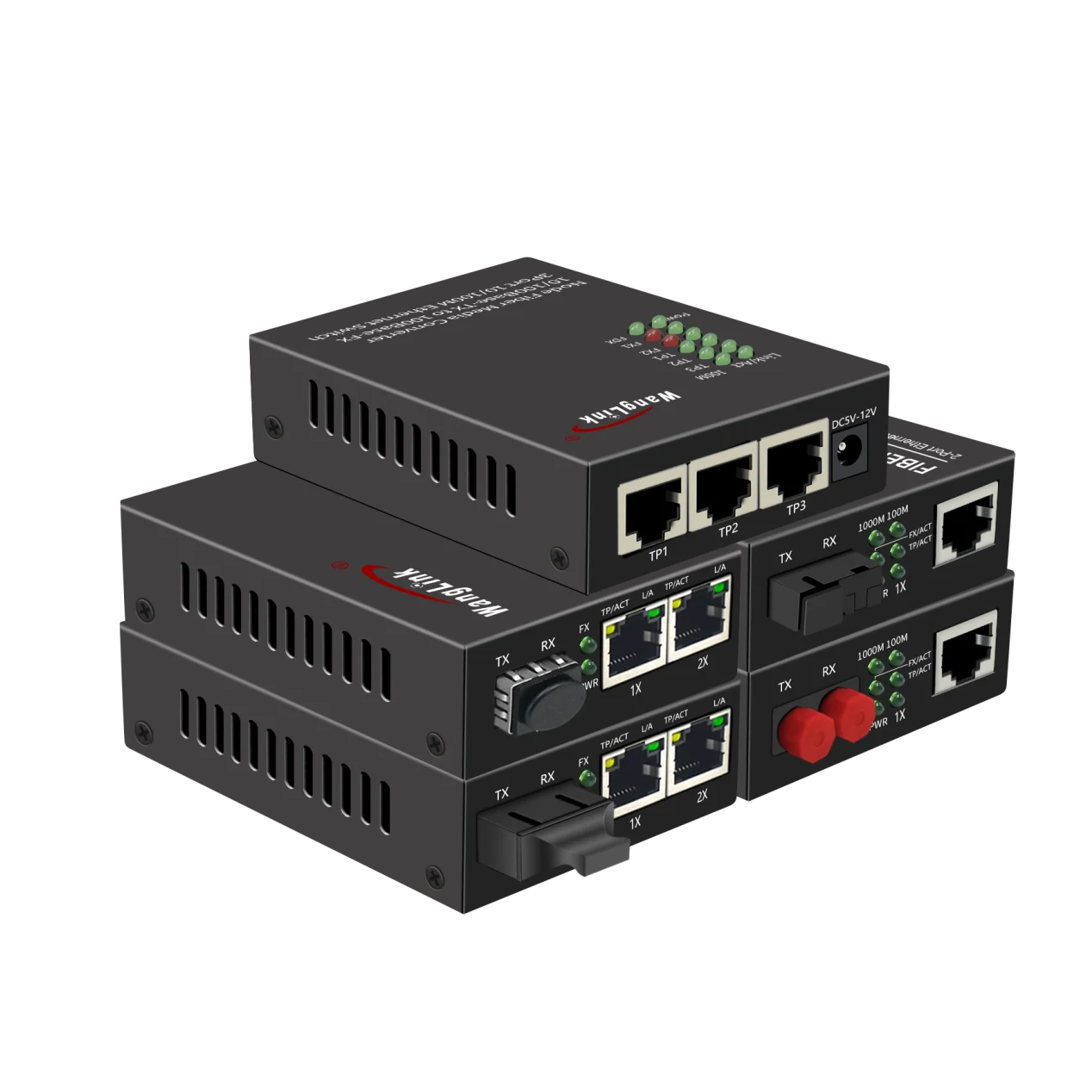
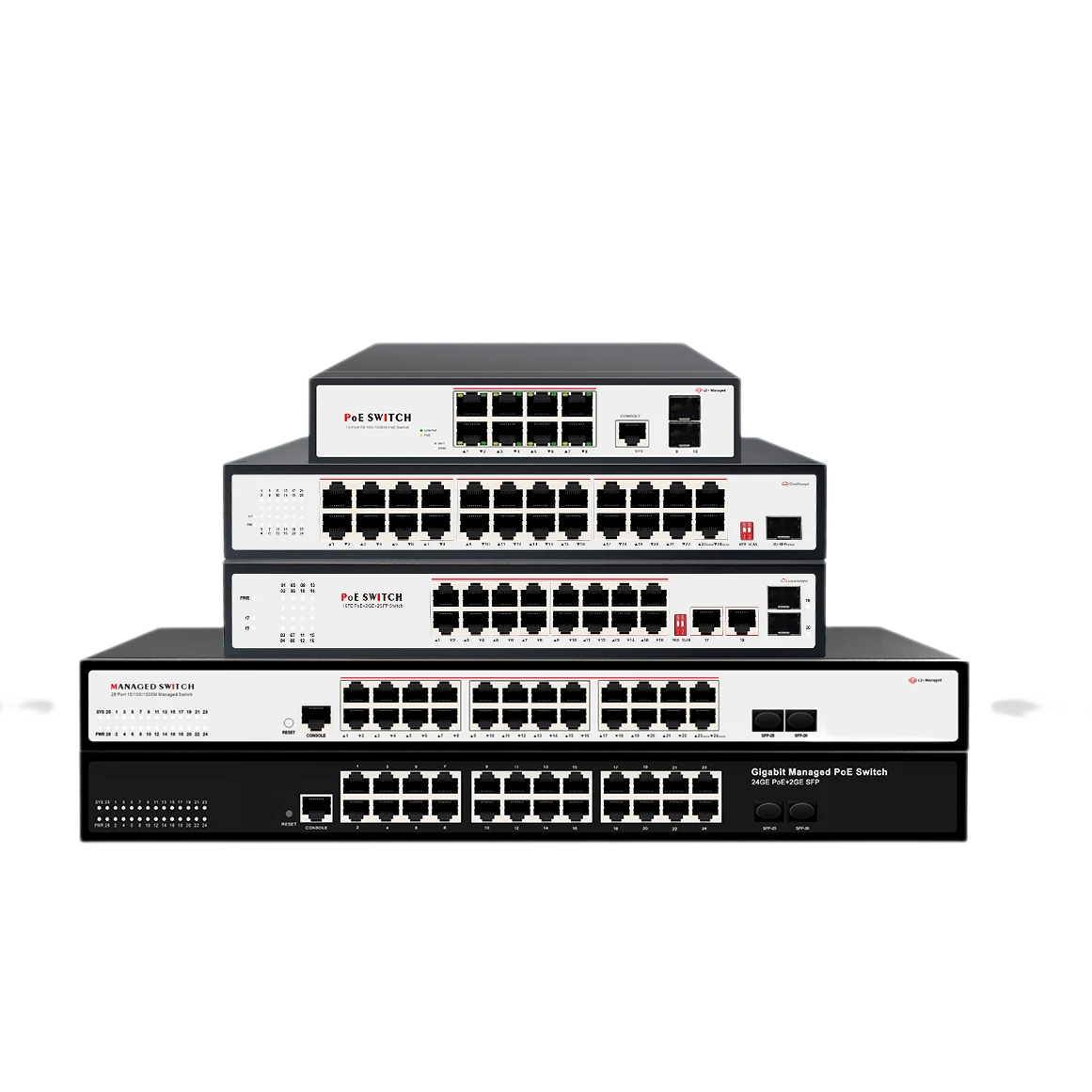
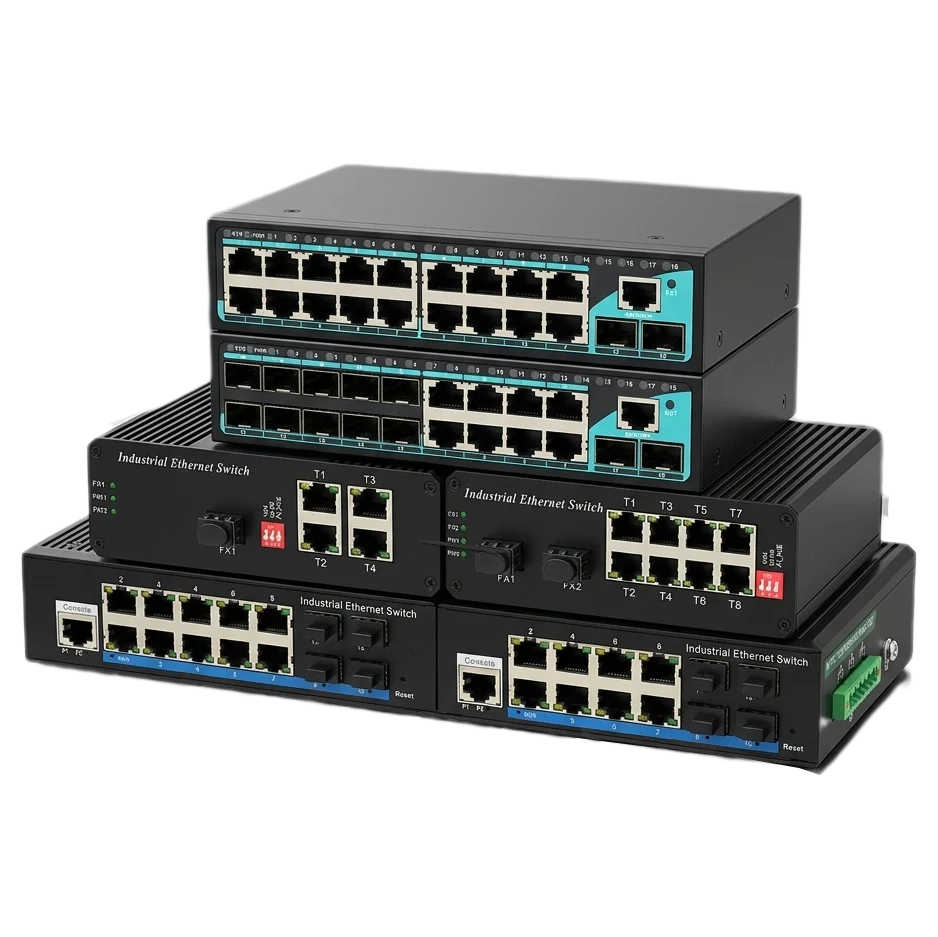

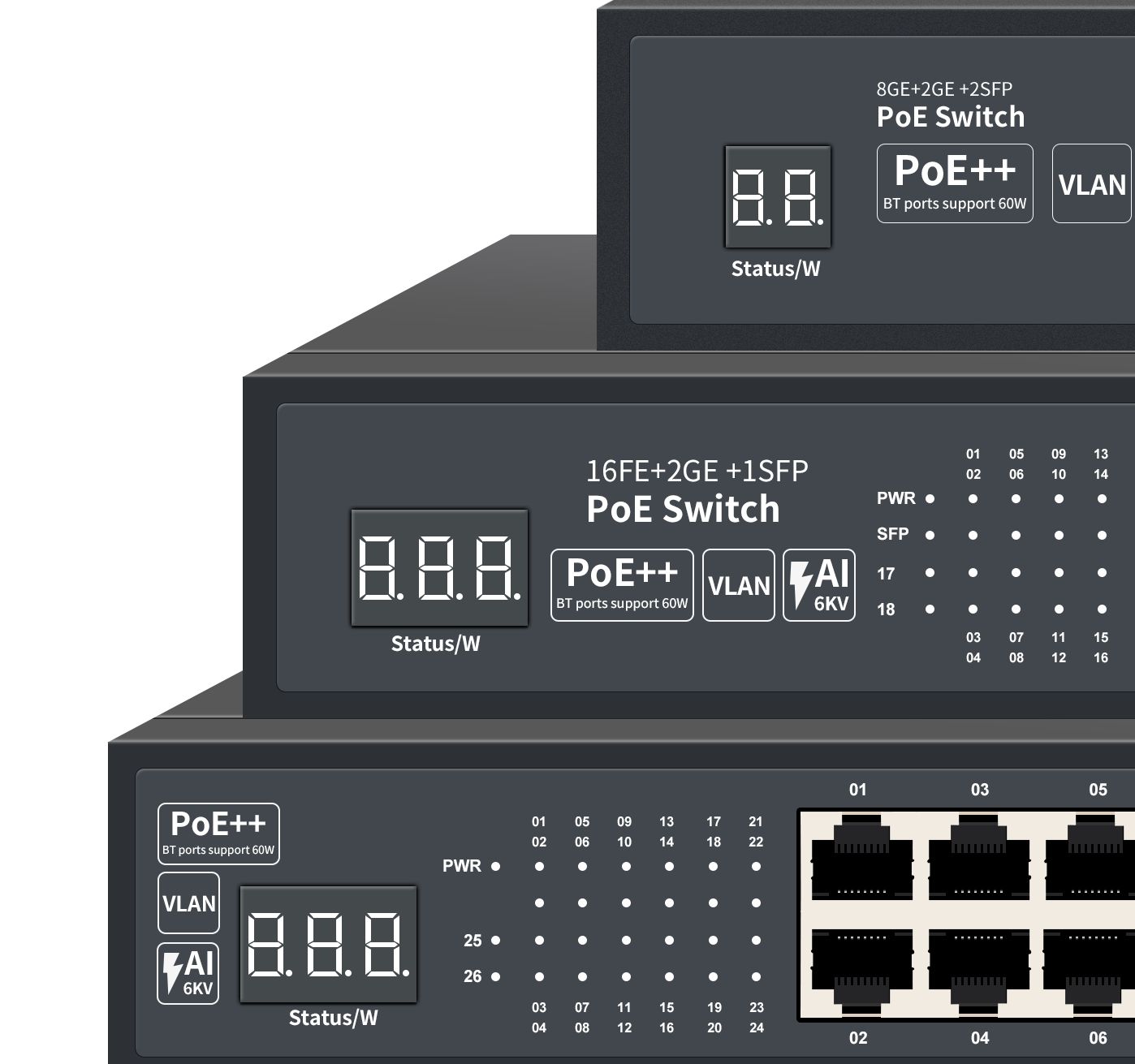
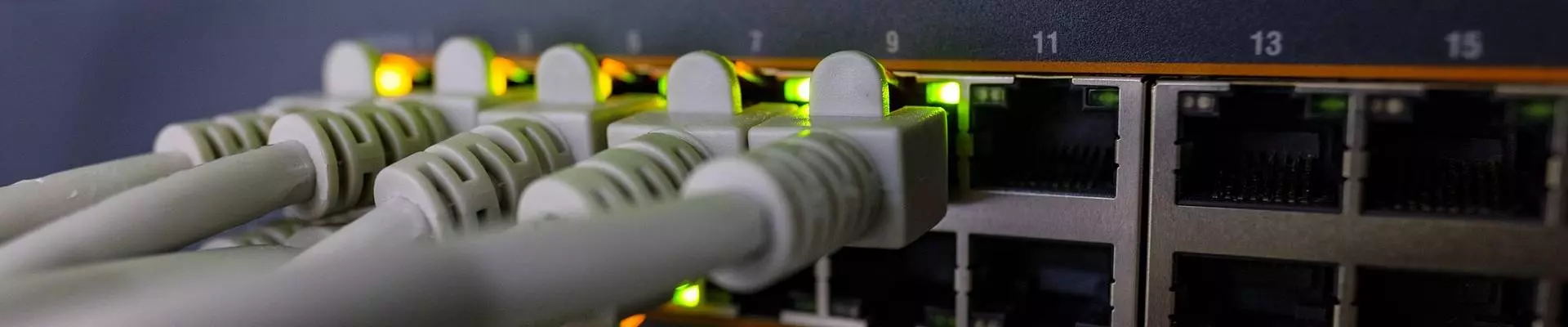
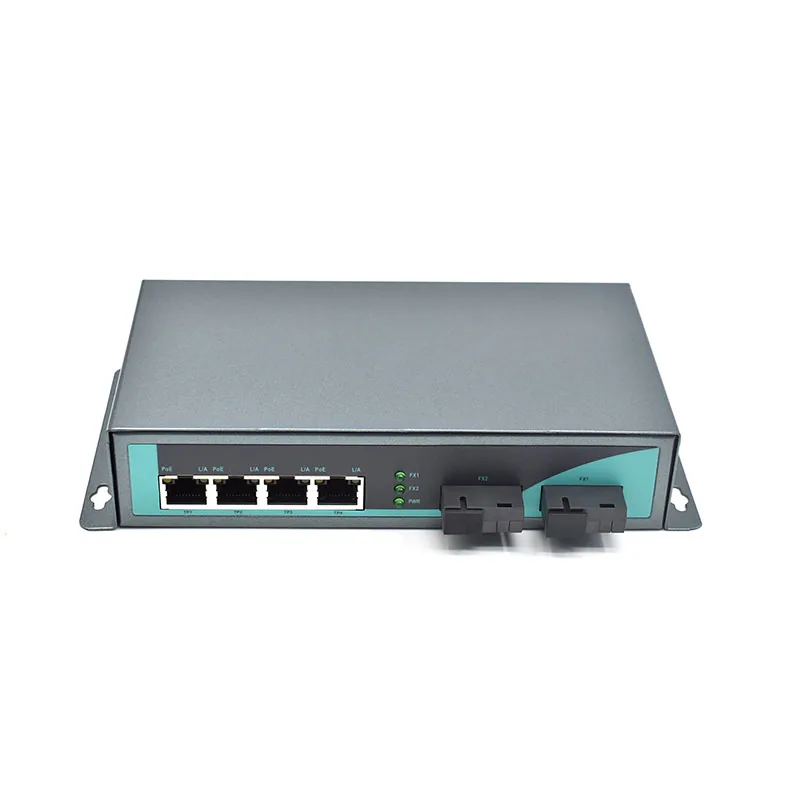
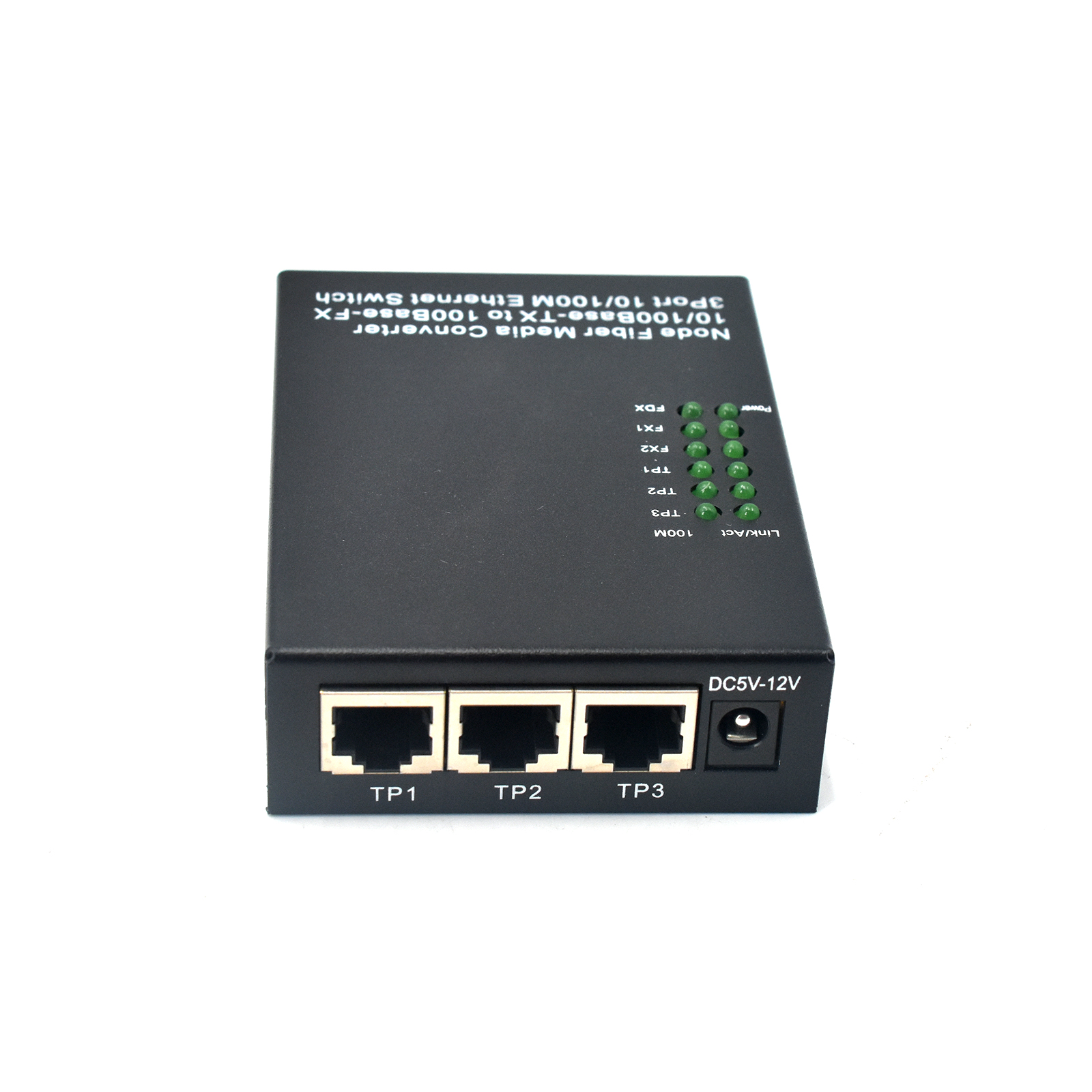
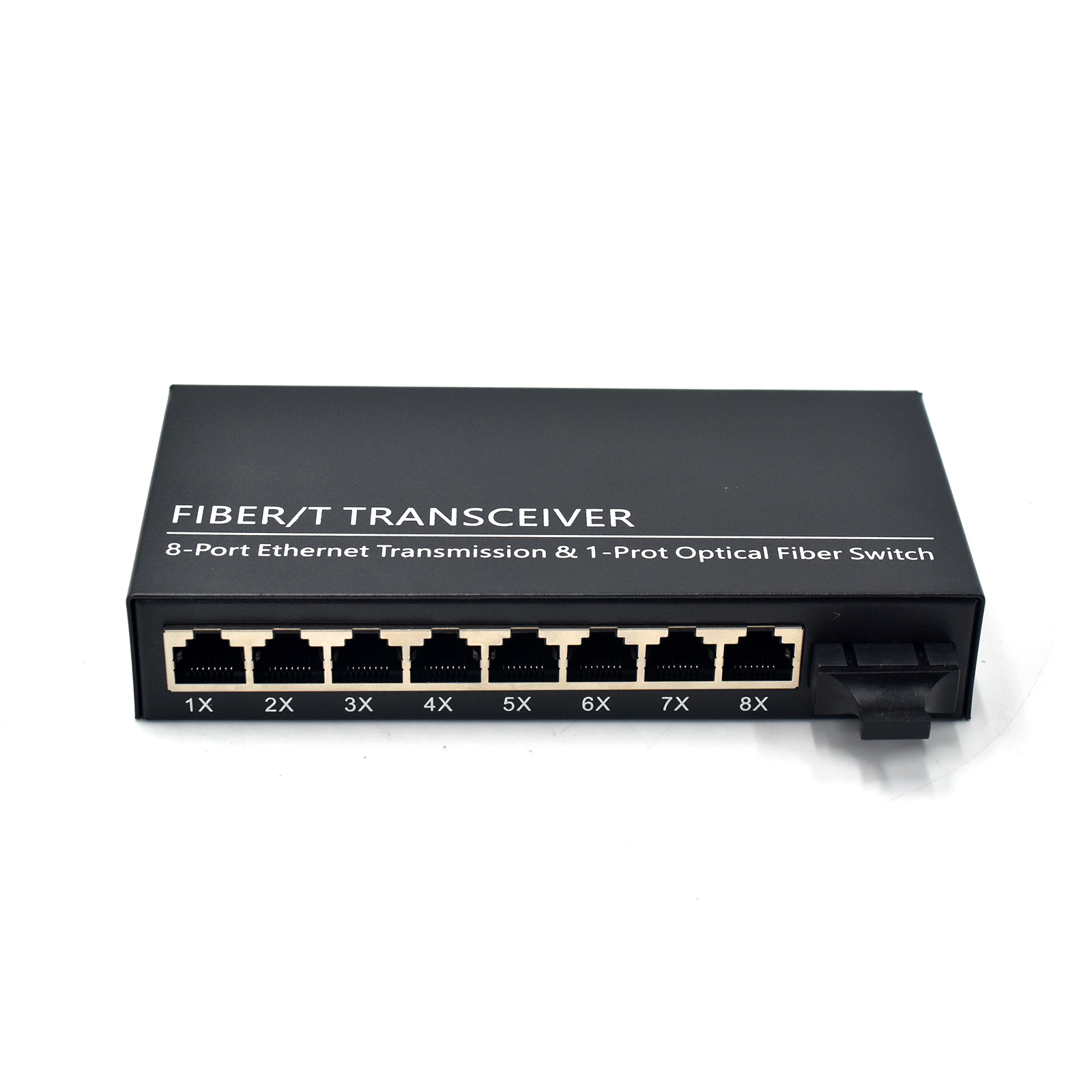
Fiber Optical Media Converter: Opto-electrical conversion device, applied to ultra-long-distance transmission (2 km – 120 km).


Fast Ethernet Media Converters

Converts signals between RJ45 copper port and fiber port, extending network transmission distance.

Gigabit Media Converters

Enables bidirectional conversion between Gigabit Ethernet and optical fiber, balancing high bandwidth and long-range transmission.

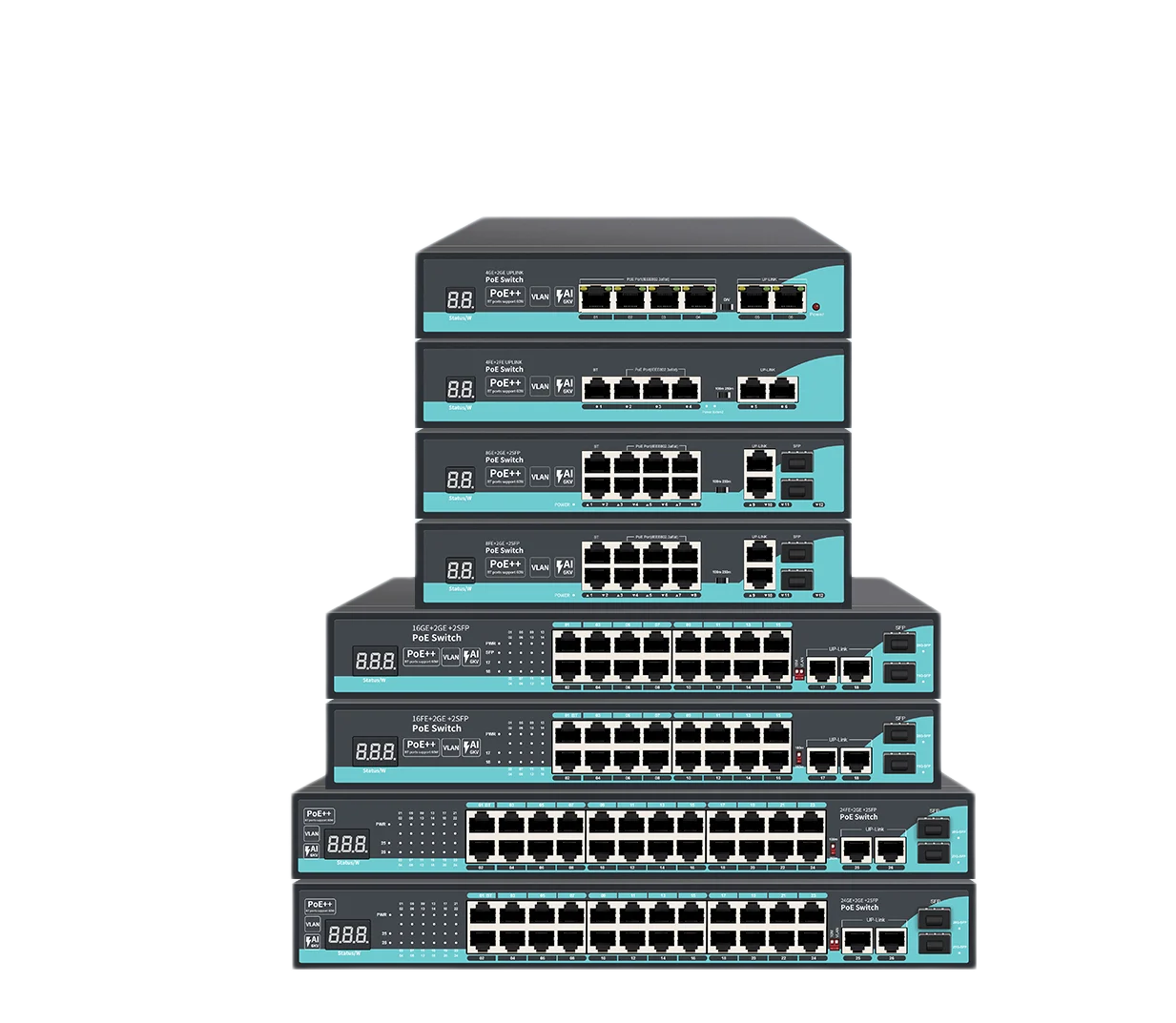
PoE Media Converters

Transmits network signals over fiber and supplies power to remote terminals via Ethernet cables, eliminating separate power lines and adapters.

Fiber Media Converter Selection Guide: Choose the Right One for Your Project

Product Category Data Rate Optical Interface Power Supply / PoE Max Reach Primary Application
Fast Ethernet Media Converter 10/100Base-TX to 100Base-FX 10 / 100 Mbps Fixed SC / FC / ST
Dual Fiber / Single Fiber (BiDi)
External DC 5V / 12V
Chassis mountable (2U rack)
20 km – 120 km
SMF (2 km on MMF)
Cost-efficient legacy IP surveillance, building access control, smart metering, and basic industrial edge access.
Gigabit Media Converter 10/100/1000Base-T to 1000Base-X 10 / 100 / 1000 Mbps Open SFP Slot or SC
Supports Multi-rate Transceivers
External DC / Internal AC
LFP (Link Fault Pass-through) support
Up to 120 km
Flexible via SFP module
High-definition IP cameras (4K), FTTH/FTTB corporate uplinks, enterprise core aggregation, and ISP backhaul.
PoE Media Converter Fiber-to-Ethernet + Power Injection 10/100M or Gigabit SC / SFP Slot Options
BiDi WDM / Dual LC compatible
IEEE 802.3af / at / bt
PSE Output: 15.4W / 30W / 60W / 90W
Up to 100 km
Plus 100m Cat5e/6 PoE feed
Outdoor PTZ domes, long-distance Wi-Fi 6 AP links, edge VoIP terminals, locations lacking localized AC outlets.

Comprehensive Media Converter Solutions

  • How Does a Network Switch Work? A Practical Guide

    How Does a Network Switch Work? A Practical Guide

    Learn how a network switch forwards Ethernet frames, builds MAC tables, supports VLANs, PoE, redundancy, and connects modern business networks.

  • What Does a Network Switch Do? A Practical Guide

    What Does a Network Switch Do? A Practical Guide

    Learn what a network switch does, how it connects devices, and the differences between managed, unmanaged, PoE, and industrial Ethernet switches.

  • Holiday Notice: 2026 Mid-Autumn Festival & National Day

    Holiday Notice: 2026 Mid-Autumn Festival & National Day

    Dear Valued Customers, Thank you for your continuous support and trust in WangLink (Shenzhen Wanglink Communication Equipment Technology Co., Ltd.). We are writing to inform you of our office closure schedule for the upcoming Mid-Autumn Festival and National Day holidays, arranged in accordance with the official notice of the General Office of the State Council…

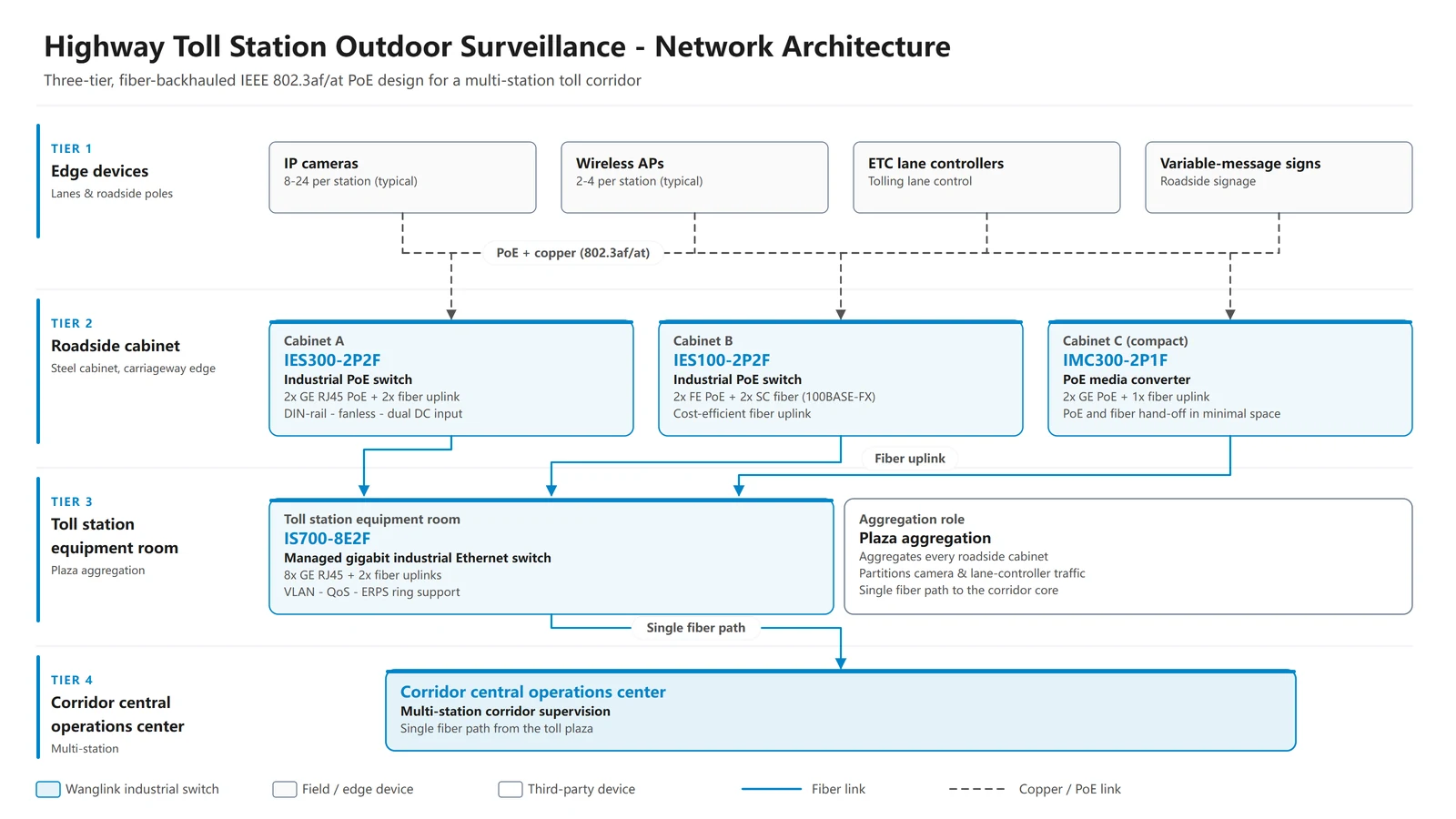
  • 11 topology 01 toll station 1600x900

    How Industrial PoE Switches Support Highway Toll-Station Surveillance

    Outdoor toll-station networks place cameras and wireless equipment in roadside cabinets where heat, moisture, electrical transients and distance affect uptime. This case study explains the PoE, uplink and cabinet checks behind a resilient highway surveillance design.

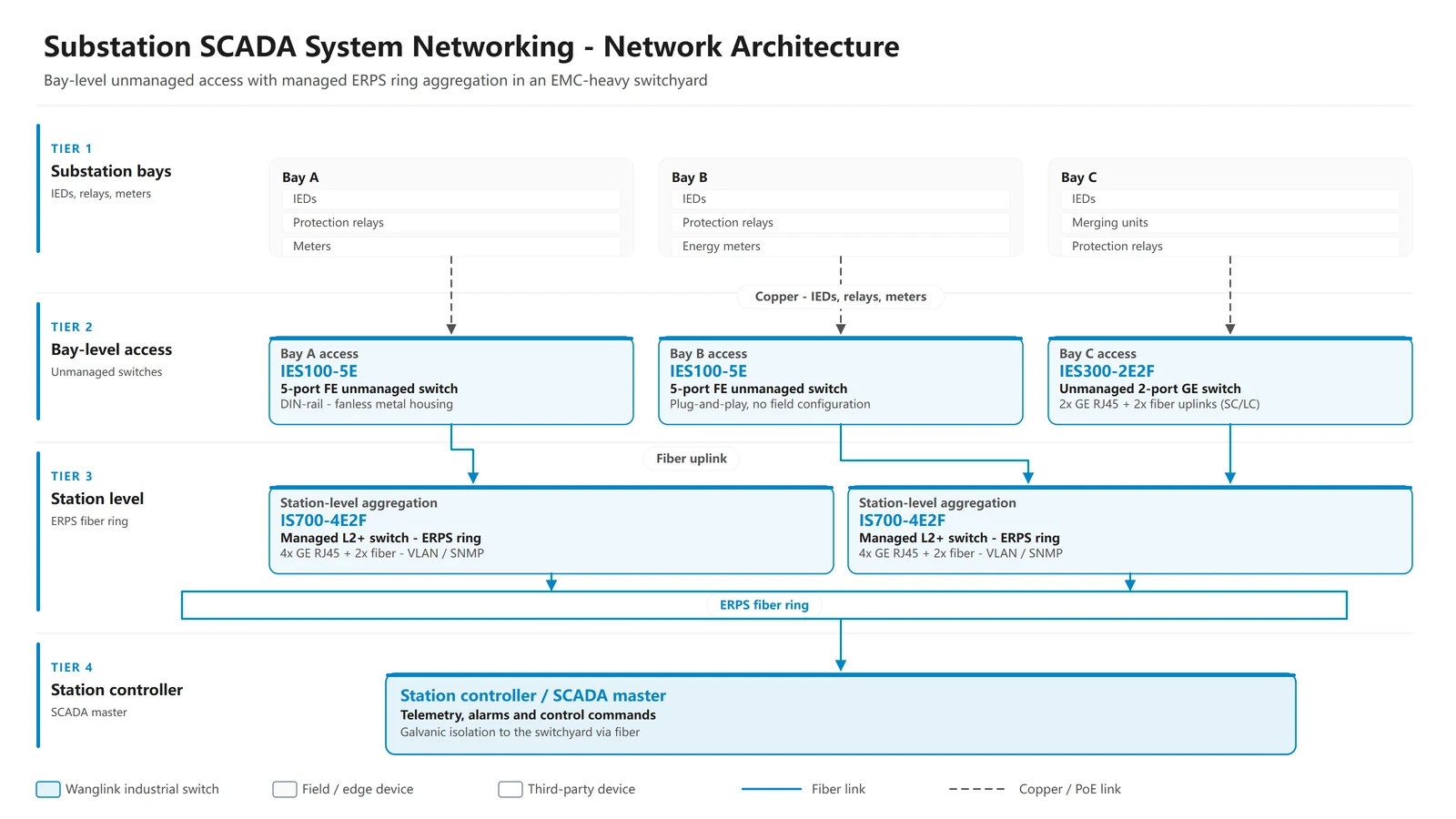
  • Substation SCADA network architecture showing bay-level IED access, fiber aggregation and a station controller

    How Industrial Switches Support Substation SCADA Networking

    A substation network must carry protection, measurement and control traffic through an electrically harsh environment. This case study explains the topology, switch-selection criteria and evidence required for an industrial SCADA deployment.

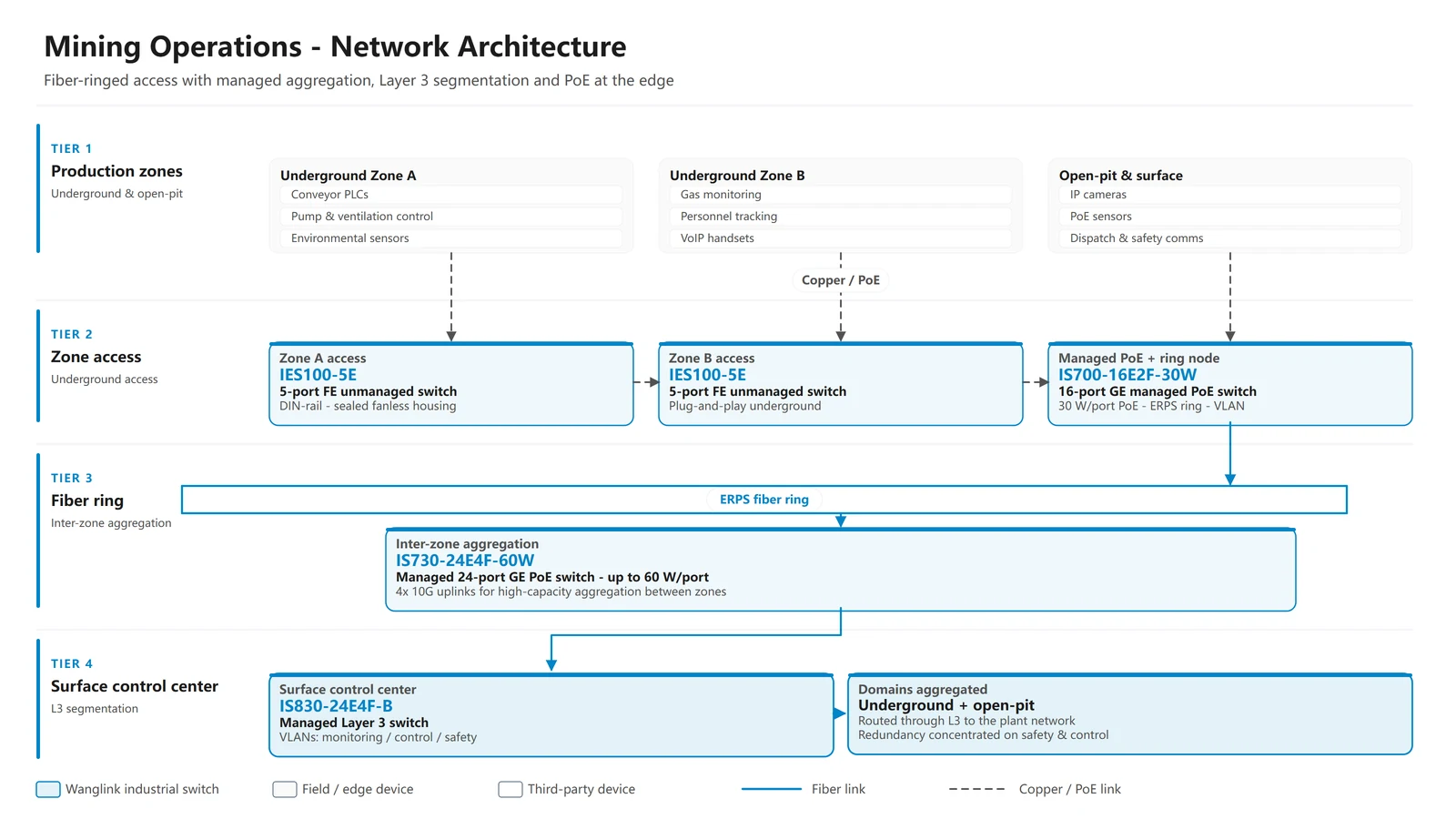
  • Wide-Temperature Industrial Switches Support Mission-Critical Networks in Mining Operations

    How Wide-Temperature Industrial Switches Support Mining Networks

    Mining networks connect control, monitoring and safety systems across areas that may be dusty, hot, cold or difficult to access. This case study explains how to document the environment, topology and validation evidence before selecting an industrial switch.

Request a Quote or Consultation

Share your fiber networking project details: device quantity, deployment scenario, power and transmission distance. We will design a suitable media converter and network solution for your project.

Tell us about:

  • Product requirements (media converters, PoE switches, optical modules, etc.)
  • Estimated order volume and OEM/ODM customization needs
  • Industrial grade, wide temperature or other special technical demands

Each request is handled by our network engineers and account managers. Expect our reply within one business day.

Frequently Asked Questions about Ethernet Switches

A: A media converter converts signals between fiber optic cable and copper Ethernet cable. It extends network transmission distance, connects different media types and helps upgrade existing network infrastructure without replacing original copper devices.

A: Multi-mode media converters are for short-distance transmission (up to several hundred meters), commonly used in campus or factory internal networks. Single-mode models support long-distance transmission ranging from 10km to 120km for cross-site and remote networking.

A: Yes. PoE-capable media converters can pass power over Ethernet to terminal devices like IP cameras. Non-PoE models only transmit data, so you need separate power supply for end devices.

A: The transmission distance depends on fiber type and transceiver module. Our multi-mode media converters support up to 2km, while single-mode options cover 10km, 20km, 40km, 80km and 120km.

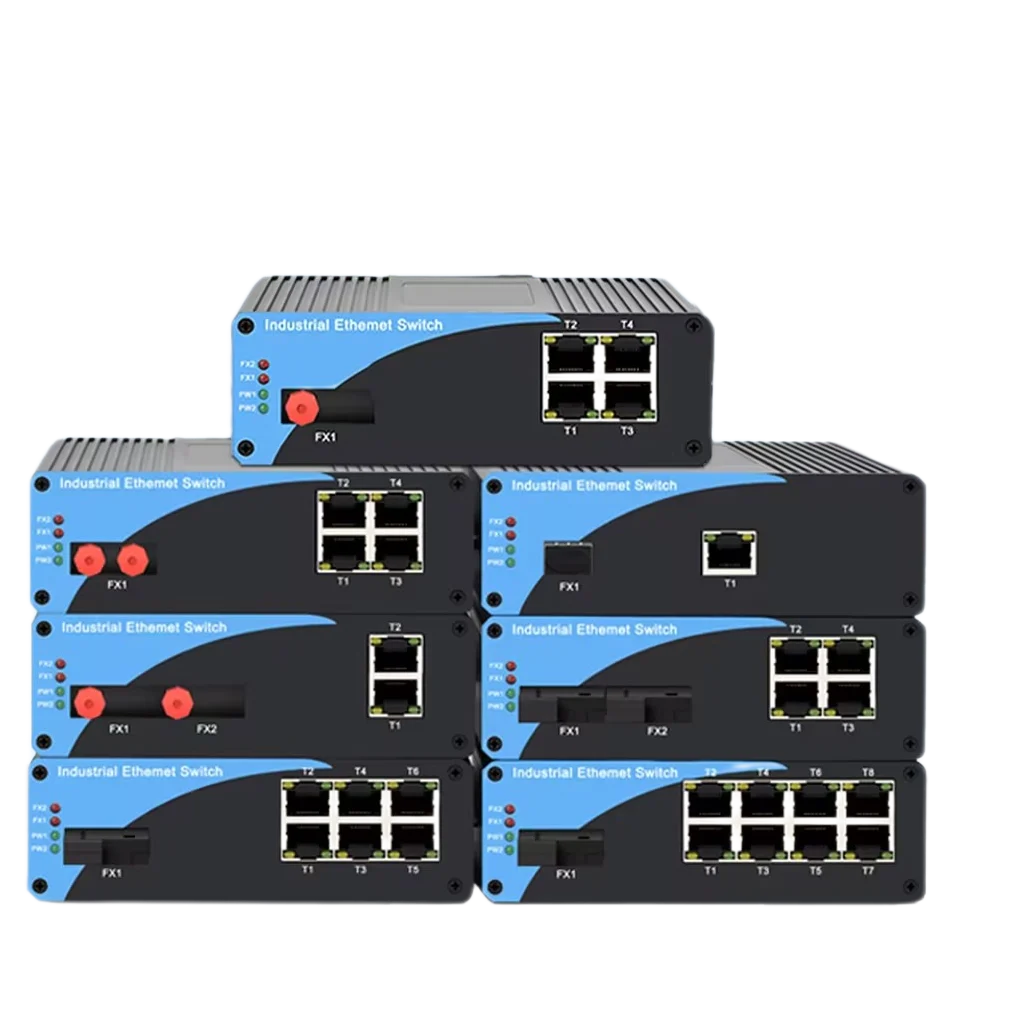
A: We offer industrial-grade media converters with wide temperature range (-40℃ ~ +75℃), surge protection and DIN-rail mounting design, ideal for factories, roadside monitoring and harsh field conditions.

A: Most of our media converters are plug-and-play with no software configuration needed. Managed models support advanced settings such as VLAN, QoS and link alarm for complex network deployments.

A: Our media converters support common fiber connectors including SC, LC, ST and FC. You can select the connector type according to your existing fiber cabling system.

A: Yes, as long as both ends match in speed, fiber mode and wavelength. However, using the same brand is recommended for better stability and easier troubleshooting.

A: We have 10/100Mbps, Gigabit and 10G media converters to meet different requirements, from small surveillance networks to high-bandwidth enterprise data transmission.

A: Our standard media converters come with a 1-year warranty. Industrial models have a 3-year warranty. We provide technical support and spare part replacement for defective units within the warranty period.

Media Converter Selection Guide | How to Choose the Right Media Converter for Your Network

Introduction

Media converters bridge fiber optic and copper Ethernet cables. They extend network range and upgrade existing infrastructure. This quick guide helps network integrators and buyers select the right fiber media converter for your project.

1. Choose by Network Speed

  • 10/100Mbps Fast Ethernet: Low-bandwidth IP camera systems, small office networks. Budget-friendly.
  • Gigabit (10/100/1000Mbps): Most popular option. HD surveillance, factory networks, enterprise LAN. Balances cost and performance.
  • 10G SFP Media Converter: High bandwidth backbone, data center interconnection, large campus networks. Low latency.

2. Select Fiber Mode & Transmission Distance

  • Multi-mode: Max 2km. Indoor short-range wiring, factory internal LAN. Lower cost.
  • Single-mode: 10km /20km /40km /80km /120km. Cross-site links, remote monitoring, long-distance fiber transmission. Strong anti-interference.

3. Pick Commercial or Industrial Grade

  • Commercial media converter: Working temp 0℃ ~ 50℃. Indoor server room, office and mall deployment.
  • Industrial media converter: Wide temperature -40℃ ~75℃. Surge & lightning protection, DIN rail mount. For roadside monitoring, factory floor and harsh outdoor cabinets. Dual power supply backup available.

4. Check PoE Requirement

  • Non-PoE: Only signal conversion. Ideal for backbone links. End devices need separate power.
  • PoE Media Converter: Deliver power + data over Ethernet. Power IP cameras and wireless APs. Reduce on-site wiring work for surveillance projects.

5. Managed vs Unmanaged

  • Unmanaged: Plug and play, zero configuration. Simple deployment for most surveillance and small network projects.
  • Managed: Supports VLAN, QoS, link alarms and remote monitoring. Best for large campus, smart city and enterprise backbone networks.

6. Fiber Connector Options

  • SC: Standard for surveillance engineering.
  • LC: Compact for high-density data center wiring.
  • ST / FC: Rugged, preferred for industrial field networking.

7. Quick Application Matching

  • Community / building surveillance: Gigabit single-mode PoE media converter.
  • Factory industrial network: Wide temp industrial media converter.
  • Campus / enterprise network: Gigabit managed media converter.
  • Long-distance road monitoring: Single-mode 40km~80km model.
  • Data center high-speed link: 10G SFP media converter.

Quick Selection Checklist

Confirm these specs before ordering: network speed, transmission distance, operating temperature, PoE needs, management features and fiber connector type. Mismatched parameters cause unstable fiber links.

Get Support

Not sure which media converter fits your network? Request a quote or consultation. Our network engineers recommend cost-effective fiber media converter solutions for your deployment. Reply within one business day.