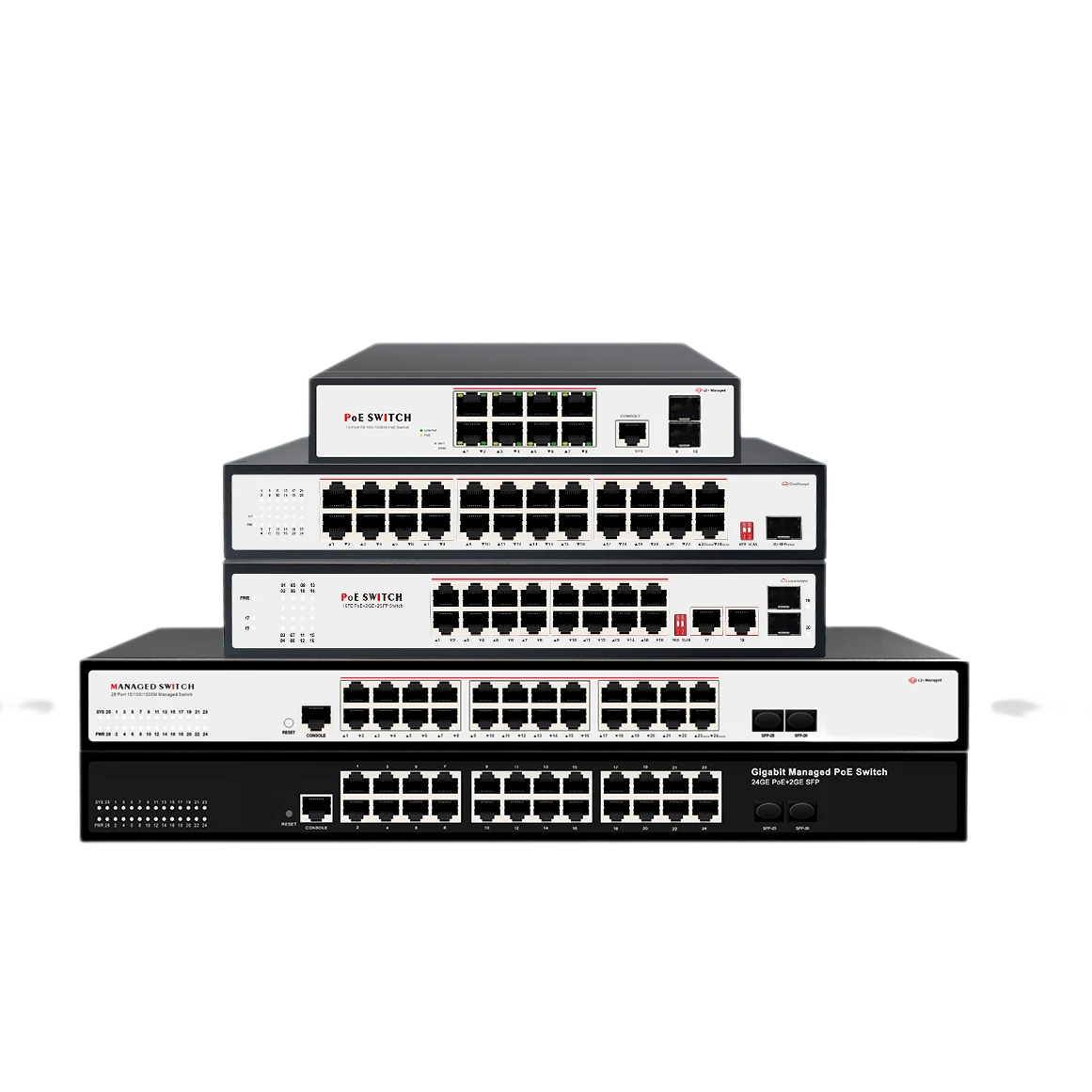
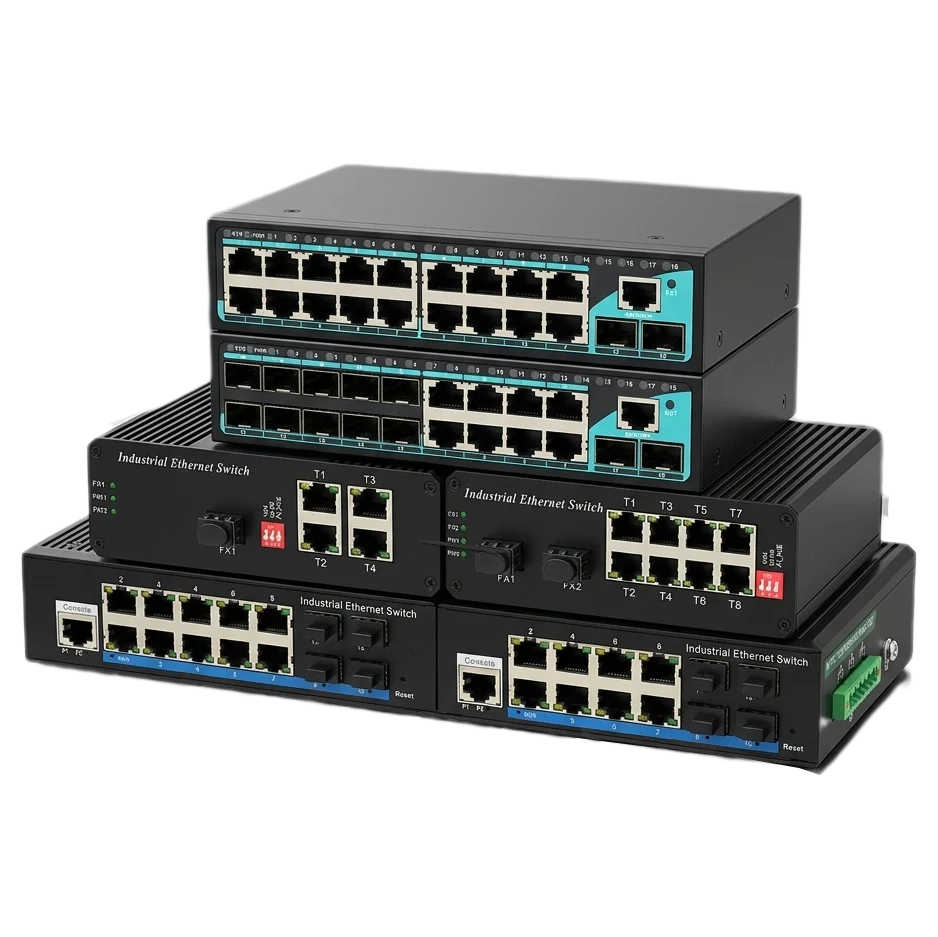
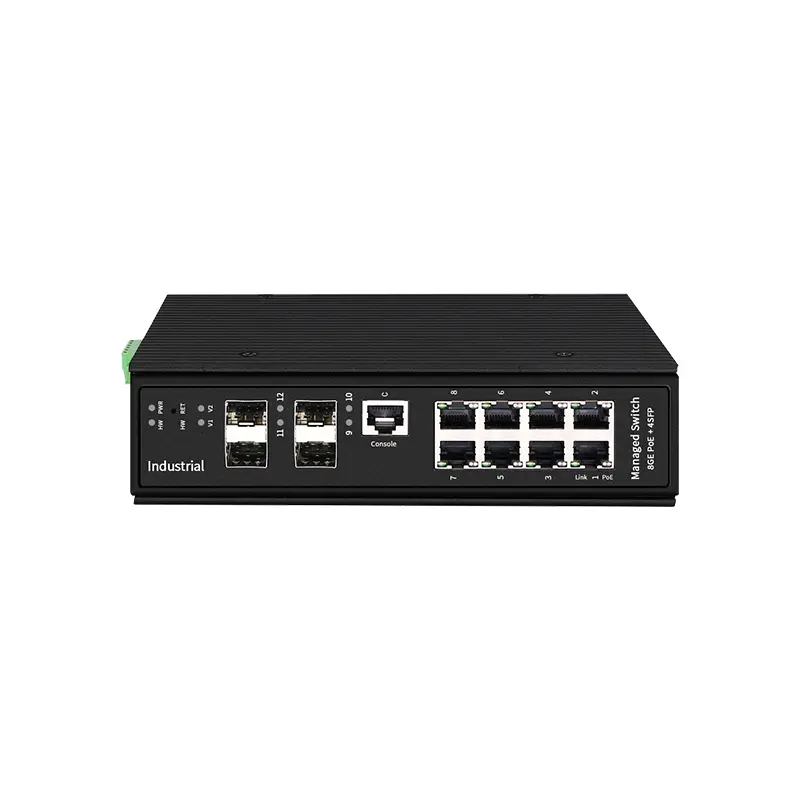
IS830-8P4F
Industrial Managed Switches
8 x 1G/100M/10M RJ45 ports and 4 x 10Gbps SFP+ uplink slots, plus 1 x Console port.
Industrial L3 Managed PoE Switch 8GE + 4 10G SFP+ 8 RJ45 4 SFP+ 90W bt PoE 128Gbps -40~75C DIN-Rail
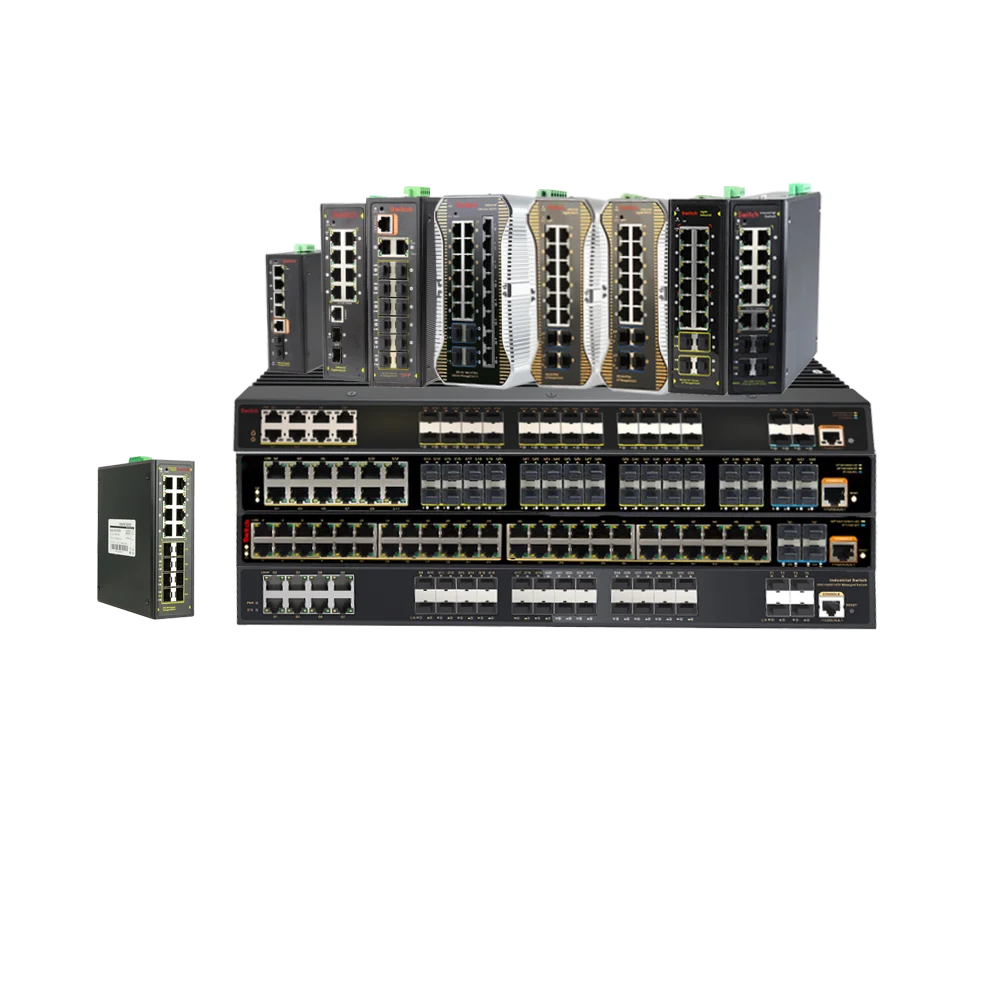
As leading industrial ethernet switch manufacturers, we provide robust networking
solutions designed for harsh industrial environments. Our industrial grade ethernet
switches deliver reliable connectivity for automation, manufacturing, and critical
infrastructure applications. Whether you need gigabit performance, DIN rail mounting,
or rackmount configurations, our industrial ethernet switch suppliers network ensures
quality products backed by technical expertise.
Explore our comprehensive range of industrial gigabit ethernet switches engineered
for 24/7 operation in extreme temperatures, vibration, and electromagnetic interference
conditions.
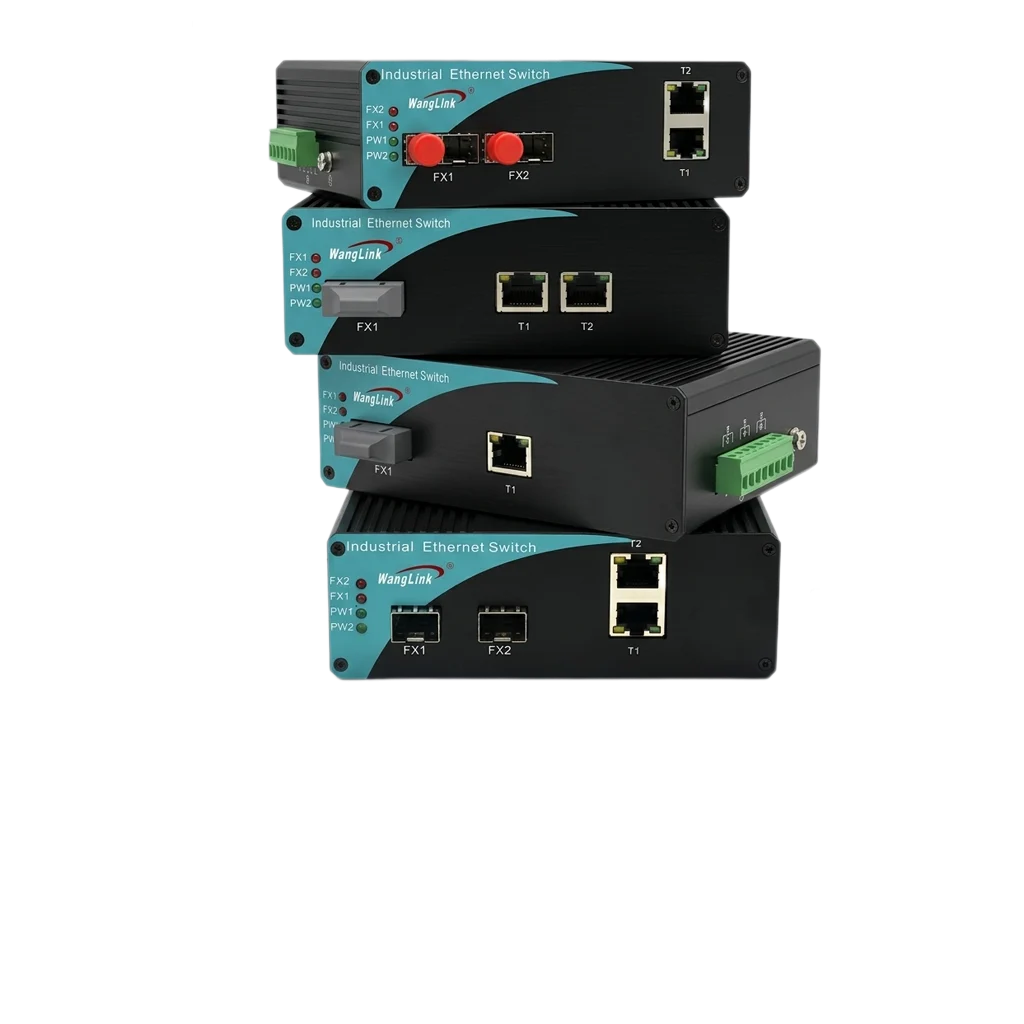
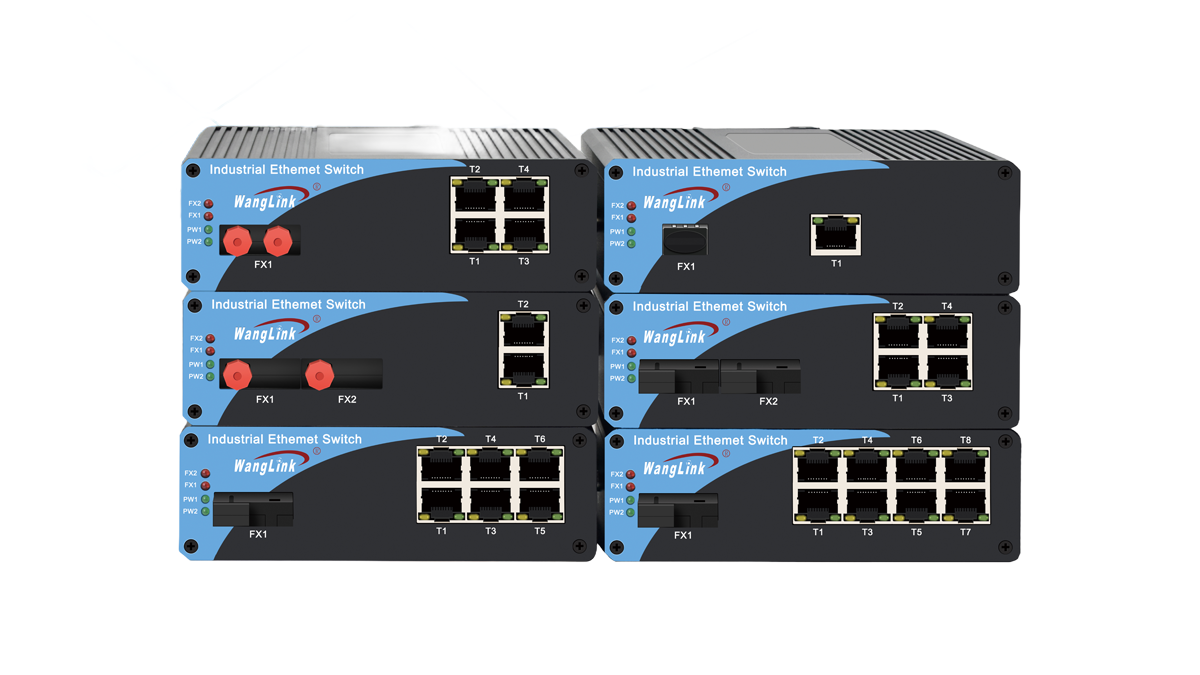
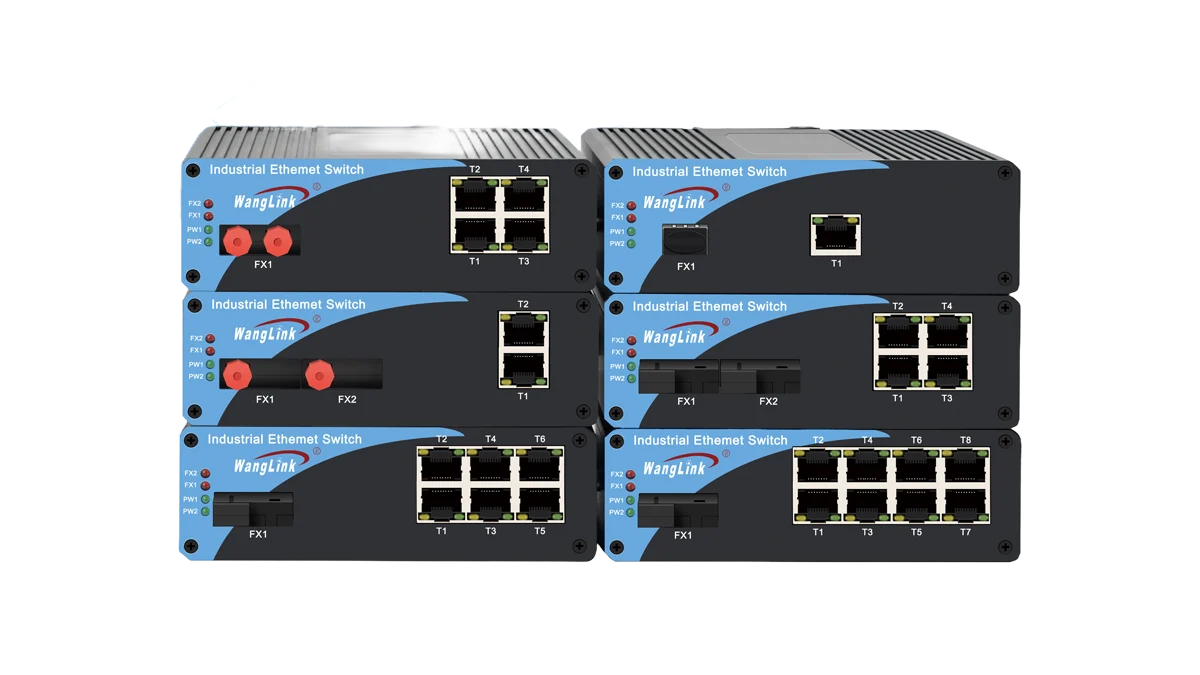
Industrial Managed Switches
8 x 1G/100M/10M RJ45 ports and 4 x 10Gbps SFP+ uplink slots, plus 1 x Console port.
Industrial L3 Managed PoE Switch 8GE + 4 10G SFP+ 8 RJ45 4 SFP+ 90W bt PoE 128Gbps -40~75C DIN-Rail

Industrial Media Converters
2 × 10/100Base-TX RJ45 ports and 2 × 100Base-X SC fiber ports; copper auto-negotiation with auto MDI/MDI-X, fiber options for multimode or single-mode transmission.
Unmanaged 2 Port Fast Ethernet Industrial Switch with 2 SC Fiber Ports, DIN-Rail, Dual Redundant DC Power

Industrial Media Converters
1 × 10/100Base-TX RJ45 copper port and 1 × 100Base-X SC fiber port for Fast Ethernet copper-to-fiber conversion.
Unmanaged Industrial Fast Ethernet Fiber Media Converter 1 RJ45 to 1 SC, DIN-Rail, Dual DC Power

Industrial Media Converters
2 x 10/100Base-TX RJ45 PoE ports plus 2 x 155 Mbps SC fiber ports for local devices and long-distance uplinks.
Unmanaged 2 Port Industrial PoE Switch with 2 SC Optical Fiber Ports, Fast Ethernet, DIN-Rail
Industrial Media Converters
1 x 10/100Base-TX RJ45 PoE port and 1 x 100Base-X SC fiber port for data conversion and remote PoE device connection.
Unmanaged Industrial PoE Media Converter 1 Port 10/100M RJ45 to 1 SC Fiber, DIN-Rail, Dual DC Power

Industrial Media Converters
2 × 10/100Base-TX RJ45 copper ports and 1 × 100Base-X SC fiber port, with auto-negotiation, auto MDI/MDI-X and full/half-duplex support.
Unmanaged Industrial Fast Ethernet Media Converter 2 RJ45 to 1 SC Fiber, Dual DC, DIN-Rail, -40°C to +85°C

Industrial Media Converters
2 × 10/100Base-TX RJ45 PoE ports and 1 × 100Base-X SC fiber port; 10/100Mbps auto-negotiation with 100Mbps optical transmission.
Unmanaged 2 Port Industrial PoE Media Converter 10/100M to SC Optical Fiber, Dual Redundant DC, DIN-Rail

Industrial Media Converters
1 × 10/100/1000Base-T RJ45 PoE port and 1 × 1.25G 1000Base-X SC fiber port; multimode up to 2 km or single-mode up to 100 km, depending on optical configuration.
Unmanaged Industrial Gigabit PoE Media Converter 1 Port RJ45 to SC Fiber, DIN-Rail, Dual DC Power, -40°C to +85°C

Industrial Media Converters
2 × 10/100/1000Base-TX RJ45 PoE ports and 1 × 1.25G 1000Base-X SC fiber port for Gigabit Ethernet extension and long-distance industrial connectivity.
Unmanaged 2 Port Industrial Gigabit PoE Media Converter with SC Fiber Port, DIN-Rail, Dual Redundant Power

Industrial PoE Switches
4 × 10/100Base-TX RJ45 PoE ports plus 1 × 100Base-X SC fiber port for short copper connections and long-distance fiber uplink.
Unmanaged 4 Port Industrial PoE Switch with 1 SC Fiber Optical Port, 10/100Mbps, DIN-Rail, Dual Redundant DC Power

Industrial PoE Switches
4 × 10/100Base-TX RJ45 PoE ports and 2 × 155 Mbps SC fiber uplink ports; supports IEEE 802.3af/at with up to 25.4 W per copper port.
Unmanaged 4 Port Industrial PoE Switch with 2 SC Fiber Uplink Ports, Fast Ethernet, DIN-Rail, Dual DC Power

Industrial PoE Switches
5 × 10/100Base-TX RJ45 ports; ports 1-4 support IEEE 802.3af/at PoE+ with up to 25.4W per port.
Unmanaged 5 Port Industrial PoE Switch 4 Port PoE+ DIN-Rail, 10/100Mbps Fast Ethernet, Dual Redundant DC Power

Industrial PoE Switches
6 x 10/100Base-TX RJ45 PoE ports plus 2 x 100Base-X SC fiber uplink ports; fiber options support multimode or single-mode transmission.
Unmanaged 6 Port Industrial PoE Switch with 2 SC Optical Uplink Ports, Fast Ethernet, DIN-Rail, Dual DC Power

Industrial PoE Switches
8 × 10/100Base-TX RJ45 PoE ports and 2 × 155Mbps SC fiber ports for local device access and long-distance uplinks.
Unmanaged 8 Port Industrial PoE Switch with 2 SC Fiber Optical Ports, 10/100Mbps, IEEE 802.3af/at, DIN-Rail

Industrial PoE Switches
8 × 10/100Base-TX RJ45 PoE ports plus 1 × 100Base-X SC fiber uplink port.
Unmanaged 8 Port Industrial PoE Switch with 1 SC Fiber Uplink Port, 10/100Mbps DIN-Rail

Industrial PoE Switches
8 × 10/100 Mbps RJ45 PoE ports with up to 30W per port, plus 2 × 1000Base-X SFP fiber uplink slots.
Unmanaged 8 Port Industrial PoE Switch with 2 Gigabit SFP Fiber Uplinks, 30W 802.3af/at, DIN-Rail
Industrial PoE Switches
4 × 10/100/1000Base-T RJ45 PoE ports and 1 × 1.25G 1000Base-X SC fiber port.
Unmanaged 4 Port Gigabit Industrial PoE Switch with 1 SC Fiber Port, DIN-Rail, Dual Redundant Power

Industrial PoE Switches
8 × 10/100/1000Base-T RJ45 ports, all supporting IEEE 802.3af/at PoE and up to 25.4W per port.
Unmanaged 8 Port Full Gigabit Industrial PoE Switch DIN Rail 802.3at, Dual DC Power

Industrial PoE Switches
4 × 10/100/1000Base-T downlink ports and 1 × 10/100/1000Base-T copper uplink port, all with auto-negotiation and RJ45 connectors.
Unmanaged 5 Port Gigabit Industrial PoE Switch DIN-Rail, Dual DC Power, Wide Temperature

Industrial PoE Switches
4 x 10/100/1000Base-T RJ45 PoE ports and 2 x 1.25G 1000Base-X SC fiber ports for Gigabit device access and long-distance uplinks.
Unmanaged 4 Port Gigabit Industrial PoE Switch with 2 SC Fiber Ports, DIN-Rail, Dual Redundant Power
Industrial PoE Switches
8 × 10/100/1000Base-T RJ45 PoE ports with up to 25.4W per port, plus 1 × 1.25G 1000Base-X SC fiber uplink.
Unmanaged 8 Port Gigabit Industrial PoE Switch with 1 SC Fiber Uplink, DIN-Rail, Dual Redundant Power
Industrial PoE Switches
8 x 10/100/1000Base-T PoE RJ45 ports and 2 x 1.25G 1000Base-X SC fiber ports.
Unmanaged 8 Port Gigabit Industrial PoE Switch with 2 SC Optical Fiber Ports, DIN-Rail, Dual DC Power

Industrial PoE Switches
8 × 10/100Base-TX RJ45 PoE ports plus 1 × 10/100Base-TX RJ45 uplink port; auto-negotiation, auto MDI/MDI-X, half/full duplex.
Unmanaged 8 Port Industrial PoE Switch with 1 Uplink Port DIN Rail, 10/100 Fast Ethernet, Dual Redundant Power

Industrial Unmanaged Switches
4 × 10/100Base-TX RJ45 ports plus 1 × 100Base-X SC fiber port; auto-negotiation, auto MDI/MDI-X, and full/half-duplex support.
Unmanaged 4 Port Industrial Ethernet Switch with 1 SC Fiber Port DIN Rail, 10/100 Mbps, Dual DC Power
Industrial Unmanaged Switches
4 × 10/100Base-TX RJ45 copper ports and 2 × 100Base-X SC fiber ports for short-distance device access and fiber backbone links.
Unmanaged 4 Port Industrial Ethernet Switch with 2 SC Fiber Ports DIN Rail, Fast Ethernet, Dual Redundant DC Power
Industrial Unmanaged Switches
5 × 10/100Base-TX RJ45 ports with auto-negotiation, auto MDI/MDI-X, and half/full-duplex support.
5 Port Industrial Fast Ethernet Switch DIN-Rail Unmanaged, Dual DC Power, IP40
Industrial Unmanaged Switches
6 × 10/100Base-TX RJ45 ports and 2 × 100Base-X SC fiber ports for copper-to-fiber industrial Ethernet links.
Unmanaged 6 Port Industrial Ethernet Switch with 2 SC Fiber Optical Ports, Fast Ethernet, DIN-Rail, Dual DC Power

Industrial Unmanaged Switches
8 × 10/100Base-TX RJ45 ports plus 1 × 100Base-X SC fiber uplink; copper auto-negotiation, auto MDI/MDI-X, and full/half-duplex support.
Unmanaged 8 Port Industrial Ethernet Switch with 1 SC Fiber Uplink Port, 10/100 Mbps, DIN-Rail, Dual DC Power

Industrial Unmanaged Switches
8 × 10/100Base-TX RJ45 ports and 2 × 100Base-X SC fiber ports for copper access and long-distance fiber uplinks.
Unmanaged 8 Port Industrial Ethernet Switch with 2 SC Optical Fiber Ports, 10/100 Mbps, DIN-Rail, Dual DC Power
Industrial Unmanaged Switches
9 × RJ45 10/100Base-TX copper ports with auto-negotiation, auto MDI/MDI-X and half/full-duplex support.
Unmanaged 9 Port Industrial Fast Ethernet Switch DIN-Rail 10/100Mbps, Dual Redundant DC Power

Industrial Unmanaged Switches
4 × 10/100/1000Base-T RJ45 ports plus 1 × 1000Base-X SC fiber port for Gigabit copper access and long-distance optical uplink.
Unmanaged 4 Port Gigabit Industrial Ethernet Switch with 1 SC Fiber Port, DIN-Rail, Dual DC Power
Industrial Unmanaged Switches
4 × 10/100/1000Base-T RJ45 ports and 2 × 1000Base-X SC fiber ports for Gigabit copper access and long-distance fiber uplinks.
Unmanaged 4 Port Gigabit Industrial Ethernet Switch with 2 SC Fiber Ports, DIN-Rail, Dual DC Power
Industrial Unmanaged Switches
5 × RJ45 10/100/1000Mbps copper ports: 4 downlink ports and 1 copper uplink port, with auto-negotiation, auto MDI/MDI-X, and up to 100m transmission over twisted-pair cable.
Unmanaged 5 Port Gigabit Industrial Ethernet Switch DIN-Rail Unmanaged, Dual Redundant DC Power, Wide Temperature

Industrial Unmanaged Switches
8 × 10/100/1000Mbps adaptive RJ45 copper ports with auto-negotiation, auto MDI/MDI-X, and full/half-duplex support.
Unmanaged 8 Port Gigabit Industrial Ethernet Switch DIN-Rail, Dual Redundant DC Power
Industrial Unmanaged Switches
8 auto-negotiating 10/100/1000Base-T RJ45 ports plus 1 1000Base-X SC fiber uplink for local Gigabit devices and long-distance network extension.
Unmanaged 8 Port Gigabit Industrial Ethernet Switch with 1 SC Fiber Port, Dual Redundant DC Power, DIN-Rail
Industrial Unmanaged Switches
8 adaptive 10/100/1000Mbps RJ45 ports plus 2 1000Base-X SC fiber ports for local Gigabit devices and long-distance uplinks.
Unmanaged 8 Port Gigabit Industrial Ethernet Switch with 2 SC Fiber Ports, Dual Redundant DC Power, DIN-Rail
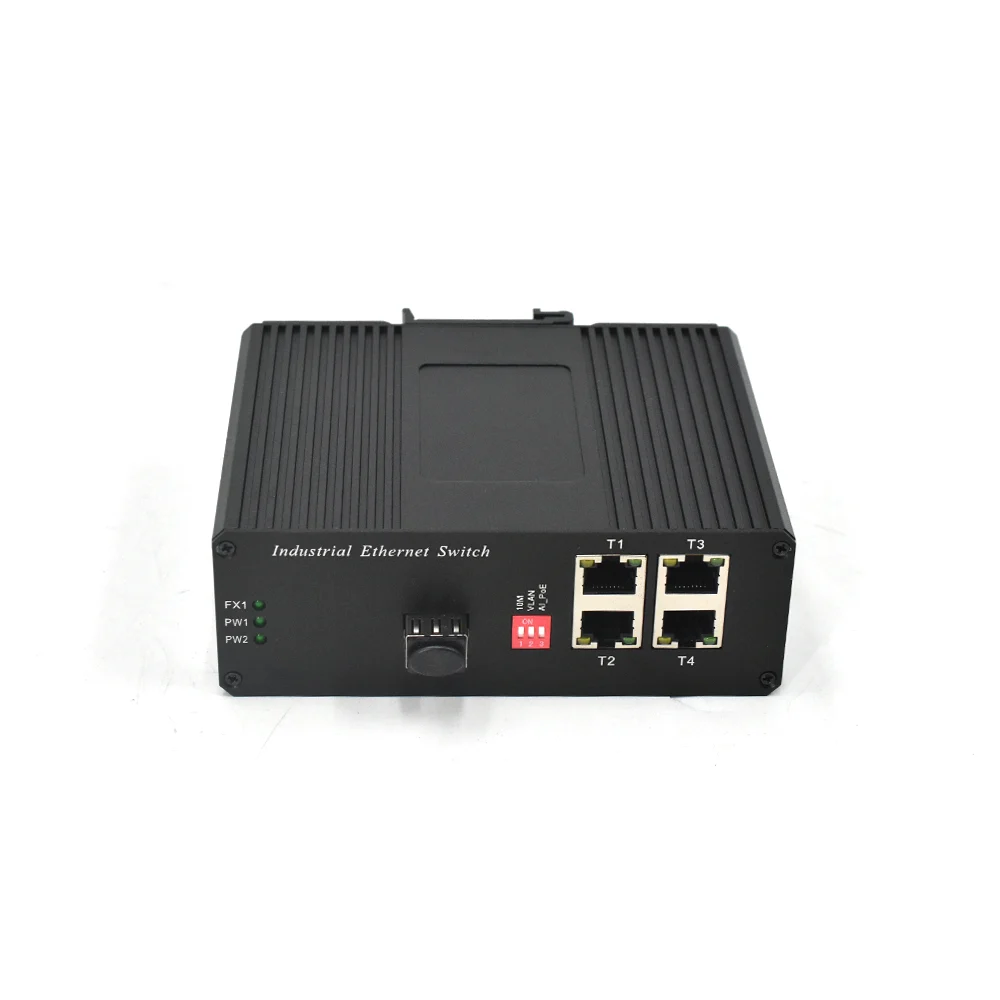
Industrial PoE Switches
4 × 10/100Mbps PoE RJ45 ports plus 1 × 1000Base-X SFP fiber uplink; up to 30W per PoE port.
Unmanaged 4 Port Industrial Ethernet Switch with 1 Gigabit Fiber Port DIN Rail, 802.3af/at PoE

Industrial PoE Switches
4 × 10/100Mbps PoE RJ45 ports and 2 × 1000Mbps SFP fiber uplink ports; 30W maximum per PoE port.
Unmanaged 4 Port Industrial Ethernet Switch with 2 Gigabit Optical Fiber Ports, 10/100M PoE, DIN-Rail
Industrial Media Converters
2 x 10/100/1000Base-TX RJ45 ports with IEEE 802.3af/at PoE, plus 2 x 1.25G 1000Base-X SC fiber ports.
Unmanaged 2 Port Gigabit Industrial PoE Switch with 2 SC Fiber Ports, DIN-Rail, Dual Redundant DC Power

Industrial Media Converters
1 × 10/100/1000Base-T RJ45 port and 1 × 1000Base-X SC fiber port for copper-to-Gigabit-fiber conversion.
Unmanaged Industrial Gigabit Fiber Media Converter 1 RJ45 to 1 SC Port, Dual Power, DIN-Rail, Wide Temperature
Industrial Media Converters
2 × 10/100/1000Base-T RJ45 copper ports and 2 × 1000Base-X SC fiber ports for Gigabit Ethernet over copper and fiber.
Unmanaged 2 Port Gigabit Industrial Ethernet Switch with 2 SC Fiber Ports, DIN-Rail, Dual DC Power
Industrial Media Converters
2 × 10/100/1000Base-T RJ45 ports and 1 × 1000Base-X SC fiber port for copper-to-fiber Gigabit Ethernet conversion.
Unmanaged Industrial Gigabit Media Converter 2 RJ45 Ports to 1 SC Fiber, Dual Redundant Power, DIN-Rail
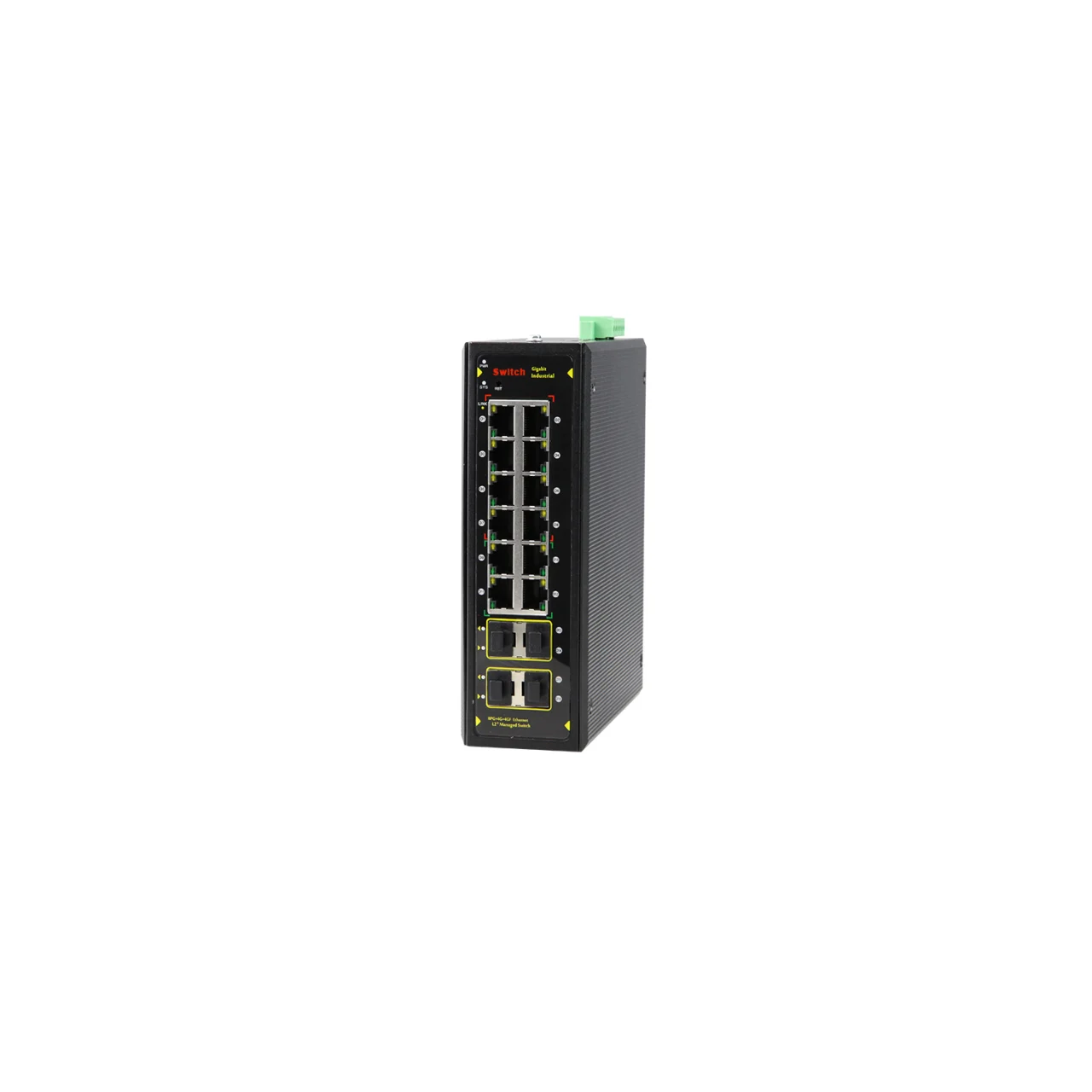
Industrial Managed Switches
12 × 10/100/1000Base-T RJ45 copper ports and 4 × 100/1000Base-X SFP slots, plus RS232 console, dual DC power input, and fault alarm.
Managed 12-Port Gigabit Industrial Ethernet Switch with 4 SFP Uplinks, L2+ Ring Redundancy
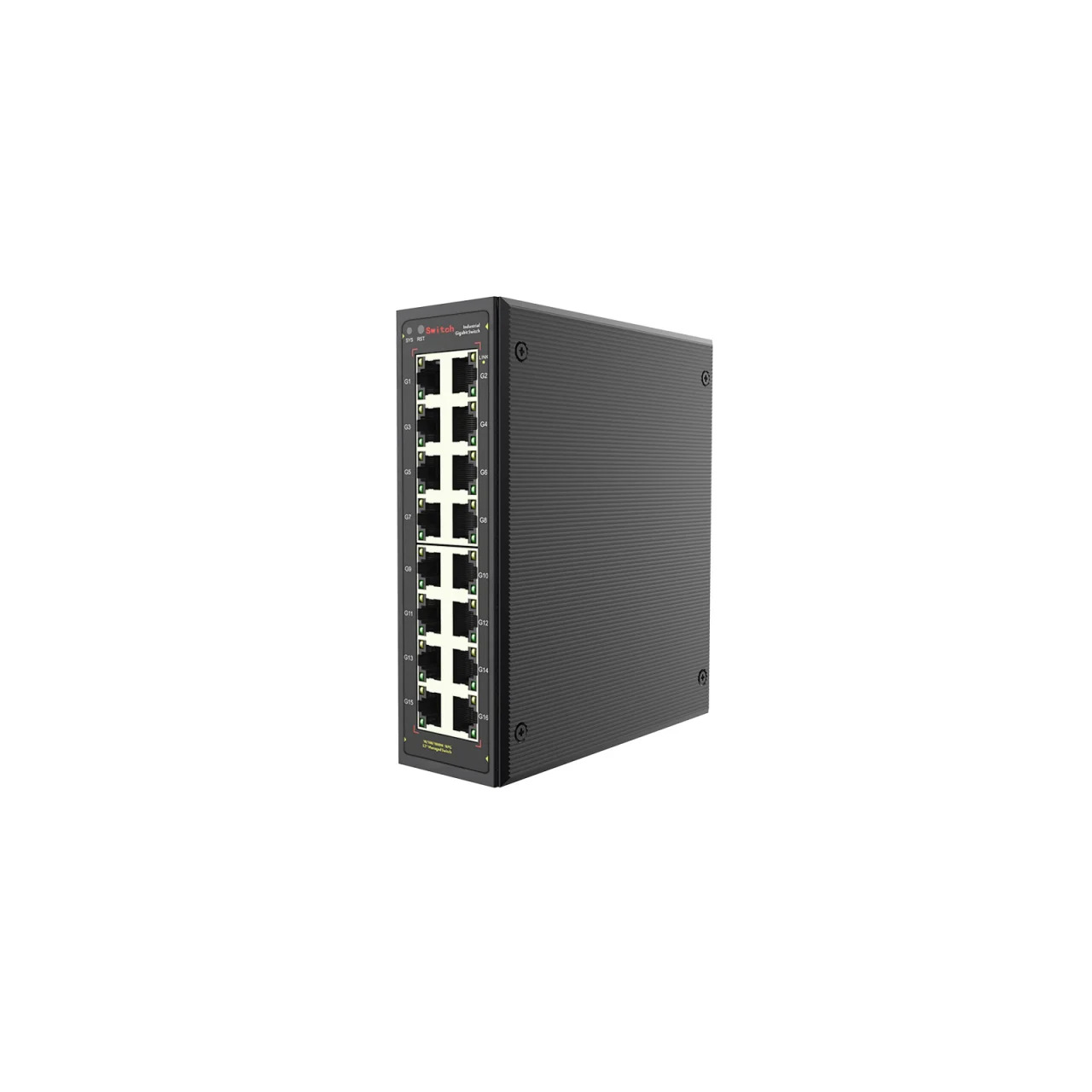
Industrial Managed Switches
16 × 10/100/1000Base-T RJ45 data ports, 1 × RS232 console port, 2 × redundant 12-48VDC inputs and 1 × FAULT alarm interface.
Managed Gigabit Industrial Ethernet Switch, 16-Port RJ45, L2+ Static Routing, ERPS <20 ms, DIN-Rail

Industrial Managed Switches
20 × 10/100/1000Base-T RJ45 Gigabit data ports plus 4 × 100/1000Base-X SFP fiber uplink slots; 1 × RS232 console port and dual redundant DC input.
Managed 12-Port Gigabit Industrial Ethernet Switch with 4 SFP Uplink, L2+ Routing, ERPS Ring
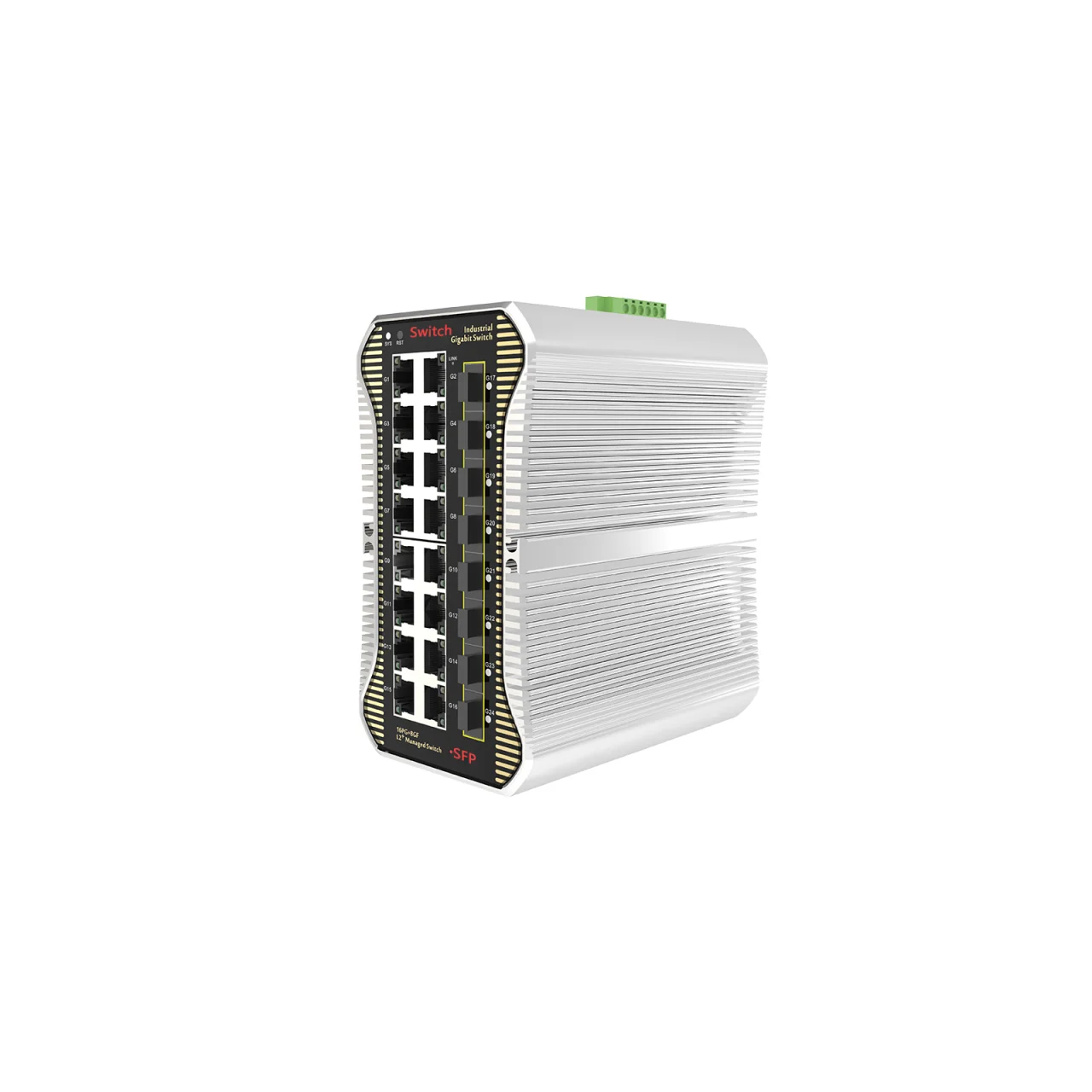
Industrial Managed Switches
16 × 10/100/1000Base-T RJ45 data ports and 8 × 100/1000Base-X SFP fiber uplink slots, with 1 × RS232 console port and redundant 12-48VDC power inputs.
Managed 16-Port Full Gigabit Managed Industrial Ethernet Switch DIN Rail with 8 SFP Uplinks
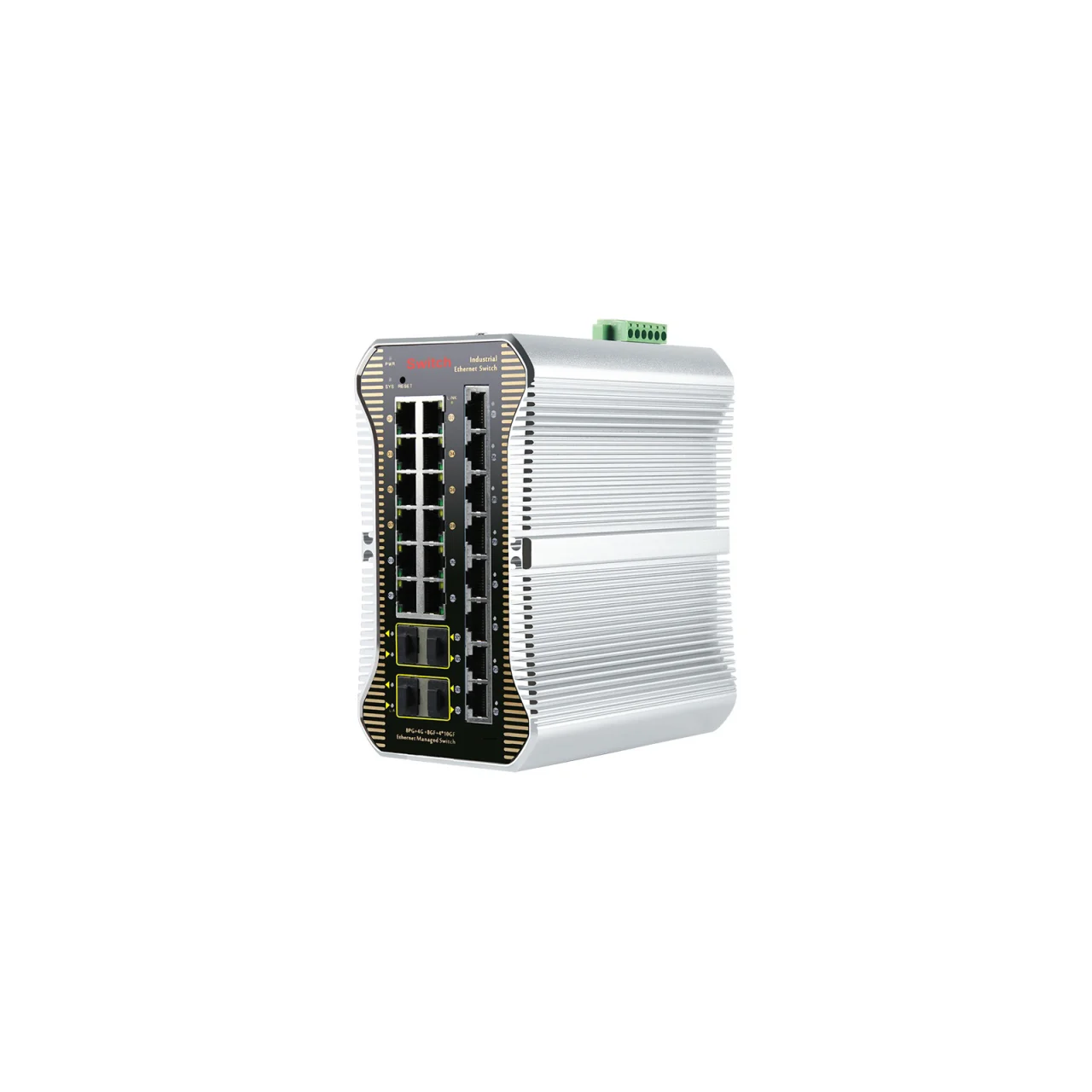
Industrial Managed Switches
20 × 10/100/1000Base-T RJ45 data ports plus 4 × 100/1000Base-X SFP fiber slots; 1 × RS232 console port and dual redundant DC power inputs.
Managed 20-Port Gigabit Industrial Ethernet Switch, 4 SFP Fiber Uplinks, L2+, ERPS, DIN-Rail
Industrial Managed Switches
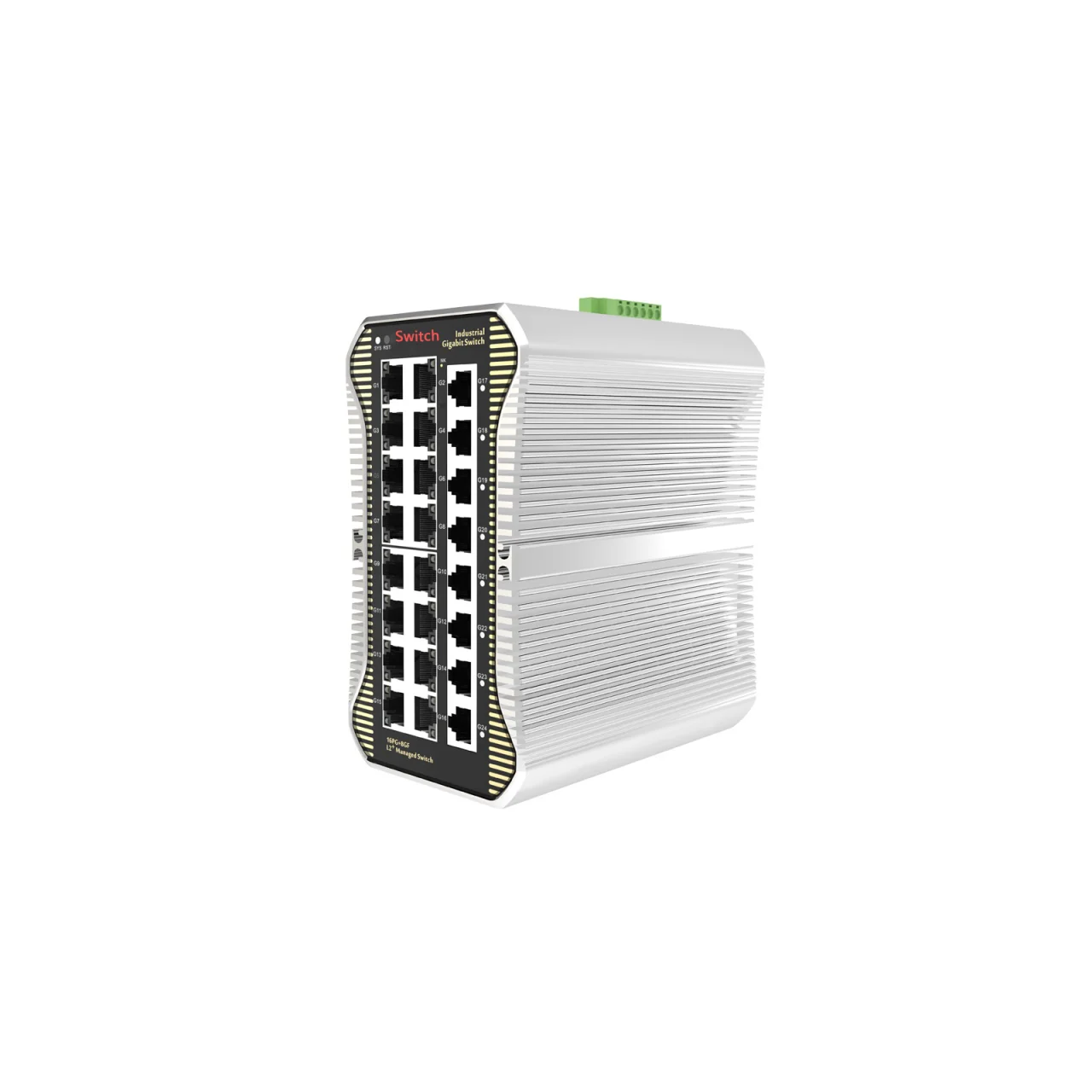
24 × 10/100/1000Base-T RJ45 data ports, 1 × RS232 console port, fault relay, and dual 12–48VDC Phoenix power inputs.
Managed 24-Port Gigabit Industrial Ethernet Switch, L2+ Routing, ERPS, DIN-Rail

Industrial Managed Switches
24 × 10/100/1000Base-T RJ45 data ports plus 4 × 100/1000Base-X SFP fiber ports, including 2 combo port sets; 1 × RS232 console port.
Managed 24-Port Gigabit Industrial Fiber Switch with 4 SFP Uplinks, L2+ Routing, ERPS and Rack Mount

Industrial Managed Switches
24 × 10/100/1000Base-T RJ45 access ports, 4 × 100/1000Base-X SFP fiber uplink slots, 1 console port, dual AC/DC power inputs and a fault relay port.
Managed Industrial Ethernet Switch, 20-Port Gigabit with 4 SFP Fiber Uplink, L2+ Routing, VLAN, QoS, Dual Power
Industrial Managed Switches
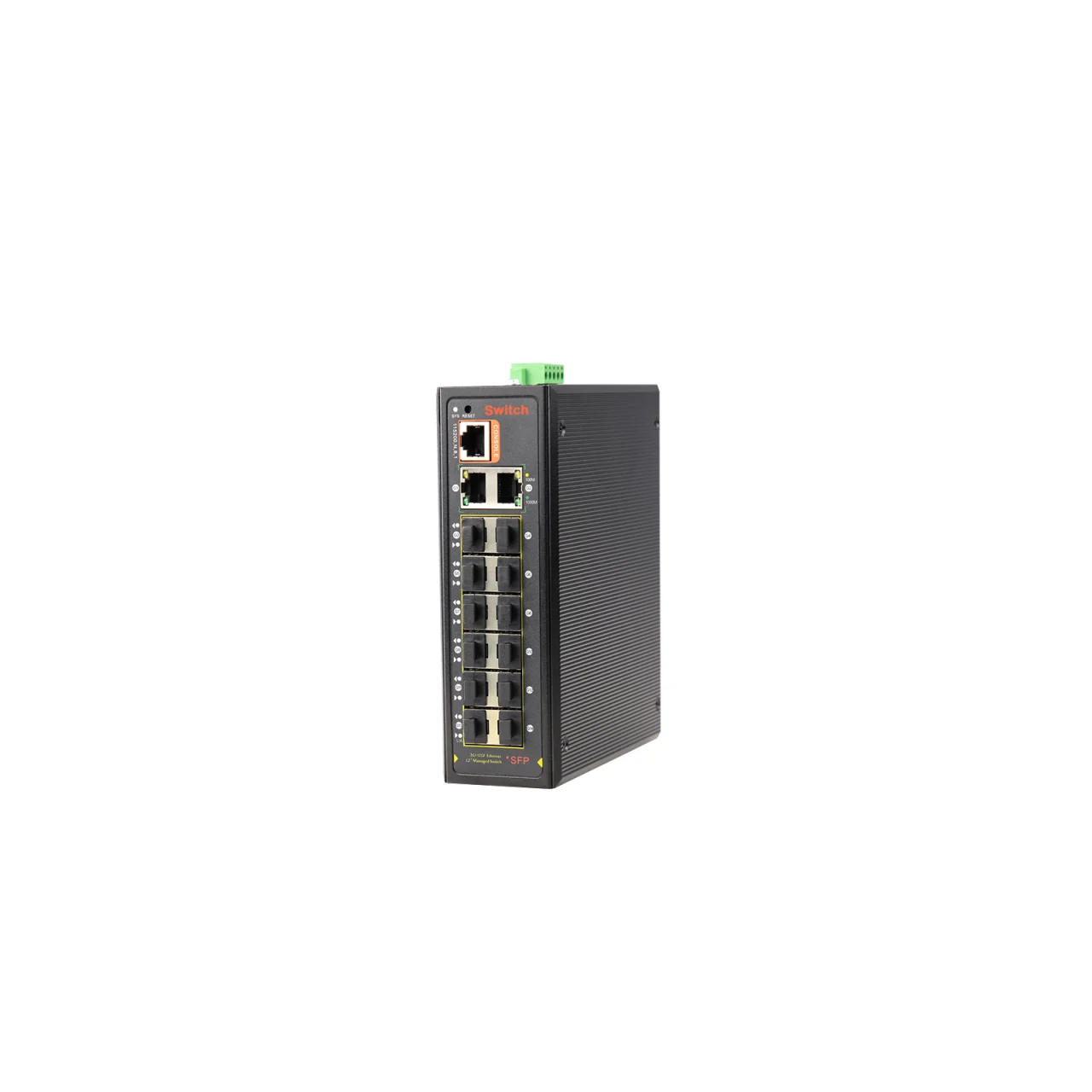
14 data ports: 2 × 10/100/1000Base-T RJ45 and 12 × 100/1000Base-X SFP fiber slots, plus 1 RS232 console port.
Managed 14-Port Full Gigabit Industrial Ethernet Switch, 2 RJ45 + 12 SFP, L2+, DIN Rail

Industrial Managed Switches
12×10/100/1000M RJ45 copper ports, 28×100/1000M SFP fiber slots and 4×1/10G SFP+ uplink slots; 44 Ethernet ports in total.
Managed 44-Port 10G Uplink Industrial Fiber Switch with 12 RJ45, 28 SFP and 4 SFP+

Industrial Managed Switches
8×10/100/1000M RJ45 data ports, 24×100/1000M SFP fiber ports, 4×1/10G SFP+ ports, 1×RS232 console port, AC 100-240V input and 2×DC 12V backup inputs.
Managed 24-port 10G uplink L2+ industrial Ethernet switch with 8 SFP and 4 SFP+
Industrial Managed Switches
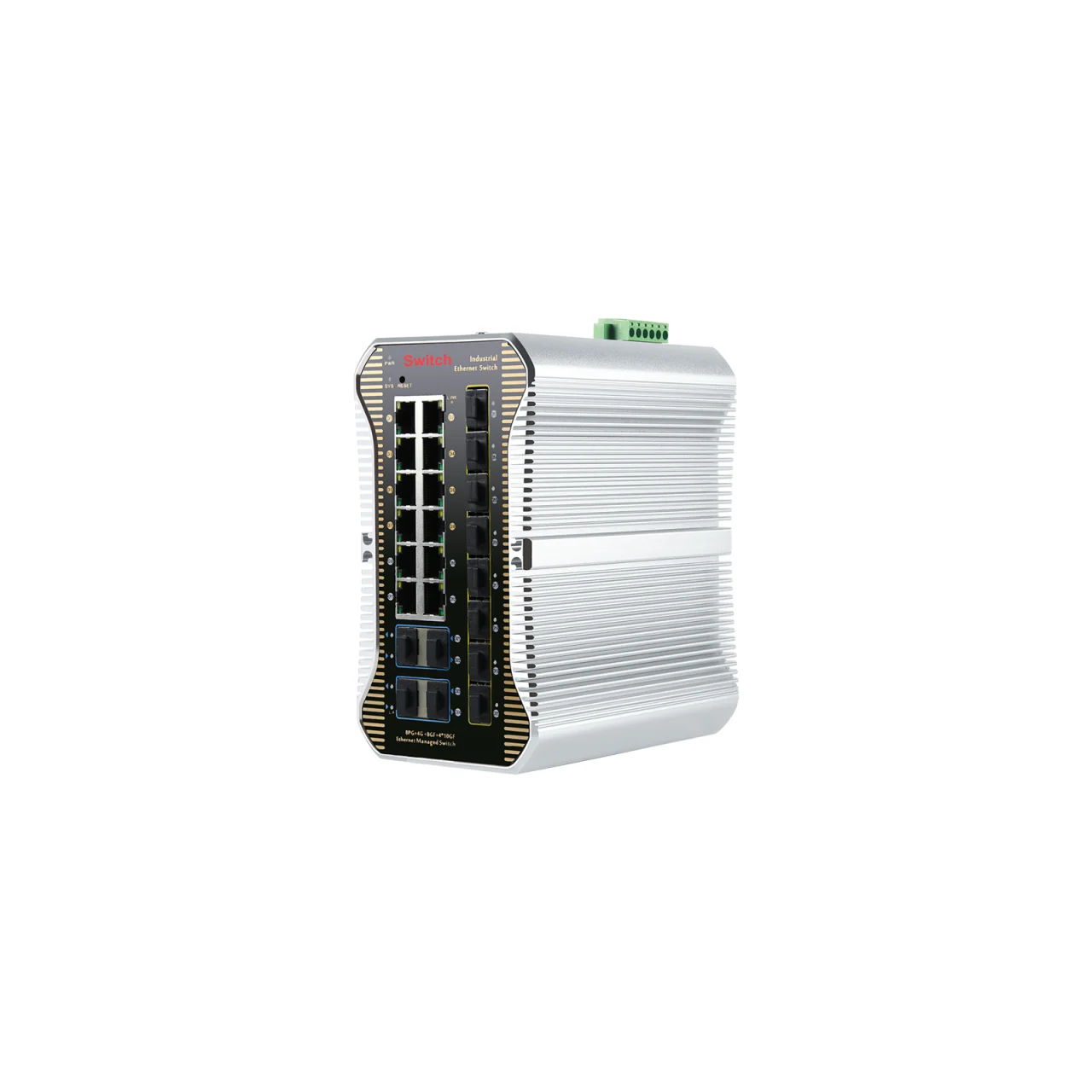
12×10/100/1000M RJ45 ports, 8×100/1000M SFP slots and 4×1/10G SFP+ uplink slots; all ports support wire-speed forwarding.
Managed 20-port 10G uplink managed industrial ethernet switch with 4 SFP+ DIN rail | IS730-12E8F4F
Industrial Managed Switches
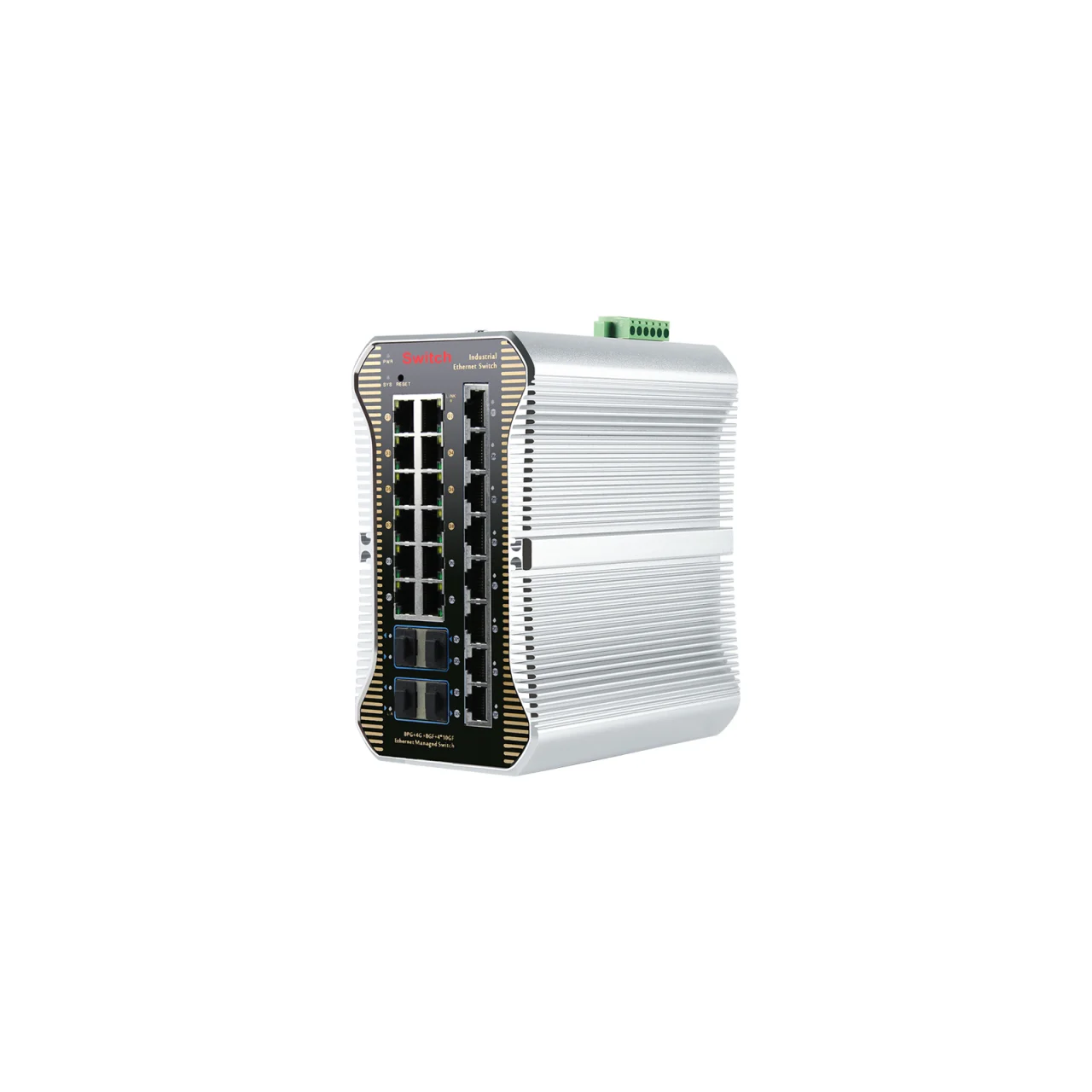
20×10/100/1000Base-T RJ45 ports plus 4×1/10G SFP+ fiber uplink slots; 1×RS232 console port and dual 12–48VDC Phoenix power inputs.
Managed 28-port 10G uplink managed industrial ethernet switch with 4 SFP+ rack mount | 20 RJ45 + 4 SFP+
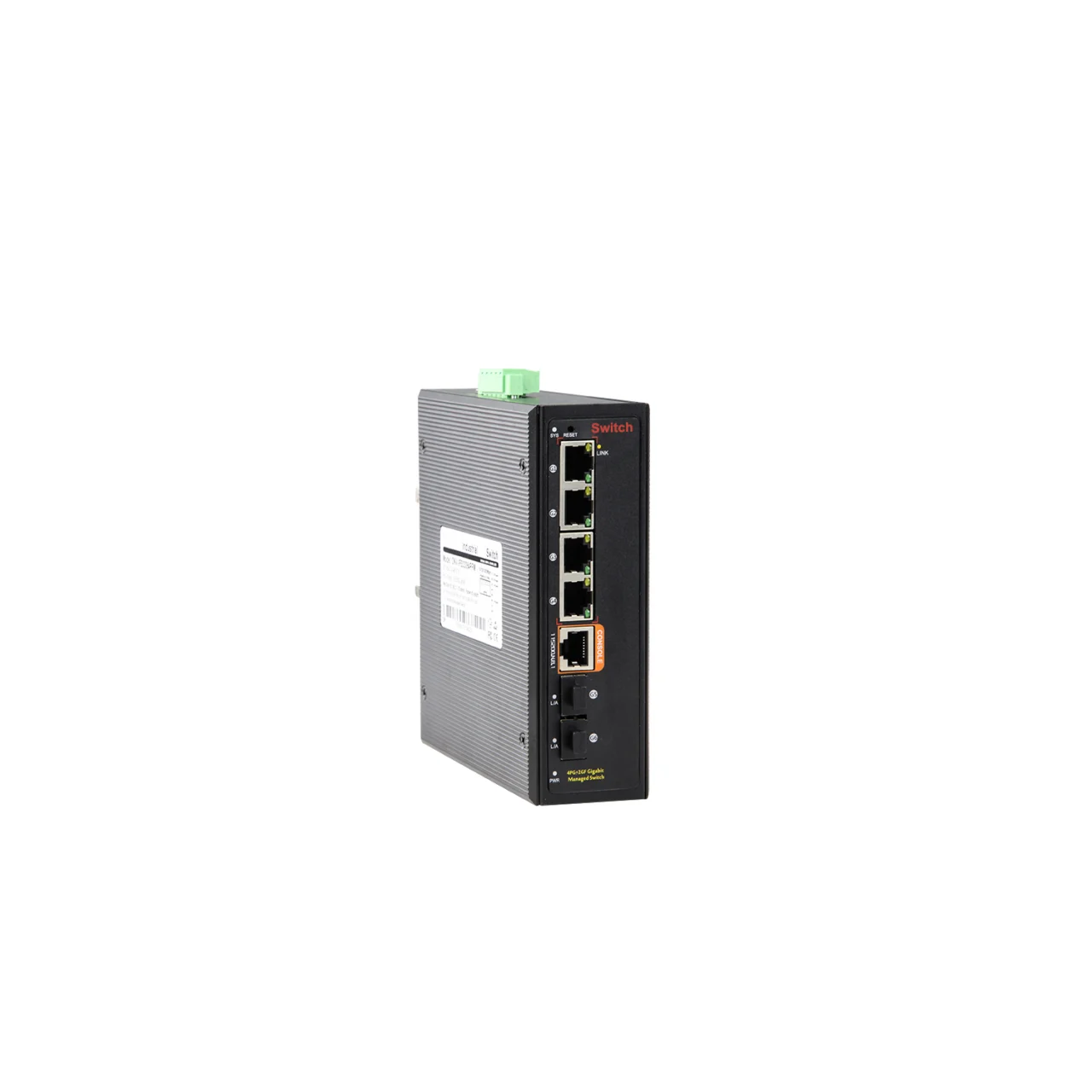
Industrial Managed Switches
4 x 10/100/1000Base-T RJ45 data ports and 2 x 100/1000Base-X SFP fiber uplink ports, plus 1 x RS232 console port.
Managed Gigabit Industrial Ethernet Switch, 4 RJ45 Ports, 2 SFP Fiber Uplinks, L2+ Routing, ERPS Ring
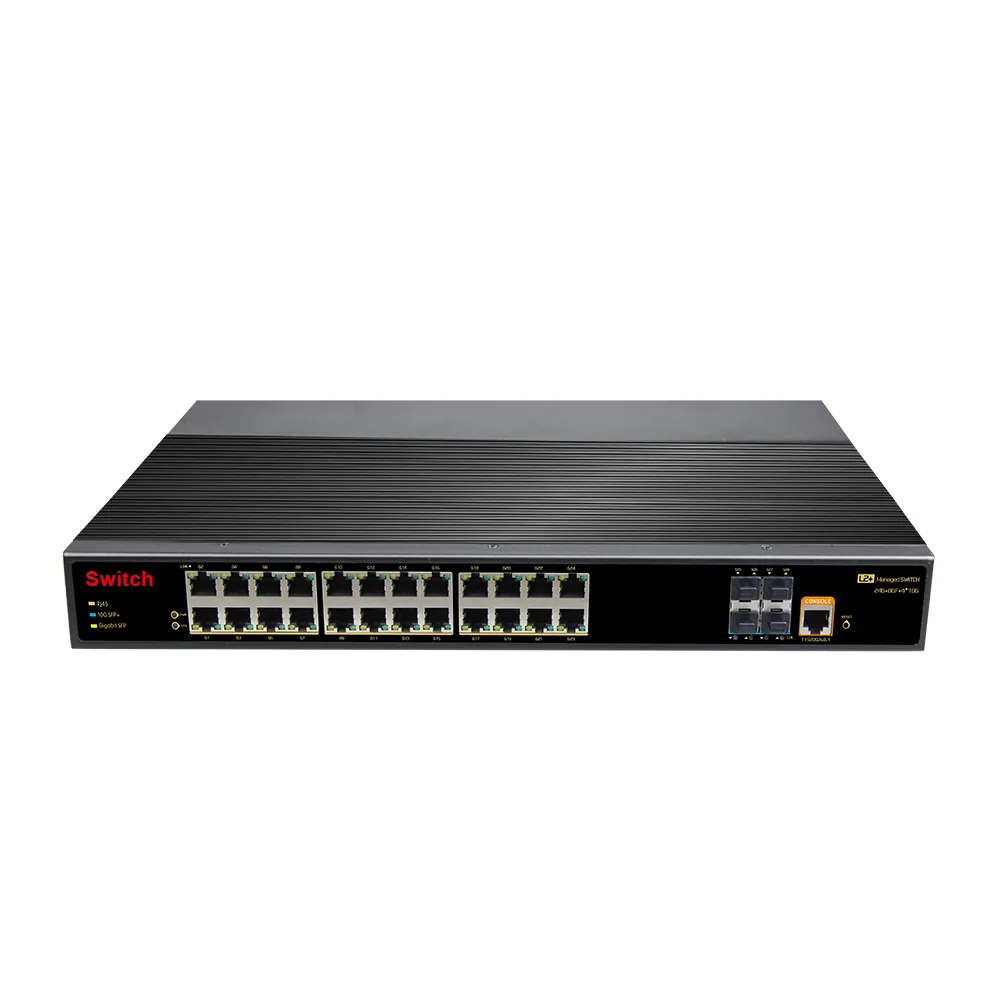
Industrial Managed Switches
24×10/100/1000Base-T RJ45 access ports and 4×1/10G SFP+ fiber uplink slots, plus 1×RS232 console port.
Managed 10G Uplink Industrial Ethernet Switch, 24-Port Gigabit RJ45, 4-Port 1/10G SFP+, Rack-Mount

Industrial Managed Switches
24×10/100/1000M RJ45 access ports, 8×100/1000M SFP fiber ports and 4×1/10G SFP+ uplink ports; all ports support wire-speed forwarding.
Managed 52-port 10G uplink managed industrial ethernet switch with 4 SFP+ rack mount | 24 Gigabit RJ45 + 8 SFP
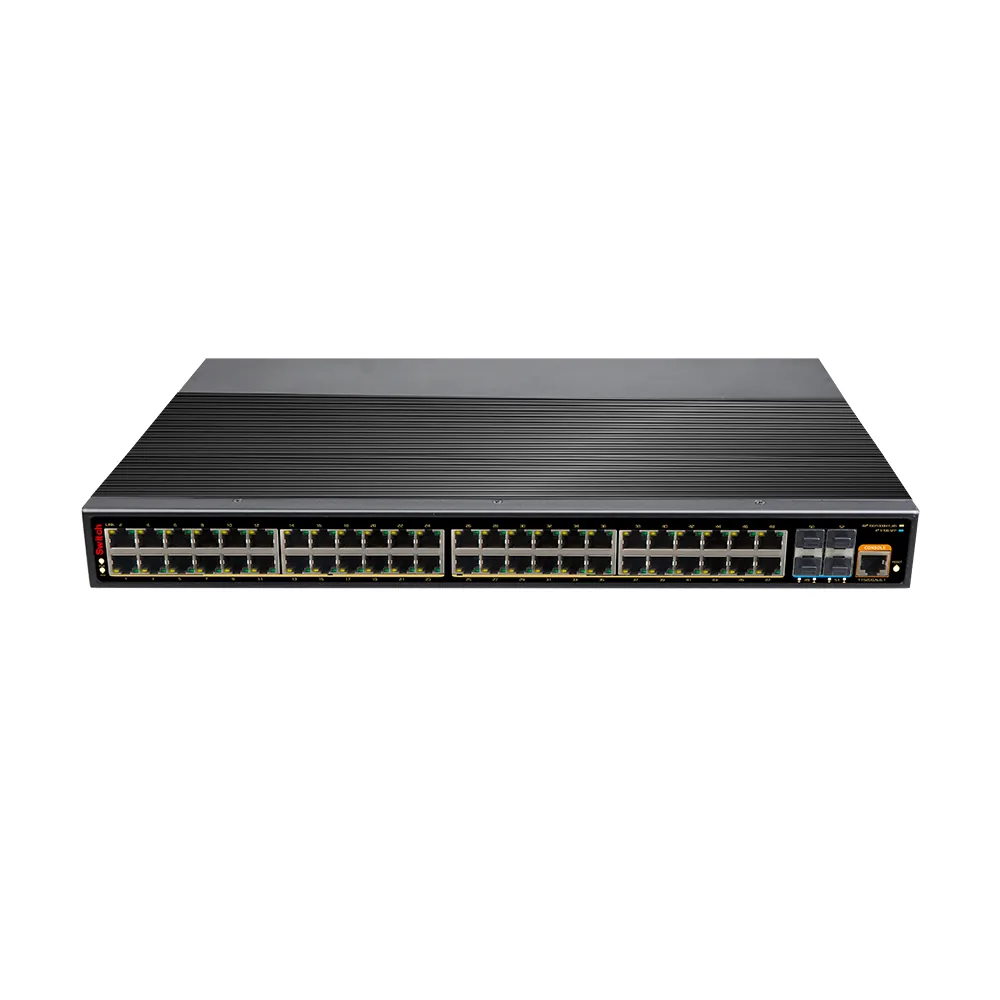
Industrial Managed Switches
48 × 10/100/1000Base-T RJ45 access ports and 4 × 1/10G SFP+ fiber uplink slots, plus console, alarm, AC and dual DC power interfaces.
Managed Industrial Fiber Switch, 48-Port Gigabit RJ45 with 4-Port 10G SFP+ Uplink, Rack-Mount

Industrial Managed Switches
12×10/100/1000Base-T RJ45 ports, 28×100/1000Base-X SFP slots, and 4×1/10G SFP+ uplink slots, all supporting wire-speed forwarding.
Managed 44-Port L3 Industrial Ethernet Fiber Switch with 4 SFP+ 10G Uplinks, 28 SFP Ports, Rack-Mount

Industrial Managed Switches
8 x 10/100/1000M RJ45 ports, 24 x 100/1000M SFP fiber slots, 4 x 1/10G SFP+ slots, plus 1 x RS232 console port.
Managed 44-port 10G uplink managed industrial fiber switch with 28 SFP 4 SFP+ rack mount – 36-Port Configuration
Industrial Managed Switches
12 × 10/100/1000Base-T RJ45 ports plus 4 × 1/10G SFP+ slots for Gigabit access and fiber 10G uplinks.
Managed 12-Port L3 Industrial Ethernet Switch with 4 SFP+ 10G Uplink, Dual DC, DIN-Rail
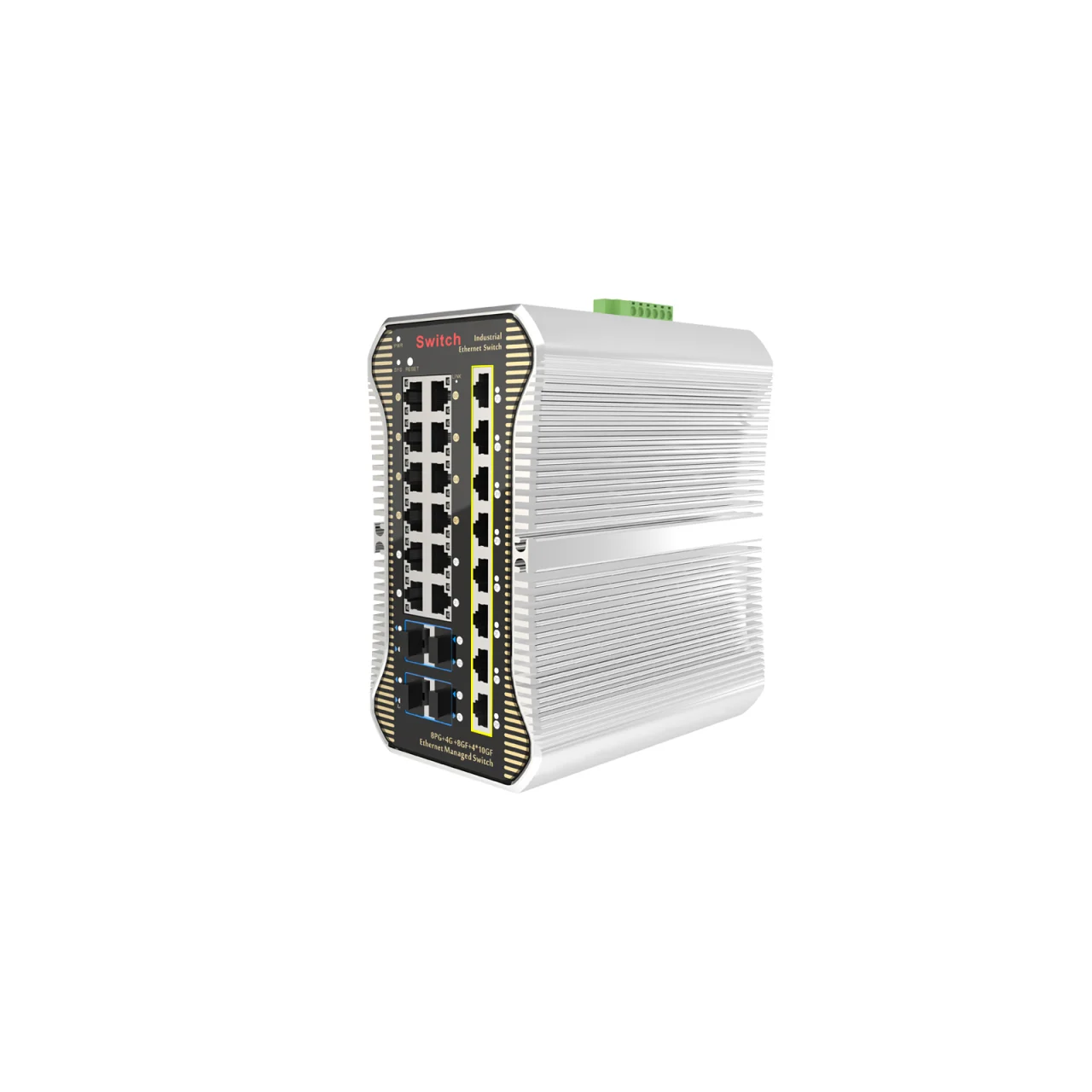
Industrial Managed Switches
12×10/100/1000M RJ45, 8×100/1000M SFP, and 4×1/10G SFP+ fiber slots, plus 1 RS232 console port and dual redundant DC power inputs.
Managed 24-Port L3 Industrial Fiber Switch, 12 Gigabit RJ45, 8 SFP, 4 SFP+ 10G Uplink, DIN-Rail
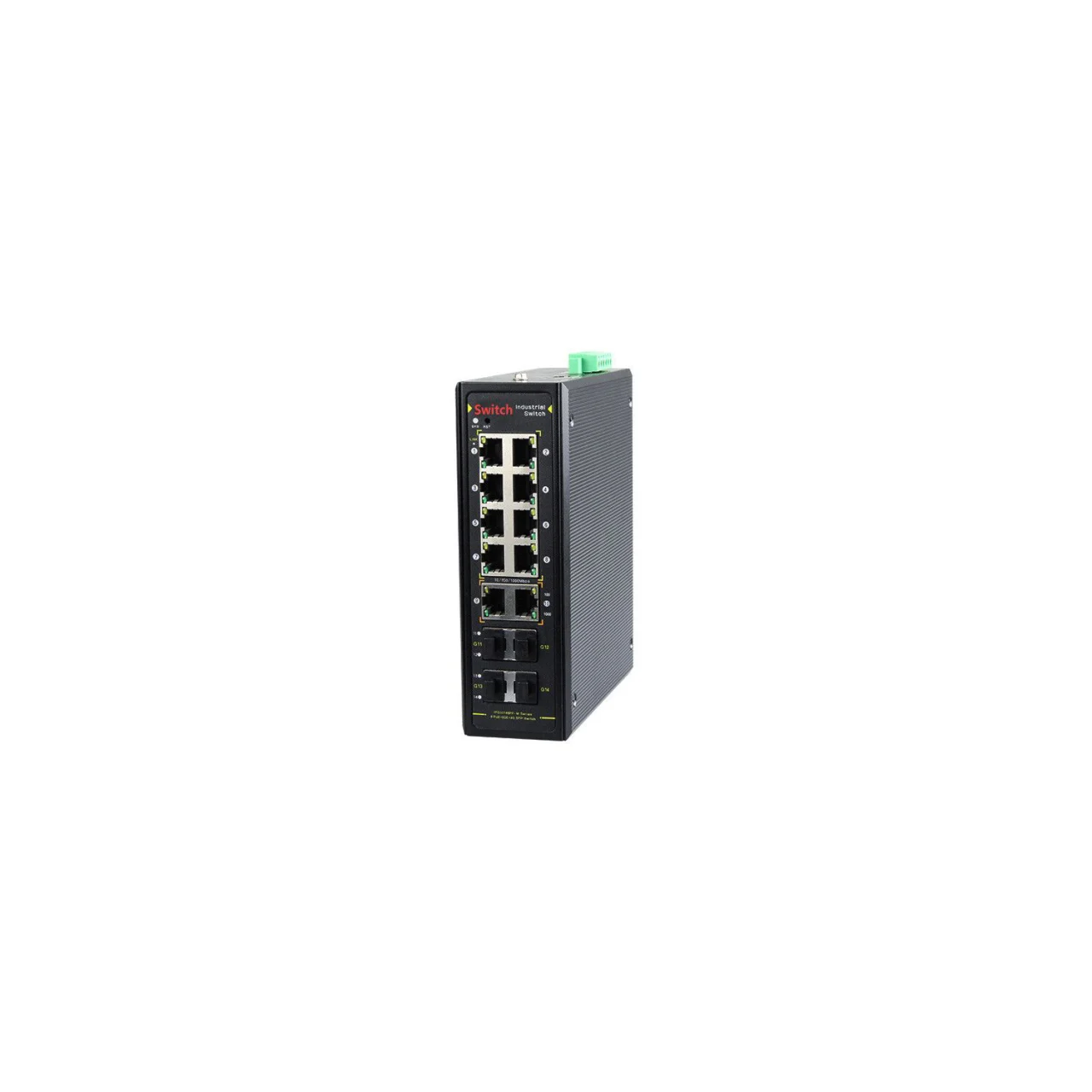
Industrial Managed Switches
10 × 10/100/1000Base-T RJ45 ports and 4 × 100/1000Base-X Gigabit SFP uplink slots, with 1 RS232 console port and dual redundant DC power inputs.
Managed Gigabit Industrial Ethernet Switch, 10 RJ45 Ports, 4 SFP Uplinks, L2+ Routing, ERPS, DIN-Rail
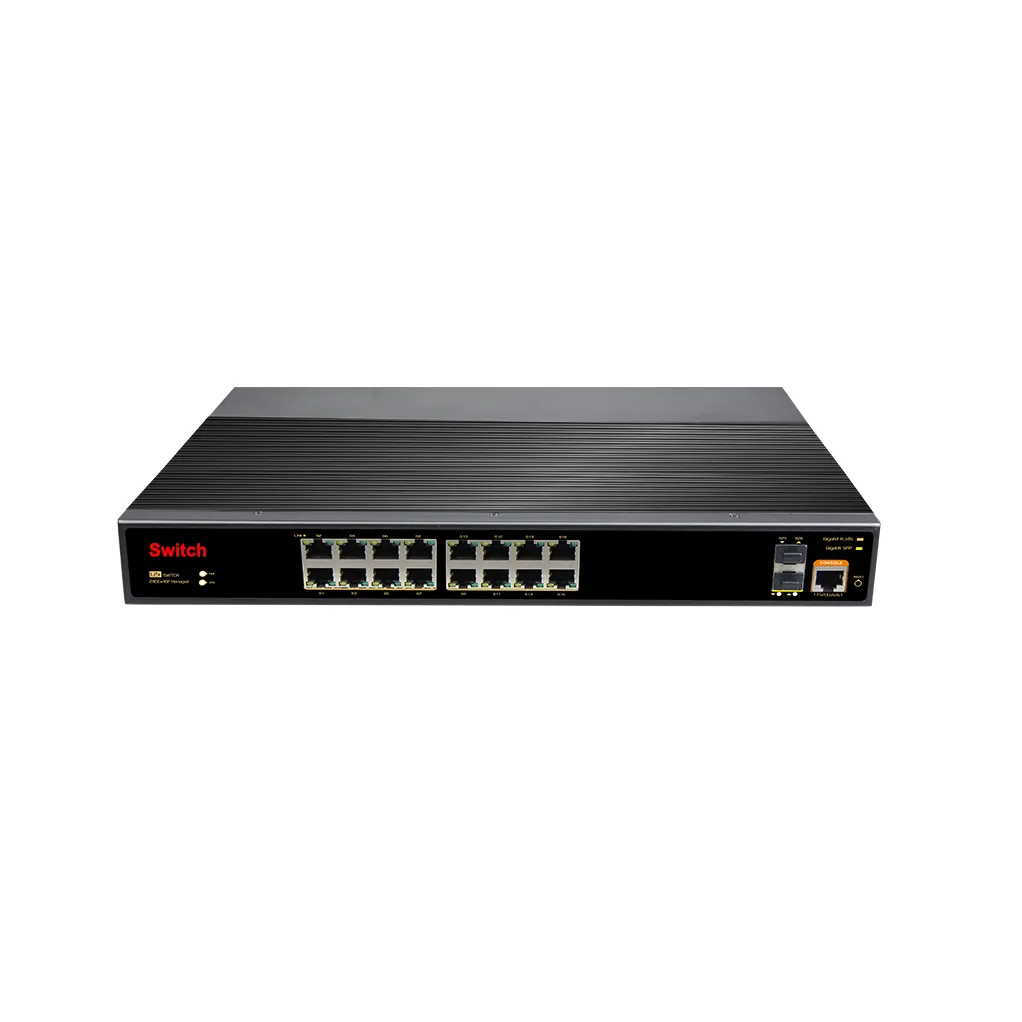
Industrial Managed Switches
16 × 10/100/1000Base-T RJ45 data ports and 2 × 100/1000Base-X Gigabit SFP fiber uplink slots, with 1 RS232 console port.
Managed 16-Port Gigabit Industrial Ethernet Switch, 2 SFP Fiber Uplinks, L2+ Static Routing
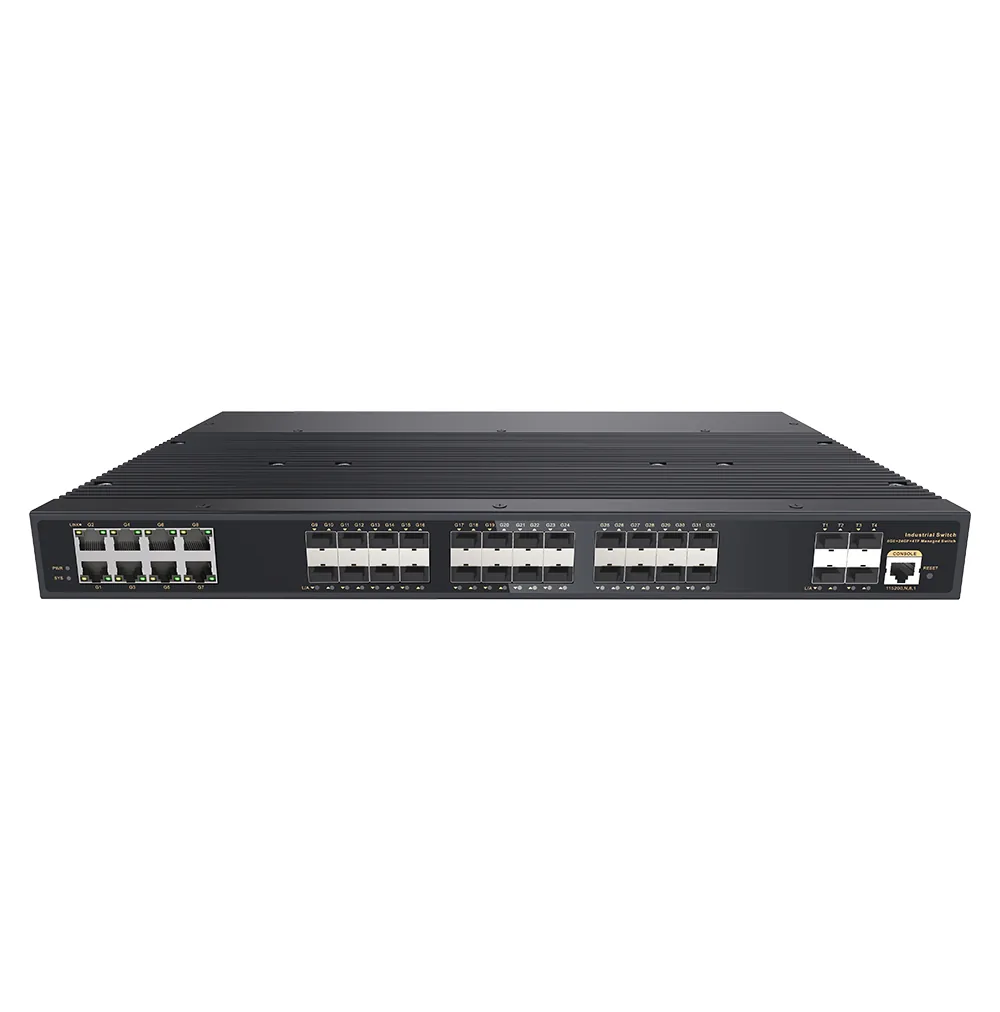
Industrial Managed Switches
8 combo ports supporting 10/100/1000Base-T RJ45 or 100/1000Base-X SFP, 16 Gigabit SFP ports, and 4 1/10G SFP+ uplink ports.
Managed 36-Port L3 Managed Industrial Ethernet Switch with 8 Combo, 16 SFP, 4 SFP+ Rack-Mount
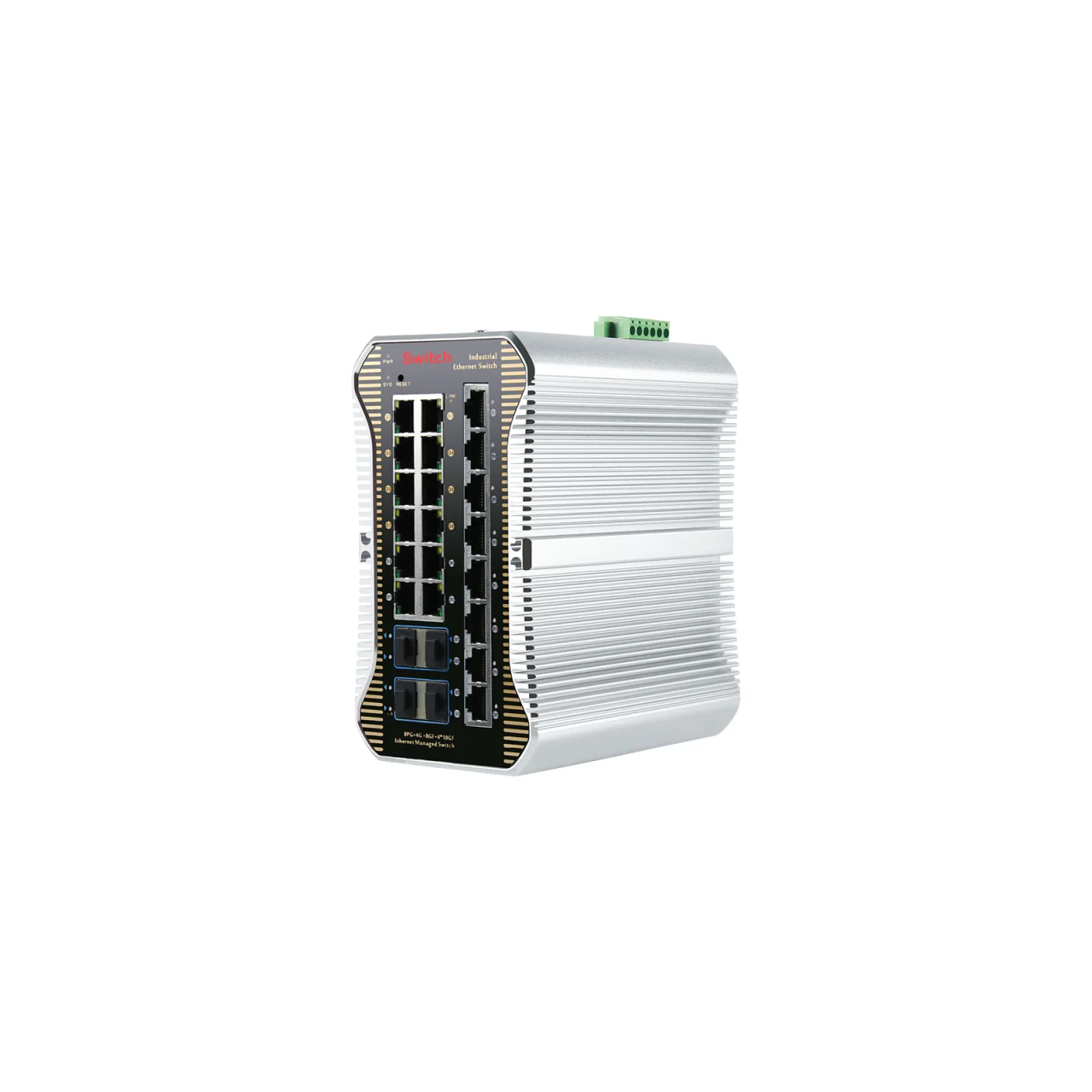
Industrial Managed Switches
20 × 10/100/1000Base-T RJ45 data ports and 4 × 1/10G SFP+ fiber uplink slots, plus 1 × RS232 console port and dual redundant DC power inputs.
Managed 24-Port L3 Managed Industrial Ethernet Fiber Switch with 4 SFP+ 10G Uplink, DIN Rail
Industrial Managed Switches
24 × 10/100/1000Base-T RJ45 access ports plus 4 × 1/10G SFP+ fiber uplink slots, with 1 × RS232 console port and AC/DC redundant power inputs.
Managed 28-port L3 managed industrial ethernet switch with 4 SFP+ 10G uplink rack mount, 24-Port Gigabit RJ45
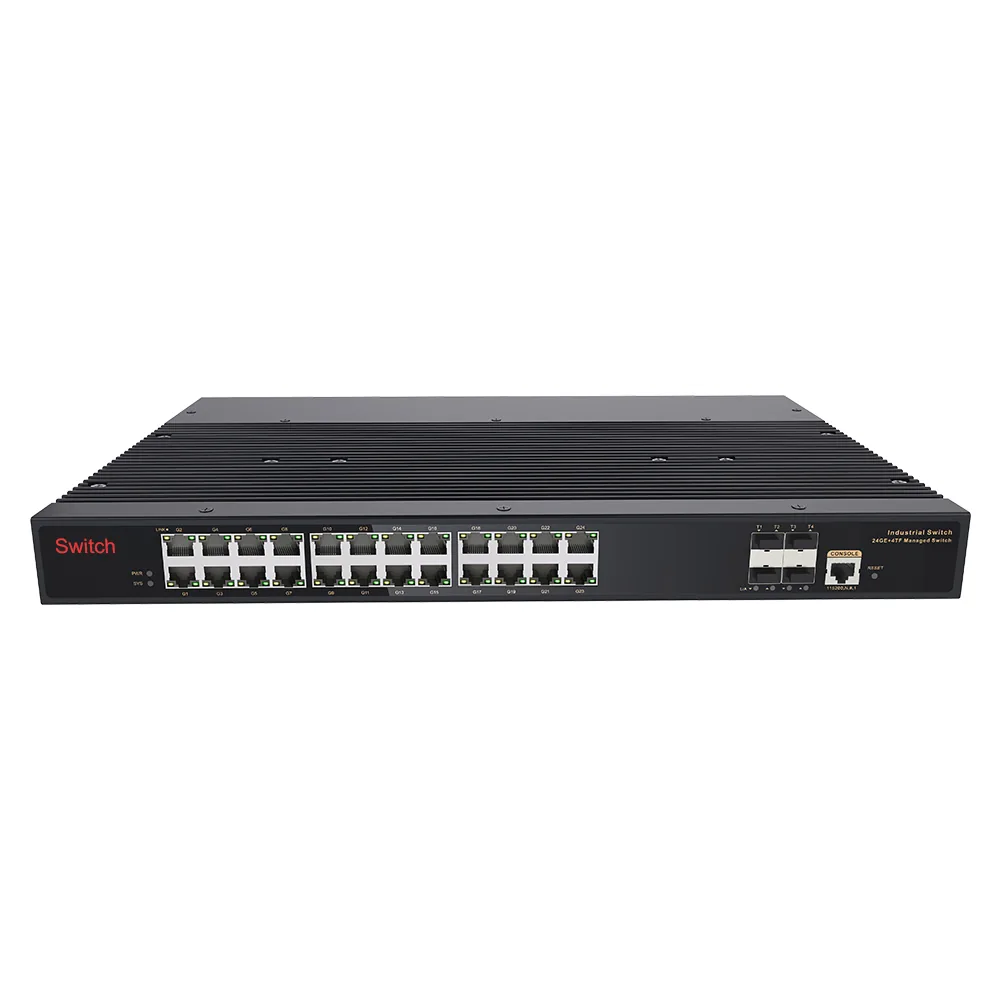
Industrial Managed Switches
24×10/100/1000Base-T RJ45 access ports and 4×1/10G SFP+ fiber uplink ports, with dual AC inputs, 12–48V DC backup, console, and fault alarm interfaces.
Managed 28-port L3 managed industrial ethernet switch with 4 SFP+ 10G uplink dual AC rack mount
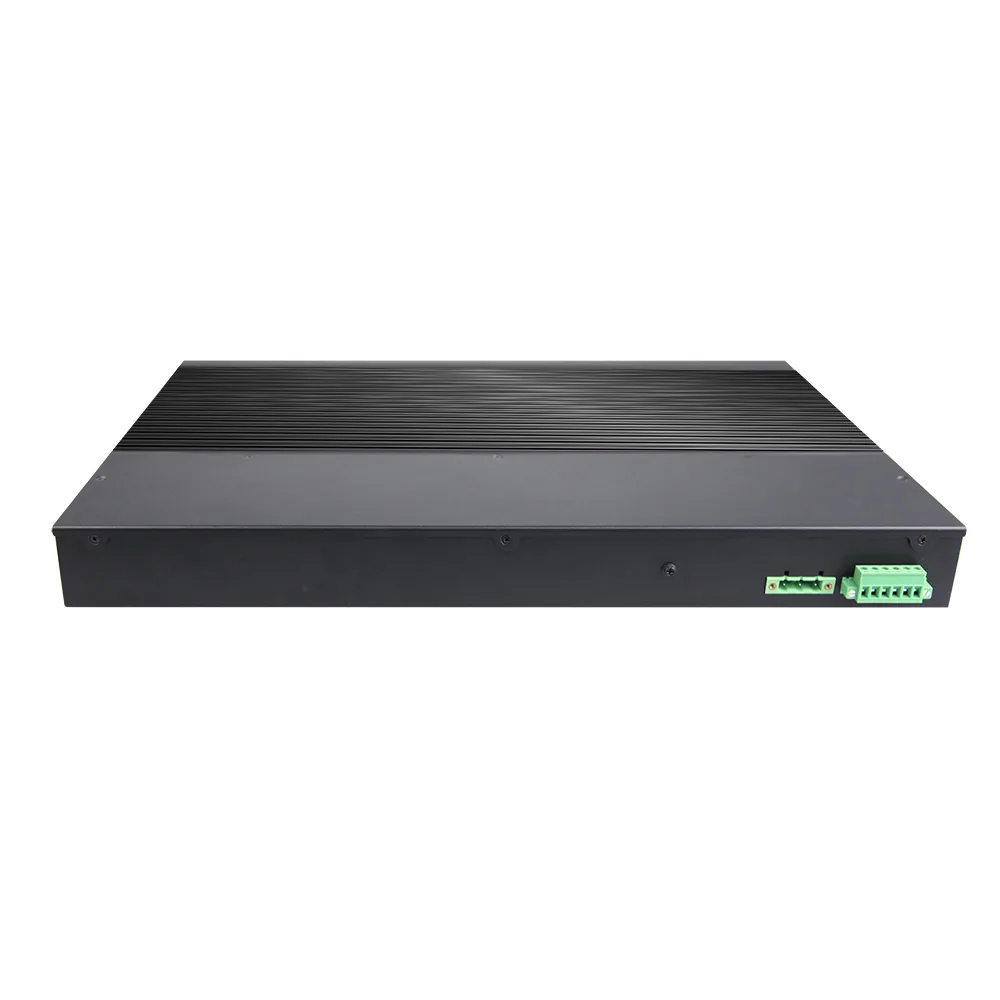
Industrial Managed Switches
24 x 10/100/1000Base-T RJ45 ports, 8 x 100/1000Base-X SFP fiber slots, and 4 x 1/10G SFP+ uplink slots; all network ports support wire-speed forwarding.
Managed 36-Port L3 Industrial Ethernet Switch with 24 Gigabit RJ45, 8 SFP, 4 SFP+ 10G Uplink, Rack-Mount
Industrial Managed Switches
48 × 10/100/1000Base-T RJ45 access ports plus 4 × 1/10G SFP+ fiber uplink slots; 1 console port, 1 alarm output, 1 AC input, and 2 DC inputs.
Managed 52-port L3 managed industrial ethernet switch with 4 SFP+ 10G uplink rack mount
Industrial Managed Switches
48×10/100/1000Base-T RJ45 access ports, 4×1/10G SFP+ fiber uplink slots, 1×console port, alarm output, AC input, and 2×12–48V DC inputs.
Managed 52-Port L3 Industrial Ethernet Switch, 48 Gigabit RJ45, 4 SFP+ 10G Uplinks, Rack-Mount Fanless Design
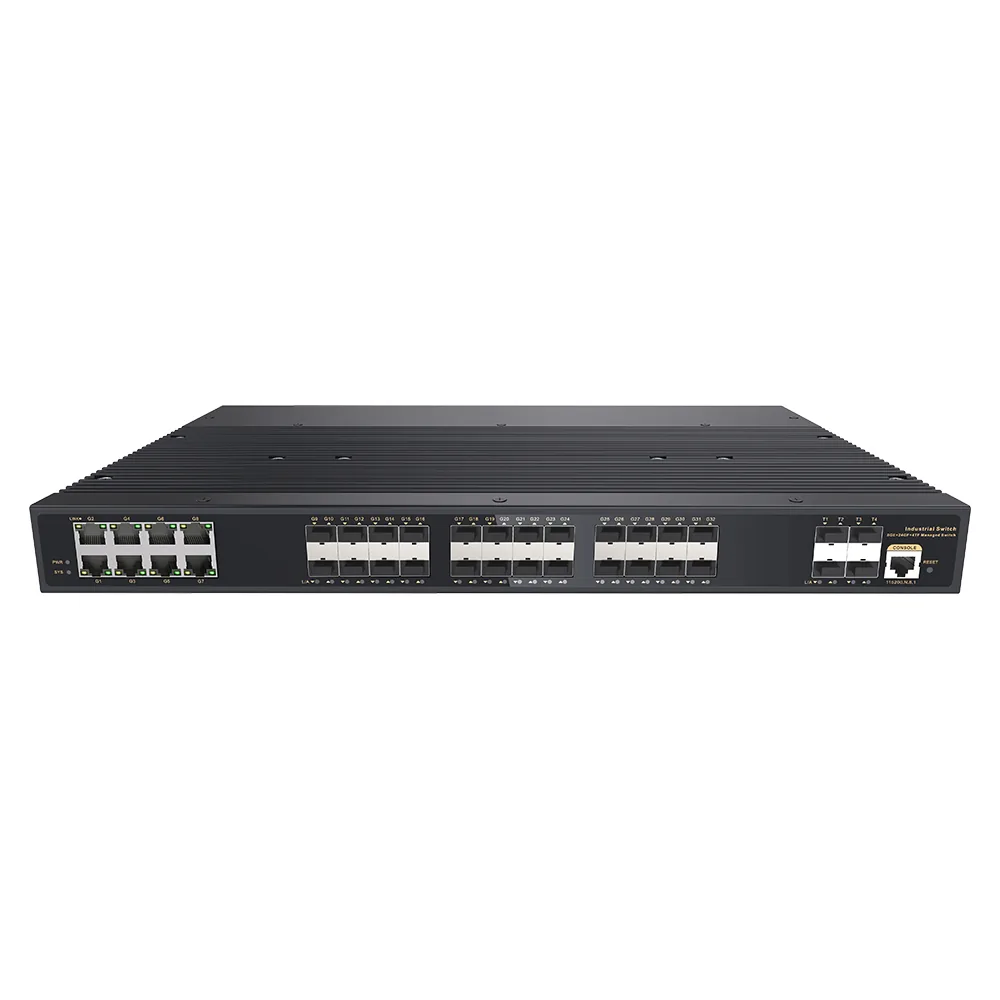
Industrial Managed Switches
8 × 10/100/1000Base-T RJ45 ports, 24 × 100/1000M SFP fiber slots, and 4 × 1/10G SFP+ fiber slots for Gigabit access and 10G uplink aggregation.
Managed 36-Port L3 Industrial Fiber Switch with 24 SFP, 4 SFP+ 10G Uplink, 8 Gigabit RJ45, Rack-Mount
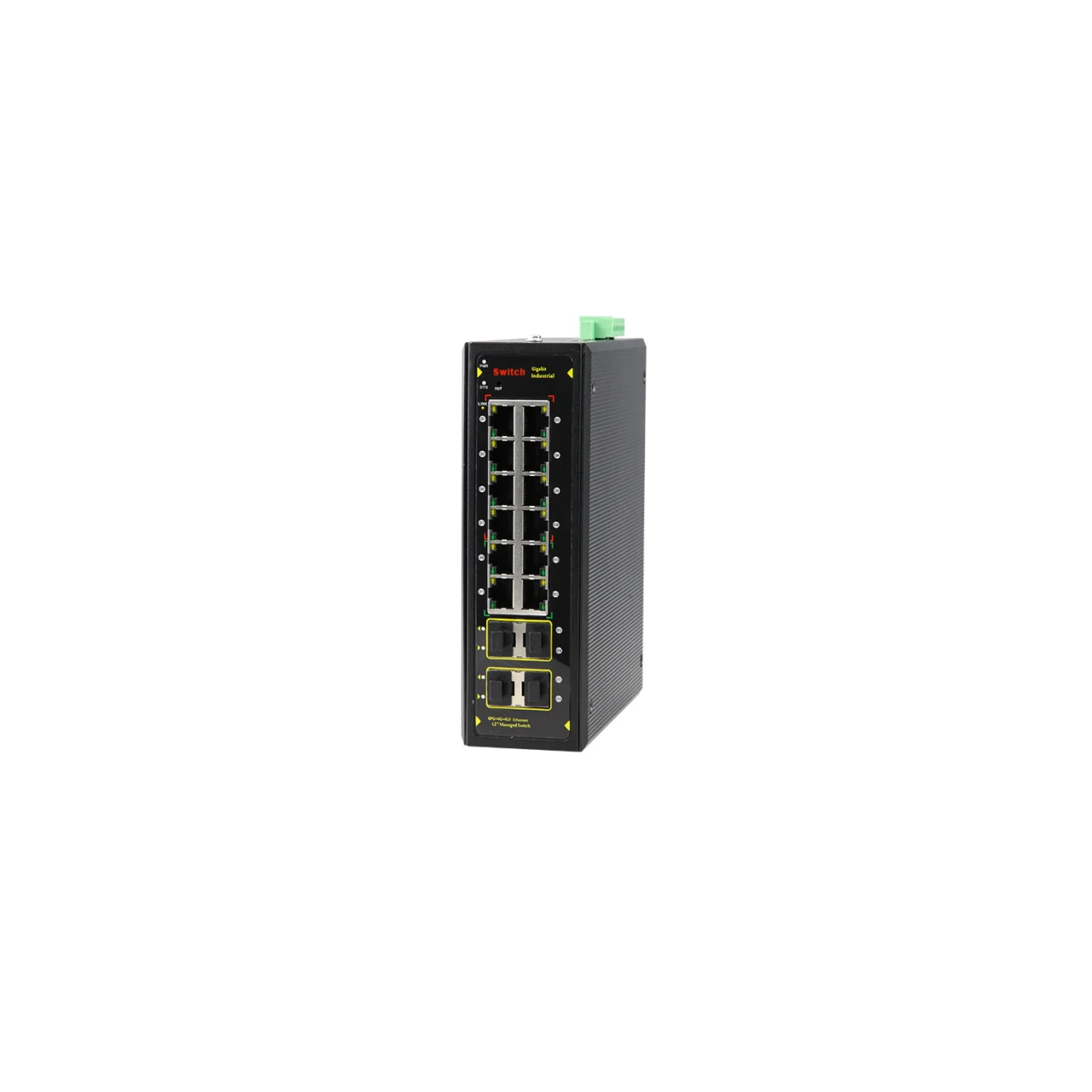
Industrial Managed Switches
8 × 10/100/1000Base-T RJ45 data ports and 8 × 100/1000Base-X SFP fiber uplink ports, all supporting auto-negotiation and wire-speed forwarding.
Managed 16-Port Gigabit Industrial Fiber Switch, 8 RJ45 + 8 SFP, L2+ Routing, ERPS Ring, DIN-Rail
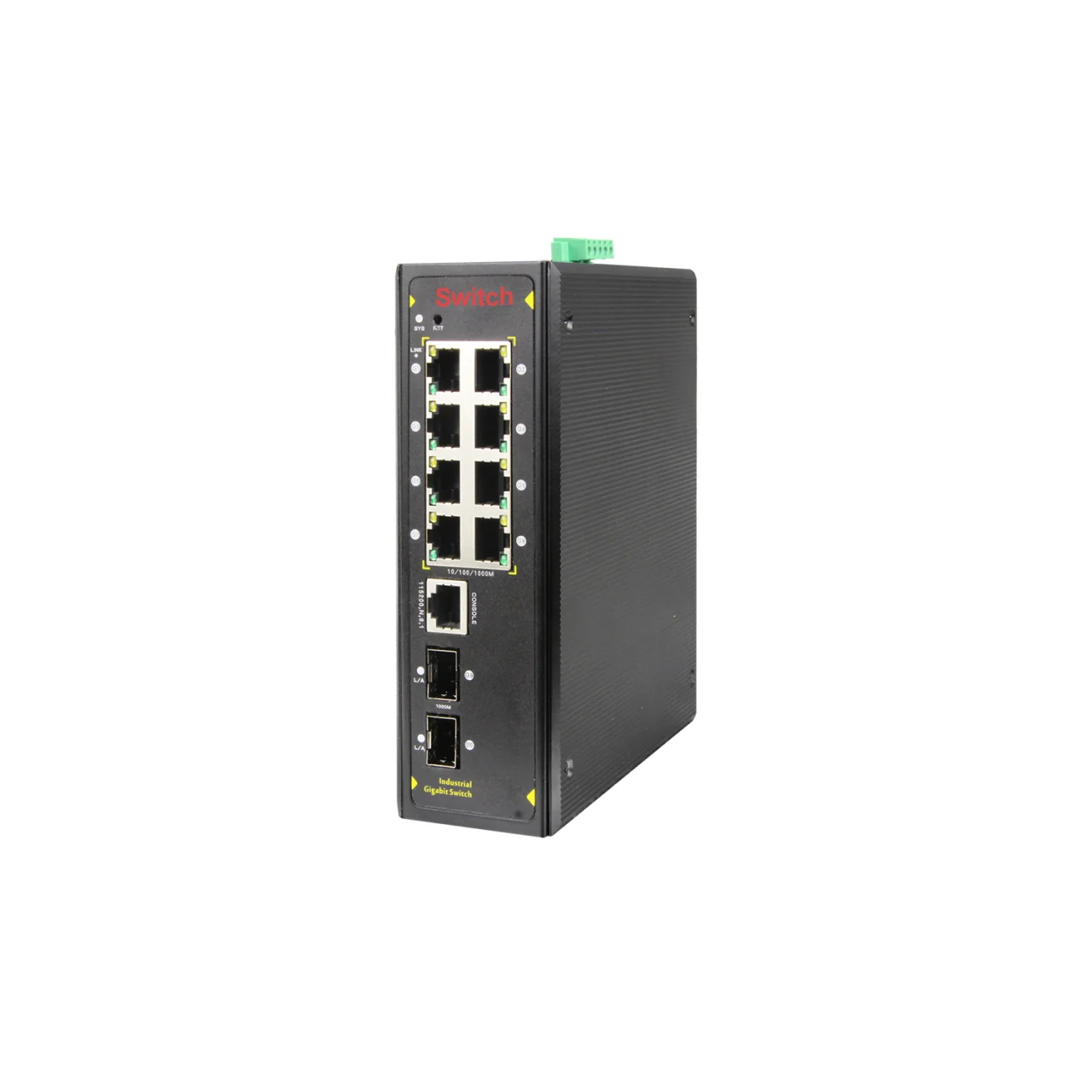
Industrial Managed Switches
8×10/100/1000Base-T RJ45 data ports, 2×100/1000Base-X SFP fiber uplink slots, and 1×RS232 console port.
Managed Gigabit Industrial Ethernet Switch, 8 RJ45 Ports, 2 SFP Fiber Uplinks, L2+ DIN-Rail
No matching products
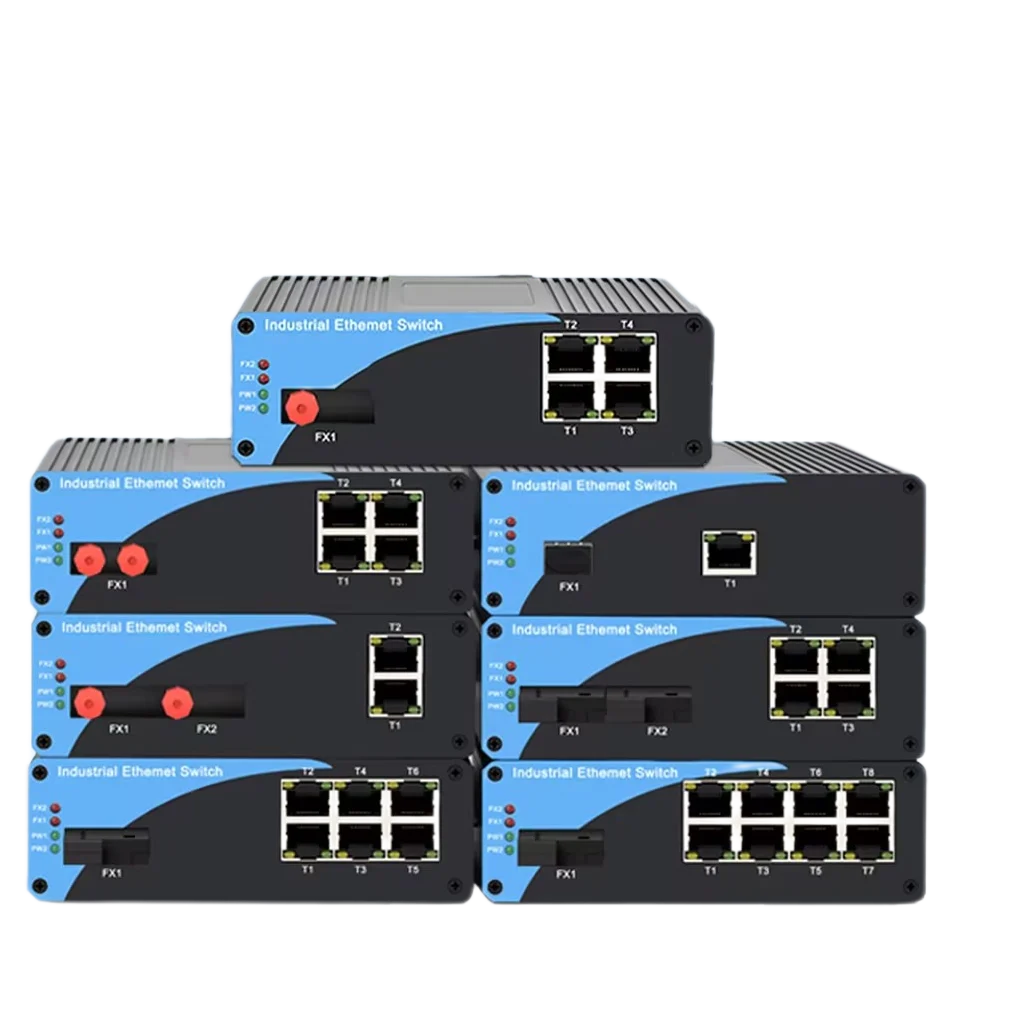
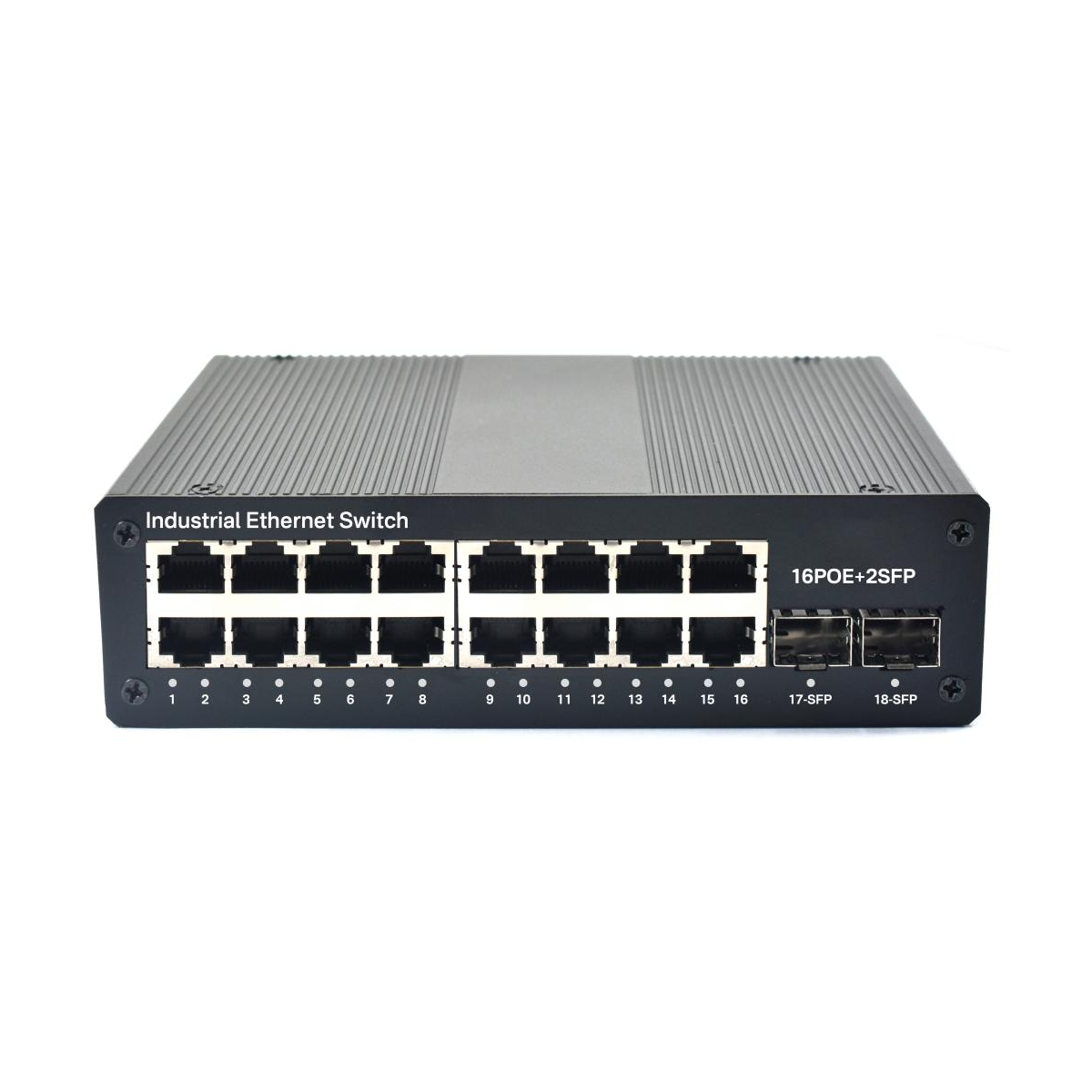
Industrial Switch: Designed and manufactured for use in harsh environments, wide temperature tolerance: -40℃ ~ +75℃, DIN rail mounting.
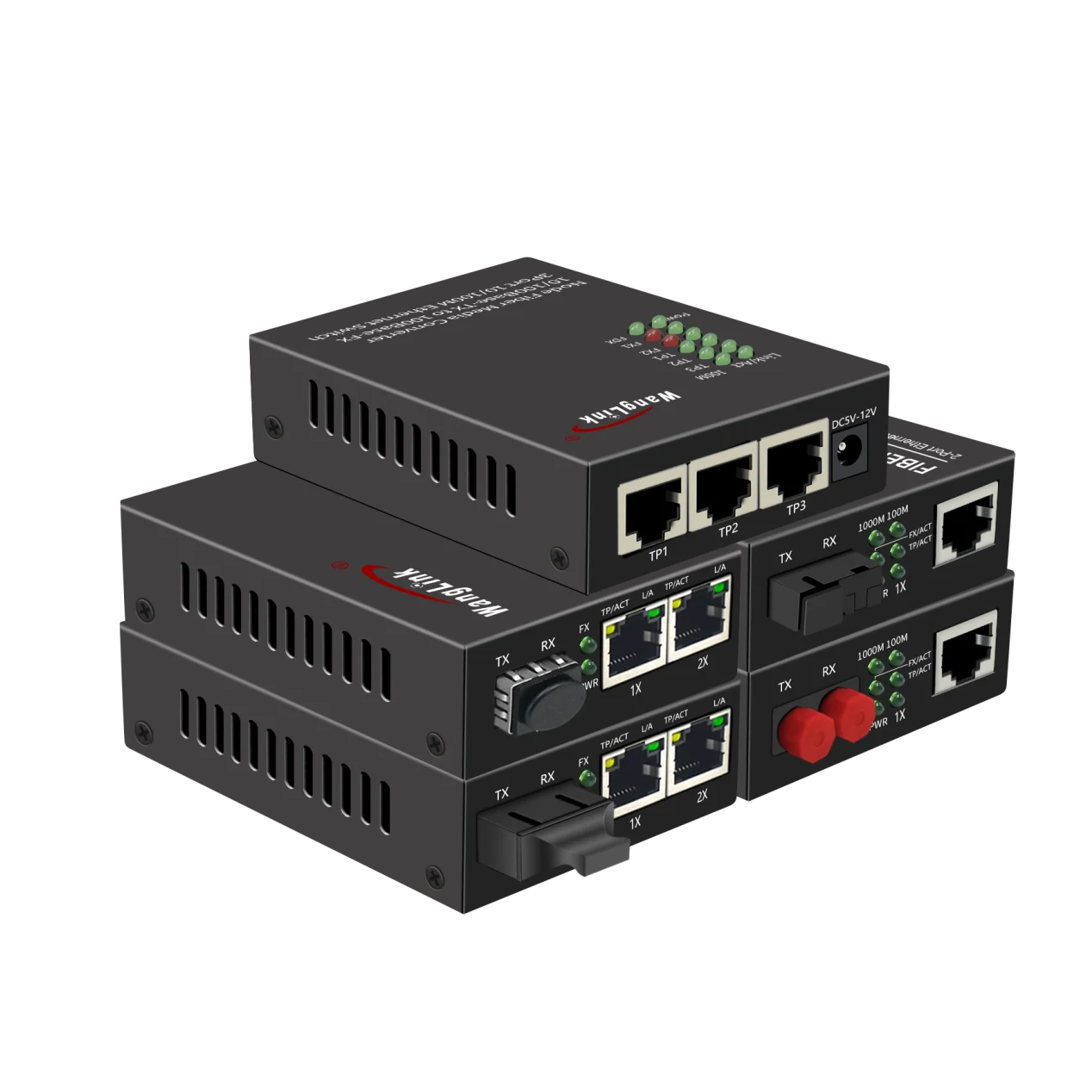
Reliable industrial-grade media converters for seamless electrical-to-optical signal conversion. Wide temperature resistance ensures stable operation in harsh industrial environments.
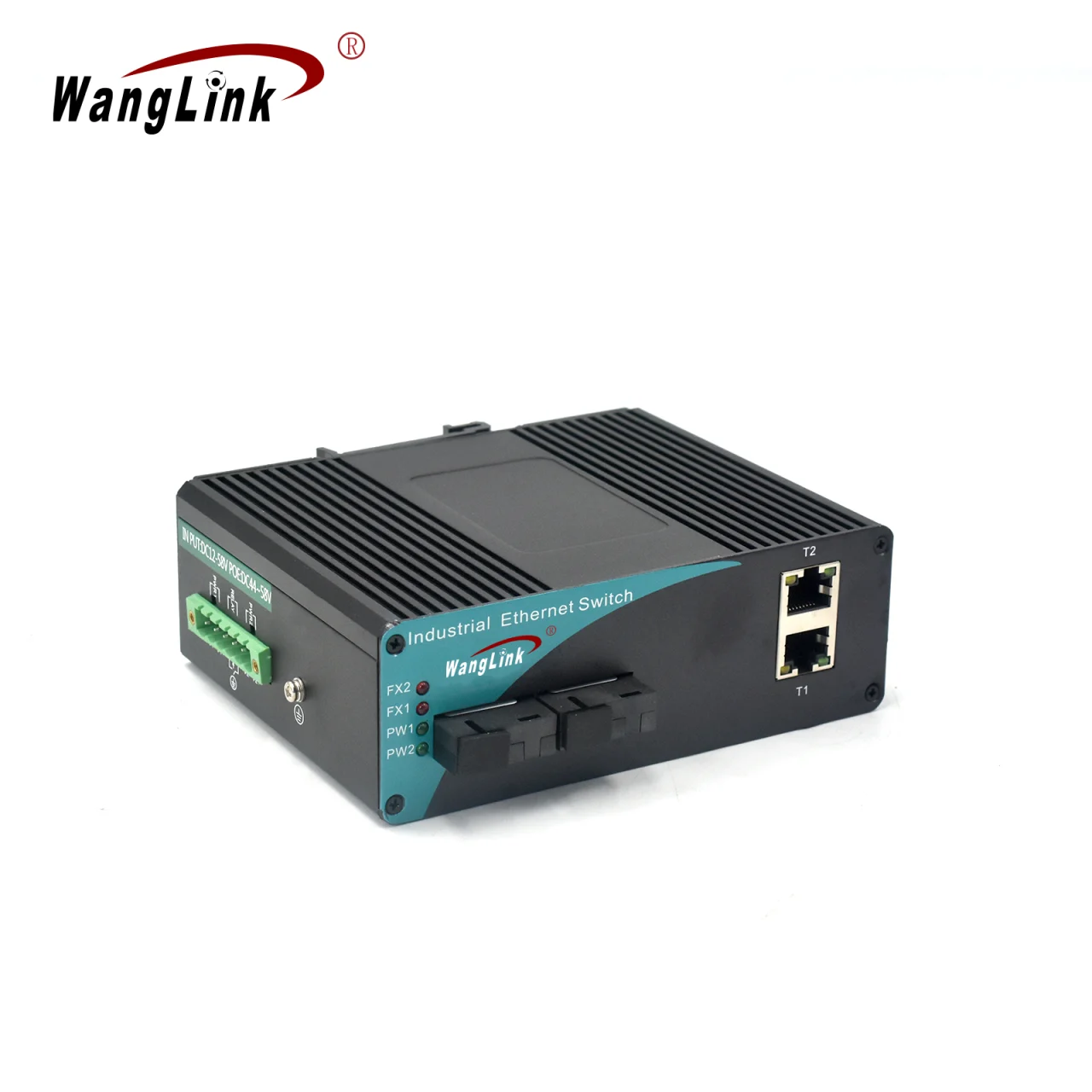
Plug-and-play industrial switches with easy deployment. No complex configuration required, ideal for basic industrial networking applications.
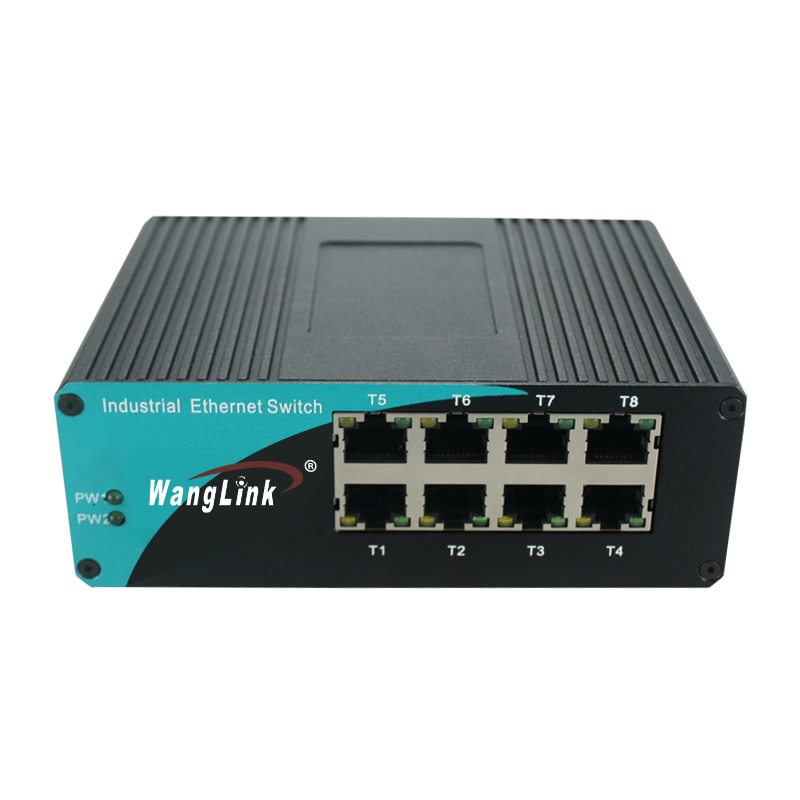
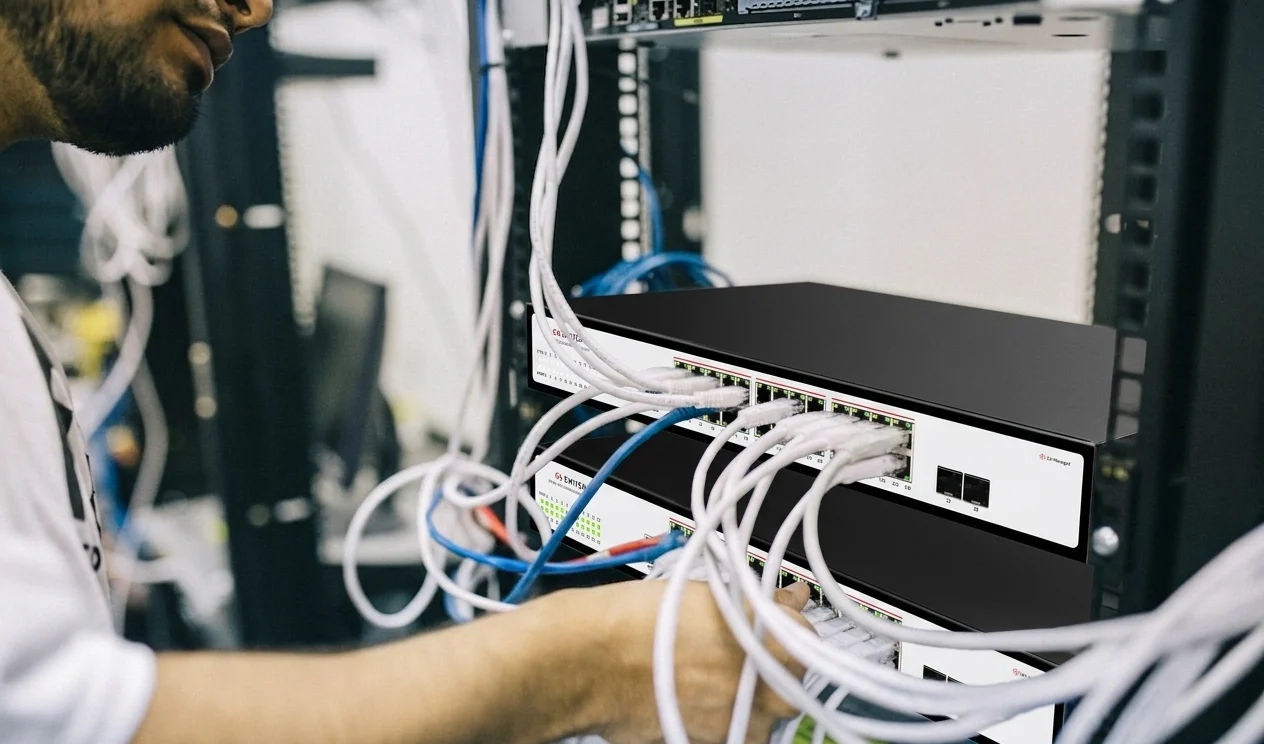
Fully manageable industrial switches supporting VLAN, ring network, QoS and other advanced functions. Realize remote monitoring and precise network control.
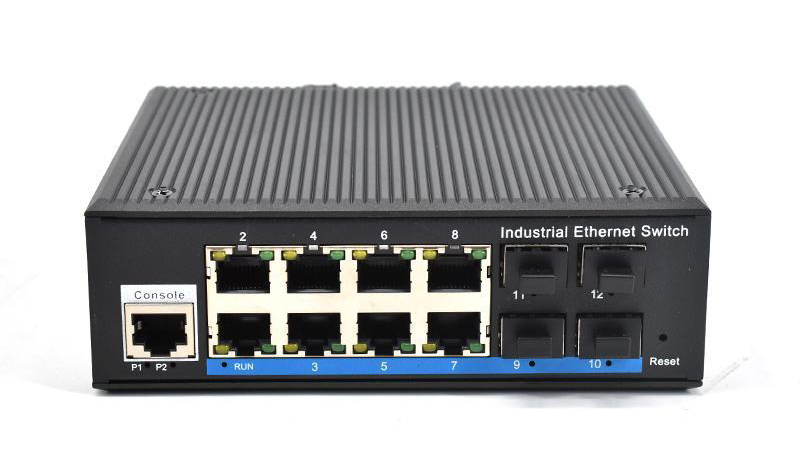
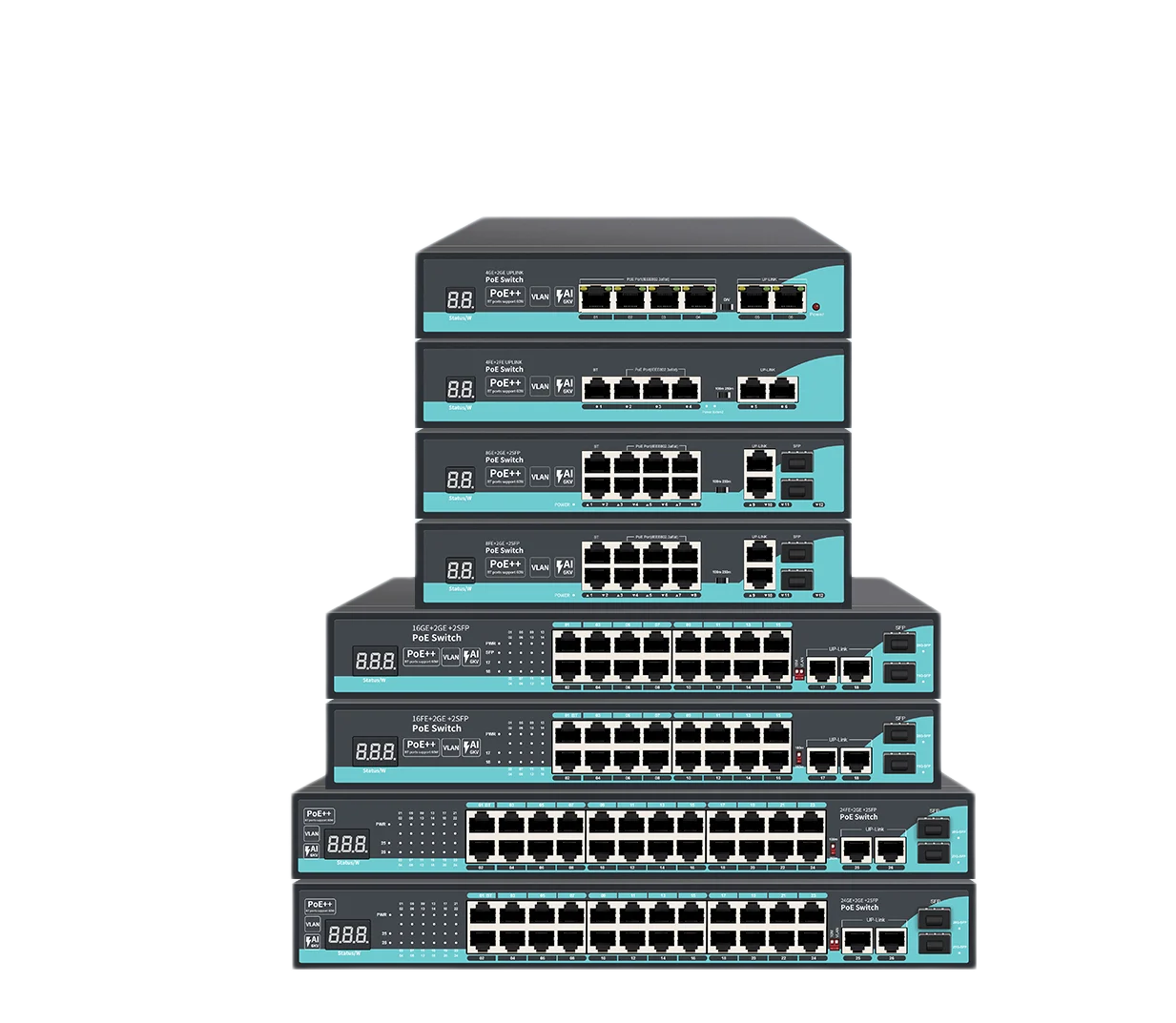
Industrial PoE switches supply power and data simultaneously to network devices. Designed for IP cameras and other PoE-powered equipment in surveillance systems.
| Parameters & Features | Industrial Media Converter (≤4 Ports) | Industrial Unmanaged Switch (>4 Ports) | Industrial Managed Switch | Industrial PoE Switch |
|---|---|---|---|---|
| Product Positioning | Optical-electrical signal conversion, distance extension, basic network adaptation | Multi-port data distribution, basic industrial networking and parallel device transmission | Precision intelligent networking, suitable for complex industrial topology and remote O&M | Dual functions of power supply & data transmission, for cameras and sensors |
| Port Specification | ≤4 ports, mostly SFP+RJ45 combo, focused on signal conversion | >4 ports, full Ethernet / hybrid ports with abundant port options | 4+ multi-spec ports, support optical expansion and port aggregation | 4+ PoE powered ports, compatible with standard PoE protocols |
| Operating Temperature | -40℃~+75℃ wide temperature range, suitable for outdoor and cabinet harsh environments | -40℃~+75℃ industrial wide temperature, high temperature and frost resistance | -40℃~+75℃ full-condition operation, stable in extreme temperature scenarios | -40℃~+75℃ wide temperature design, stable power & data under high load |
| Installation | Standard DIN rail mounting, compatible with industrial cabinet and wall mounting | DIN rail mounting, support embedded industrial cabinet installation | DIN rail mounting with reinforced fixation for harsh working conditions | DIN rail mounting, perfect for integrated industrial network layout |
| Configuration Management | ✖ Plug-and-play, no configuration required, fully automatic operation | ✖ Unmanaged plug-and-play, zero debugging, power-on and work | ✔ Web/CLI/Telnet access, full custom configuration | ✖ Basic plug-and-play, high-end models support simple management |
| VLAN Support | ✖ Not supported | ✖ Not supported | ✔ Multi-VLAN division, network isolation & broadcast storm suppression | ✔ High-end models support VLAN & port isolation |
| Loop Protection | ✖ No loop protection mechanism | ✖ No active loop prevention | ✔ STP/RSTP loop self-healing, prevent network collapse | ✔ Intelligent loop detection & automatic blocking |
| PoE Power Supply | ✖ Data transmission only, no power output | ✖ Pure data switch, no PoE function | ✖ Non-PoE by default, PoE version optional | ✔ Support 802.3af/at, high-power single-port output |
| Network Monitoring & O&M | ✖ No statistics, no log recording | ✖ No network monitoring and data statistics | ✔ SNMP, traffic statistics, system logs, remote monitoring | ✔ PoE power monitoring, port status real-time detection |
| Applicable Scenarios | Long-distance optical transmission, signal conversion, small-scale edge networking | Industrial workshop basic networking, multi-device parallel access | Smart factory, complex network topology, remote operation and maintenance | Industrial camera, wireless AP, sensor terminal integrated networking |
Learn how a network switch forwards Ethernet frames, builds MAC tables, supports VLANs, PoE, redundancy, and connects modern business networks.
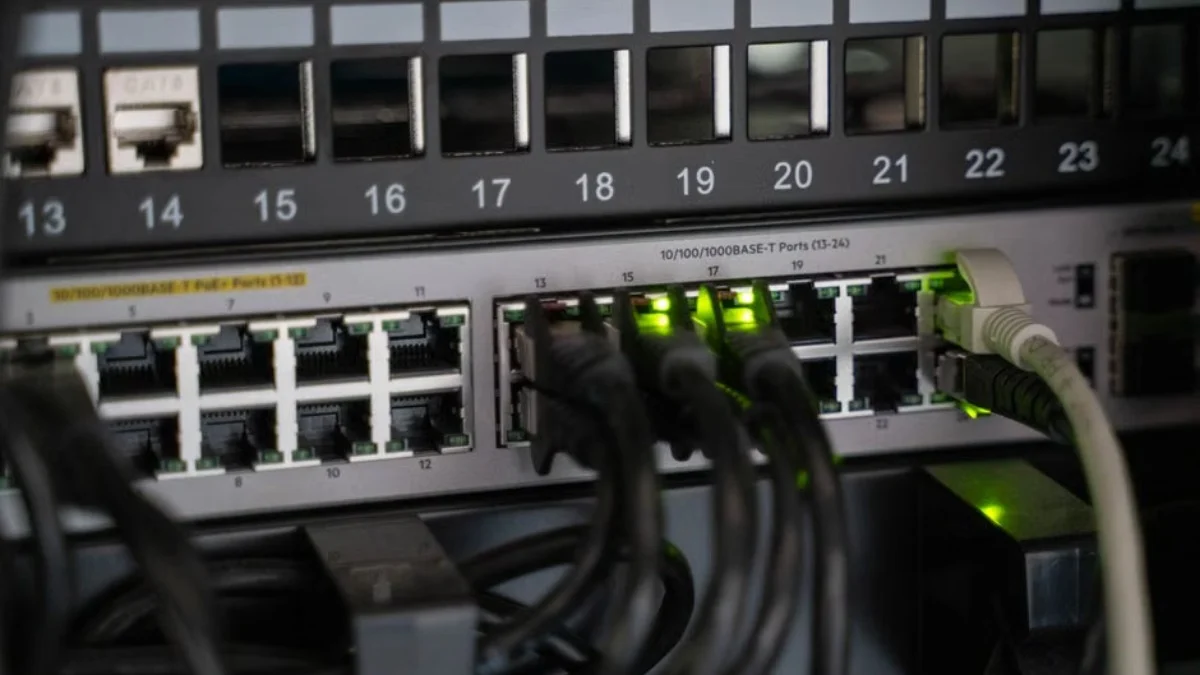
Learn what a network switch does, how it connects devices, and the differences between managed, unmanaged, PoE, and industrial Ethernet switches.

Dear Valued Customers, Thank you for your continuous support and trust in WangLink (Shenzhen Wanglink Communication Equipment Technology Co., Ltd.). We are writing to inform you of our office closure schedule for the upcoming Mid-Autumn Festival and National Day holidays, arranged in accordance with the official notice of the General Office of the State Council…
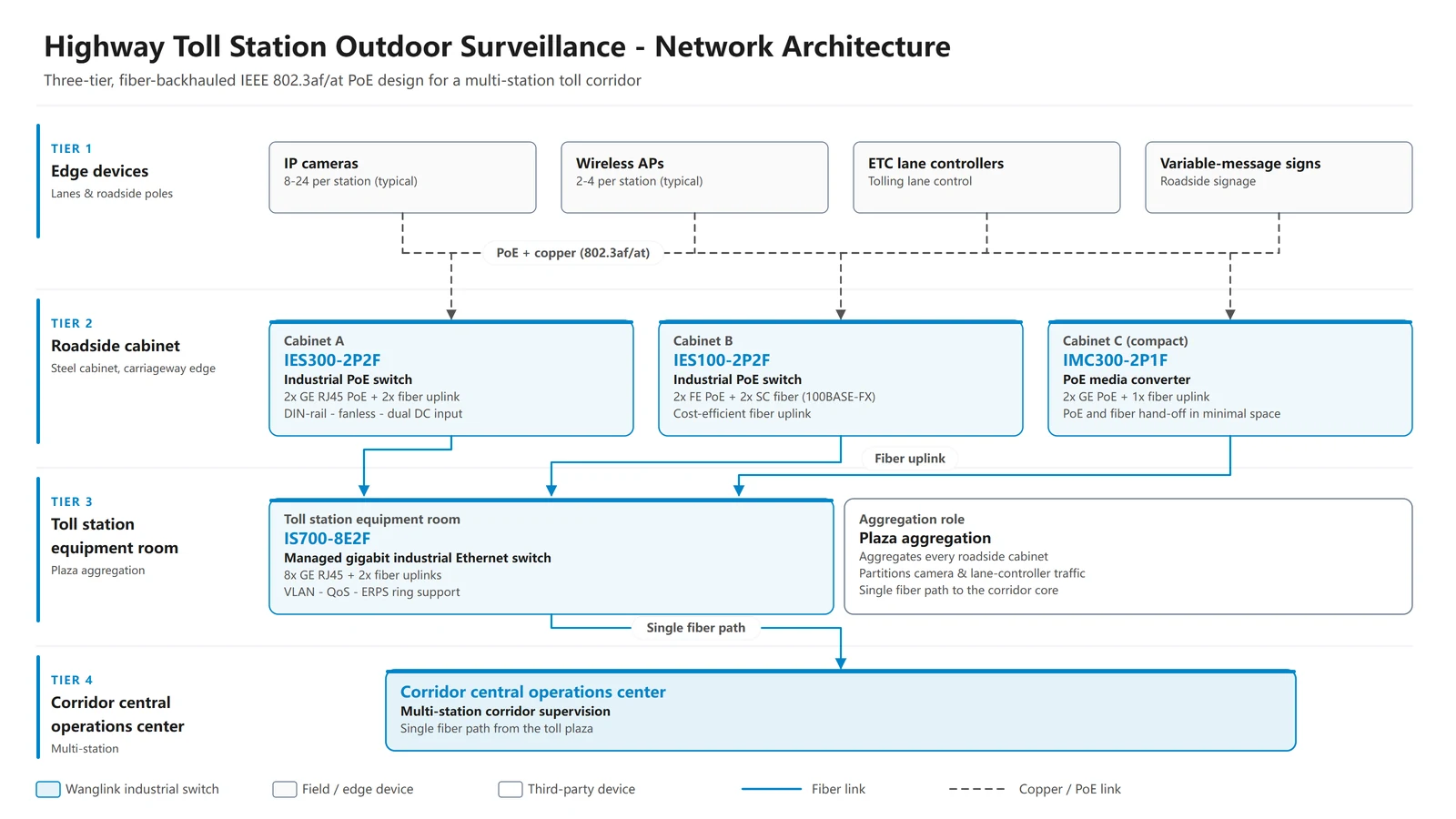
Outdoor toll-station networks place cameras and wireless equipment in roadside cabinets where heat, moisture, electrical transients and distance affect uptime. This case study explains the PoE, uplink and cabinet checks behind a resilient highway surveillance design.
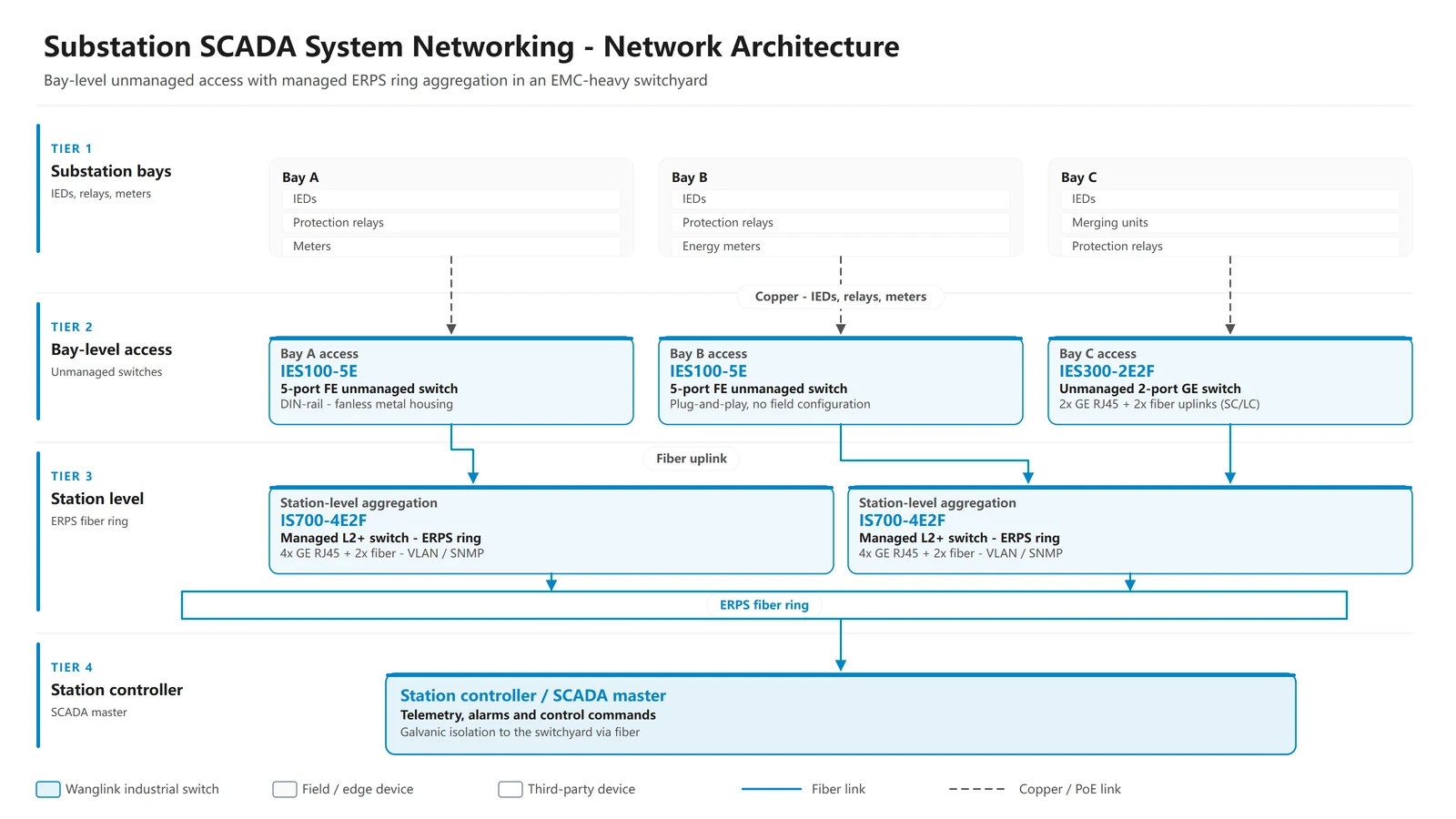
A substation network must carry protection, measurement and control traffic through an electrically harsh environment. This case study explains the topology, switch-selection criteria and evidence required for an industrial SCADA deployment.
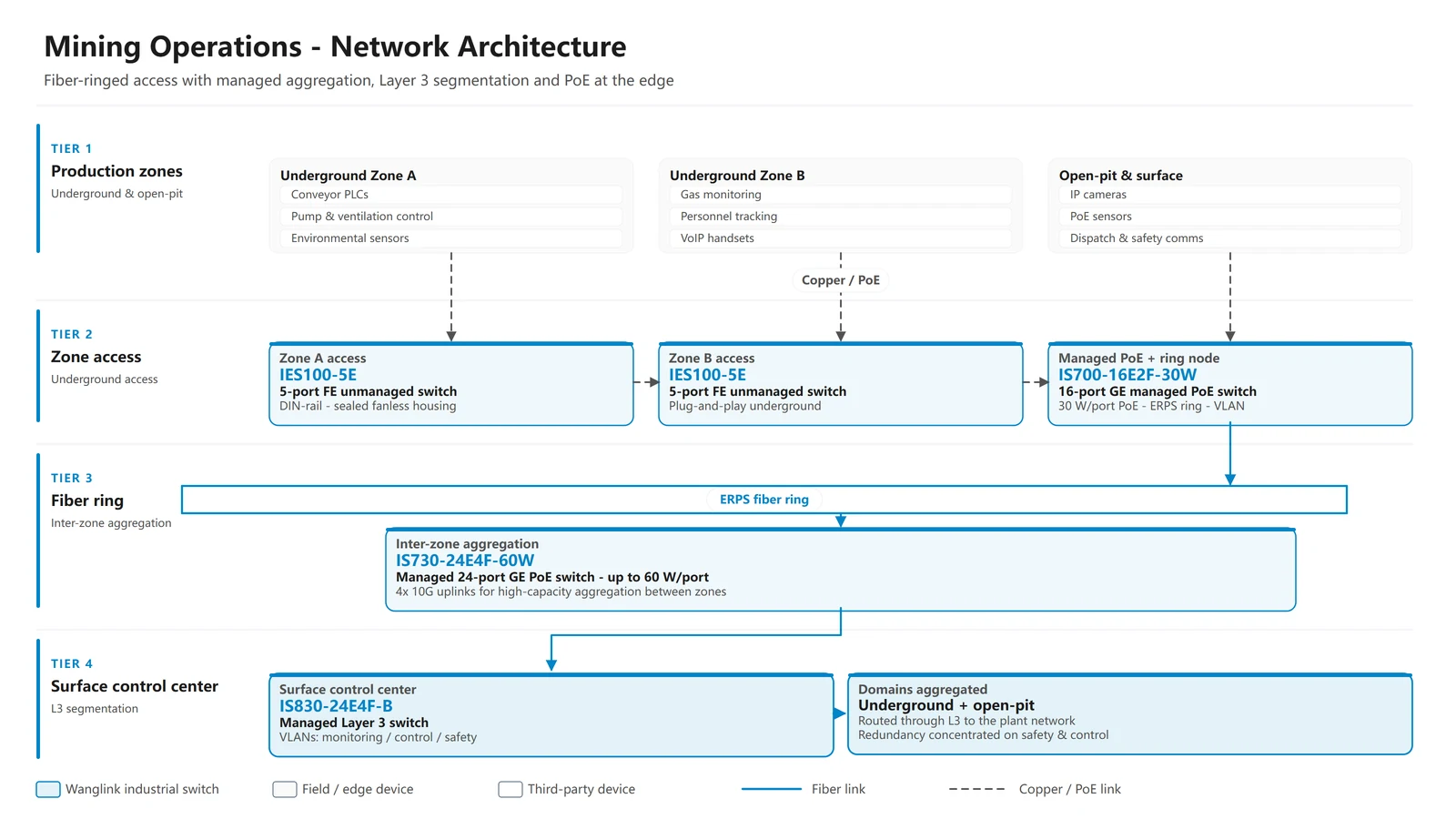
Mining networks connect control, monitoring and safety systems across areas that may be dusty, hot, cold or difficult to access. This case study explains how to document the environment, topology and validation evidence before selecting an industrial switch.
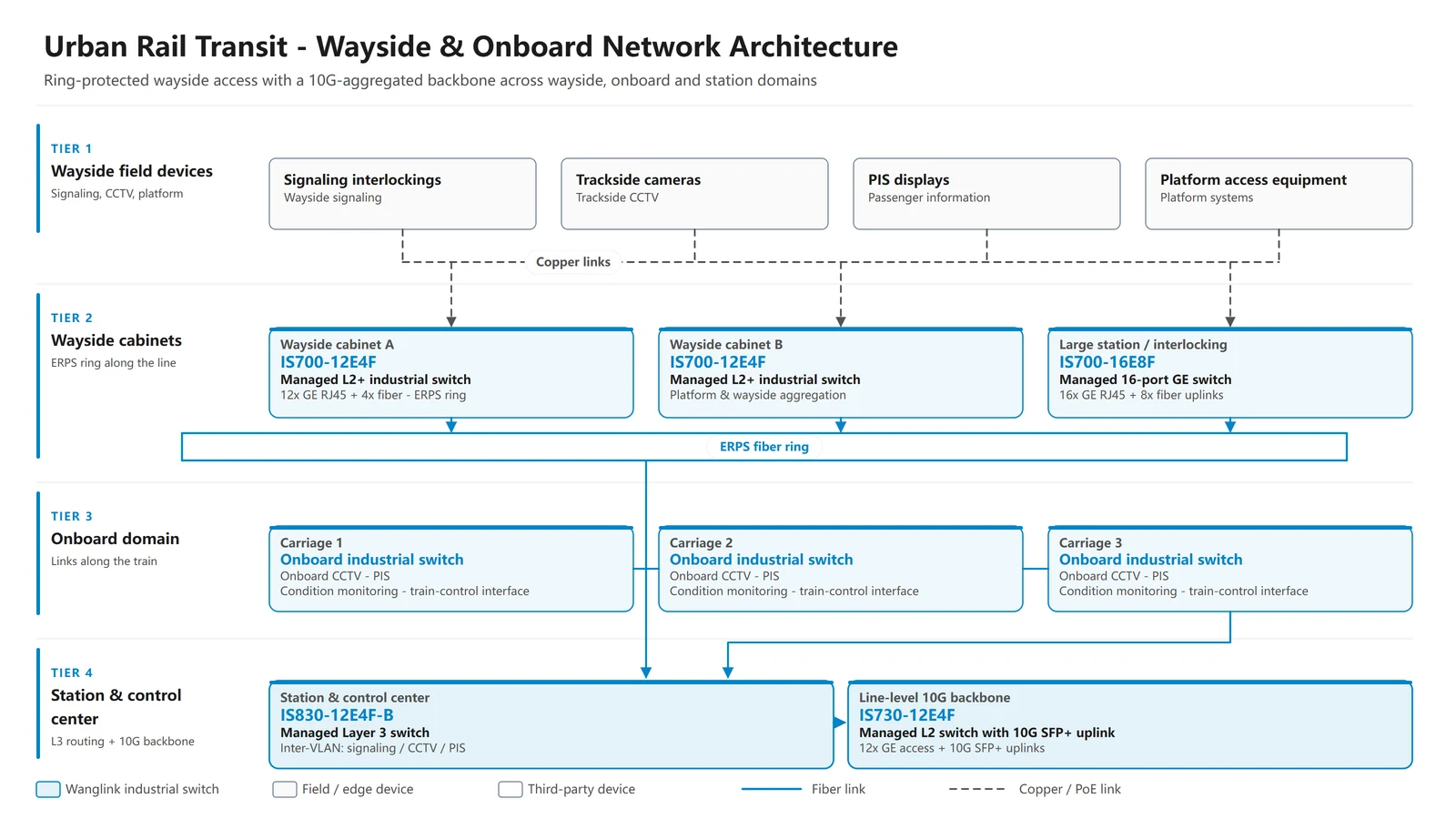
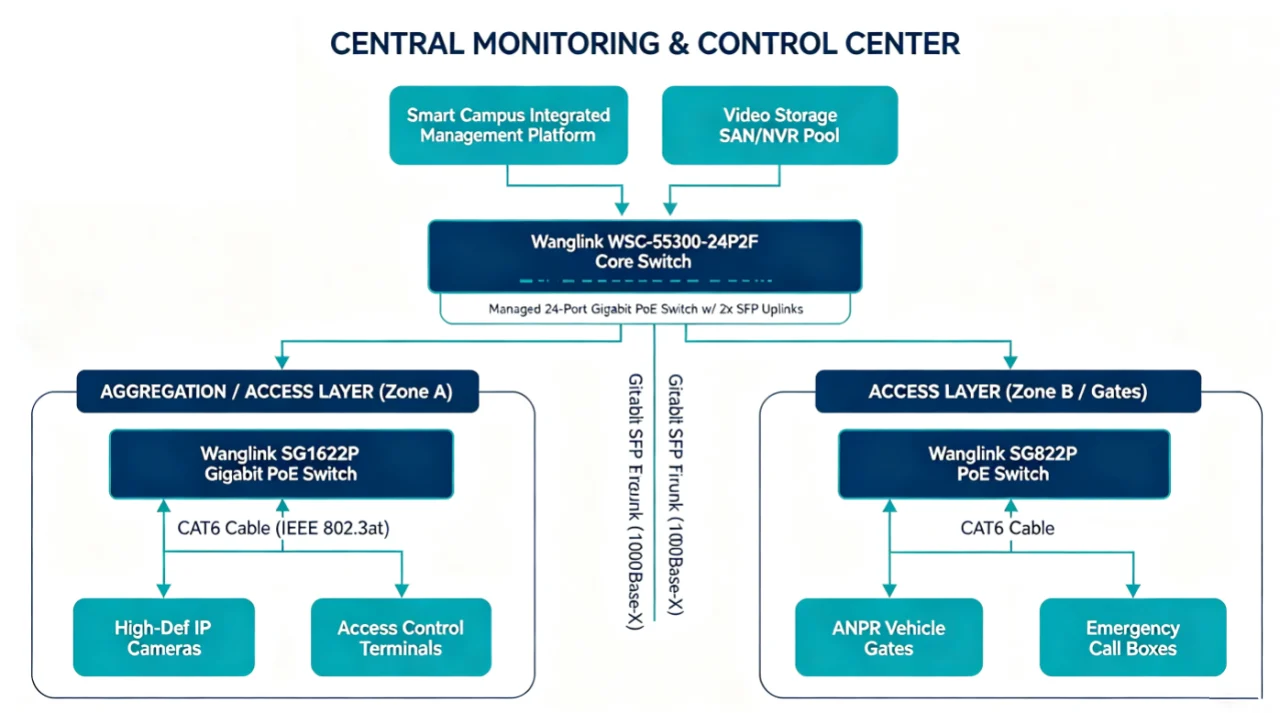
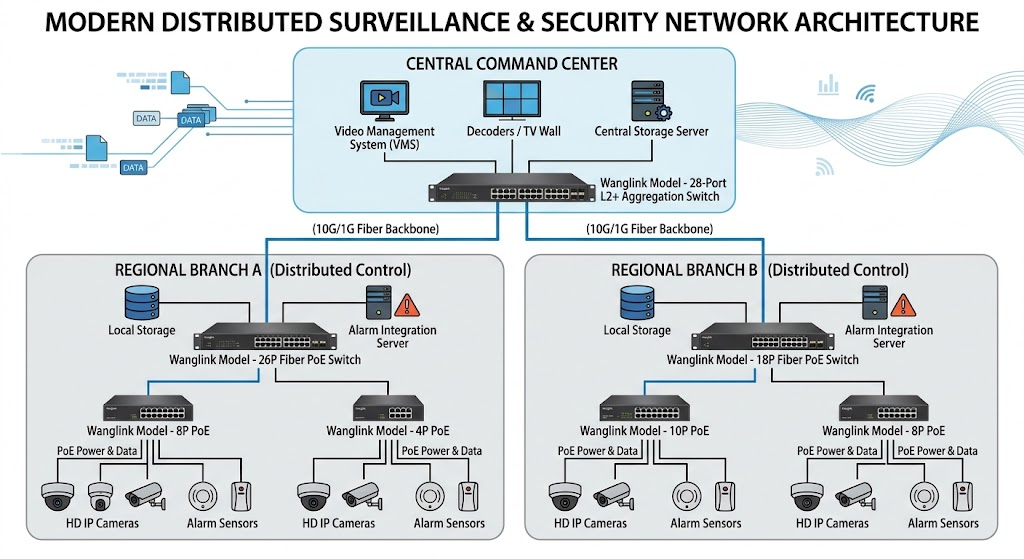
Explore verified field deployment cases of Wanglink industrial unmanaged switches, managed L2+ ring switches, industrial PoE switches, and fiber media converters. All practical projects cover factory automation, municipal surveillance, smart traffic, intelligent buildings, and long-distance fiber transmission scenarios. Each case reflects real-site network topology, industrial-grade anti-interference performance, wide-temperature stability, and 24/7 continuous operating capability, providing reliable reference solutions for system integrators and industrial network engineering design.